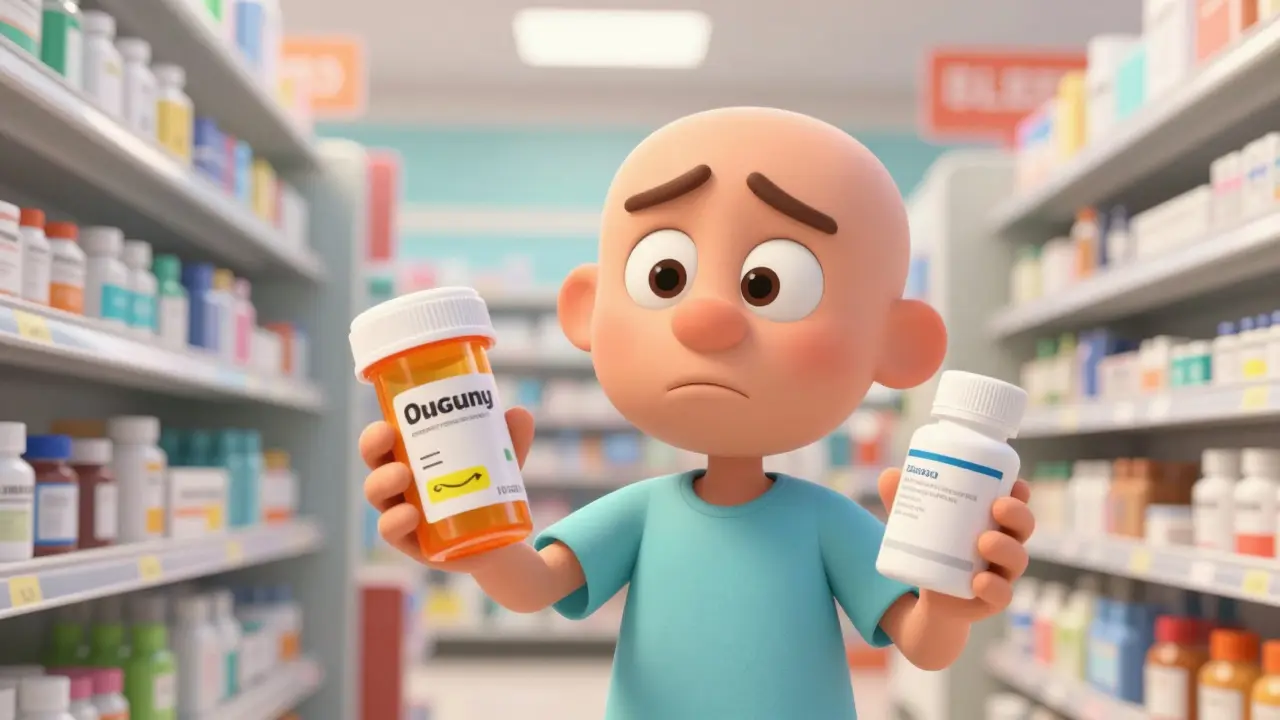
Imagine your mental health is finally stable. You’ve spent months finding the right balance of medications that keep your mood steady and your anxiety manageable. Then, one day, you pick up your prescription at the pharmacy, and it looks slightly different. The price is lower, but the name on the bottle has changed from a brand you trust to a generic version you don’t recognize. For many people managing complex mental health conditions, this switch isn’t just a cost-saving measure-it’s a potential crisis.
This scenario highlights a critical issue in modern psychiatry: the intersection of psychiatric medication combinations and the use of generic alternatives which can introduce significant clinical variability and risks for patients on polypharmacy regimens. When doctors prescribe multiple drugs to treat conditions like treatment-resistant depression or bipolar disorder, they are creating a delicate chemical balance. Introducing generic substitutes into this mix can disrupt that balance, leading to unexpected side effects or a return of severe symptoms. Understanding why this happens, and how to manage it, is essential for anyone navigating these treatments.
The Science Behind Combination Therapy
Combination therapy isn’t a new idea, but its application in psychiatry has become more sophisticated over the last two decades. It typically involves pairing an antidepressant with anSSRI (Selective Serotonin Reuptake Inhibitor) or SNRI with another class of medication, such as an atypical antipsychotic or a mood stabilizer. This approach emerged prominently after the STAR*D trial (2001-2006), a massive study by the National Institute of Mental Health, revealed that 30-40% of patients with major depressive disorder did not respond adequately to their first antidepressant alone.
Why combine them? Because single medications often fail to address the full complexity of psychiatric disorders. For example, a common evidence-based pairing involves adding low-dose aripiprazole (brand name Abilify) to an SSRI like escitalopram. The FDA approved this specific adjunctive use in 2014 because clinical trials showed it could boost remission rates significantly-up to 24.3% compared to 11.2% with placebo. Another well-known combination is Symbyax, a fixed-dose pill containing olanzapine and fluoxetine, designed specifically for treatment-resistant depression to reduce pill burden while attacking the condition from two biological angles.
However, combining drugs increases the stakes. Each medication affects how the body processes the others through liver enzymes like CYP1A2 or CYP2D6. If one drug slows down the metabolism of another, blood levels can spike to toxic ranges. If it speeds it up, the therapeutic effect vanishes. This pharmacokinetic dance requires precision, which is where generics complicate matters.
The Generic Substitution Problem
Generic drugs are required by the FDA to be "bioequivalent" to their brand-name counterparts. But what does that actually mean? The standard allows generic versions to have 80% to 125% of the bioavailability of the original drug. For most medications, this wide window is acceptable. But for psychiatric drugs, especially those used in combinations, this range can be dangerous.
Consider lithium carbonate, a narrow therapeutic index drug. Its effective blood level must stay between 0.6 and 1.2 mmol/L. A drop below that can lead to depression; a rise above it causes toxicity. A 2018 case series from the University of British Columbia documented three bipolar patients who experienced manic episodes within 14 days of switching from brand-name lithium to a generic. Their serum levels dropped from 0.85 mmol/L to 0.55 mmol/L despite taking the exact same milligram dose. The generic simply didn’t absorb as consistently.
A landmark 2019 study published in the Journal of Clinical Psychiatry analyzed nearly 29,000 patients and found that those switched from brand-name SSRIs to generics had a 22.3% higher rate of treatment failure. While some experts argue that generics are generally safe and necessary for cost control, the data suggests that for complex regimens, the "one-size-fits-all" assumption of interchangeability is flawed.
| Factor | Brand-Name Medications | Generic Alternatives |
|---|---|---|
| Bioequivalence Range | Fixed manufacturing process | 80-125% allowed variance |
| Treatment Failure Rate (SSRIs) | d>Baseline | 22.3% higher risk after switch |
| Release Technology | Consistent across batches | Varies by manufacturer (e.g., bead systems) |
| Cost Impact | Higher out-of-pocket costs | ~14-50% reduction in patient costs |
| Clinical Monitoring Need | Standard follow-up | Intensive monitoring (7-10 days post-switch) |

Specific High-Risk Combinations
Not all generic switches carry the same risk. Some combinations are particularly volatile due to how the drugs interact chemically. One notorious example is bupropion XL (Wellbutrin). In 2012, the FDA issued warnings about certain generic formulations because they released the drug too quickly, causing breakthrough anxiety and depression. Patients on bupropion combined with an SSRI to counteract sexual dysfunction reported that when their bupropion was switched to a generic, the protective effect vanished, and side effects returned.
Another high-risk area is venlafaxine ER (Effexor XR). Different generic manufacturers use different technologies to control how the drug releases into the bloodstream. Some use osmotic pumps, while others use multiparticulate beads. These differences can alter the ratio of serotonin to norepinephrine reuptake inhibition, which is critical for the drug’s efficacy. If you are taking venlafaxine alongside a mood stabilizer, even a slight shift in absorption kinetics can destabilize your entire regimen.
Patient reports reinforce these clinical concerns. On platforms like PatientsLikeMe, 38.7% of users on combination therapy reported worsened symptoms after a generic substitution, compared to only 12.3% of those on single medications. Common complaints include the return of obsessive thoughts, increased akathisia (a feeling of inner restlessness), and sudden emotional volatility.

Navigating the System: Protocols for Safety
If you are on a combination regimen, you cannot afford to be passive about your prescriptions. Here is a practical approach to managing generic substitutions safely:
- Document Your Baseline: Before any switch, work with your doctor to record your current symptom severity using standardized scales like the MADRS (Montgomery-Åsberg Depression Rating Scale). This gives you objective data to compare against later.
- Check the Manufacturer: Don’t just look at the drug name. Ask your pharmacist for the specific manufacturer and lot number. Studies show that issues often arise with specific batches or companies, not all generics universally.
- Time the Switch Wisely: Never allow a generic substitution during an acute episode of illness. Only make changes when you are clinically stable. This ensures that if things go wrong, you can distinguish between a relapse and a drug interaction.
- Schedule Immediate Follow-Up: The Massachusetts General Hospital recommends seeing your prescriber within 7-10 days of any substitution. Do not wait for your next routine appointment. Subtle changes in sleep, appetite, or mood can signal a problem early.
- Know Your Rights: In some states, like California, laws now require pharmacists to notify prescribers before substituting psychotropic generics in patients on multiple drugs. Ask if similar protections exist in your region.
Some insurers and pharmacies offer "dispense as written" options, allowing you to pay a bit more to stick with the brand or a specific generic manufacturer that has worked for you. While this adds cost, it may prevent far more expensive emergency room visits or hospitalizations caused by treatment failure.
The Future of Psychiatric Polypharmacy
The tension between cost containment and clinical safety is driving regulatory change. The FDA has proposed narrower bioequivalence ranges (90-111%) for complex extended-release antidepressants used in combination therapy. Additionally, the Department of Veterans Affairs implemented a policy in 2023 requiring patients on narrow therapeutic index drugs to stay with the same generic manufacturer for at least 12 months, resulting in an 18.7% drop in psychiatric hospitalizations.
Looking ahead, personalized medicine may offer a solution. Pharmacogenetic testing, which analyzes how your genes affect drug metabolism, could help clinicians predict which generic formulations will work best for you. Until then, vigilance is your best tool. Your mental health stability is worth the extra effort to monitor and manage the specifics of your medication supply chain.
Can I refuse a generic substitution for my psychiatric medication?
Yes, you can. You have the right to request "dispense as written" or ask your doctor to specify "brand medically necessary" on your prescription. However, your insurance provider may require prior authorization or charge you a higher copay for the brand-name version. It is crucial to discuss the clinical reasons for this refusal with your prescriber to support the request.
How soon should I expect side effects after switching to a generic?
Most adverse reactions or loss of efficacy occur within the first 7 to 14 days after the switch. This is because the new formulation alters your blood levels of the active ingredient. If you notice increased anxiety, insomnia, or return of depressive symptoms during this window, contact your healthcare provider immediately rather than waiting.
Are all generic psychiatric medications unsafe?
No, many patients tolerate generic switches without any issues. The risk is highest for narrow therapeutic index drugs like lithium and clozapine, or complex release formulations like bupropion XL and venlafaxine ER. Simple immediate-release tablets generally pose less risk than extended-release combinations. Individual biology plays a significant role in sensitivity to these changes.
What is the "STAR*D" trial and why is it relevant?
The STAR*D trial was a large-scale NIMH study (2001-2006) that demonstrated 30-40% of depression patients do not respond to initial monotherapy. This research validated the use of combination therapy as a second-line treatment option. It is relevant today because it established the clinical need for precise dosing in multi-drug regimens, making generic variability a more significant concern than in simple single-drug treatments.
Does insurance cover the cost of staying on brand-name drugs?
Coverage varies by plan. Many commercial insurers require step therapy, meaning you must try the generic first. However, if your doctor provides documentation of "medical necessity" due to previous adverse reactions to generics, some plans will override this requirement. Medicaid programs often have stricter mandates for generic use, though state-specific laws (like in California) are beginning to create exceptions for complex psychiatric cases.