
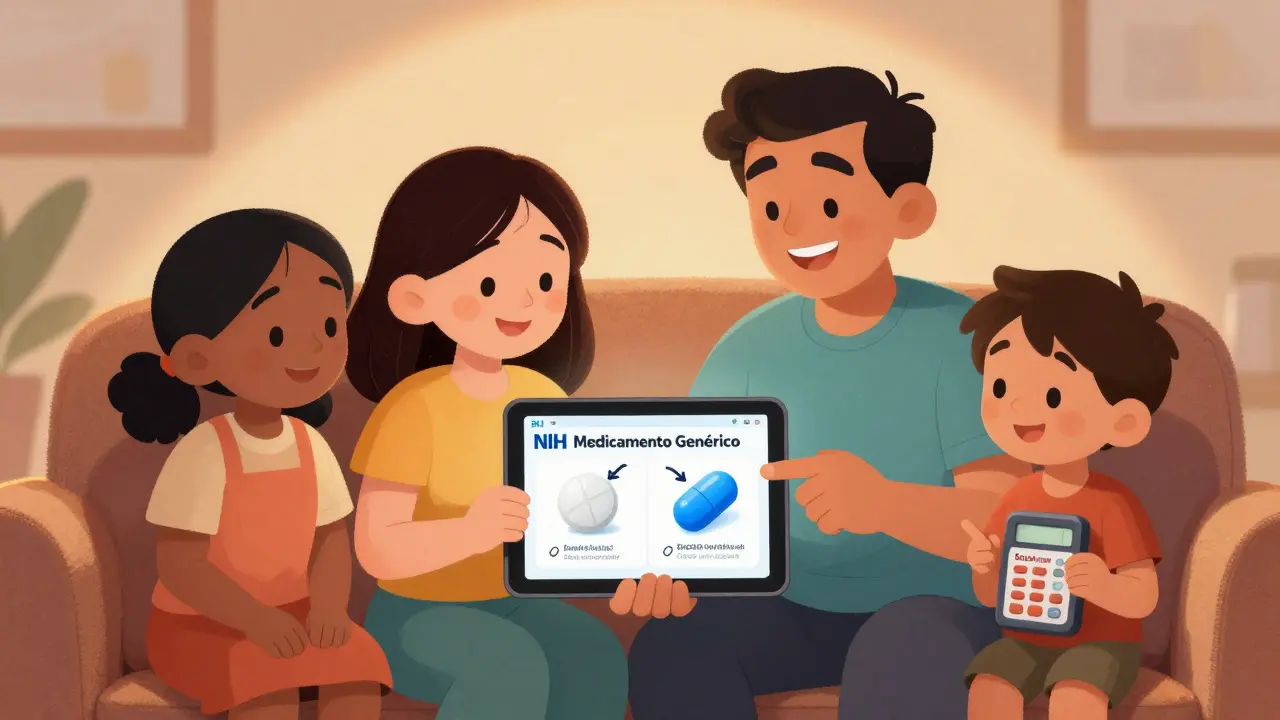
When a Spanish-speaking patient walks into a pharmacy and hears "el medicamento genérico", do they really understand what that means? Too often, the answer is no. Many think a generic pill is weaker, less safe, or just a cheaper knockoff - even though it’s scientifically identical to the brand-name version. This misunderstanding isn’t about language alone. It’s about access, clarity, and trust. And it’s costing lives.
In the U.S., nearly 90% of prescriptions filled are for generic medications. They save patients an average of $200 a month per drug. But for Spanish-speaking communities - who make up 13.7% of the population - that savings is often out of reach because they don’t know how to ask for it, or worse, they’re afraid to take it. The gap isn’t just linguistic. It’s educational.
What Exactly Is a Generic Medication? (In Spanish)
The term "medicamento genérico" doesn’t mean "cheap" or "second-rate." It means the same active ingredient, same dose, same way of working - just without the brand name and marketing costs. The FDA requires generics to meet the exact same standards as brand-name drugs. But patients don’t always hear that.
Resources like the Agency for Healthcare Research and Quality (AHRQ)’s "My Medicines List" - updated in February 2023 and available in Spanish - help patients write down not just the brand name, but also the generic name, why they’re taking it, and how much to take. This simple tool helps patients speak up in appointments and pharmacies. One patient in California told her nurse: "I finally understood my dad could switch to generics and save $200 a month. He was scared he’d get sick if he changed pills. Now he takes them without worry."
Why Do Spanish-Speaking Patients Hesitate?
It’s not just about language. It’s about appearance.
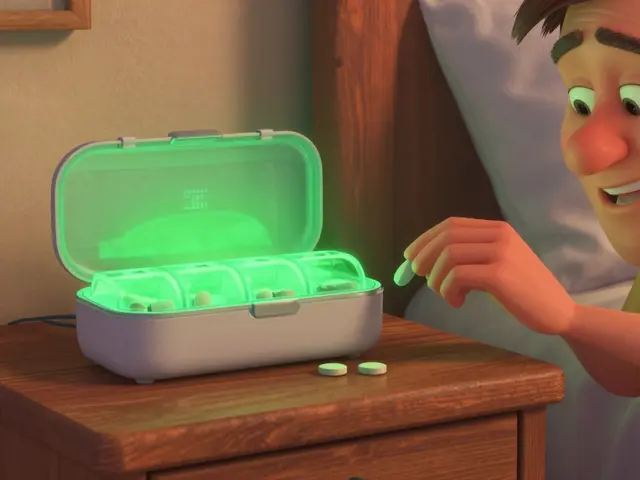
Generic pills often look different - different color, shape, or markings. A patient might recognize their brand-name pill as a small white tablet. Then they get a large blue one. If no one explains that "Esta medicina tiene una apariencia diferente, pero es lo mismo" (This medicine looks different, but it is the same), they might stop taking it. A 2022 study from the University of Miami found that showing side-by-side images of brand and generic pills reduced confusion by 37%.
Another fear: "Will it work the same?" In a 2023 survey of 1,200 Spanish-preferring patients by the California Health Care Foundation, 63% still doubted generics were as effective. That’s not ignorance - it’s lack of clear, repeated messaging.
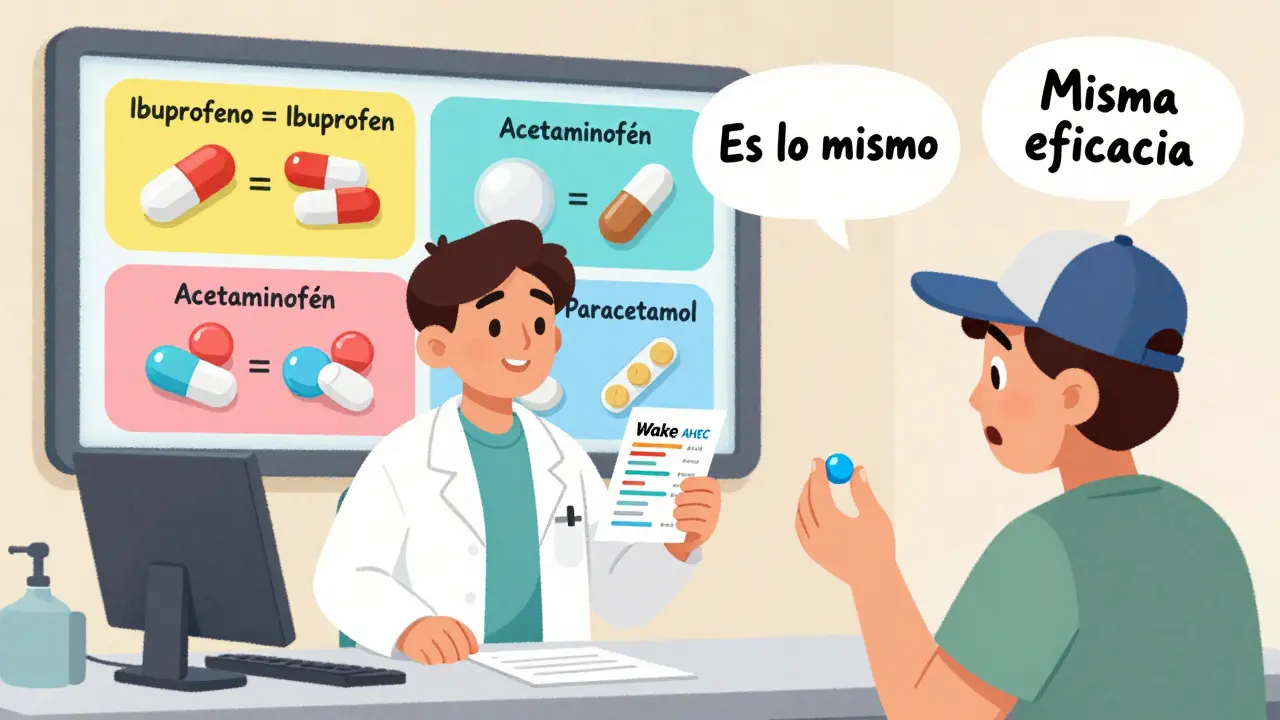
Even worse, some patients hear different terms in different clinics. One person might be told about "paracetamol," another about "acetaminofén." They’re the same drug - but in Spain, it’s paracetamol; in Mexico and the U.S., it’s acetaminofén. Without context, patients think they’re being given two different medicines.
Where to Find Reliable Spanish-Language Resources
Not all Spanish-language materials are created equal. Some are well-designed. Others are poorly translated, full of jargon, or use regional terms that confuse patients from other countries.
Here are the most trusted, up-to-date resources:
- MedlinePlus.gov (Spanish): Offers bilingual PDFs comparing brand and generic names. Updated quarterly, with clear side-by-side charts. Includes warnings about drug interactions.
- AHRQ’s "My Medicines List" (Spanish): A fillable form that helps patients track both brand and generic names, dosage, and reason for use. Includes QR codes linking to video explanations in multiple dialects.
- Wake AHEC Pharmacy Translation Card: Designed for healthcare providers. Has 15 ready-to-use phrases for pharmacists: "El medicamento genérico es igual en eficacia y seguridad." (The generic medicine is equal in effectiveness and safety.)
- Spanish Academy Pharmacy Vocabulary Guide (July 2023): Lists 27 key terms like "medicamentos de venta libre" (OTC drugs), "receta médica" (prescription), and "efectos secundarios" (side effects). Includes pronunciation guides like "farmacia" (far-MA-sya), not "far-MAY-shee-ah."
- Medicamento Genérico App (NIH, 2023): A free mobile app with 147,000 downloads. Lets users scan a pill, compare images of brand vs. generic versions, calculate cost savings, and even record a question to send to a pharmacist.
These aren’t just translations. They’re tools built by experts who know what patients actually need.
What’s Missing From Most Resources
Even the best resources have blind spots.
First, regional differences. A pill called "ibuprofeno" in Mexico might be labeled "ibuprofen" in the U.S. But if a patient from Guatemala visits a clinic in Texas and hears "ibuprofeno," they might think it’s a different drug. Most materials don’t explain these variations.
Second, audio support is rare. Many patients can’t read well - even in Spanish. A 2023 study found that 42% of Spanish-speaking patients in rural clinics had low health literacy. Hearing the name of their medicine spoken clearly - like "metformina" not "met-for-mee-na" - makes a huge difference.
Third, few resources explain bioequivalence. Patients need to know: "The FDA requires generics to be absorbed into the body at the same rate and amount as the brand. If it didn’t work the same, it wouldn’t be approved."
How Providers Can Use These Tools
Doctors and pharmacists aren’t expected to be fluent in Spanish. But they are expected to ensure patients understand their medications.
Best practices from Kaiser Permanente’s Spanish medication portal (launched in 2022) show what works:
- Always show the pill - side by side - brand and generic.
- Use the phrase: "Este es el mismo medicamento, solo diferente en forma. No es menos efectivo."
- Provide printed cards with key phrases and QR codes to videos.
- Train staff for 10-15 hours on common pharmacy terms and regional variations.
One nurse in Texas shared: "I used to spend 10 minutes explaining generics to every patient. Now I hand them the card. They watch the video. They leave with confidence. I’ve seen fewer calls to the pharmacy, fewer missed doses."
The Bigger Picture: Why This Matters
Medication errors are the third leading cause of death in the U.S. - and language barriers play a big part. Patients with limited English proficiency are 3.2 times more likely to misunderstand dosage instructions.
Generic medications save the U.S. healthcare system over $300 billion a year. But if patients don’t take them, those savings vanish. And worse - their health suffers.
Dr. Maria Hernandez from Harvard Medical School found that since 2015, bilingual medication resources have cut medication errors by 23% among Spanish-speaking patients. But generic medication confusion remains one of the top three reasons people stop taking their drugs.
That’s why this isn’t just about translation. It’s about justice. It’s about giving people the same chance to be healthy - no matter what language they speak.
What You Can Do Today
If you’re a patient or caregiver:
- Ask: "¿Tiene la versión genérica de esa medicina? La original es muy cara." (Do you have the generic version? The original is too expensive.)
- Request a printed list of your medicines in Spanish.
- Download the NIH’s "Medicamento Genérico" app. Use it to compare pills.
If you’re a provider:
- Use AHRQ’s "My Medicines List" in Spanish during every visit.
- Display side-by-side images of brand and generic pills in your waiting room.
- Don’t assume patients know what "genérico" means. Explain it like you’re talking to a friend.
If you’re a community health worker:
- Carry Wake AHEC’s translation cards. Use them in home visits.
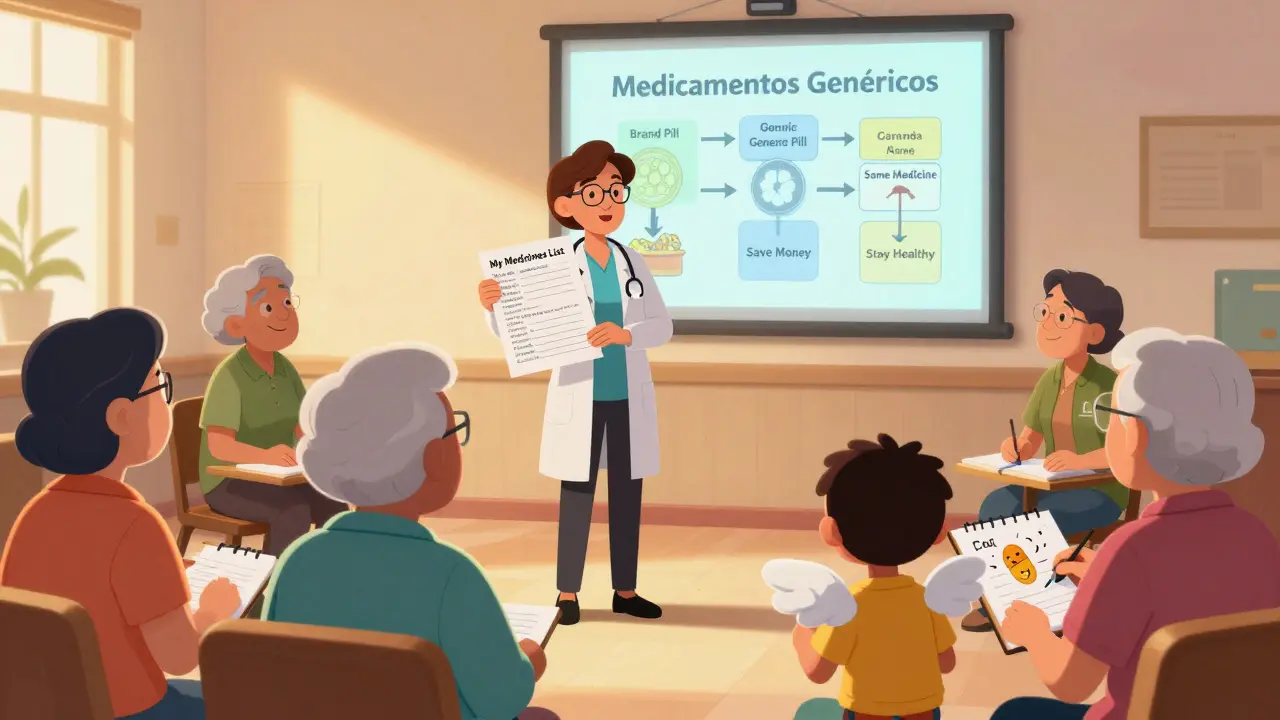
- Host 10-minute "Medicamentos Genéricos" workshops at churches or community centers.
- Record short audio clips in your own dialect explaining common drugs.
Change doesn’t come from big policies alone. It comes from a pharmacist saying the right phrase. A nurse showing a picture. A family member watching a video together.
What does "medicamento genérico" mean in English?
"Medicamento genérico" means "generic medication." It’s the same drug as the brand-name version, with the same active ingredient, strength, and how it works in your body. The only differences are the name, color, shape, and price - not the effectiveness.
Are generic medications safe?
Yes. The U.S. Food and Drug Administration (FDA) requires generic medications to meet the same strict standards as brand-name drugs. They must have the same active ingredient, dosage, safety, strength, and way of working. The only thing that can differ is the inactive ingredients - like dyes or fillers - which don’t affect how the medicine works.
Why do generic pills look different?
Generic pills look different because U.S. law says they can’t copy the exact appearance of brand-name drugs. But that doesn’t mean they’re different inside. The color, shape, or markings are just for branding. The medicine inside is identical. Visual aids - like side-by-side photos - help patients understand this.
Is "paracetamol" the same as "acetaminofén"?
Yes. "Paracetamol" is the term used in Spain and some European countries. "Acetaminofén" is used in the U.S., Mexico, and most Latin American countries. They are the exact same drug - used for pain and fever. This difference can confuse patients who travel or get prescriptions from different regions. Always check the active ingredient, not just the name on the bottle.
How can I find out if my medicine has a generic version?
Ask your pharmacist directly: "¿Tiene una versión genérica de este medicamento?" You can also check MedlinePlus.gov’s Spanish section or use the NIH’s "Medicamento Genérico" app. Just enter the brand name, and it will show if a generic exists, what it looks like, and how much it costs.
Why do some pharmacies not offer generics?
Sometimes, the prescriber wrote "dispense as written" or "no substitutions" on the prescription. Other times, the pharmacy doesn’t have the generic in stock. Always ask: "¿Pueden sustituirlo por la versión genérica?" If they say no, ask why. You have the right to know your options - and to choose the more affordable one unless your doctor says otherwise.


One comment
soooo... the FDA is just lying to us? 🤔 i heard generics are made in the same factories as brand names but they just slap a different label on it. who’s really benefiting here? i think big pharma owns the FDA now. they want you to think it’s safe so you’ll take the cheap stuff and keep paying for the brand name anyway. it’s all a scam.
thank you for writing this. my abuela used to refuse her blood pressure med because it was ‘blue’ instead of ‘white’-she thought it was poison. once we showed her the side-by-side pics and explained it in Spanish, she cried and said ‘por fin entiendo’. this matters so much.
the real issue isn’t just translation-it’s epistemic injustice. when a patient’s lived experience of seeing different pill shapes is dismissed as ‘ignorance’ instead of being met with visual literacy tools, you’re not educating-you’re othering. the NIH app is a start, but we need systemic design that treats language as a bridge, not a barrier. also, pronunciation guides? genius. ‘far-MA-sya’ not ‘far-MAY-shee-ah’-small things, huge impact.
generic meds are dangerous. i know a guy who switched and had a stroke. they’re not the same. the FDA doesn’t test them right. and why do they look different? because they ARE different. you’re being manipulated into taking second-rate drugs so corporations can profit. wake up.
so you're saying the solution is to give people more stuff to read? wow. brilliant. what about the 42% who can't read? you're solving a literacy crisis with a pamphlet. genius. also why is everyone assuming all spanish speakers are the same? what about dominicans vs. salvadorans? this is so reductive.
bro the app is fire. scanned my pill and it showed me the generic version with a video in mexican spanish. saved me 150 bucks this month. also the qr code to the pharmacist video? yes. just downloaded it. thank you whoever made this
let’s be real here-this whole thing is performative allyship. you give people a pamphlet and call it justice? where’s the funding? where’s the policy change? why are we putting the burden on patients to download apps instead of forcing pharmacies to have bilingual staff? and don’t even get me started on how the word ‘genérico’ is weaponized by insurers to push cheaper meds without consent. this isn’t education-it’s a bandaid on a hemorrhage. and the fact that you think showing side-by-side pictures fixes systemic neglect? that’s the real tragedy.
ohhh so now we’re making apps for pills? next they’ll invent a vibrating pill that sings you lullabies in spanish. 🤡 but seriously-this is beautiful. i used to work at a clinic in el paso and patients would cry because they didn’t know if their new blue pill was ‘the real one’. now i just hand them the card. no words needed. just point. it’s magic.
i hate how people act like this is just about language. it’s about power. who gets to decide what ‘generic’ means? who gets to translate it? why isn’t the government paying for real interpreters instead of forcing patients to use apps? and why do we always assume they’re dumb for not knowing? it’s not their fault-they’ve been gaslit for decades. also i think the word ‘genérico’ should be banned. it’s a lie.
the structural inequities embedded in pharmaceutical accessibility are profound, and while these resources represent critical micro-interventions, we must recognize that the epistemic violence inflicted upon LEP (limited English proficiency) populations through pharmacological miscommunication constitutes a public health crisis of existential magnitude. the AHRQ tool, for instance, leverages participatory design principles to co-create trust through multimodal affordances-QR codes, dialect-specific audio, and visual schema alignment-which collectively mitigate cognitive load and foster pharmacological agency. yet, without institutional mandates for provider competency in linguistic humility and bioequivalence literacy, these tools remain aspirational rather than systemic. we need policy that funds not just translation, but transformation.
my mom’s been on metformina for 12 years. she thought it was different from metformin until i showed her the NIH app. she said, ‘so it’s the same? why didn’t anyone tell me?’ i wish we had this 10 years ago. simple tools, huge impact.
in india we call it 'samanya dawa'-same thing. but here’s the twist: in some parts of south india, they say 'dawa' means poison unless you say 'samanya' first. so even the word 'generic' is loaded. this isn’t just spanish-it’s global. the app? i’m sharing it with my cousin in guatemala. she’s been scared of her pills for years.
you don’t fix a language gap with a PDF. you fix it with presence. a nurse who says ‘yo te entiendo’ while holding the pill. a pharmacist who laughs and says ‘sí, es igual, solo cambia el color’. that’s the real medicine. these tools? they’re the spark. but the fire? that’s human connection.