Living with Irritable Bowel Syndrome (IBS) is a daily battle against unpredictable cramping, bloating, and discomfort that disrupts your life. While prescription medications often come with heavy side effects, many patients are turning to a natural alternative with strong clinical backing: Peppermint Oil. Specifically formulated as enteric-coated capsules designed to release in the intestines rather than the stomach, this herbal remedy has moved from folk medicine to mainstream gastroenterology guidelines.
You might wonder if it’s just another wellness trend or if there is real science behind the minty scent. The answer lies in how L-menthol, the primary active compound in peppermint oil, interacts with your digestive system. It acts as a calcium channel blocker, relaxing the smooth muscles of the gut to stop spasms before they start. This article breaks down the evidence, explains exactly how to use it safely, and helps you decide if it fits your specific IBS subtype.
How Peppermint Oil Works for Gut Health
To understand why peppermint oil works, we have to look at what happens inside your intestines during an IBS flare-up. Your gastrointestinal tract contains smooth muscle tissue that contracts to move food along. In people with IBS, these contractions can become overly sensitive or spastic, leading to pain and altered bowel habits.
L-menthol is the bioactive component responsible for peppermint oil's antispasmodic effects. When L-menthol reaches the small intestine, it blocks calcium channels in the smooth muscle cells. Calcium is required for muscle contraction; by blocking its entry, L-menthol effectively relaxes the muscle tissue. Think of it like loosening a tight knot in a rope. Additionally, L-menthol activates TRPM8 receptors, which are cold-sensitive sensors. This activation helps modulate visceral hypersensitivity, meaning it reduces the intensity of pain signals sent to your brain from the gut.
This mechanism is distinct from antacids or anti-diarrheals. It targets the root cause of the cramping-muscle spasms-rather than just treating the symptoms like acid reflux or loose stools. This is why it is particularly effective for global IBS symptoms, including abdominal pain and bloating.
The Clinical Evidence: What Studies Say
Skepticism toward herbal remedies is healthy, but the data for peppermint oil is surprisingly robust. A comprehensive meta-analysis published in the Journal of Clinical Gastroenterology (2014) reviewed five randomized controlled trials involving 392 patients. The results showed that enteric-coated peppermint oil had a relative risk of 2.23 for global symptom improvement compared to placebo. In plain English, you are more than twice as likely to see improvement with peppermint oil than with a sugar pill.
The medical community has taken notice. The American College of Gastroenterology’s 2022 clinical guideline conditionally recommends peppermint oil as a first-line therapy for global IBS symptoms. Similarly, the European Medicines Agency officially recognized peppermint oil preparations for IBS treatment in 2014. Dr. William Chey, a Professor of Gastroenterology at the University of Michigan, noted that enteric-coated peppermint oil represents one of the most evidence-based herbal remedies in the field, with effect sizes comparable to prescription antispasmodics.
However, it is not a magic bullet for everyone. Recent rigorous trials have highlighted that placebo effects play a significant role in IBS treatment. Dr. Anthony Lembo of Harvard Medical School pointed out that both peppermint oil and placebo improved symptoms equally in some recent studies, suggesting that patient expectation and the ritual of taking medication contribute to relief. Still, the consistency of positive findings across 12 randomized trials involving over 800 patients provides compelling evidence for its clinical utility.
Crucial Factor: Enteric Coating Explained
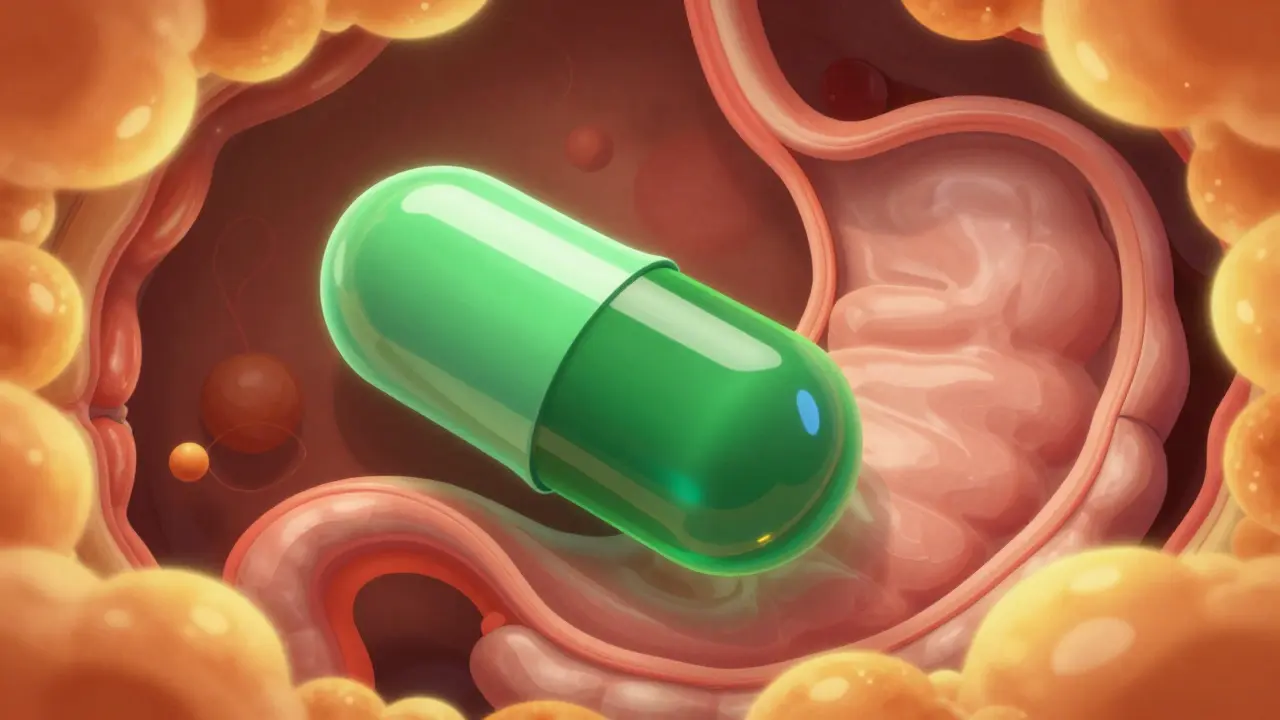
If you buy regular peppermint oil capsules or take liquid drops, you will likely experience heartburn so severe it outweighs any benefit. This is why Enteric Coating is a specialized polymer layer that prevents capsule dissolution in the acidic stomach environment.
Your stomach has a low pH (high acidity) to break down food. Peppermint oil relaxes the lower esophageal sphincter, the valve between your stomach and esophagus. If the oil releases in the stomach, it causes acid to splash back up, causing intense heartburn. Non-enteric coated forms have a 43% discontinuation rate due to this issue alone.
Enteric coating ensures the capsule remains intact until it passes through the stomach and enters the small intestine, where the pH is higher. There, the coating dissolves, releasing the oil directly where the spasms occur. Look for formulations using advanced delivery systems, such as the triple-coated microspheres found in brands like IBgard or the solid-state matrix technology used in other premium products. These technologies ensure consistent release and better efficacy rates.
Dosing Protocol and Timing
Getting the timing right is half the battle. Standard dosing protocols suggest taking 180-200 mg of enteric-coated peppermint oil three times daily. But when should you take them?
- Before Meals: Take the capsule 30 to 60 minutes before eating. This allows the oil to reach the small intestine just as food begins to trigger the gastrocolic reflex (the urge to poop), preemptively relaxing the muscles.
- Start Low: If you are new to peppermint oil, start with one capsule daily to assess tolerance. About 28% of new users experience initial mild heartburn even with enteric coatings, which often resolves with continued use.
- Taper Up: Gradually increase to the full dose of three capsules daily over two weeks.
Patient-led studies indicate that those who take capsules 20 minutes before meals report an 84% efficacy rate, compared to only 52% for those who take them with meals. Avoid taking them concurrently with proton pump inhibitors (PPIs) like omeprazole, as altering stomach pH can reduce the effectiveness of the enteric coating mechanism.
Effectiveness by IBS Subtype
Not all IBS is the same. Peppermint oil performs differently depending on whether you have constipation-predominant (IBS-C), diarrhea-predominant (IBS-D), or mixed (IBS-M) symptoms.
| IBS Subtype | Symptom Improvement Rate | Key Consideration |
|---|---|---|
| IBS-C (Constipation) | 68% | Highly effective for cramping and bloating associated with slow transit. |
| IBS-M (Mixed) | 68% | Balances muscle relaxation without significantly worsening either extreme. |
| IBS-D (Diarrhea) | 32% | Use with caution; may exacerbate loose stools in some patients. |
If you have IBS-D, be careful. While peppermint oil relieves pain, its muscle-relaxing properties can sometimes speed up intestinal transit, potentially worsening diarrhea. In head-to-head trials, peppermint oil was inferior to trimebutine (a prescription antispasmodic) for overall symptom control but still outperformed placebo. For IBS-C and IBS-M, however, it is often a top-tier choice.

Safety Profile and Side Effects
Like any therapeutic agent, peppermint oil has risks. Adverse events occur in approximately 11.4% of users, compared to 5.1% for placebo. The most common complaints include:
- Heartburn (7.3%): Usually mild and transient, often linked to non-enteric formulations or taking the pill too close to lying down.
- Nausea (2.1%): Can occur if the dose is too high initially.
- Perianal Burning (1.8%): Rare, but can happen if the coating fails and oil is excreted.
Long-term safety data is limited, with the longest published trials following patients for only 12 weeks. However, the 2023 IBS Safety Registry, which tracked over 12,000 patients, reported no serious adverse events attributable to peppermint oil over two years of observation. Always choose products that meet USP Verified Mark standards or European Pharmacopoeia requirements, ensuring the oil contains 50-65% menthol and less than 4% esters. In 2020, the FDA warned about non-standardized products containing pesticides, so quality control is essential.
Cost and Market Availability
Peppermint oil is generally more cost-effective than prescription alternatives. A 2021 analysis in the United European Gastroenterology Journal found that peppermint oil had an 89% probability of being cost-effective at standard willingness-to-pay thresholds. With an incremental cost-effectiveness ratio of €8,342 per QALY (Quality-Adjusted Life Year) gained, it offers excellent value.
In the US market, brands like IBgard® are widely available online and in pharmacies. In Europe, Colpermin® has been a staple since 1986. Generic enteric-coated capsules are also becoming more common. The global market for gastrointestinal peppermint oil was valued at $127.4 million in 2022, reflecting growing demand as IBS affects approximately 11% of the global population.
Frequently Asked Questions
Can I take peppermint oil with other IBS medications?
Generally, yes. Peppermint oil is often used alongside probiotics or fiber supplements. However, avoid taking it simultaneously with proton pump inhibitors (PPIs) like omeprazole, as PPIs alter stomach pH, which can interfere with the enteric coating's ability to protect the oil until it reaches the intestine. Always consult your gastroenterologist before combining therapies.
Why does peppermint oil cause heartburn?
Peppermint oil relaxes the lower esophageal sphincter, the muscle that keeps stomach acid from rising into the esophagus. If the oil is released in the stomach (due to lack of enteric coating), it triggers this relaxation, allowing acid to splash back up. Using enteric-coated capsules prevents this by ensuring the oil is released in the small intestine instead.
Is peppermint oil safe for long-term daily use?
Current data suggests it is safe for extended use. The 2023 IBS Safety Registry reported no serious adverse events over two years of observation in thousands of patients. However, because long-term trials beyond 12 weeks are limited, it is wise to periodically reassess your need for the supplement with your healthcare provider.
Does peppermint oil work for IBS-D (diarrhea)?
It is less effective for IBS-D. While it helps with abdominal pain, the muscle-relaxing effect can sometimes speed up gut motility, potentially worsening diarrhea. Patients with IBS-D should try it cautiously and monitor their bowel movements closely. Prescription antispasmodics like eluxadoline may be more suitable for this subtype.
How quickly does peppermint oil start working?
Many users report relief within 30 minutes of taking the capsule, especially if taken before a meal. However, finding your optimal dosage and timing may take 2 to 3 weeks. Most patients achieve stable symptom control by week 4 when following a structured protocol.