
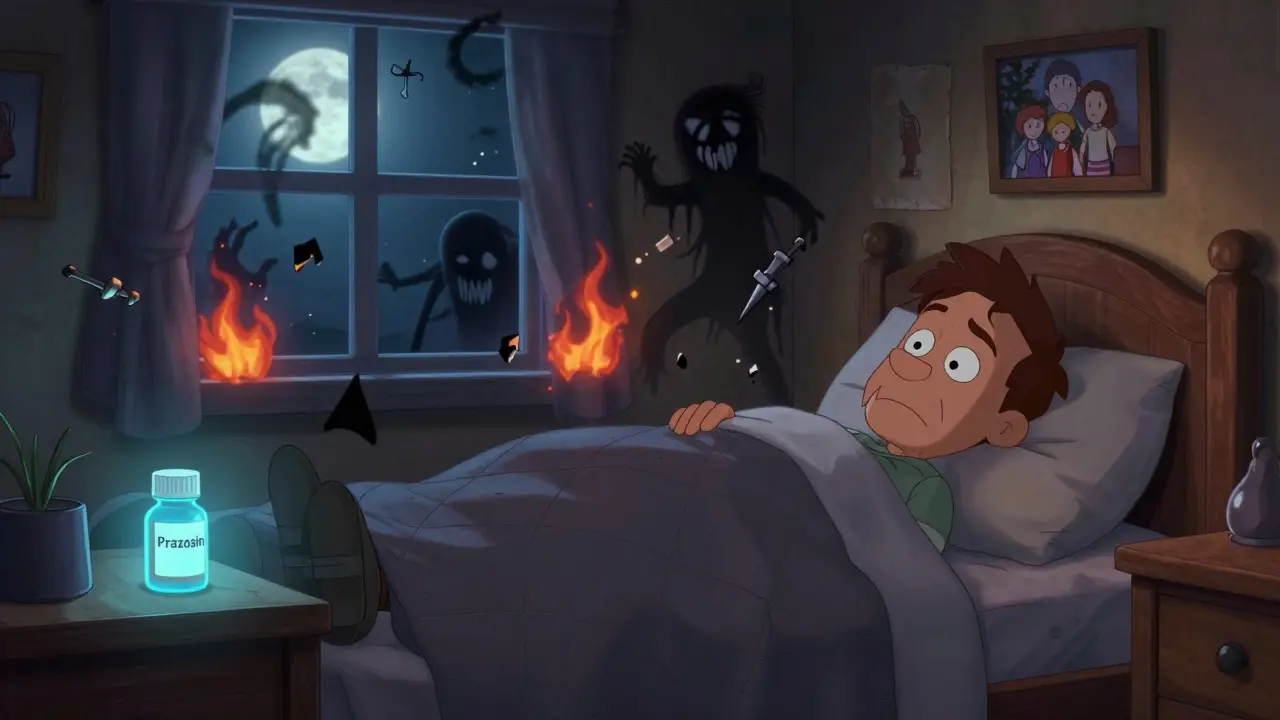
For many people living with PTSD, the worst part isn’t the memories-it’s what happens when they close their eyes at night. Nightmares don’t just disrupt sleep; they keep trauma alive. You wake up drenched in sweat, heart pounding, convinced you’re still in danger. And that cycle? It makes everything else harder-work, relationships, even getting out of bed in the morning.
Over 70% of veterans and more than half of civilian trauma survivors report frequent, terrifying nightmares. These aren’t ordinary bad dreams. They’re replayed trauma, often exact copies of the original event. And for years, doctors have been trying to break that cycle. Two main paths have emerged: medication, especially prazosin, and sleep-focused therapies like CBT-I and IRT. But which actually works? And why do some people get relief while others don’t?
What Is Prazosin, and Why Do People Take It for PTSD?
Prazosin was never meant to treat PTSD. It was developed in the 1970s as a blood pressure drug. But in 2003, a VA psychiatrist named Dr. Murray Raskind noticed something strange: veterans on prazosin for hypertension were sleeping better. Their nightmares? They faded.
Turns out, prazosin blocks alpha-1 receptors in the brain-part of the system that keeps your body on high alert. In PTSD, that system stays stuck in "fight or flight" mode, even at night. Prazosin doesn’t erase trauma. It quiets the body’s panic response during REM sleep, when nightmares usually happen.
Dosing is simple but tricky. Most people start at 1 mg at bedtime. If there are no side effects, the dose goes up by 1 mg each week, usually topping out between 6 and 15 mg. Some need up to 25 mg, but that’s rare. The goal? Take it 60 to 90 minutes before bed, so it’s at peak level when nightmares are most likely.
But here’s the catch: prazosin isn’t FDA-approved for PTSD nightmares. Not even close. The FDA rejected its approval in 2021 because results across trials were mixed. Some studies showed big improvements. Others? Barely any. Why? Because many trials didn’t screen for nightmare severity. If someone only had nightmares once a week, prazosin looked useless. But if they had them every night? The difference was clear.
Real-world data from the VA tells another story. In 2022, 42% of veterans with PTSD were prescribed prazosin-up from 29% just seven years earlier. Why? Because it’s accessible. You don’t need a therapist. You don’t need to talk about trauma. You just need a prescription.
The Real Effectiveness of Prazosin
Let’s cut through the noise. Does prazosin work? Yes-but not for everyone.
A 2022 meta-analysis of 15 clinical trials found prazosin reduced nightmare frequency by about 30-50% in people with severe, nightly nightmares. That’s meaningful. But it had almost no effect on overall PTSD symptoms like hypervigilance, anger, or emotional numbness. It only helped sleep.
Side effects are common. About 44% of users report dizziness, especially when standing up. Nasal congestion? 18%. Low blood pressure? 15%. That’s why doctors check blood pressure before and during treatment. If you’re already on blood pressure meds, prazosin can drop it too far.
And then there’s rebound. When people stop prazosin suddenly, nightmares often come back worse than before. One VA adverse event report found 28% of users experienced this. That’s why tapering off slowly-over weeks-is critical.
On Reddit’s r/PTSD community, 62% of 147 users said prazosin reduced nightmares. 38% said they stopped having them entirely. But 44% also said the side effects made them want to quit. It’s a trade-off: better sleep, but at a cost.
Why Sleep Therapies Are Changing the Game
If prazosin is a bandaid, sleep therapies are the surgery.
The gold standard is Cognitive Behavioral Therapy for Insomnia, or CBT-I. It’s not about sleeping pills. It’s about fixing the habits and thoughts that keep you awake. A typical CBT-I program lasts 6 to 8 weeks, with one 60-minute session per week. It includes:
- Stimulus control: Get out of bed if you’re not asleep after 20 minutes. Reassociate your bed with sleep, not anxiety.
- Sleep restriction: Limit time in bed to how much you actually sleep. Yes, that means only 5 hours if you’re sleeping 5 hours. It sounds brutal, but it builds sleep pressure.
- Cognitive restructuring: Challenge thoughts like "I’ll never sleep again" or "If I don’t sleep, I’ll die." These aren’t true-but they’re running the show.
- Sleep hygiene: No screens before bed. Keep the room cool and dark. No caffeine after noon.
- Relaxation techniques: Breathing, muscle relaxation, mindfulness.
Studies show CBT-I cuts insomnia severity by 60-70%. For PTSD patients, it also reduces overall symptoms. One 2021 review found it lowered PTSD severity by 0.62 standard deviations-bigger than any medication.
And the results stick. VA surveys show 71% of patients reported better sleep after CBT-I. At six months? 63% were still doing better. That’s long-term change.
Imagery Rehearsal Therapy: Rewriting Nightmares
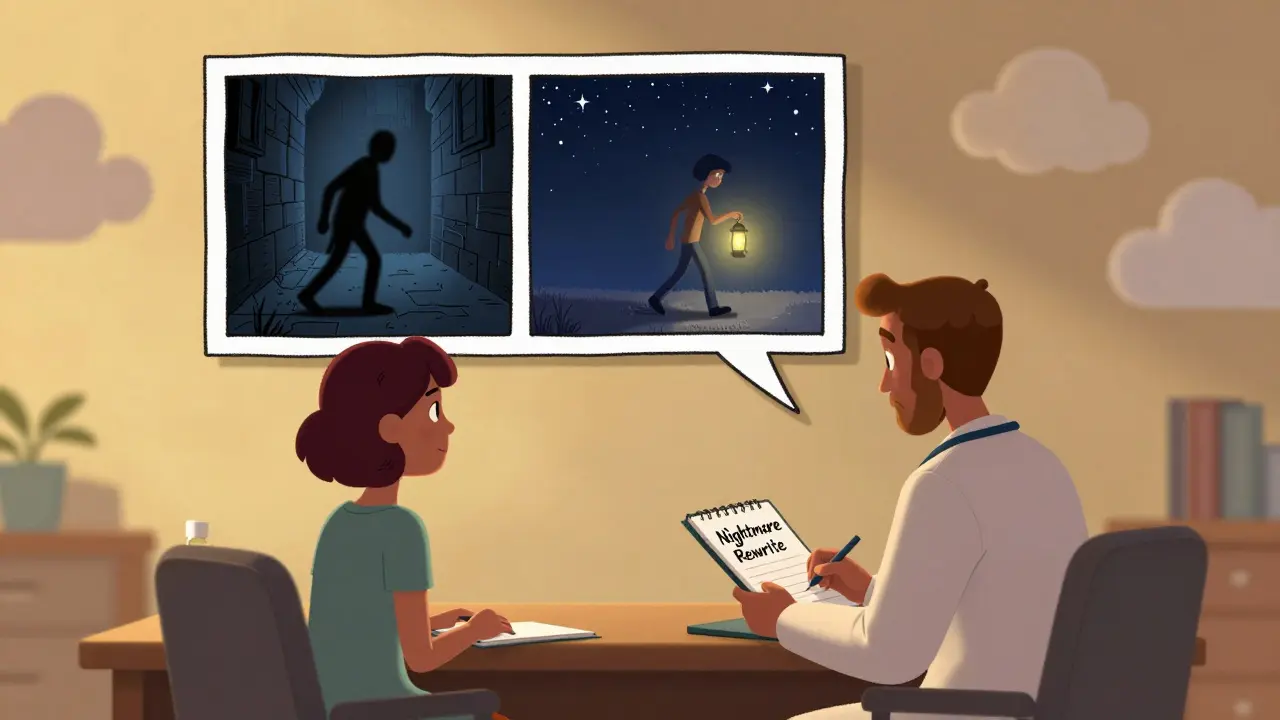
Then there’s Imagery Rehearsal Therapy (IRT). It’s simple in concept, powerful in practice.
Patients pick one recurring nightmare. They write it down exactly as it happened. Then they rewrite it-change the ending. Make it calm. Make it safe. Maybe the attacker leaves. Maybe they escape. Maybe they wake up before the danger starts.
Then they rehearse the new version for 10-15 minutes every day. Not just once. Every day. For weeks.
Why? Because nightmares are learned. Your brain keeps replaying the same script. IRT teaches it a new one.
Studies show 67-90% of PTSD patients reduce nightmare frequency by at least half. In one National Center for PTSD survey, 85% said IRT reduced nightmare distress. That’s huge.
And unlike prazosin, IRT has no side effects. No dizziness. No crashes. Just work. And that work? It builds control. You’re not waiting for a pill. You’re rewriting your own story.
What Works Best? Prazosin vs. CBT-I vs. IRT
Let’s compare them head-to-head.
| Treatment | Effect on Nightmares | Effect on Overall PTSD | Side Effects | Long-Term Benefits |
|---|---|---|---|---|
| Prazosin | Modest (30-50% reduction) | Minimal (less than 10%) | Dizziness, low BP, rebound nightmares | Only while taking it |
| CBT-I | Strong (50-70% reduction) | Significant (25-40% reduction) | Initial sleep disruption | Lasts years |
| IRT | Very strong (67-90% reduction) | Moderate (20-30% reduction) | None | Long-lasting |
Here’s what the data says: if you want to fix sleep and reduce PTSD symptoms together, CBT-I wins. If you want quick, no-talk relief, prazosin helps. If you want to take back control of your dreams, IRT is unmatched.
And here’s the kicker: combining them works even better. One VA study found patients who got CBT-I along with Prolonged Exposure therapy improved 3 times more than those who got only exposure therapy. Sleep efficiency jumped 15.3%. Total sleep time? Up by 78 minutes.
Why Isn’t Everyone Getting This Care?
Here’s the ugly truth: access is broken.
The VA has rolled out CBT-I in 143 facilities. Over 86,000 veterans get it yearly. Completion rates? 74%. That’s impressive. But outside the VA? Only 32% of PTSD patients get evidence-based therapy. Why? Because there aren’t enough trained therapists.
Only 412 clinicians in the U.S. are certified in CBT-I. Insurance often limits sessions to 6-even though 8 are needed. Rural veterans? 47% less likely to get access than urban ones.
Prazosin? Easy to prescribe. Cheap. Generic. But it’s not a cure. It’s a stopgap.
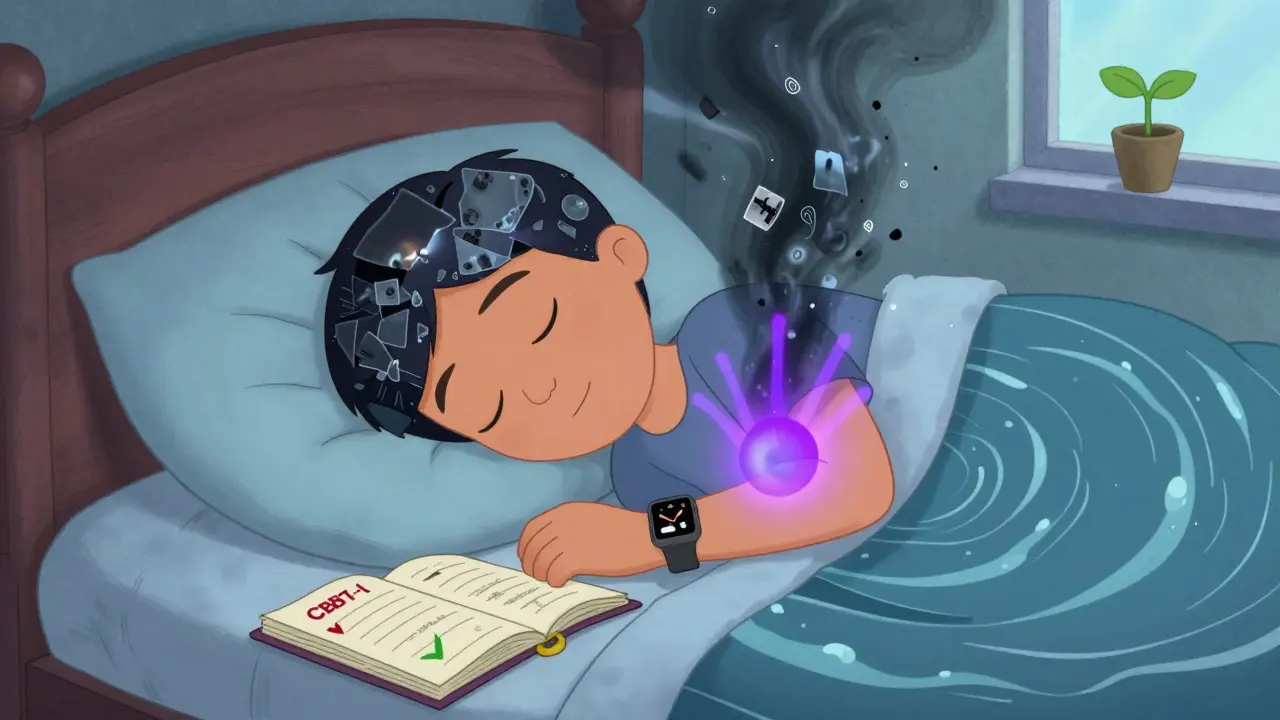
And then there’s NightWare. This FDA-approved app uses an Apple Watch to detect when you’re having a nightmare-based on heart rate and movement. Then it gives a tiny vibration to gently interrupt REM sleep-without waking you. In trials, it cut nightmares by 58%. It’s not perfect. But for people who can’t get therapy? It’s a lifeline.
What Should You Do?
If you’re struggling with PTSD nightmares, here’s what to try:
- Start with a sleep diary. Track nightmares for two weeks. Note frequency, intensity, time of night. This helps your doctor.
- Ask about CBT-I. If you’re in the VA system, request it. If you’re outside, ask your therapist if they offer it. If not, find a certified provider through the Society of Behavioral Sleep Medicine.
- Try IRT. You can do it yourself. Write your nightmare. Rewrite it. Rehearse it daily. There are free guides online.
- If therapy isn’t an option, ask about prazosin. But be honest with your doctor about side effects. Don’t quit suddenly. Taper slowly.
- Consider NightWare. If you have an Apple Watch and can’t access therapy, it’s one of the few FDA-approved options.
There’s no one-size-fits-all. But there is hope. Sleep isn’t just a symptom of PTSD. It’s a doorway out.
What’s Next?
The field is moving fast. The Department of Defense just funded $28 million to test CBT-I combined with virtual reality exposure. New studies are testing higher prazosin doses. Apps are getting smarter. And clinicians? They’re finally starting to treat sleep as a core part of PTSD-not an afterthought.
By 2027, experts predict 92% of PTSD treatment guidelines will require sleep screening. That’s progress. But right now, the best treatment is the one you can actually get.
Can prazosin cure PTSD nightmares permanently?
No. Prazosin helps reduce nightmares while you’re taking it, but it doesn’t change the underlying trauma. Once you stop, nightmares often return-especially if you stop suddenly. It’s a tool for symptom relief, not a cure.
Is CBT-I only for veterans?
No. CBT-I works for anyone with PTSD-related insomnia, including survivors of abuse, accidents, or natural disasters. The therapy doesn’t focus on the trauma itself-it focuses on sleep habits. That makes it safe and effective for civilians too.
Can I do IRT on my own?
Yes. IRT doesn’t require a therapist. You can write your nightmare, change the ending, and rehearse it daily. Many free guides and worksheets are available online. It’s simple, free, and has strong evidence behind it.
Why hasn’t the FDA approved prazosin for PTSD nightmares?
Because clinical trials showed inconsistent results. Some studies found big benefits. Others found little to none. The FDA requires consistent, strong evidence across multiple trials. Until then, prazosin remains an off-label option.
What’s the best way to start treatment?
Start with a sleep diary to track your nightmares. Then talk to your doctor or therapist. If you can access CBT-I or IRT, start there. If not, prazosin is a reasonable short-term option. The goal is to reduce nightmares enough so you can then tackle the trauma itself.
PTSD nightmares don’t have to be your life. There are tools. There are paths. And you don’t have to walk them alone.



One comment
I swear, prazosin was a game-changer for me. Not perfect-dizzy as hell when I stood up too fast-but after 3 years of waking up screaming, I finally slept through the night. Didn't fix my trauma, but it gave me the breathing room to start therapy. That's worth more than I can say.
Now I do IRT daily. Rewrite the nightmare, make the monster turn into a confused squirrel. It sounds dumb, but your brain listens to repetition. And yeah, I still do it. Even when I'm not having nightmares. Just in case.
This whole post reads like a pharmaceutical ad disguised as medical advice. Prazosin is a blood pressure drug repurposed because someone noticed a correlation. Correlation ≠ causation. And now we're prescribing it like it's vitamin D? The VA's data is cherry-picked. They didn't control for concurrent therapy. And CBT-I? Only works if you have 8 weeks of free time and a therapist who isn't burnt out. This isn't science. It's hope marketing.
i read this whole thing and i think i need to try irt. i dont even have a therapist but i wrote down my nightmare last night. it was the same one i’ve had since 2018. so i changed it. now in my version, i just wave at the guy with the gun and he says ‘hey man, you okay?’ and walks away. weird. but i rehearsed it before bed. fingers crossed.
Let’s get real. Prazosin works for some, but it’s not magic. And CBT-I? It’s brutal. Sleep restriction? Only 5 hours in bed? I tried it. First week I was a zombie. But by week 4? I slept 7 hours straight for the first time in 12 years. No meds. No side effects. Just discipline. And IRT? That’s the secret weapon. You’re not just treating symptoms-you’re rewriting your subconscious script. It’s like cognitive hacking. And yeah, it’s work. But so is surviving.
you people are so naive. prazosin is just a bandaid that makes you feel better while your trauma festers. and cbt-i? it's expensive, time-consuming, and requires you to be functional enough to show up. most of us aren't. we're barely holding it together. irt sounds cute but what if your nightmare is too raw to rewrite? what if you can't even say the words out loud? the real issue isn't the treatment-it's the system that makes you choose between a pill and a 6-month waiting list. and don't get me started on nightware. apple watch for trauma? that's a luxury for people who can afford to own a watch that costs more than their rent.
I mean, I love that you're talking about this, but… have you considered that maybe nightmares aren't the problem? Maybe they're the body's way of forcing you to face what you've buried? Maybe the real cure isn't stopping them-but learning to listen?
I did IRT for 6 weeks and now I have a dream where I’m sipping tea on a beach while my attacker gets chased by a giant goose. I cry every time I think about it. Not from sadness. From relief. It’s not just a trick. It’s a revolution. And if you’re thinking ‘I can’t do this’-you can. I couldn’t write a sentence in 2020. Now I’m rewriting my nightmares like a damn poet. You got this.
For anyone reading this and thinking ‘I can’t afford therapy’-you’re not alone. I did IRT on my own using free PDFs from the VA website. Took me 3 months. No therapist. Just me, a notebook, and a stubborn refusal to let fear win. You don’t need permission. You just need to start. Even if it’s just rewriting one sentence a day. That’s how you take back your mind. One dream at a time.
This whole thing is so performative. You’re all acting like PTSD is just a sleep problem. It’s not. It’s a life-altering injury. And now we’re giving people a pill and a bedtime story and calling it a day? What about the rage? The dissociation? The shame? Nobody talks about that. Prazosin doesn’t fix the fact that I still flinch when someone slams a door. And IRT? It’s cute. But it’s not healing. It’s distraction.
this is a joke right? prazosin? i mean its a blood pressure med. why not just give them benzos? at least those make you chill. and cbt-i? sounds like a cult. i did a 3 day online course and i still wake up screaming. so yeah. no. this post is just making people feel good while they keep suffering. i know. i’ve been there.
I want to say thank you to whoever wrote this. Not just for the info, but for the tone. No sugarcoating. No jargon. Just real talk. I’ve been on prazosin for 18 months. Side effects? Yeah. Dizziness. But I sleep. And I finally started IRT last month. I rewrote my nightmare so the kid in it-me, age 8-gets to hug me. I do it every night. I cry. But I sleep. And I’m starting to believe I’m not broken. Just wounded. And wounds heal. Slowly.
I tried prazosin. Didn't work. Then I did CBT-I. The sleep restriction part almost broke me. But now? I sleep 7 hours. No pills. No watch. Just me and a consistent routine. And IRT? I tried it. Didn't stick. But I didn't quit. I just kept showing up. That's the real secret. Not the treatment. The consistency. Show up. Even when it hurts. Even when you don't believe it works. Just show up.
Prazosin: makes you sleepy. CBT-I: makes you tired. IRT: makes you feel like a wizard. 🧙♂️💤
The real answer? There isn't one. There's just what works today. And tomorrow? You try something else. That's not failure. That's adaptation. We're not fixing PTSD. We're learning to live with it. One weird, messy, non-linear step at a time.