
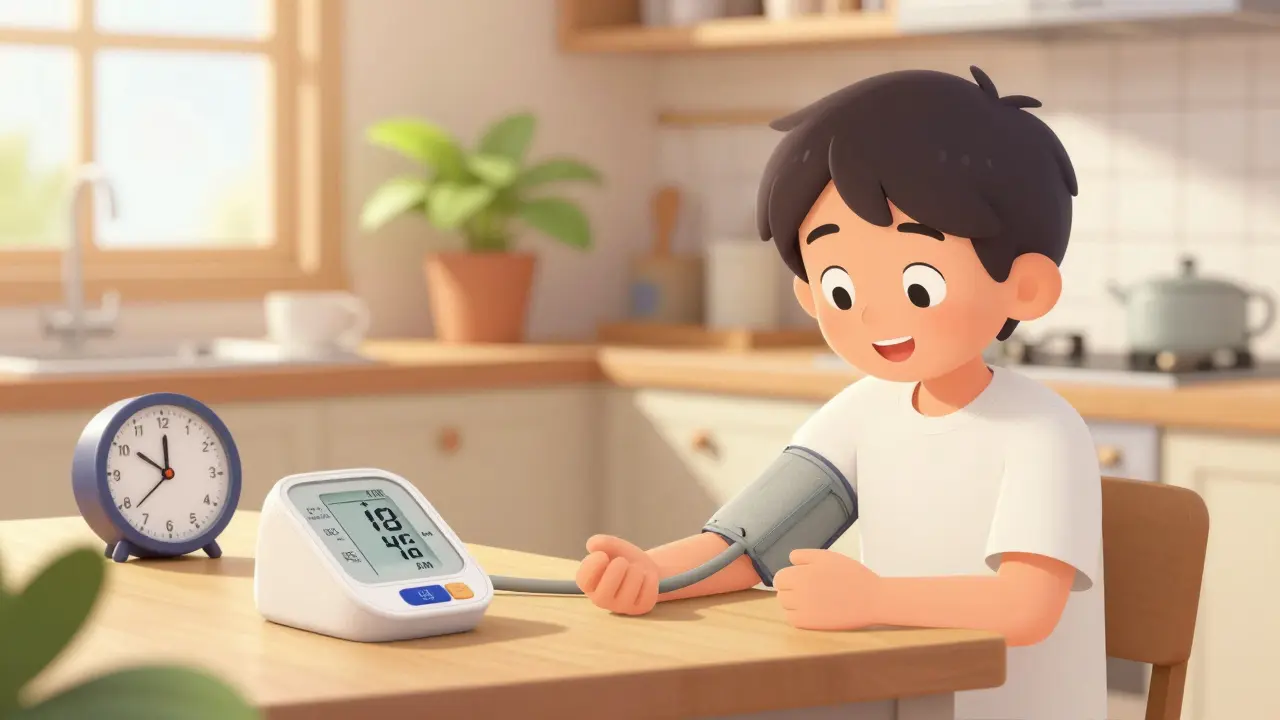
Why Timing Matters for Your Medication
Medication adherence is defined as taking medicine exactly as prescribed by a healthcare provider, including correct dosage, timing, and administration method. This isn't just a technical term-it's the difference between getting better and facing serious health risks. Skipping even one dose might seem harmless, but for many conditions, it can lead to dangerous complications. Imagine you've been taking your blood pressure medication for weeks. You feel great, so you skip a dose. A few days later, you end up in the hospital. It sounds extreme, but it happens more often than you think.
Medication timing isn't about arbitrary rules. It's about keeping drug levels in your bloodstream within a safe and effective range. For example, antibiotics need consistent dosing to fully kill bacteria. If you stop early, surviving bacteria can become resistant. This isn't just a theory-it's a real-world problem. The Centers for Disease Control and Prevention warns that antibiotic resistance is one of the biggest threats to global health, and skipping doses is a major contributor.
What Happens When You Skip a Dose?
Let's look at real examples. If you're taking antibiotics for an infection like pneumonia, missing doses lets some bacteria survive. These survivors can develop resistance, making future infections harder to treat. The Centers for Disease Control and Prevention reports that antibiotic resistance causes over 2.8 million infections and 35,000 deaths in the U.S. each year. Skipping doses directly fuels this crisis.
For hypertension medications, skipping doses causes dangerous blood pressure spikes. The American Heart Association explains that high blood pressure damages arteries silently. Consistent medication use prevents this damage. But if you skip doses, your blood pressure can fluctuate wildly, increasing your risk of heart attack or stroke. In fact, studies show that up to 50% of people with high blood pressure don't take their medication as prescribed, leading to preventable complications.
Take warfarin, a blood thinner. It requires precise timing and regular blood tests. Skipping a dose or taking it at inconsistent times can cause dangerous clotting or bleeding. The FDA has issued warnings about the risks of inconsistent warfarin dosing, emphasizing that even small deviations can have life-threatening consequences.
Diabetes medications also need careful timing. For example, insulin must be taken with meals to prevent low blood sugar. Skipping a dose or taking it at the wrong time can lead to dangerous hypoglycemia, requiring emergency treatment. The CDC notes that nearly 35 million Americans have diabetes, and medication timing errors are a leading cause of hospitalizations for this condition.

How Timing Affects Different Medications
| Medication Type | Timing Requirements | Risks of Skipping |
|---|---|---|
| Antibiotics | Complete full course even after symptoms improve | Antibiotic resistance, recurrent infection |
| Anticoagulants (e.g., warfarin) | Consistent daily dosing with regular INR monitoring | Clotting or bleeding events |
| Hypertension medications | Daily consistency to maintain steady blood pressure | Blood pressure spikes, heart attack or stroke risk |
| Diabetes medications | Align with meals to prevent blood sugar swings | Severe hypoglycemia or hyperglycemia |
| Immunosuppressants (post-transplant) | Strict schedule to prevent organ rejection | Organ rejection requiring emergency treatment |
Common Barriers to Adherence and Solutions
So why do people skip doses? Common reasons include forgetfulness, misunderstanding instructions, fear of side effects, or cost issues. A study in the Annals of Internal Medicine found that each additional daily dose decreases adherence by 16%. For someone taking five pills a day, that's a huge challenge.
But there are practical solutions. Pill organizers are simple tools that can make a big difference. They let you sort pills by day and time, so you know exactly what to take. Many pharmacies, like those covered by EmblemHealth, offer free pill organizers to patients.
Another effective strategy is the teach-back method. After a doctor explains your medication schedule, you repeat it back to them. This confirms you understand the instructions. Research in Public Health Reports shows this reduces misunderstandings by up to 30%.
For forgetfulness, smartphone alarms work well. Set a reminder for each dose. Pairing medication with an existing habit-like taking it with your morning coffee or after brushing your teeth-also builds a reliable routine. Many patients find this easier than trying to remember a separate schedule.
Cost is another barrier. If you can't afford your medication, talk to your pharmacist. They can often suggest lower-cost alternatives or connect you with assistance programs. The FDA and CDC have resources to help patients access affordable medications.

Practical Tips to Stay on Track
Here are a few more actionable tips:
- Keep a medication log. Write down each dose you take. This helps you spot patterns and catch missed doses early.
- Use a medication app. Many free apps track doses and send reminders. Some even sync with your pharmacy for refills.
- Ask your pharmacist for help. Medication therapy management services review all your prescriptions to simplify your regimen and catch timing conflicts.
- Involve family members. Having someone else remind you can be a lifesaver, especially for older adults.
- Don't stop taking medication just because you feel better. For chronic conditions like hypertension, symptoms often disappear when the medication is working. Stopping can cause relapse.
Frequently Asked Questions
What should I do if I miss a dose?
Don't panic. Check the medication label or ask your pharmacist for specific instructions. For most medications, if you realize you missed a dose soon after the scheduled time, take it right away. If it's close to the next dose, skip the missed one and continue as normal. Never double up on doses unless instructed by your healthcare provider. For critical medications like blood thinners or insulin, contact your doctor immediately for guidance.
Can I take my medication with food?
It depends on the medication. Some drugs need to be taken on an empty stomach for proper absorption, while others should be taken with food to reduce stomach upset. The FDA requires clear labeling for this information. For example, antibiotics like amoxicillin can often be taken with food, but tetracycline must be taken on an empty stomach. Always check the label or ask your pharmacist before deciding.
Why do some medications need to be taken at specific times of day?
Timing matters because your body's natural rhythms affect how medications work. For instance, blood pressure medications are often taken in the morning to match natural blood pressure patterns. Corticosteroids for autoimmune conditions are usually taken in the morning to mimic the body's natural cortisol production. Taking medications at the right time ensures maximum effectiveness and minimizes side effects. Your healthcare provider tailors timing based on your specific condition and medication.
How can I tell if I'm taking my medication correctly?
Regular check-ins with your healthcare team are key. For chronic conditions like hypertension or diabetes, your doctor will monitor your progress through blood tests or measurements. If your condition is stable or improving, you're likely on track. If you're unsure, ask for a medication review. Pharmacists can also verify your regimen during refill appointments. Remember, feeling better isn't always a sign you're taking it right-some conditions like high blood pressure have no symptoms when controlled.
Are there tools to help me remember to take my meds?
Yes! Simple tools like pill organizers with daily compartments can help. Many pharmacies offer free ones. Smartphone alarms are another easy option-set them for each dose time. Some advanced pill bottles have electronic reminders that beep when it's time to take medication. For complex regimens, medication management apps like Medisafe or MyMedSchedule provide dose tracking and refill alerts. These tools are designed to fit into your daily life without adding extra stress.


One comment
Skipping meds is dangerous. Period. No excuses. If you don't take it right you're putting yourself and others at risk. This is why we need discipline. No weak excuses. Just take your damn pills on time. It's simple. Don't be lazy. This is about survival. No room for error.
I agree this is serious but let's work together. We need better education on meds. Maybe community programs. Also, pharmacists should help more. Let's support each other. No one should face this alone. We can fix this if we collaborate.
Hey just saying... this is why we need to be carefull. Antibiotic resistence is no joke. But hey maybe we should all just take it easy 😅 Also typo here: 'dose' not 'dose'... wait no. Anyway stay safe.
Interesting. I guess some people just don't care about their health. Skipping doses... it's their choice I guess. But I'm sure they'll figure it out eventually. Or not. Who knows? Maybe they'll learn the hard way. But I'm not here to judge. Just saying.
It is imperative to adhere to prescribed medication schedules. Cultural understanding plays a role in adherence; thus healthcare providers must tailor communication to diverse populations. Education must be accessible and empathetic. We must address systemic barriers. This is a global issue requiring collective action. Let us work together for better health outcomes.
Hey everyone! Taking meds on time is a game-changer. You got this! 💪 Small steps make a big difference. Stay consistent and you'll see results. Let's crush it!
Ritu you're absolutely right about cultural factors. I've seen how language barriers and mistrust in healthcare systems affect adherence. For example in some communities traditional healers are preferred over Western medicine which can lead to conflicts in treatment. But with proper education and culturally sensitive approaches we can bridge that gap. It's not just about the medication; it's about trust and understanding. We need more community health workers who speak the language and respect cultural practices. This way patients feel heard and supported which improves compliance. It's a holistic approach that addresses both medical and social needs. This is why inclusive healthcare is so important. It's not just about prescribing pills; it's about creating a supportive environment where people feel empowered to take control of their health. Every small step towards understanding makes a difference.
Skipping doses is dangerous.
I've been on meds for years. Skipping doses? Bad idea. Trust me. I've seen the consequences. Just take it on time. No big deal.
Take your meds on time! youll feel better. Simple as that. 😊 Set a reminder. It's worth it. You got this! 💕
This is why our country needs better healthcare. Skipping doses is a sign of weakness. We must be disciplined. No excuses. It's about survival. Period.
Hey I know its hard to remember. But maybe set a reminder Its worth it 🤔 Also talk to your pharmacist They can help Were all in this together.
As an expert I must say: taking meds on time is crucial. But you know what? I'm here to help you. 😎 Its all about discipline. Also check out my website for more tips. Seriously you need to read this. I've got all the answers. Trust me. 😎