
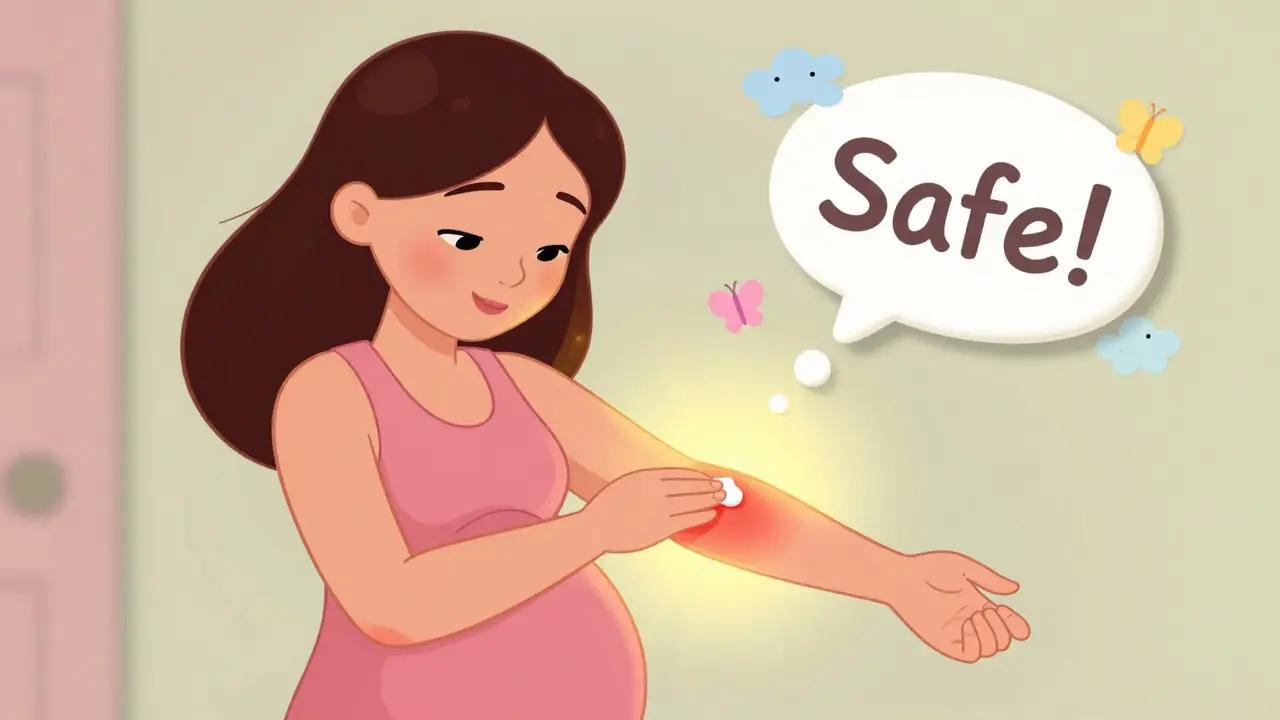
When you’re pregnant, even the smallest decision about what you put on your skin can feel huge. That itchy rash? The breakout on your forehead? The dark patches on your cheeks? You want relief-but you’re terrified of doing something that might hurt your baby. The good news: most topical medications during pregnancy are far safer than you think. Your skin isn’t a sponge. It doesn’t let everything in. But not all creams are created equal. Some are fine. Some you should avoid. And some? You need to talk to your doctor before even touching the tube.
Why Topical Creams Are Usually Safer Than Pills
When you swallow a pill, it goes into your bloodstream and travels everywhere-including your baby. Topical creams? Most of them stay right where you put them. Studies show that only 1% to 10% of the active ingredient gets absorbed into your blood, depending on the cream, how much you use, and where you apply it. That’s why doctors often recommend topical treatments first for skin issues during pregnancy. Less system-wide exposure means less risk to your baby. But here’s the catch: that doesn’t mean everything on your skin is harmless. Some ingredients still cross the barrier in enough amounts to matter. And some? Even tiny amounts could be dangerous. So you can’t just assume “it’s on the skin, so it’s safe.” You need to know which ones are truly low-risk.Safe Topical Treatments for Common Pregnancy Skin Problems
Many skin conditions flare up during pregnancy-eczema, acne, fungal infections, even melasma (that “pregnancy mask”). The good news? There are safe, effective options for each.- For eczema and rashes: Low-potency hydrocortisone cream (1%) is widely recommended. It’s been used for decades in pregnant women with no proven link to birth defects. Avoid stronger steroids unless your doctor says it’s necessary-and even then, use it for the shortest time possible. Apply it only where needed, not all over.
- For acne: Benzoyl peroxide (5-10%) is considered safe. It doesn’t absorb much into your blood. Topical clindamycin and erythromycin are also first-line choices. Studies show less than 5% gets absorbed, and serum levels stay far below any dangerous range. Avoid retinoids like tretinoin, adapalene, or tazarotene. Even though they’re topical, case reports link them to rare birth defects, so the advice is clear: don’t use them.
- For fungal infections (like yeast infections or athlete’s foot): Clotrimazole, miconazole, and nystatin are safe. These are the go-to antifungals recommended by the European Academy of Dermatology. Avoid econazole in the first trimester, and don’t use terbinafine or naftifine unless your doctor approves it.
- For melasma (dark patches): Azelaic acid (15-20%) is a top pick. It’s Category B, meaning animal studies show no risk, and it’s been used safely by thousands of pregnant women. Many report visible improvement without side effects.
- For cold sores: Acyclovir cream is safe. It’s been studied extensively and shows almost no absorption. You can use it as directed without worry.
Topical Medications to Avoid During Pregnancy
Some creams sound harmless-but they’re not. These are the ones to keep off your skin entirely:- Topical retinoids: This includes tretinoin (Retin-A), adapalene (Differin), and tazarotene. Even though they’re applied to the skin, they’re chemically related to vitamin A, which is known to cause serious birth defects when taken orally. Case reports exist of babies born with malformations after mothers used these during early pregnancy. The American College of Obstetricians and Gynecologists (ACOG) says to stop using them before you even try to conceive.
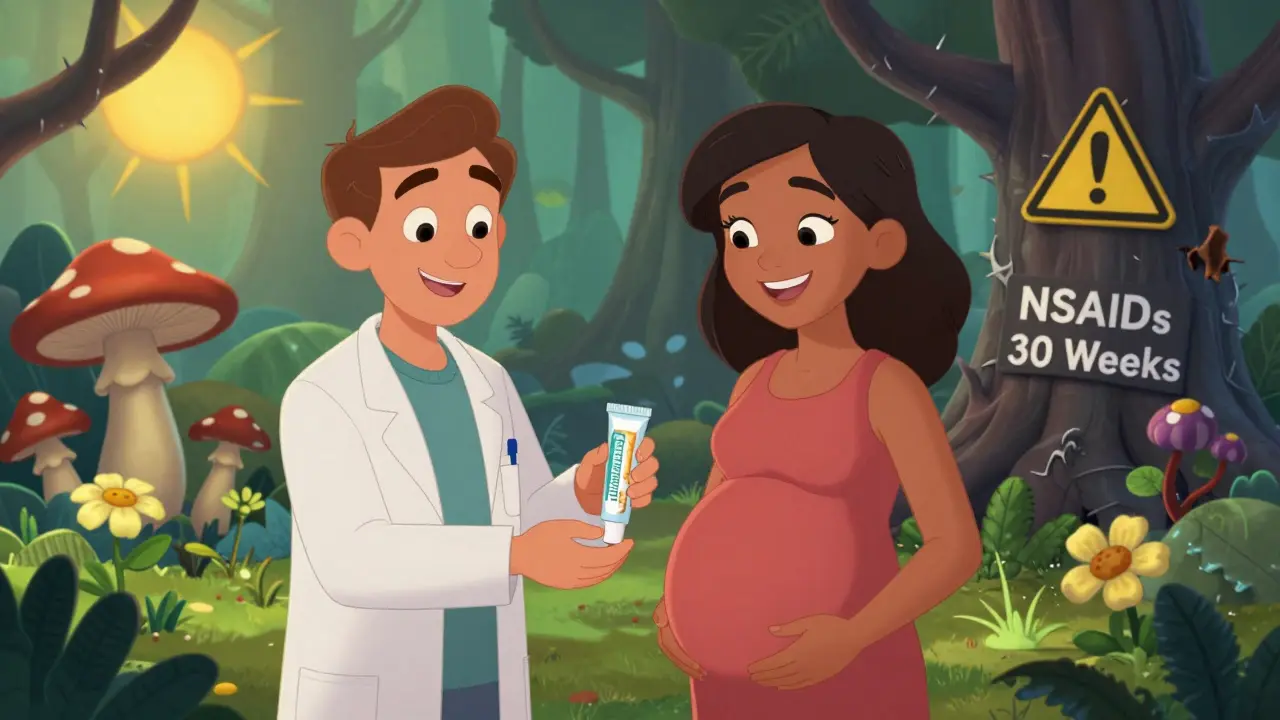
- Topical NSAIDs: Diclofenac gel, ibuprofen cream, ketoprofen patches. These might seem like harmless pain relievers, but they can affect your baby’s heart. After 30 weeks, they can cause the ductus arteriosus-a vital blood vessel-to close too early. This can lead to serious heart problems in the newborn. Avoid them after 30 weeks, and even before then, use only if your doctor says it’s absolutely necessary.
- Podofilox and podophyllin: Used for genital warts. These are highly toxic and can be absorbed in significant amounts. They’re linked to fetal death and severe birth defects. Never use them during pregnancy.
- Salicylic acid in high concentrations: Low-dose salicylic acid (under 2%) in acne toners or cleansers is generally okay. But avoid peels, high-strength treatments, or using it over large areas. High doses are related to the same risks as oral aspirin, including bleeding complications and low birth weight.

What About Corticosteroids? Potency Matters
Not all steroid creams are the same. The amount your skin absorbs depends on where you put it. Your forearm? Only about 1% gets in. But your face, eyelids, neck, armpits, or groin? That’s a different story. Those areas absorb more-sometimes up to 10 times more. That’s why doctors recommend:- Use mild or moderate steroids (like hydrocortisone 1%) for most areas.
- Only use potent steroids (like clobetasol or betamethasone) for short periods on small areas, and only if absolutely needed.
- Avoid using potent steroids on large areas or for more than 2 weeks without supervision.
- Studies link very high cumulative doses of potent steroids to lower birth weight. It’s rare-but it happens.
Over-the-Counter Products: Just Because It’s “Natural” Doesn’t Mean It’s Safe
You might be tempted to reach for “natural” or “organic” creams. But “natural” doesn’t mean safe during pregnancy. Some essential oils, herbal extracts, and plant-based ingredients can be absorbed and affect fetal development. Tea tree oil, for example, has estrogen-like effects in lab studies. Lavender and chamomile? Limited data. Better to stick with well-studied, over-the-counter options like hydrocortisone or benzoyl peroxide. Also, watch out for hidden ingredients. Some moisturizers, sunscreens, and cleansers contain retinol (a form of retinoid) or salicylic acid. Always check the label. If you’re unsure, skip it.What If You Used Something Unsafe Before Knowing You Were Pregnant?
This happens more often than you think. A woman uses her acne cream, then finds out she’s pregnant. Panic sets in. But here’s the truth: most of the time, the risk is extremely low. For example:- If you used a small amount of tretinoin cream in the first 4 weeks of pregnancy-before you even knew you were pregnant-the chance of harm is tiny. Studies show no consistent pattern of birth defects from accidental exposure.
- If you used hydrocortisone for a rash? No problem.
- If you used a topical NSAID after 30 weeks? Talk to your doctor. They may want to check your baby’s heart with an ultrasound.
How to Use Topical Products Safely
Even safe products can cause problems if misused. Here’s how to use them wisely:- Use the smallest amount possible. A pea-sized dab covers a palm-sized area.
- Apply only where needed. Don’t spread it over your whole body.
- Wash your hands after applying.
- Avoid using on broken or raw skin-it increases absorption.
- Don’t use under occlusive dressings (like plastic wrap) unless your doctor says so.
- Check the expiration date. Old creams can degrade and become less safe.
When to Call Your Doctor
You don’t need to stress about every little thing-but you should call if:- You used a product you weren’t sure about, especially a retinoid or NSAID.
- Your skin condition isn’t improving after 1-2 weeks of using a safe cream.
- You develop a rash, swelling, or burning after applying a cream.
- You’re considering a new product and can’t find clear safety info on the label.
Final Thoughts: You Can Take Care of Your Skin-Safely
Pregnancy doesn’t mean you have to suffer through rashes, acne, or fungal infections. You have options. Most topical treatments are safe. You just need to know which ones. Stick with the well-studied: hydrocortisone, benzoyl peroxide, azelaic acid, clotrimazole, and acyclovir. Avoid retinoids, strong steroids, NSAIDs after 30 weeks, and anything with “retinol” or “tretinoin” on the label. When in doubt? Read the label. Ask your pharmacist. Call a pregnancy hotline. Your baby’s safety matters-but so does your peace of mind. You don’t have to choose between comfort and safety. You can have both.Is hydrocortisone cream safe during pregnancy?
Yes, low-potency hydrocortisone cream (1%) is considered safe for short-term use during pregnancy. It’s commonly recommended for eczema, rashes, and itching. Use only as needed, on small areas, and avoid long-term use on sensitive skin like the face or groin. Stronger steroid creams should only be used under medical supervision.
Can I use benzoyl peroxide for acne while pregnant?
Yes, benzoyl peroxide is safe during pregnancy. It has very low skin absorption-less than 5%-and no proven link to birth defects. It’s one of the top recommended treatments for acne in pregnant women. Use it as directed, and avoid combining it with retinoids, which are not safe.
Are topical antifungals safe in pregnancy?
Yes, clotrimazole, miconazole, and nystatin are considered first-line and safe for treating yeast infections and fungal skin conditions during pregnancy. Avoid econazole in the first trimester, and don’t use terbinafine or naftifine unless approved by your doctor.
Is retinol safe during pregnancy?
No, retinol is not safe during pregnancy. Even though it’s topical, retinol is a form of vitamin A and can convert to retinoic acid in the skin. While systemic absorption is low, case reports link it to rare birth defects. The American College of Obstetricians and Gynecologists advises avoiding all retinoids-including retinol-before and during pregnancy.
Can I use topical NSAIDs like diclofenac gel while pregnant?
Avoid topical NSAIDs after 30 weeks of pregnancy. They can cause the baby’s ductus arteriosus to close prematurely, leading to heart complications. Before 30 weeks, use only if your doctor says it’s necessary and for the shortest time possible. Oral NSAIDs carry the same risks, so topical doesn’t mean risk-free.
What should I do if I used a risky cream before knowing I was pregnant?
Don’t panic. Most single, short-term exposures-even to retinoids-carry very low risk. The critical factor is timing and amount. Call your doctor or the InfantRisk Center (1-806-352-2519) for personalized advice. They’ve handled over 1,200 similar cases per month. In most cases, no action is needed beyond monitoring.
Are natural or organic skincare products safe during pregnancy?
Not necessarily. “Natural” doesn’t mean safe. Many plant oils, extracts, and essential oils (like tea tree, lavender, or rosemary) have limited safety data in pregnancy and may affect hormones or fetal development. Stick to products with well-researched, FDA-approved ingredients unless your doctor confirms the safety of a natural product.


One comment
Just used hydrocortisone for my itchy belly and felt like a genius. So many people panic over nothing-this post is a lifesaver.
Same. I used benzoyl peroxide all trimester and my skin looked better than pre-pregnancy. People act like topical stuff is poison-but nope, science says it’s fine.
Let’s be real here-most of these ‘safe’ recommendations are based on low-absorption studies that were done on healthy adults, not pregnant women with altered skin permeability due to hormonal shifts. The data is observational, not controlled. You’re assuming that 1-10% absorption is negligible, but cumulative exposure over weeks and months? That’s a different story. And let’s not forget that fetal development isn’t linear-it’s a cascade of micro-events where even trace amounts can disrupt signaling pathways. The fact that no large-scale RCTs exist doesn’t mean safety-it means we’re flying blind with anecdotal reassurance.
So basically if you’re pregnant you can’t even use a face wash without signing a waiver? 😅 I’m just here for the drama.
THEY KNOW. THEY ALL KNOW. Topical creams are just the beginning. They’re testing fetal absorption through skincare so they can later force vaccines into pregnant women under the guise of ‘safety’. You think they care about your baby? They care about control. Azelaic acid? It’s a Trojan horse. I’ve seen the documents. The FDA is in bed with Big Pharma and they’re slowly normalizing chemical exposure so we don’t panic when the real poison comes. I’m not using ANYTHING. Not even water. I’m bathing in raw goat milk now. Pray for me.
Good summary. I’ve been using clotrimazole for a yeast infection and felt way better knowing it was backed by European guidelines. Always check the label though-some OTC stuff hides salicylic acid in the ingredients.
USA has the best medical guidelines in the world. If your doctor says it’s safe, it’s safe. Stop listening to internet bloggers and trust real science. Canada’s overcautious, Europe’s too slow, but we got this right.
YESSS! I was so scared to use anything but coconut oil but this post gave me my confidence back 😊 You’re not alone, mama!
Let’s not forget: the skin barrier is not a perfect shield, but it’s also not a sieve. The real risk isn’t the cream-it’s the anxiety. Anxiety raises cortisol, which affects fetal development more than any topical 1% hydrocortisone ever could. So use the cream. Breathe. And stop Googling at 3 a.m. Your baby is fine.
You got this. You’re already doing better than 90% of moms by even asking these questions. Keep reading, keep trusting your instincts, and don’t let fear silence your comfort. You’re not just protecting your baby-you’re protecting your peace.