Topical Medication Allergy: Signs, Triggers, and What to Do
When your skin reacts badly to a cream, lotion, or ointment, it’s not always just irritation—it could be a topical medication allergy, an immune response triggered by ingredients in skin-applied drugs. Also known as allergic contact dermatitis, this isn’t just a rash—it’s your body telling you something in the product is wrong for you, even if you’ve used it before without issue. Unlike systemic drug allergies that affect your whole body, this one stays on the skin, but it can still be serious, painful, and long-lasting.
Many people don’t realize that the active ingredient isn’t always the culprit. Often, it’s the inactive ingredients, like dyes, preservatives, fragrances, or lanolin. Also known as excipients, these are the fillers and stabilizers that make the medicine easy to apply—and sometimes, deadly for sensitive skin. For example, you might tolerate a brand-name hydrocortisone cream but break out from a generic version because it uses a different dye or preservative. That’s why a topical medication allergy can catch you off guard, even with familiar treatments. This is the same reason why people react to generic pills: it’s not the drug, it’s what’s wrapped around it.
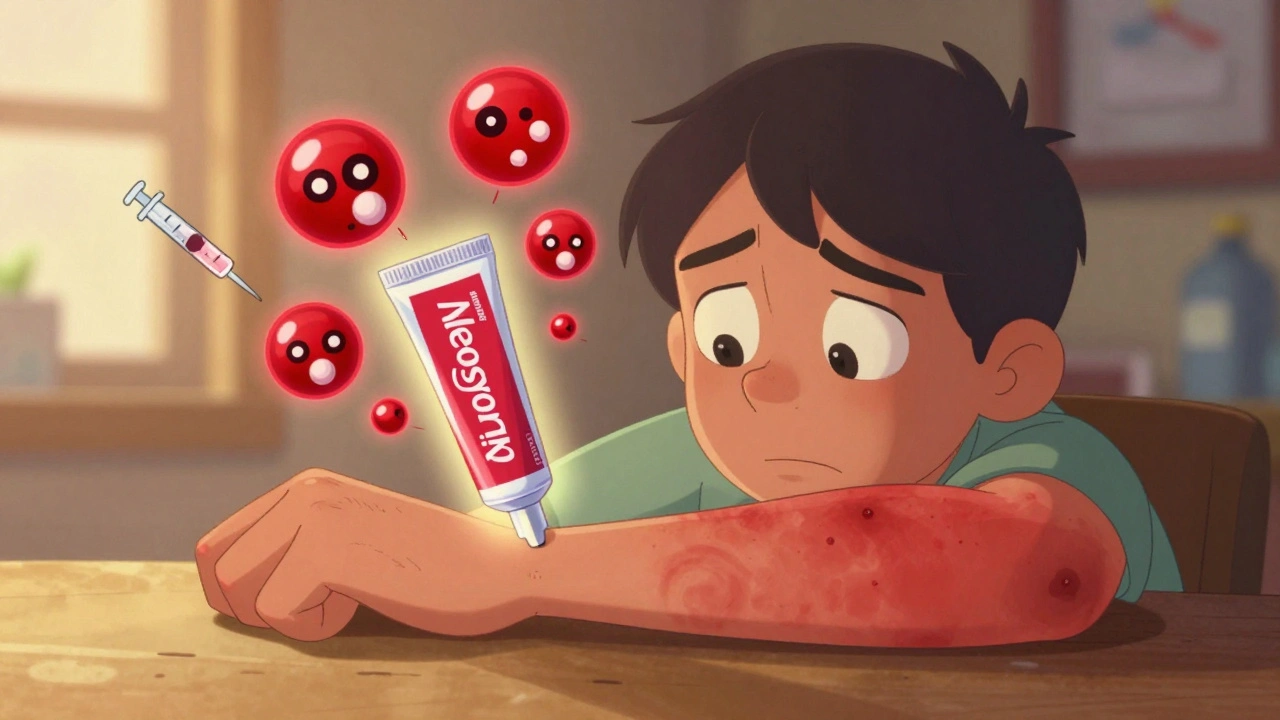
Some common triggers include neomycin in antibiotic ointments, benzocaine in numbing gels, and propylene glycol in moisturizers. You might notice redness, itching, blisters, or peeling where you applied the product—usually within 24 to 72 hours. If it spreads beyond the area you treated, or if you start feeling feverish or swollen, that’s not just a skin reaction—it’s a sign your body’s response is getting out of hand. That’s when you need to stop using it and get help.
Doctors can test for this with patch tests, where small amounts of common allergens are taped to your back for a couple of days. It’s not perfect, but it’s the best way to find out what’s really causing your reaction. And once you know, you can avoid it—not just in prescriptions, but in lotions, sunscreens, and even makeup. Your skin isn’t just a barrier; it’s a warning system. Listen to it.
What you’ll find below are real stories and expert advice on how to recognize, manage, and prevent these reactions. From how to read labels on OTC products to understanding why a medication that worked for your friend made you sick, these posts give you the tools to protect yourself—without guessing.