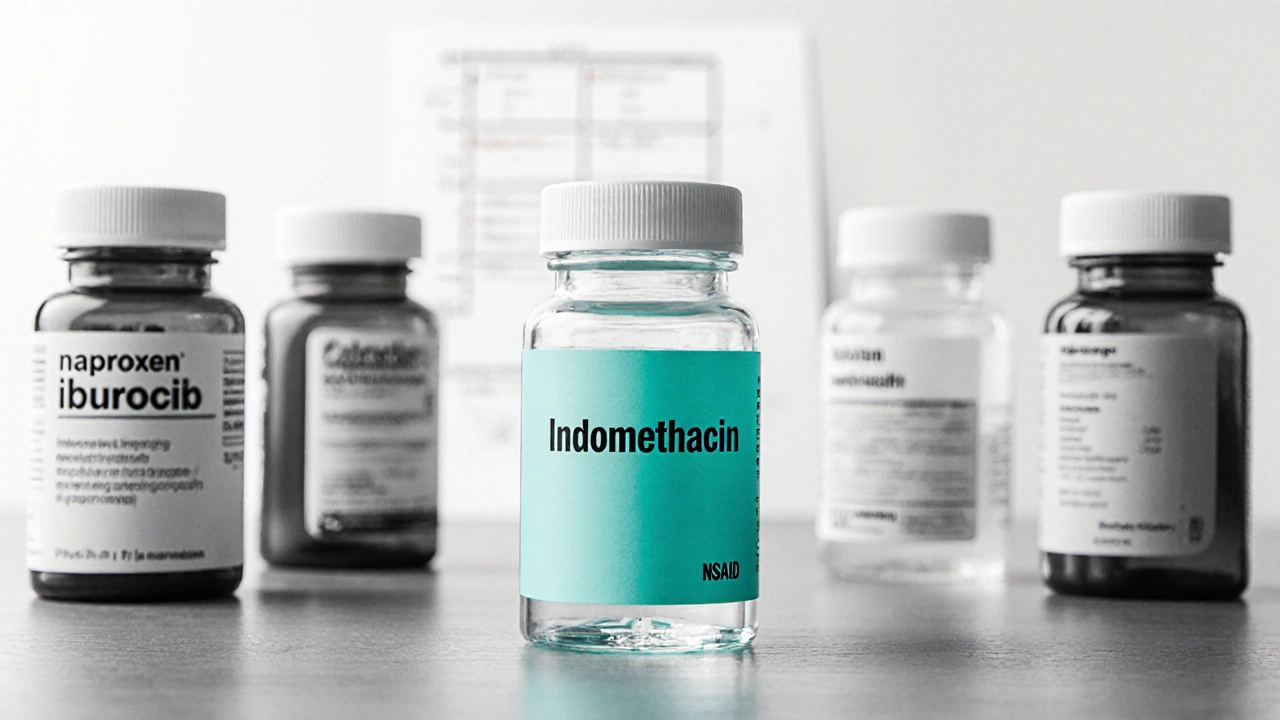
Indomethacin – What You Need to Know
When working with Indomethacin, a potent non‑steroidal anti‑inflammatory drug (NSAID) used to treat pain and inflammation. Also known as Indocin, it blocks cyclooxygenase enzymes to reduce prostaglandin production, you get fast relief for conditions like rheumatoid arthritis and acute gout. This drug was first approved in the 1960s, and its strength comes from a high affinity for both COX‑1 and COX‑2, which makes it especially useful when other pain relievers fall short.
How Indomethacin Fits Into the NSAID Family
Indomethacin belongs to the broader group of NSAIDs, medications that lower inflammation by inhibiting cyclooxygenase enzymes. While many NSAIDs target COX‑2 preferentially to spare the stomach, Indomethacin hits both COX isoforms, giving it a powerful anti‑inflammatory punch but also raising the risk of gastrointestinal side effects. Understanding this balance helps you choose the right drug for your specific pain level and health profile.
One of the main reasons doctors prescribe Indomethacin is for rheumatoid arthritis, an autoimmune disorder that causes joint swelling, stiffness, and long‑term damage. In clinical practice, patients who don’t respond well to milder NSAIDs often see a noticeable drop in joint pain within a few days of starting Indomethacin. The drug’s ability to quickly blunt the inflammatory cascade makes it a go‑to option during flare‑ups.
Another classic indication is gout, a painful form of arthritis caused by uric acid crystal deposits in joints. Because Indomethacin reduces prostaglandin‑driven swelling, it can calm a gout attack faster than many other treatments. Patients often report relief within hours, especially when the medication is taken at the first sign of intense joint pain.
Dosage matters a lot with Indomethacin. Typical adult regimens start at 25‑50 mg two to three times daily, with a maximum of 200 mg per day for short‑term use. Doctors usually keep the treatment period under two weeks to limit exposure to the stomach‑lining irritation that can lead to ulcers. If you have a history of peptic ulcer disease, your provider may add a proton‑pump inhibitor or choose a different NSAID altogether.
Side effects can range from mild to serious. Common complaints include nausea, dizziness, and headache. More concerning issues involve gastrointestinal bleeding, kidney function decline, and increased blood pressure. Because Indomethacin reduces kidney blood flow, patients with pre‑existing kidney disease or heart failure need close monitoring or an alternative therapy.
When comparing Indomethacin to newer agents like celecoxib, the trade‑off becomes clear: celecoxib’s COX‑2 selectivity means fewer stomach problems, but it may carry a higher cardiovascular risk. Indomethacin, on the other hand, offers stronger anti‑inflammatory action at the cost of greater GI toxicity. The choice often hinges on whether you prioritize rapid inflammation control or long‑term safety.
If you’re wondering how to take Indomethacin safely, here are a few practical tips: always take it with food or milk to protect your stomach; avoid alcohol and other NSAIDs while on the drug; keep an eye on any signs of blood in stool or unusual bruising; and never skip routine blood work if you’re on a prolonged course. These steps help you get the pain relief you need without unnecessary complications.
Below you’ll find a curated list of articles that dive deeper into specific aspects of Indomethacin, from dosing strategies and drug interactions to real‑world patient experiences. Whether you’re a new prescription holder, a healthcare professional, or just curious about how this medication works, the next section offers practical insights you can apply right away.