
Medication Sleep Risk Checker
Identify if your medications are causing sleep issues and get personalized solutions.
Enter your medications to see results
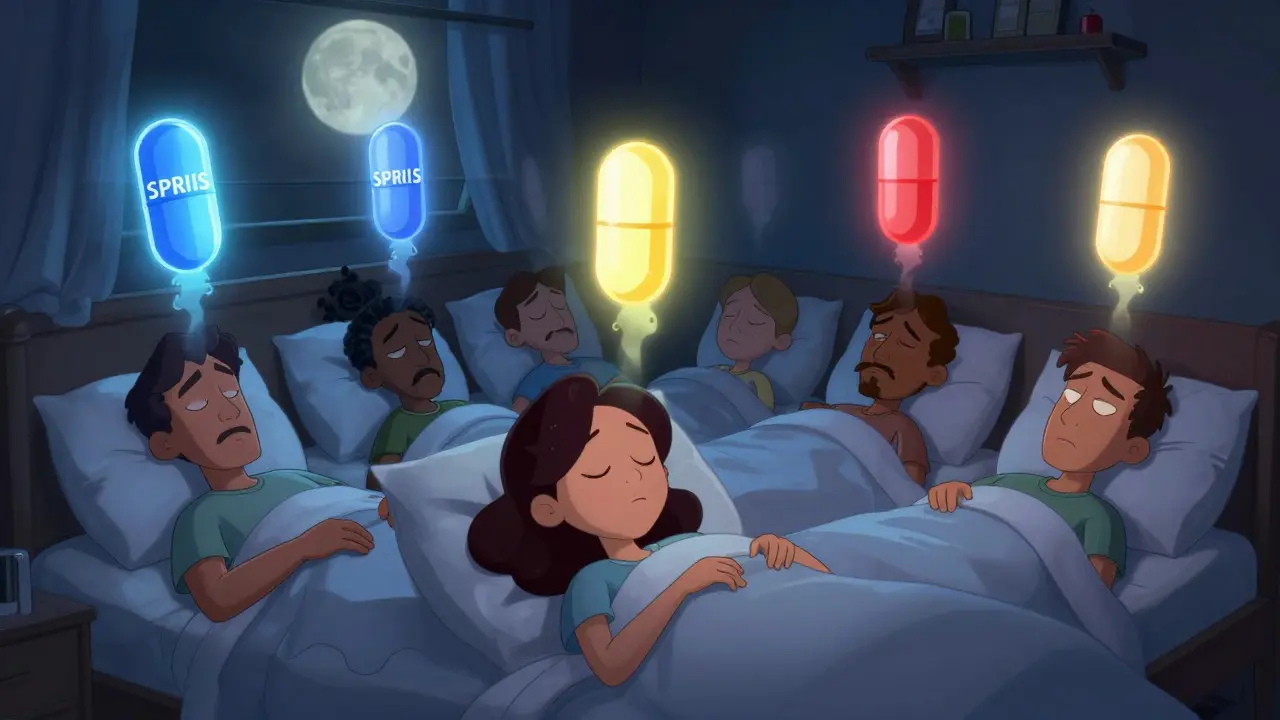
More than 1 in 5 adults say their sleep problems started after beginning a new medication. It’s not just stress, aging, or screen time-it’s something you’re taking every day. Whether it’s your blood pressure pill, antidepressant, or even that over-the-counter cold medicine, many common drugs quietly steal your sleep. And most people don’t realize it until they’re exhausted, tossing and turning for hours, or waking up at 3 a.m. with their mind racing. The good news? You don’t have to live with it. There are clear, practical steps you can take-backed by science and real patient experience-to fix this without quitting your meds cold turkey.
Which Medications Are Most Likely to Ruin Your Sleep?
Not all drugs affect sleep the same way. Some keep you wired. Others chop your sleep into pieces. Here are the big culprits, based on clinical data and patient reports:
- SSRIs like fluoxetine (Prozac) and sertraline (Zoloft): These antidepressants increase serotonin, which can overstimulate brain areas that control sleep. About 25-30% of users report frequent nighttime awakenings and less deep sleep. It’s not depression making you tired-it’s the medicine.
- Beta-blockers like metoprolol (Lopressor) and propranolol (Inderal): Used for high blood pressure and heart conditions, these drugs slash melatonin production by up to 42%. That means your body doesn’t get the signal to wind down. Nightmares and waking up in the middle of the night are common.
- Corticosteroids like prednisone and dexamethasone: These powerful anti-inflammatories spike cortisol levels at night, which directly blocks sleep. People taking even 20mg daily report nearly half as much deep sleep and more than three times the nighttime awakenings.
- ADHD stimulants like Adderall XR and methylphenidate: These keep your brain alert. Up to 50% of users struggle to fall asleep, often by more than an hour past bedtime.
- Over-the-counter decongestants like pseudoephedrine (Sudafed): Even though it’s not a prescription, this common cold remedy can cause insomnia in 12-15% of users. It’s a stimulant, plain and simple.
- Non-drowsy antihistamines like loratadine (Claritin): You’d think they’d help you sleep, but they don’t. In fact, 8-10% of users say they have trouble falling asleep.
- St. John’s wort and glucosamine-chondroitin supplements: Yes, even natural products can mess with sleep. St. John’s wort, often taken for mood, causes sleep issues in 15% of users. Glucosamine? About 7% of people report trouble sleeping after starting it.
And here’s the kicker: first-generation antihistamines like diphenhydramine (Benadryl) are listed as unsafe for people over 65 by the American Geriatrics Society. They don’t just cause drowsiness-they disrupt sleep architecture, leading to next-day fog and worse insomnia over time.
Why Your Medicine Is Disrupting Your Sleep
It’s not random. Each drug hits your body’s sleep system in a different way:
- SSRIs: Boost serotonin too much. Serotonin is a building block for melatonin, but too much of it in the wrong brain areas keeps your mind active when it should be shutting down.
- Beta-blockers: Block the signals that tell your pineal gland to make melatonin. No melatonin? No sleep signal.
- Corticosteroids: Trick your body into thinking it’s morning-even at night. Cortisol, the wake-up hormone, stays high when it should be low.
- Stimulants: Flood your brain with dopamine and norepinephrine. These are your brain’s natural alertness chemicals. When they’re stuck on, sleep can’t kick in.
Think of your sleep like a dimmer switch. These medications are either turning up the brightness when it should be dark-or flipping the switch off completely. The result? You’re physically ready to sleep, but your brain won’t let you.
Practical Fixes That Actually Work
You don’t have to suffer. Here’s what works, based on studies and what real people have tried:
1. Change When You Take Your Medicine
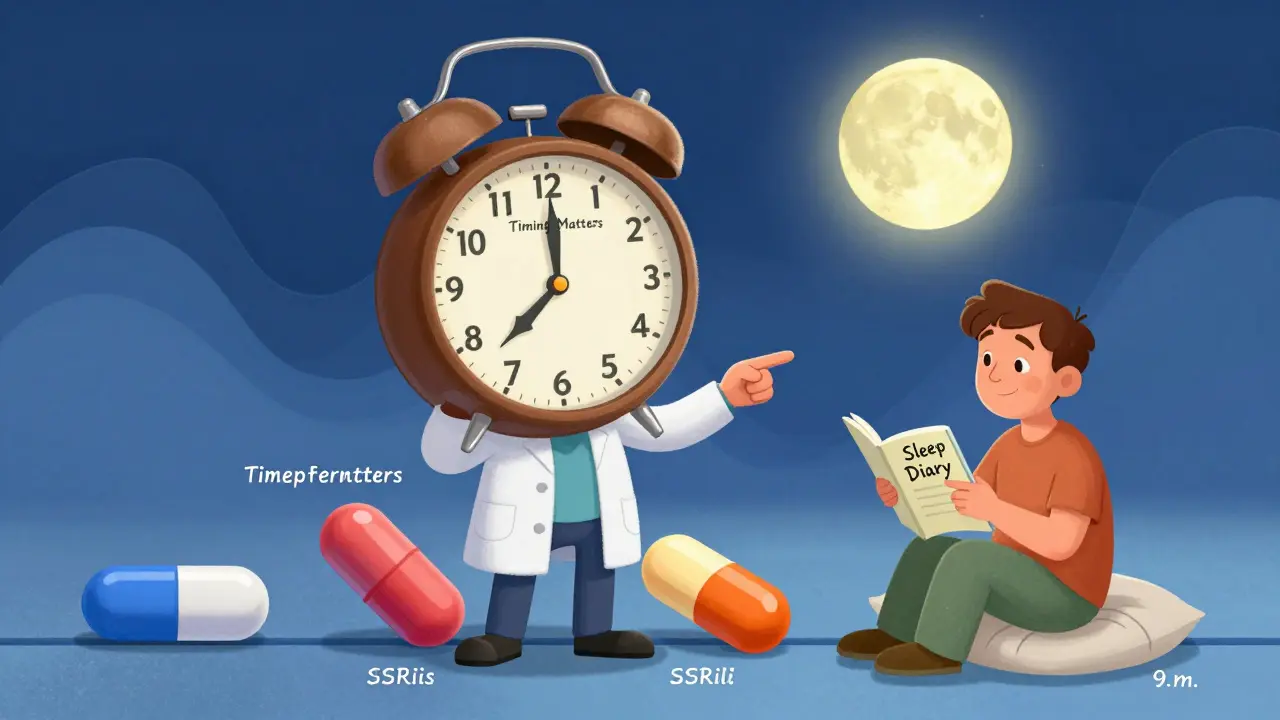
Timing matters more than you think.
- If you take corticosteroids, take them before 9 a.m. A 2022 study found this reduces insomnia risk by 63% compared to taking them in the afternoon.
- If you take an SSRI, switch from nighttime to morning dosing. One study showed this cut sleep problems by 45%.
- If you take a beta-blocker, ask your doctor about switching from propranolol (fat-soluble) to atenolol (water-soluble). It reduces nighttime awakenings by 37%.
Simple shift. Big difference.
2. Try Melatonin-But Do It Right
For beta-blocker users, taking 0.5 to 3 mg of melatonin 2-3 hours before bed helped restore sleep in over half of users in a 2020 trial. Don’t take it right before bed. Your body needs time to absorb it. And don’t go over 3 mg-more doesn’t mean better.
3. Swap Medications When Possible
If your SSRI is wrecking your sleep, ask about switching to a sedating alternative like mirtazapine (Remeron). Clinical data shows it resolves insomnia in 68% of cases. It’s not a one-size-fits-all fix, but for many, it’s a game-changer.
For pain or inflammation, talk to your doctor about alternatives to corticosteroids. Sometimes a different class of drug can do the job without stealing your sleep.
4. Don’t Quit Cold Turkey
If you’re taking sleep aids like zolpidem (Ambien) and want to stop, taper slowly. Cut your dose by 25% every two weeks under your doctor’s care. Going cold turkey raises your risk of rebound insomnia from 65% down to just 18%.
5. Use a Sleep Diary for 14 Days
Before you blame your meds, prove it. Write down:
- What you took and when
- When you got into bed
- How long it took to fall asleep
- How many times you woke up
- How rested you felt in the morning
This isn’t fluff. A 2022 study showed sleep diaries are 82% accurate at linking sleep issues to medications. Bring this to your doctor. It turns guesswork into action.
What to Do If Nothing’s Working
Some people think their sleep problems are just "normal"-especially if they’re older or managing chronic illness. But here’s the truth: 40-50% of people who think their sleep issues are caused by meds actually have an undiagnosed sleep disorder like sleep apnea or restless legs.
Dr. Raj Dasgupta’s "3-3-3 Rule" is simple:
- If your sleep problems last more than 3 weeks
- They happen 3 or more nights a week
- And they leave you feeling impaired 3 or more days a week
Then it’s time to see a sleep specialist.
And don’t forget: Cognitive Behavioral Therapy for Insomnia (CBT-I) works even when meds are the cause. A 2023 meta-analysis found it helps 65-75% of people with medication-related insomnia. It’s not about pills. It’s about retraining your brain to sleep again.
Real People, Real Results
On Reddit’s r/insomnia forum, 68% of users who linked their sleep problems to SSRIs found relief by switching to morning dosing. On Drugs.com, beta-blocker users reported insomnia in over 20% of reviews-with metoprolol named most often. And in patient forums, 52% of corticosteroid users saw major improvement just by moving their dose to the morning.
But here’s the scary part: 34% of people who had sleep issues from meds just stopped taking them without telling their doctor. That’s dangerous. You could be risking your health for a problem that’s fixable.

What You Can Do Today
You don’t need to wait for your next appointment. Start here:
- Check your medication list. Look for any of the drugs mentioned above.
- Review when you take them. Could timing be the issue?
- Start a 14-day sleep diary. No fancy app needed-just a notebook.
- If you’re on a beta-blocker, ask if atenolol is an option.
- If you’re on an SSRI at night, ask about switching to morning.
- If you’re taking melatonin or other supplements, check if they’re part of the problem.
Sleep isn’t something you lose because you’re getting older. It’s something you can lose because of what’s in your medicine cabinet. And the best part? You can get it back.
Can over-the-counter cold medicines cause insomnia?
Yes. Decongestants like pseudoephedrine (found in Sudafed) are stimulants and can cause insomnia in 12-15% of users. Even non-drowsy antihistamines like loratadine (Claritin) can make it harder to fall asleep in 8-10% of people. Always check the active ingredients-many OTC products contain hidden stimulants.
Is it safe to take melatonin with my prescription meds?
Melatonin is generally safe to use with most medications, including beta-blockers and SSRIs. In fact, studies show it helps counteract melatonin suppression from beta-blockers. But always check with your doctor first-especially if you’re on blood thinners, immunosuppressants, or diabetes medications. Stick to 0.5-3 mg, taken 2-3 hours before bed.
Why does my antidepressant make me more tired during the day but keep me awake at night?
SSRIs and SNRIs can cause daytime fatigue because they alter serotonin levels, which affects energy regulation. At night, that same change can overstimulate brain regions involved in wakefulness. It’s not a contradiction-it’s a side effect of how these drugs interact with your brain’s sleep-wake cycle. Switching to morning dosing often fixes both problems.
Can I just stop taking the medication causing my insomnia?
No-not without talking to your doctor. Stopping suddenly can cause dangerous withdrawal effects or make your original condition worse. For example, stopping a beta-blocker abruptly can spike your blood pressure. Always work with your provider to adjust or switch medications safely.
Is CBT-I effective if my insomnia is caused by medication?
Yes. A 2023 meta-analysis found CBT-I works just as well for medication-induced insomnia as it does for primary insomnia. It doesn’t remove the drug, but it retrains your brain to sleep despite its effects. Many people see results in 4-6 weeks, even while still taking the medication.
Should I avoid all medications that list insomnia as a side effect?
No. Many medications with insomnia as a side effect are still necessary for your health. The goal isn’t to avoid them-it’s to manage the side effect. Small changes like timing, dosage, or switching to a different drug in the same class can make a big difference. Talk to your doctor about your sleep before deciding to stop.
Next Steps
If you’re taking one of these medications and struggling to sleep, don’t assume it’s just part of life. Your sleep matters. Start with the sleep diary. Talk to your doctor. Ask about timing. Ask about alternatives. Ask about CBT-I. You don’t have to choose between staying healthy and sleeping well. You can have both.



One comment
Been there. Took sertraline at night for years, woke up like I’d been punched in the face by caffeine. Switched to morning-same day, same dose, slept like a baby. No magic, just timing.
Stop blaming yourself. It’s the med, not your brain.
It is imperative to underscore the clinical significance of pharmacologically induced sleep architecture disruption, particularly in the context of monoaminergic modulation via SSRIs and adrenergic blockade via beta-adrenergic antagonists.
Moreover, the circadian misalignment induced by corticosteroid administration-particularly when dosed beyond the 09:00 threshold-constitutes a well-documented neuroendocrine perturbation, as evidenced by diurnal cortisol profiling studies (cf. J Clin Sleep Med, 2022).
Therefore, it is strongly recommended that clinicians prioritize chronotherapeutic optimization prior to pharmacological substitution, thereby minimizing iatrogenic morbidity.
People these days think they can just ‘switch’ their meds like switching Netflix shows. You take a prescription, you deal with the side effects. If you can’t sleep, maybe you’re just weak.
And don’t even get me started on melatonin-some kind of hippie supplement you buy at Whole Foods. Real medicine doesn’t come in little white pills you order online.
OMG I’m so glad someone finally said this!! I’ve been on prednisone for 3 months and thought I was going crazy waking up at 3am every night like a zombie 😭
Then I moved my dose to 8am and-BAM-sleep returned. I cried. Not because I’m emotional, but because I finally felt human again.
Why isn’t this common knowledge??
Doctors just say ‘take it’ and leave you hanging. So rude.
Y’all are overthinking this. If your med messes with sleep, just take it earlier. Duh.
Also, stop taking that stupid St. John’s Wort. It’s not ‘natural’ if it’s wrecking your life.
And no, Benadryl ain’t your friend. I used to take it like candy. Now I’m 40 and feel like a robot. Lesson learned.
I know how hard this is. I’m on beta-blockers for my heart and used to wake up terrified, heart pounding, mind racing. I started 1mg melatonin at 8pm-just 1mg-and now I sleep 6-7 hours. Not perfect, but better.
You’re not broken. Your body just needs a little help catching up. Be gentle with yourself.
And if you’re scared to talk to your doctor, I get it. I was too. But I did it. And they listened.
You’re not alone.
YES YES YES 😭 I’ve been on Zoloft for 2 years and thought I was just ‘an anxious person’… then I switched to morning and started sleeping 8 hours. I even started smiling again 😊
Why do doctors never tell you this??
Pls share this with everyone you know. This changed my life.
For those considering melatonin: the timing is critical. Plasma half-life is approximately 30-40 minutes; absorption peaks at 60-90 minutes post-ingestion. Administering it 2-3 hours pre-sleep aligns with endogenous circadian phase shifts, not merely pharmacological sedation.
Also, avoid sublingual forms unless clinically indicated-oral bioavailability is more predictable.
These are not trivial details.
My mom took prednisone for her arthritis and slept like a rock after moving it to 8am. She didn’t even know it was the timing. She thought she was just getting ‘better’.
Doctors should give this info upfront. Not after you’ve been exhausted for months.
Thanks for writing this. I’m printing it out for her next appointment.
This is one of the most balanced, evidence-based pieces I’ve read on this topic in years.
It’s not about demonizing meds-it’s about understanding how they interact with our biology.
And CBT-I? Absolutely. I’ve seen patients on SSRIs, beta-blockers, even opioids-CBT-I still works. It’s not a replacement for medication, it’s a companion.
Thank you for not pushing quick fixes. This is what real care looks like.
took adderall for years, never slept. tried everything. then i just took it at 7am instead of 9am. boom. slept. no magic. just science.
why do we make this so hard?