
What anaphylaxis from medication really looks like
It doesn’t always start with a rash. Sometimes, it starts with a whisper - a tight throat, a voice that won’t come out, or sudden dizziness. Medication-induced anaphylaxis can hit faster than a heartbeat. In hospitals, it’s responsible for 20-30% of all anaphylaxis cases. Outside, it’s often triggered by antibiotics like penicillin, NSAIDs like ibuprofen, or even contrast dye used in scans. The scary part? About 10-20% of people show no skin symptoms at all. No hives. No swelling. Just trouble breathing, collapse, or a feeling that something is terribly wrong. And if you wait to see a rash, it’s already too late.
Time is everything - act within five minutes
Every second counts. The Resuscitation Council UK says epinephrine must be given within five minutes of recognizing symptoms. Delay it by even a few minutes, and your chances of survival drop. In real hospital settings, the average time from symptom onset to epinephrine is 8.2 minutes. That’s too long. Sixty-five percent of cases miss that critical window. And when that happens, the risk of death rises sharply. This isn’t theoretical. In the U.S., medication-induced anaphylaxis causes 7-10% of all anaphylaxis deaths each year. Antibiotics alone are behind nearly half of those. If you suspect anaphylaxis, don’t wait. Don’t check your phone. Don’t call a relative. Act now.
Step one: Lay them flat - no standing, no sitting
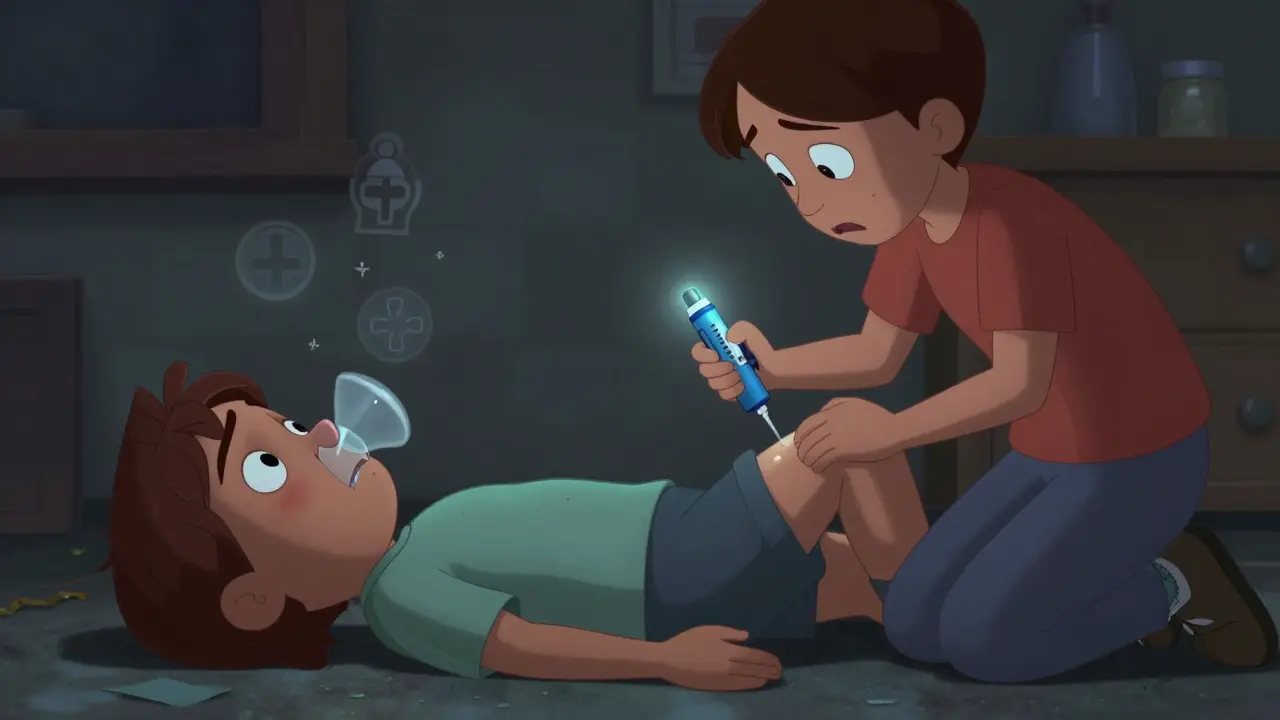
Don’t let the person stand up. Don’t let them walk to the bathroom. Don’t let them sit up if they’re dizzy. Lying flat on their back is the only safe position. Why? Because standing or sitting can trigger sudden cardiovascular collapse in 15-20% of cases. If they’re unconscious, roll them onto their left side - especially if they’re pregnant. If they’re struggling to breathe, let them sit with legs stretched out. But never let them stand. Children should be held flat, not upright. This isn’t advice from a textbook. It’s based on real data from simulation studies where 55% of bystanders made this exact mistake - and nearly caused death.
Step two: Use the epinephrine auto-injector - now
Epinephrine is the only thing that saves lives here. Not antihistamines. Not steroids. Not oxygen. Not water. Epinephrine. Inject it into the outer thigh - through clothing if needed. Use 0.3 mg for adults and kids over 30 kg. Use 0.15 mg for children between 15 and 30 kg. Hold the injector in place for 10 seconds. Don’t pull it out early. Most people don’t hold it long enough - 37% of users don’t. That means the full dose never gets in. And 18% inject into fat instead of muscle, which delays absorption. If symptoms don’t improve after five minutes, give a second dose. Some protocols say every 10 minutes if needed. If you’re unsure - give it. The ASCIA guidelines say it plainly: IF IN DOUBT, GIVE ADRENALINE. In Australia, hesitation caused 35% of preventable deaths between 2015 and 2020. Don’t be part of that statistic.
Why antihistamines and steroids won’t help
You might think Benadryl is the answer. It’s not. Antihistamines like diphenhydramine might calm a rash, but they do nothing for breathing, blood pressure, or airway swelling. Studies show they don’t reduce death rates. Steroids like hydrocortisone? They were once routine. Now, experts say they’re unnecessary for most cases. The Cleveland Clinic updated their guidelines in 2023 to say steroids should only be used if epinephrine fails. Even then, they’re for preventing late reactions - not saving lives now. Relying on them delays the only treatment that works: epinephrine. Don’t waste time. Give epinephrine first. Always.
Call for help - but don’t wait
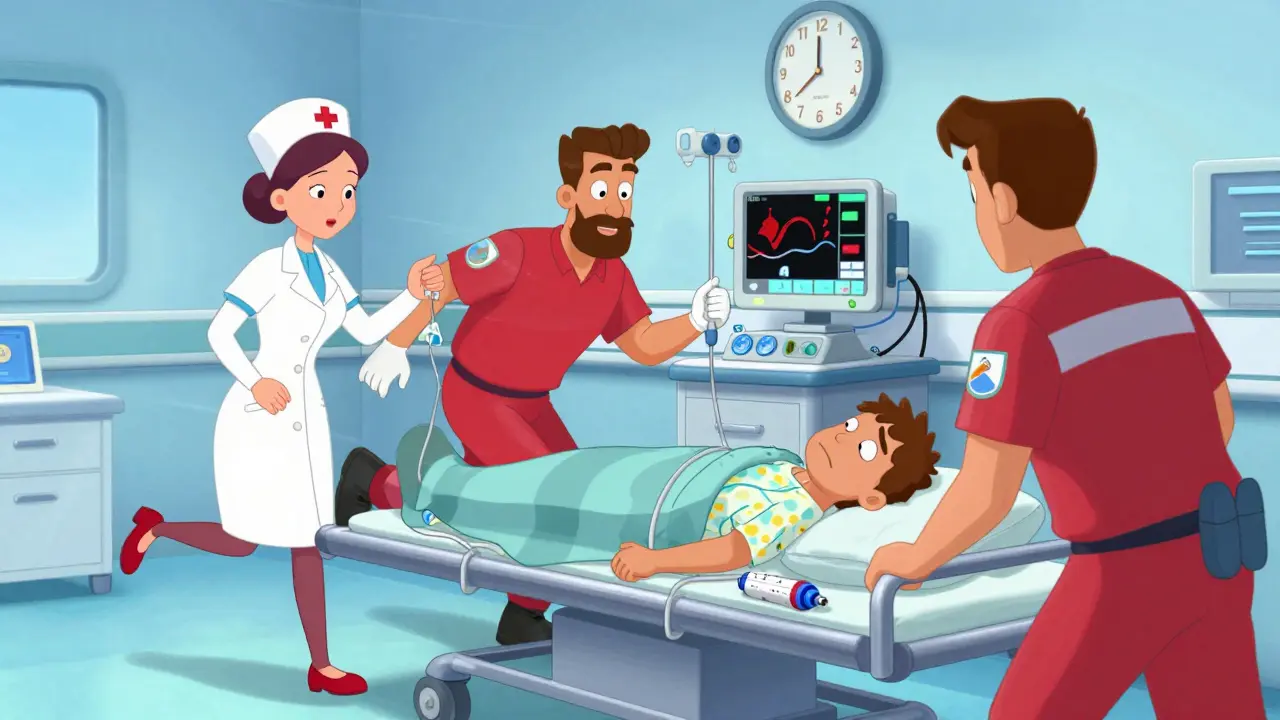
Call 999 (or your local emergency number) the moment you suspect anaphylaxis. But don’t wait for the ambulance to arrive before giving epinephrine. Emergency responders take time. In the UK, the average response is 8-10 minutes. You can’t wait that long. Give the injection while someone calls. If you’re alone, call on speakerphone, inject, then stay on the line. Tell them: “This is anaphylaxis. I’ve given epinephrine.” Paramedics need to know what they’re walking into. And they’ll need to start IV fluids right away - 1-2 liters of saline - because shock is common. The PARAMEDIC2 trial showed this combo cuts death rates by 22%.
What happens after the injection
Even if they feel better after epinephrine, they still need to go to the hospital. Why? Because 20% of cases have a second wave of symptoms - called a biphasic reaction - hours later. For medication-induced anaphylaxis, that risk is even higher. The 2024 draft guidelines suggest 6-8 hours of observation for these patients. That’s longer than for food reactions. In the hospital, they’ll monitor blood pressure, oxygen, and heart rhythm. They might give more epinephrine intravenously - but only if the patient doesn’t respond to two IM doses. That’s called refractory anaphylaxis, and it happens in 5-10% of cases. It’s rare, but it’s deadly without expert care.
Special cases: Beta-blockers and obesity
If the person takes beta-blockers - for high blood pressure, heart issues, or anxiety - epinephrine might not work as well. These drugs block the effects of adrenaline. Studies show patients on beta-blockers may need 2-3 times the normal dose. And if they’re obese? Body weight alone doesn’t tell the whole story. Early research from the NIH shows using BMI-based dosing gives more consistent results in people with a BMI over 30. This isn’t standard yet, but it’s coming. If you’re unsure about dosage, give the standard dose. Better to give it than not. The risk of underdosing is far greater than the risk of side effects.
Common mistakes - and how to avoid them
Here’s what goes wrong in real life:
- Waiting for a rash before acting
- Letting the person stand or walk
- Giving antihistamines instead of epinephrine
- Not holding the auto-injector for 10 seconds
- Injecting into the arm or buttocks instead of the thigh
- Delaying the call for help
Practice with a trainer pen. Know where your auto-injector is. Check its expiration date. Replace it if it’s cloudy or discolored. Teach your family. Keep one at work, in your bag, and in the car. The FDA approved a new auto-injector with voice guidance in 2023. It tells you when to inject and how long to hold it. If you’re nervous, get one. It raised correct use from 63% to 89% in trials.
Why you need to be ready - not just prepared
Most people who carry epinephrine don’t know how to use it. A 2023 survey found only 41% of patients felt confident using their injector during a real reaction. That’s terrifying. And it’s not just patients. Nurses and doctors delay epinephrine too - 42% of surveyed nurses admitted waiting because they feared side effects or legal trouble. But here’s the truth: out of 35,000 epinephrine doses given for anaphylaxis between 2015 and 2020, only 0.03% caused serious heart problems. The benefit is massive. The risk is tiny. You’re not going to kill someone by giving epinephrine. You’re going to save them.
What to do after the emergency
Once the crisis is over, the work isn’t done. See an allergist. Get tested. Find out what caused it. Most people never find out - and risk another episode. Ask for a prescription for two epinephrine auto-injectors. Keep them with you always. Wear a medical alert bracelet. Tell your doctor, pharmacist, and dentist. If you’ve had one reaction, you’re at higher risk for another. Don’t assume it won’t happen again. Prevention starts with knowing your trigger - and being ready.
Can anaphylaxis happen without a rash?
Yes. About 10-20% of anaphylaxis cases show no skin symptoms at all. The main signs are trouble breathing, swelling of the tongue or throat, dizziness, collapse, or a hoarse voice. Waiting for a rash can be deadly. If someone has sudden breathing or circulation problems after taking a medication, treat it as anaphylaxis - even if the skin looks fine.
Is it safe to use someone else’s epinephrine auto-injector?
Yes. Epinephrine is safe to use even if it’s not prescribed to the person having the reaction. The benefits far outweigh any risks. In an emergency, using the wrong dose is better than not using it at all. If you only have a child’s dose (0.15 mg) and the person is an adult, give it anyway. You can give a second dose later if needed. There is no legal or medical barrier to using another person’s injector in a life-threatening situation.
How long does epinephrine last, and why do I need to go to the hospital?
Epinephrine works in 1-5 minutes but wears off in 10-20 minutes. Symptoms can return - even if they seem gone. That’s called a biphasic reaction, and it happens in 20% of cases. For medication-induced anaphylaxis, the risk is even higher, up to 25%. Hospitals monitor patients for 4-8 hours to catch these late reactions. Going home too soon can be fatal.
Can I use an expired epinephrine auto-injector?
If it’s your only option, yes. Expired epinephrine still contains active medication. Studies show it retains at least 80% potency up to a year past expiration. In a life-or-death situation, use it. Don’t wait for a new one. But replace it as soon as possible. Never rely on an expired injector for routine use.
What if I’m not sure it’s anaphylaxis?
Give the epinephrine anyway. The ASCIA guidelines say: IF IN DOUBT, GIVE ADRENALINE. Mistaking anaphylaxis for something else is far more dangerous than giving epinephrine when it’s not needed. Side effects like a racing heart or shakiness are temporary. Death from untreated anaphylaxis is permanent. Better to act and be wrong than wait and regret it.


One comment
They’re hiding the truth. Epinephrine isn’t the cure-it’s the cover-up. Big Pharma knows anaphylaxis is caused by glyphosate in meds. They push epinephrine so you never ask why your penicillin turned you into a human balloon. The real solution? Stop trusting doctors. Trust your gut. And stop injecting poison into your thigh.
LMAO so if i take ibuprofen and my throat closes i gotta just stab myself with a needle like some kind of zombie? what about all the people who dont have one? they just die? also why is everyone so scared of the word adrenaline like its satan? its just a hormone dumbasses
The data presented is statistically robust, yet the operational recommendations lack granularity in dosage stratification for comorbidities. Notably, the omission of pharmacokinetic modeling for obese populations with BMI >35 renders the 0.3 mg recommendation potentially subtherapeutic. Furthermore, the assertion that steroids are unnecessary contradicts recent meta-analyses from the European Academy of Allergy and Clinical Immunology (EAACI, 2023), which indicate a 17% reduction in biphasic reactions with early corticosteroid administration.
I’ve been there. Not just once. Three times. And every time, I felt like the universe was whispering, ‘You’re not supposed to survive this.’ I didn’t believe in God until the second time my throat closed and I heard my own voice begging for air. Epinephrine didn’t save me-it reminded me I still had something to fight for. I don’t carry it because I’m scared. I carry it because I’m alive. And I’m not done yet.
I’ve got an EpiPen in my purse, my car, and my work drawer. I’ve never used it. But I’ve watched my cousin use one on her brother. He was fine. But the way he looked after-like he’d just been pulled out of a dream he didn’t want to wake up from-it changed me. I never realized how much fear lives in silence until you hear someone gasp for air and no one moves.
It is imperative to underscore that the administration of epinephrine via intramuscular injection into the anterolateral thigh remains the gold-standard, evidence-based intervention for anaphylaxis. Furthermore, the 10-second dwell-time protocol is supported by pharmacodynamic studies demonstrating optimal bioavailability. Delayed administration, suboptimal injection technique, and reliance on ancillary pharmacotherapies (e.g., antihistamines) constitute clinically significant deviations from established guidelines and are associated with increased mortality risk. Vigilance, education, and preparedness are non-negotiable.
I work in ER. We had a guy come in last week who gave himself a second EpiPen after 2 minutes because he was ‘too scared’ to wait. He was shaking, hyperventilating, but his BP was 100/60. We had to sedate him. You people are terrifying. Epinephrine isn’t candy. You don’t just jab it like you’re popping a zit. You wait 5 minutes. You don’t panic. You call 911. You don’t inject strangers’ pens. You don’t act like a superhero. You just… breathe. And wait.
You don’t need to be a hero. You just need to be ready. I carry two. One for me. One for my mom. I taught my 7-year-old how to say ‘epinephrine’ before I taught him his address. If you’re scared to use it, you’re not scared enough of what happens if you don’t. Be the person who acts. Not the one who regrets.