

Medication Switching Decision Aid
Medication Comparison Tool
This tool helps you compare two common diabetes medications based on your personal priorities. Use it to prepare for a discussion with your doctor about a medication switch.
Your Priorities
Medication Comparison
Medication A: SGLT2 Inhibitor
(e.g., Jardiance, Farxiga)
Medication B: GLP-1 Agonist
(e.g., Ozempic, Mounjaro)
| Feature | Medication A | Medication B |
|---|---|---|
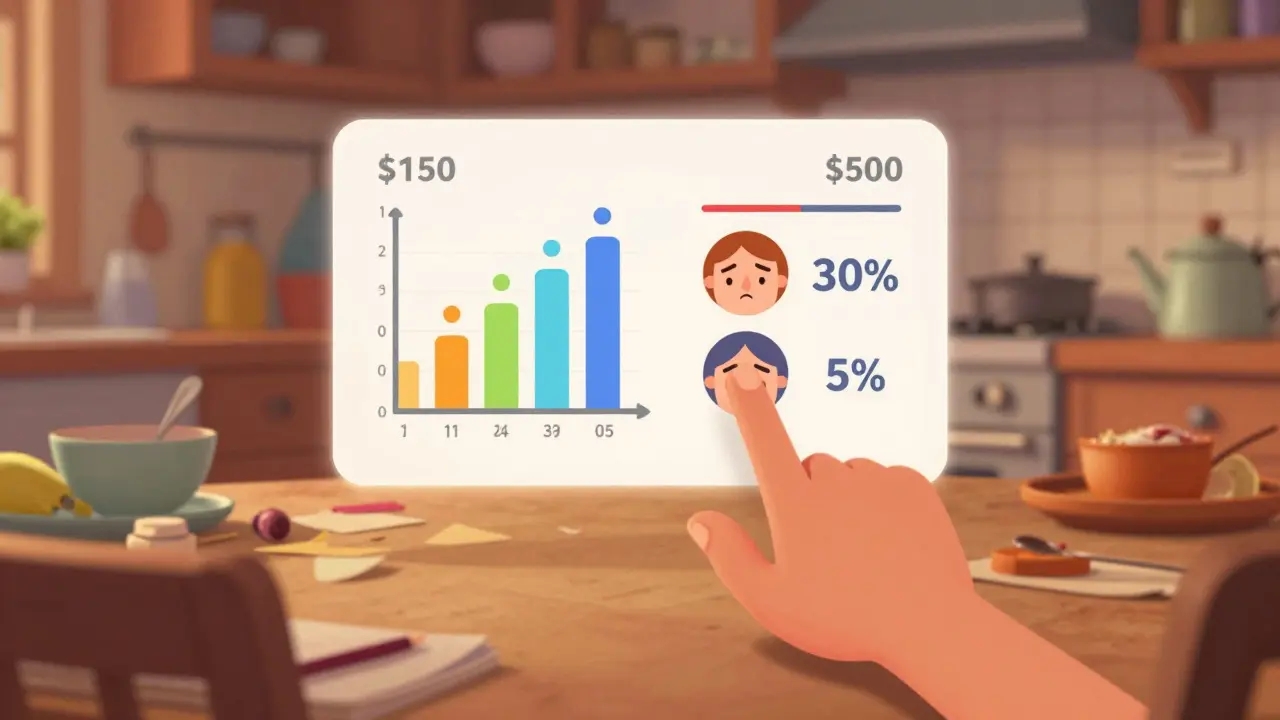
| Reduces HbA1c by | 0.8–1.2% | 1.0–1.5% |
| Weight loss (avg. over 1 year) | 2–4 kg | 4–8 kg |
| Chance of nausea | 10% | 30% |
| Chance of genital yeast infection | 5% | 2% |
| Dosing frequency | Once daily | Once weekly |
| Cost (monthly, without insurance) | $150 | $500 |
| Heart protection | Yes | Yes |
Visual Risk Comparison
Imagine 100 people taking each medication:
Your Best Match
Calculate your best match by clicking the button above.
Recommended Option:
This option best matches your priorities with 0% alignment.
Key Trade-offs
Changing medications isn’t just about swapping one pill for another. It’s a decision that can affect how you feel every day - your energy, your mood, your body, even your ability to stick with treatment. And yet, too often, patients are handed a new prescription without really understanding why the switch is being made, or what they might lose - or gain - in the process.
Why Medication Switches Often Go Wrong
About one in two people stop taking a new medication within the first year. Not because it doesn’t work. But because they didn’t feel ready for it. They were scared of side effects they didn’t fully understand. They didn’t know if the new drug was truly better, or just different. And no one took the time to walk them through the trade-offs. This isn’t about poor adherence. It’s about unaddressed fear. A 2022 study in JAMA Internal Medicine found that 25-50% of patients discontinue medications because their concerns about risks or benefits were never properly discussed. That’s not just a statistic. That’s someone skipping doses because they’re terrified of weight gain. Or refusing a blood thinner because they heard about bleeding risks on a forum and didn’t know how likely it really was. That’s where decision aids come in.What Are Medication Switching Decision Aids?
These aren’t brochures. They’re not just lists of side effects. Decision aids are structured tools - often digital - designed to help you and your doctor make a decision together. They show you the real numbers: not vague warnings like “may cause nausea,” but clear probabilities. Like: “Out of 100 people taking this drug, 30 will gain weight. Out of 100 on the alternative, only 15 will.” They use pictures. Icon arrays. Bars. Faces. One tool from the VA shows 100 little people. Ten are colored red to represent the chance of a serious bleed on one drug. On another, only three are red. Suddenly, the risk isn’t abstract. It’s visual. Real. They ask you questions too. What matters most to you? Is it avoiding daily pills? Keeping your weight stable? Saving money? Reducing anxiety? The tool doesn’t tell you what to choose. It helps you figure out what you value - and then matches that to your options.How They Compare to Regular Doctor Talk
A typical visit might go like this: “We’re switching you from Metformin to a GLP-1 agonist. It helps with weight and blood sugar.” Then you leave with a prescription and a handout that says “Possible side effects: nausea, vomiting, diarrhea.” A decision aid changes that. Before your appointment, you get access to a tool that breaks down:- How much better each option is at controlling your blood sugar
- How likely each side effect is - with numbers, not just “common” or “rare”
- What the long-term benefits are - like reduced heart attack risk
- How much each drug costs
- How often you need to take it
When Decision Aids Work Best
They’re not for every switch. They’re designed for situations where there’s no single “right” answer - where multiple options are equally valid, but each has different pros and cons. That’s common in:- Switching antidepressants - some help with sleep, others with energy, but all carry risk of weight gain or sexual side effects
- Choosing between blood thinners - warfarin needs regular checks, newer drugs don’t, but bleeding risk varies
- Diabetes medications - GLP-1 agonists help with weight loss but cost more and can cause nausea
- Cholesterol drugs - statins are proven, but some people can’t tolerate them
Where They Fall Short
They’re not magic. They don’t work if you’re in crisis. If you’re having a panic attack and your doctor says, “Let’s switch your anxiety med,” you’re not going to sit down and click through a 10-minute interactive tool. Decision aids aren’t for emergencies. They also struggle when patients have trouble processing numbers. A 2022 study found no benefit for people with cognitive scores below 24 on the MMSE test - a threshold that includes many older adults with mild dementia. And here’s the catch: some patients get overwhelmed. One Mayo Clinic study found 31% of users felt “too many numbers.” That’s why good decision aids let you go at your own pace. You can pause. Skip sections. Come back later. Even worse, some tools oversimplify. A 2021 commentary in the BMJ warned that 22% of patients misunderstood absolute risk reductions - thinking a “22% lower risk of heart attack” meant they were now safe. It doesn’t. It means if your baseline risk was 10%, it drops to 7.8%. Still a risk. Still needs monitoring.What You’ll See in a Real Decision Aid
Here’s what a well-built tool actually looks like:| Feature | Medication A (SGLT2 Inhibitor) | Medication B (GLP-1 Agonist) |
|---|---|---|
| Reduces HbA1c by | 0.8-1.2% | 1.0-1.5% |
| Weight loss (avg. over 1 year) | 2-4 kg | 4-8 kg |
| Chance of nausea | 10% | 30% |
| Chance of genital yeast infection | 5% | 2% |
| Dosing frequency | Once daily | Once weekly |
| Cost (monthly, without insurance) | $150 | $500 |
| Heart protection | Yes - reduces risk | Yes - stronger evidence |
- How important is avoiding nausea to you? (Scale: Not at all - Extremely)
- How much does cost matter compared to weight loss?
- Would you prefer fewer pills, even if they’re more expensive?
What Doctors Say About Them
Clinicians are split. A 2023 survey of 1,200 doctors found 68% said decision aids disrupt their workflow. They take time - 7 to 12 extra minutes per visit, according to a 2023 study in Annals of Internal Medicine. But those who use them regularly say it’s worth it. “I used to spend 10 minutes explaining why I thought a drug was better,” one VA physician told me. “Now I say, ‘Here’s what the tool says. What stood out to you?’ And suddenly, the patient tells me their real fear - not what I assumed.” The American College of Physicians says decision aids should be used for “preference-sensitive decisions” - exactly the kind where there’s no single best choice. That’s most medication switches.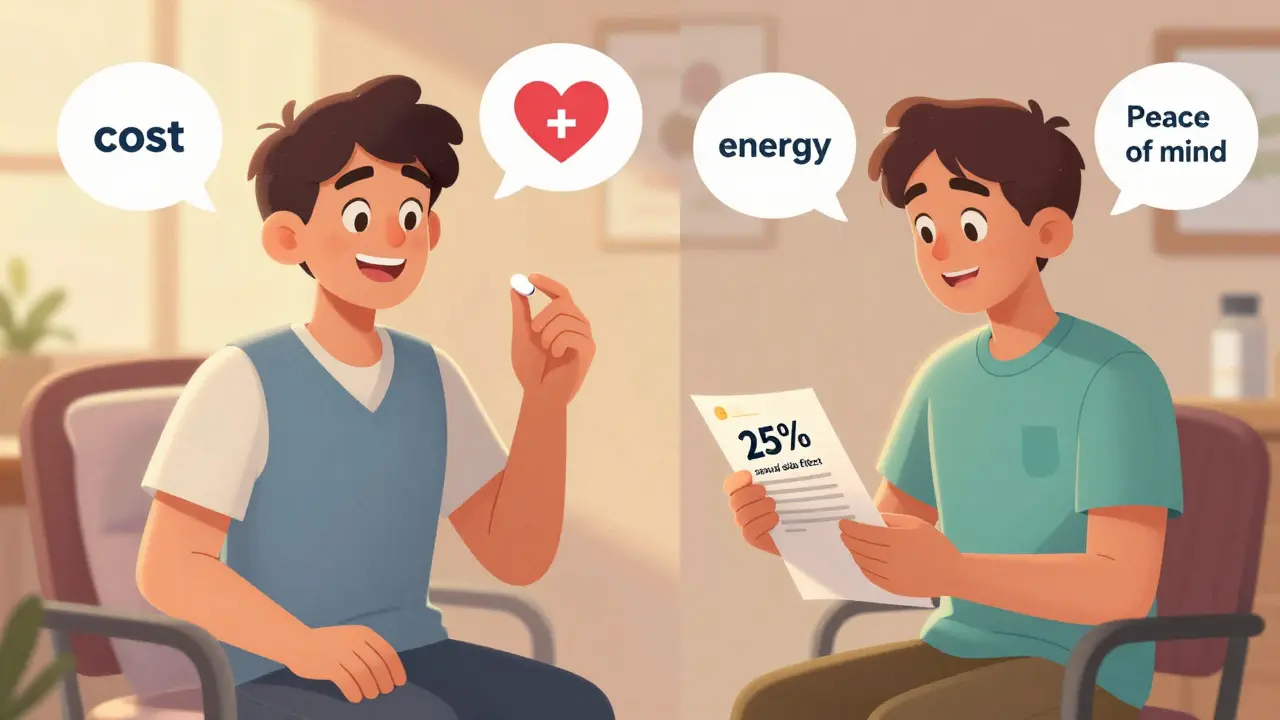
Real Stories From People Who Used Them
One veteran on Reddit described how he switched from warfarin to a DOAC after using the VA’s decision aid. “The icon array showed 8 out of 100 people on warfarin had a bleed. Only 3 on the new one. That made it real. I didn’t just trust my doctor - I trusted the numbers.” Another patient declined a switch to a new antidepressant after seeing the side effect profile. “I was fine on my old one. The new one had a 25% chance of sexual side effects. I didn’t want to risk it. My doctor said, ‘Good call.’” But not all stories are smooth. One woman felt the tool made two drugs seem equally good, even though one had decades of safety data and the other was brand new. “I felt like I was being pushed into a gamble,” she wrote. That’s why good tools don’t just list options - they show the strength of the evidence. “This drug has been studied in 10,000 people over 10 years.” “This one has only been studied in 500 people for 1 year.” That context matters.How to Use a Decision Aid - Step by Step
If your doctor offers one, here’s how to make the most of it:- Ask for it before your appointment. Say: “I’d like to review the decision aid for switching medications before we talk.”
- Use it alone first. Don’t rush. Read the numbers. Look at the icons. Note what surprises you.
- Write down your top 2 concerns. Is it weight? Cost? Side effects? Fatigue?
- During your visit, say: “I saw that Medication X has a 30% chance of nausea. That’s higher than I expected. How does that compare to what I’m on?”
- Ask: “Which option matches what I care about most?”
- Don’t feel pressured to decide right then. Say: “Can I take this home and think about it?”
The Future of Decision Aids
The tools are getting smarter. Intermountain Healthcare launched an AI tool in early 2024 that adapts the presentation based on how you learn. If you skip the numbers, it shows more visuals. If you zoom in on cost, it highlights price comparisons. The FDA is also stepping in. In 2024, they proposed new rules requiring decision aids to be tested on real patients - including those with low literacy or limited English - to make sure they’re truly understandable. But the biggest barrier isn’t technology. It’s funding. Only 38% of hospitals have money set aside to keep these tools updated as new drugs come out. A decision aid that doesn’t reflect current evidence is worse than none at all.Final Thought: You Have a Right to Understand
Switching medications shouldn’t feel like a leap into the dark. You deserve to know what you’re getting into - not just the upsides, but the real risks. Not vague warnings, but real numbers. Not assumptions, but clarity. Decision aids aren’t about replacing your doctor. They’re about giving you the tools to work with them - as a partner, not a passive recipient. If you’re being asked to switch meds, ask: “Is there a decision aid I can use?” If they say no, ask why. If they don’t know what you’re talking about, you’re not alone. But now you do.And that knowledge? That’s the first step to making a choice you won’t regret.



One comment
OMG I JUST USED ONE OF THESE FOR MY DIABETES SWITCH AND IT CHANGED EVERYTHING 😭 I was terrified of the GLP-1 because of the nausea stories, but the icon array showed only 30% chance? That’s like 3 out of 10 people. I’m on it now and only had mild stomach upset for 3 days. My doctor didn’t even mention the weight loss stats until I brought up the tool. Why don’t more docs use these???
So let me get this straight - we’re now outsourcing medical decisions to a PowerPoint with cute little people? 🤡 Next they’ll have a TikTok filter that tells you which antidepressant matches your zodiac sign. Meanwhile, my doctor still thinks ‘common side effects’ means ‘you’ll be fine.’
As a clinician who’s implemented decision aids in our clinic, I can confirm the ROI is real. The cognitive load reduction for patients is substantial - especially with preference-sensitive decisions. The icon arrays leverage visual literacy, which outperforms text-based risk communication by 40% in retention studies. It’s not magic, it’s behavioral design. The 7–12 min extra time? Totally worth it. Patients come in already primed with questions. We’re not replacing the consult - we’re enhancing it.
People still don’t understand absolute vs relative risk. That’s not a tool problem. That’s a population problem. If you think ‘22% lower risk’ means you’re safe, you shouldn’t be making med decisions. Get a guardian.
THIS IS WHY I HATE DOCTORS 😭 I was on metformin for 5 years, fine. Then they switched me to this new thing and said ‘it’s better’ and I believed them. Then I gained 12 lbs and my anxiety spiked. No one told me about the 30% nausea rate or that it’d make me feel like I was drowning in my own skin. I cried in the pharmacy aisle. Why didn’t they show me the 100 little people???
This is just another way for Big Pharma to trick people into taking expensive drugs. If your doctor really cared, they’d just tell you the truth. But no, now we need apps and icons and ‘value clarification’ - it’s all just marketing dressed up as medicine.
Man, I wish I had this when I switched from Zoloft to Lexapro. I was so scared of the weight gain and libido stuff, but no one ever broke it down. I just thought ‘oh well, I’ll deal.’ Ended up quitting after 3 months. If I’d seen the numbers - like ‘15% chance of weight gain vs 40% on your old one’ - I might’ve stuck with it. These tools are low-key lifesavers.
While I find the conceptual framework underpinning the implementation of decision aids to be both philosophically and clinically compelling, I must express a certain degree of concern regarding the linguistic accessibility of such tools for non-native English speakers and individuals with limited health literacy. The use of terms such as ‘absolute risk reduction’ and ‘preference-sensitive decisions’ - while technically accurate - may inadvertently alienate those who are most in need of such resources. Furthermore, the absence of culturally contextualized examples (e.g., cost comparisons in rural India versus urban Boston) may limit their efficacy across global populations. A truly equitable tool must be multilingual, multimodal, and mindful of socioeconomic nuance.
i used one of these for my blood thinners and it was mind blowing. the red dots showed 8 out of 100 on warfarin had a bleed, 3 on the new one. i was like wow. i did it. no more monthly blood tests. my doctor was like ‘how did you know all this?’ i said ‘the tool told me’ 😊
They don’t tell you how the tools are designed to make you feel like you’re in control when really, you’re just being nudged into the most profitable option for the hospital. I saw the same tool for two drugs - one was cheaper, one was newer. The new one had more icons, brighter colors. Guess which one I was ‘guided’ toward? Never again.
As someone who has lived with chronic illness for over two decades, I find the introduction of decision aids to be not merely a technological advancement, but a profound cultural shift in the physician-patient relationship - one that honors autonomy, respects cognitive diversity, and reclaims dignity from the paternalistic model that has long dominated clinical practice. That said, I urge institutions to ensure these tools are not merely deployed, but co-designed with patients who have lived experience - particularly those from marginalized communities - lest we replicate systemic inequities under the guise of innovation.