

Every year, tens of thousands of people in the U.S. get bitten by a tiny tick they never even noticed. Most of those bites are harmless. But for some, that little bite can lead to something far more serious: Lyme disease. It’s not just a summer annoyance-it’s a complex infection that can sneak into your body, spread silently, and cause long-term problems if not caught early. The good news? If you know what to look for and act fast, you can beat it. The bad news? Too many people miss the signs until it’s too late.
How Lyme Disease Starts: The Tick That Doesn’t Look Dangerous
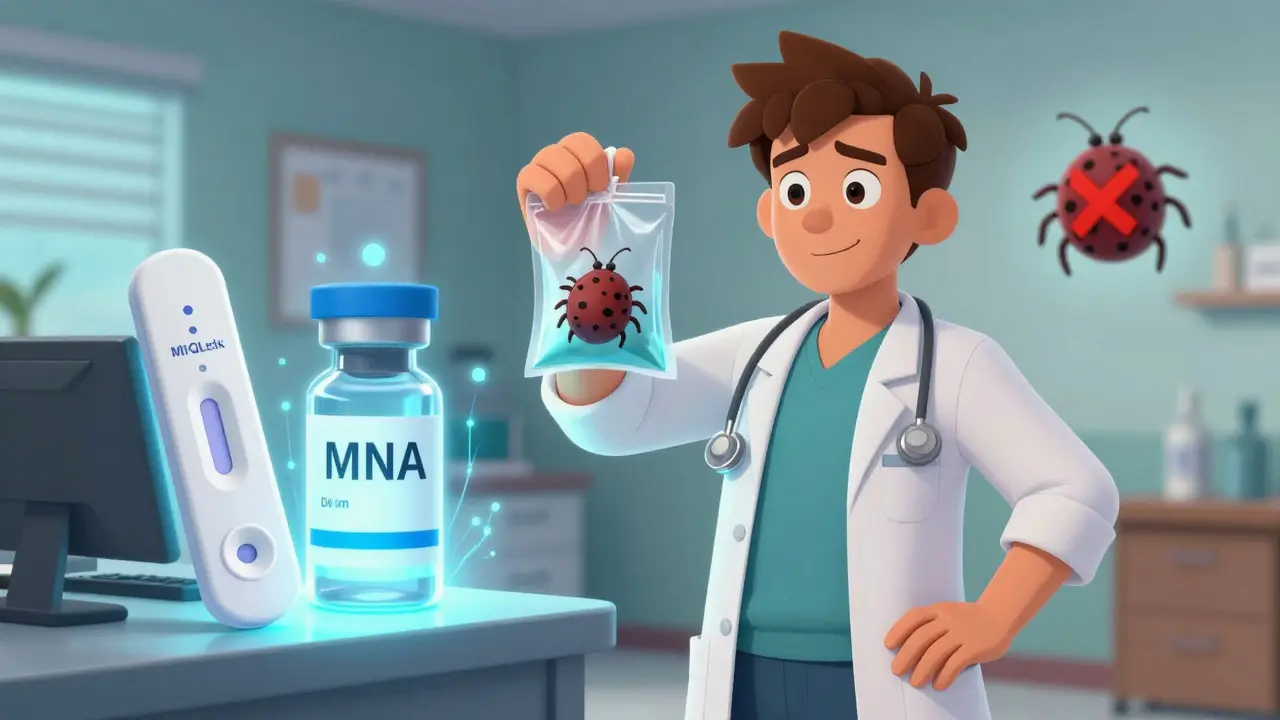
Lyme disease is caused by bacteria called Borrelia burgdorferi a spiral-shaped bacterium transmitted by infected blacklegged ticks. These ticks don’t jump or fly. They wait on grass or shrubs, latch onto you as you brush past, and start feeding. The real danger? The nymph stage-tiny, pea-sized ticks that are nearly invisible. They’re most active in spring and summer, right when people are outside hiking, gardening, or playing with kids in the yard.You won’t feel the bite. No itch. No pain. Just a small, dark speck clinging to your skin. But here’s the key: transmission doesn’t happen instantly. The CDC says the tick usually needs to be attached for more than 24 hours to pass on the bacteria. Some studies suggest it can start as early as 15 hours, but the risk jumps sharply after 36 hours. That’s why checking yourself right after being outdoors matters. Shower within two hours. Do a full-body tick check. If you find one, remove it with fine-tipped tweezers, pull straight up, and save it in a sealed bag. You might need it for testing later.
The Three Stages of Lyme Disease-And What They Look Like
Lyme disease doesn’t hit you all at once. It unfolds in stages, each with different symptoms. Missing the first stage is the biggest reason people end up with long-term problems.Stage 1: Early Localized (1-28 days after bite)
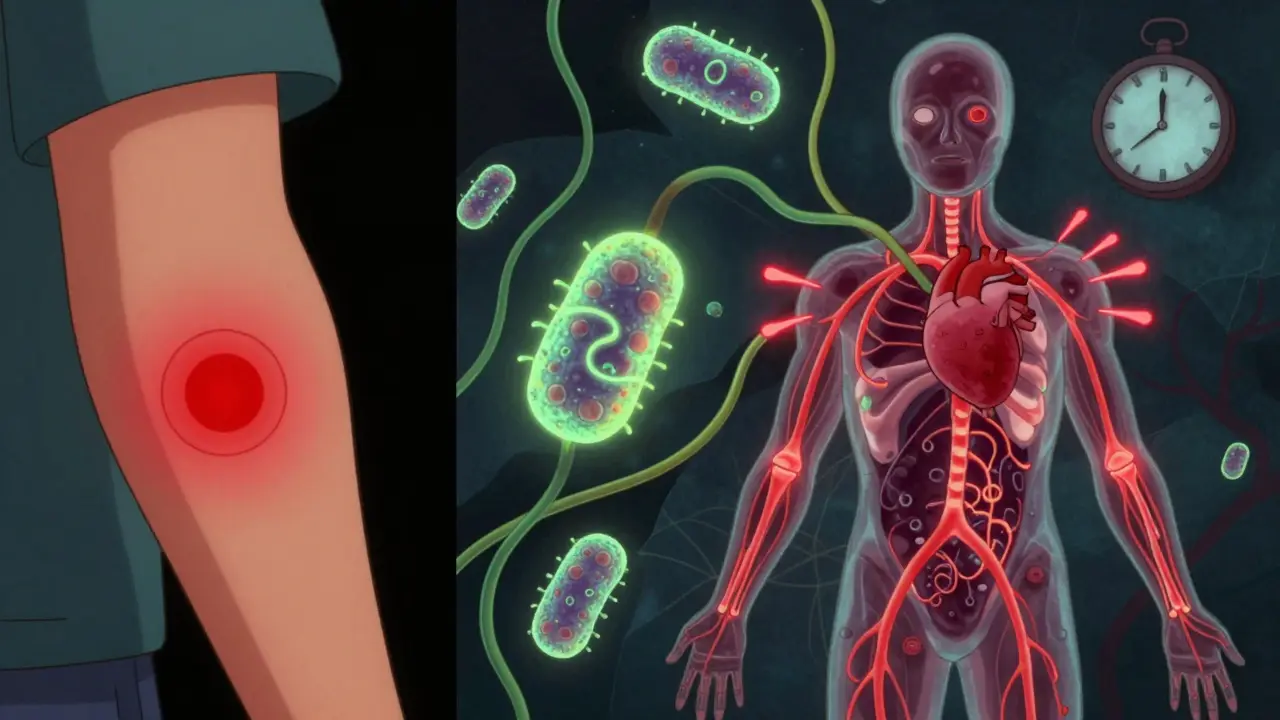
This is when the body first reacts. About 70-80% of people develop a rash called erythema migrans a circular, expanding red rash often with a bull’s-eye appearance. It shows up 7 to 14 days after the bite. The rash isn’t always perfect-it might look like a solid red patch, or fade in the center. It’s usually not itchy or painful, so people ignore it. That’s a mistake. This rash is the clearest sign of Lyme disease. In fact, if you have it, you don’t even need a blood test to start treatment.
Alongside the rash, you might feel flu-like: fever (45% of cases), headaches (61%), fatigue (70%), muscle aches, or swollen lymph nodes. These symptoms are easy to blame on a cold or overexertion. But if you’ve been in a wooded or grassy area and feel off, consider Lyme.
Stage 2: Early Disseminated (weeks to months after bite)
If the infection isn’t treated, the bacteria spread. Now you’re in Stage 2. This is when things get serious-and harder to diagnose.
You might get multiple rashes in new places. Nerve damage can cause facial palsy-drooping on one side of the face, like Bell’s palsy. Heart problems can show up too: Lyme carditis causes skipped heartbeats, dizziness, or shortness of breath. About 4-10% of untreated cases develop this. It’s rare, but it can be life-threatening if ignored.
Neurological symptoms like tingling, numbness, or shooting pains in your limbs are also common. Many people think these are signs of multiple sclerosis or stress. They’re not. They’re Lyme.
Stage 3: Late Disseminated (months to years after bite)
This is what happens when Lyme goes untreated for too long. Up to 60% of people develop severe joint pain and swelling, especially in the knees. The pain comes and goes. Some people get arthritis that lasts for years.
Neurological damage can become permanent: memory problems, trouble concentrating, brain fog, even depression. These symptoms mimic Alzheimer’s or chronic fatigue syndrome. That’s why so many people get misdiagnosed for years. One Reddit user, ‘LymeWarrior2020,’ spent 18 months and saw seven doctors before someone finally connected the dots: joint pain, fatigue, and a past tick bite.
How Lyme Disease Is Treated-And When It Works
Antibiotics work. But only if you start early.
For Stage 1, doctors prescribe doxycycline an oral antibiotic commonly used for early Lyme disease in adults for 10 to 21 days. Kids and pregnant women get amoxicillin a penicillin-based antibiotic safe for children and pregnant women. Most people feel better within days. Full recovery usually happens in a few weeks.
Stage 2 and 3? That’s where things change. If you have neurological or heart symptoms, you’ll need ceftriaxone an intravenous antibiotic used for advanced Lyme disease given through an IV for 14 to 28 days. This isn’t a quick fix-it’s a hospital visit, sometimes for weeks.
Here’s the hard truth: 87% of people treated within 30 days of symptoms report complete recovery, according to CDC case studies. But if you wait three months? That number drops. And if you wait a year? Recovery isn’t guaranteed.
The Controversy: Is There Such a Thing as ‘Chronic Lyme’?
Here’s where things get messy.
The Infectious Diseases Society of America (IDSA) a professional organization that sets treatment guidelines for infectious diseases says there’s no proof that long-term antibiotics help people with lingering symptoms after standard treatment. They call it ‘Post-Treatment Lyme Disease Syndrome’ (PTLDS)-not an ongoing infection, but a set of symptoms that stick around for months, possibly due to immune system damage.
But Dr. Raphael Stricker a leading researcher and advocate for patients with persistent Lyme symptoms and the International Lyme and Associated Diseases Society (ILADS) an organization advocating for individualized Lyme treatment protocols disagree. They say 10-20% of patients need longer courses of antibiotics because the bacteria hide in tissues and don’t respond to short-term treatment.
And the patients? They’re caught in the middle. A 2021 survey by the Bay Area Lyme Foundation found 42% of patients still had symptoms six months after treatment. Fatigue (78%), brain fog (65%), and joint pain (61%) were the top complaints. These aren’t imaginary. They’re real. And they’re debilitating.
So far, the FDA and CDC don’t support long-term antibiotics for PTLDS. But 28 U.S. states have passed laws protecting doctors who prescribe them anyway. That’s how deep the divide goes.
What’s New in Lyme Disease? Diagnosis, Vaccines, and Hope
There’s progress. In March 2023, the FDA approved the first new Lyme test in 20 years: the MiQLick test a urine-based diagnostic test that detects Borrelia burgdorferi DNA. It finds the bacteria directly, not just antibodies. That’s huge. Current blood tests miss up to 35% of early cases because your body hasn’t made antibodies yet.
There’s also a new vaccine on the horizon. VLA15 a Lyme disease vaccine candidate developed by Valneva with Pfizer, co-developed by Valneva and Pfizer, showed 70-96% effectiveness in Phase 2 trials. Human trials are expected to begin in mid-2024.
Researchers at NIAID are even working on an mRNA Lyme vaccine-similar to the ones used for COVID. That could be a game-changer.
How to Protect Yourself-And What to Do If You Get Bitten
Prevention is your best defense.
- Wear long pants and tuck them into socks when walking in grassy or wooded areas.
- Use EPA-approved tick repellents with DEET or permethrin on clothing.
- Check your body, scalp, and pets every time you come inside. Don’t wait until bedtime.
- Shower within two hours of being outdoors-it washes off unattached ticks.
- If you find an engorged tick that’s been attached for more than 36 hours in a high-risk area (like New England or the upper Midwest), ask your doctor about a single 200mg dose of doxycycline. It can prevent infection if taken within 72 hours.
And if you develop a rash, fever, or joint pain after a tick bite? Don’t wait. Don’t Google it for weeks. Go to your doctor. Say: ‘I think I might have Lyme disease.’ Show them the tick if you saved it. Bring up the rash. Insist on testing if needed.
Because Lyme disease isn’t just a tick bite. It’s a race against time. And the sooner you start, the better your chance of walking away completely healthy.
Can you get Lyme disease from a dog bite?
No. Lyme disease is only spread through the bite of infected ticks, specifically blacklegged ticks (Ixodes species). Dogs can carry ticks into your home, but they can’t transmit the bacteria directly. If your dog has ticks, check yourself and treat your pet with vet-approved tick prevention.
Is Lyme disease contagious between people?
No. You can’t catch Lyme disease from another person through touch, kissing, sex, or blood transfusion. There’s no evidence it passes from mother to baby during pregnancy, though untreated Lyme in pregnancy can lead to complications. The only transmission route is through infected ticks.
Can you get Lyme disease more than once?
Yes. Having Lyme disease once doesn’t give you immunity. You can get infected again if bitten by another infected tick. That’s why ongoing prevention matters-even if you’ve had it before.
Do all ticks carry Lyme disease?
No. Only certain species-mainly blacklegged ticks (Ixodes scapularis and Ixodes pacificus)-can spread Lyme. And even among those, only a portion are infected. In high-risk areas, about 20-50% of nymph ticks carry the bacteria. Most ticks you find won’t give you Lyme, but you can’t tell just by looking.
What if my blood test for Lyme is negative but I still have symptoms?
Don’t dismiss it. Blood tests for Lyme are unreliable in the first few weeks after infection because your body hasn’t produced enough antibodies yet. If you have a classic bull’s-eye rash, treatment should start immediately-no test needed. If you have symptoms and a known tick bite but a negative test, your doctor may still treat you based on clinical signs. Early treatment is more important than test results.
What Happens If You Ignore It?
Some people think, ‘I felt better after a few days, so it’s gone.’ That’s dangerous. The bacteria don’t disappear-they hide. They settle in joints, nerves, and tissues. What starts as a rash can become arthritis. What feels like a headache can turn into memory loss. What seems like tiredness might be your nervous system damaged.
Lyme disease isn’t just a bug you shake off. It’s a silent invader. And if you don’t stop it early, it can change your life.
The good news? You’re not powerless. Know the signs. Check for ticks. Act fast. Your future self will thank you.




One comment
Just got back from a hike and did my usual tick check-found one on my ankle. Removed it with tweezers, saved it in a bag, and showered right away. Felt weird about it but better safe than sorry.
As a primary care physician, I can't emphasize enough: if you see erythema migrans, treat immediately. No blood test required. The CDC guidelines are clear, and delaying treatment increases the risk of dissemination. Early intervention is 90% effective. Don't wait for labs.
my friend got diagnosed last year after ignoring a rash for 3 months… she’s still dealing with brain fog and joint pain. it’s not a joke. check yourself. seriously.
Knowledge is power. The more people understand the stages of Lyme, the less likely they are to fall into the trap of dismissal. Prevention, early detection, and trust in clinical signs over imperfect tests-this is the path forward.
They don’t want you to know this but the CDC is hiding the truth. Lyme isn’t just from ticks-it’s in the water, the food, the vaccines. They don’t want you cured because the pharmaceutical industry makes billions off chronic symptoms. That’s why they deny long-term antibiotics. Wake up.
People who don’t take ticks seriously are just lazy. You go outside? You check yourself. No excuses. I’ve seen too many idiots ignore the rash and then cry about being ‘misdiagnosed’ for years. If you’re not willing to do a 30-second body scan after hiking, you deserve what you get.
the miqlick test is a game changer but they’re still not testing for co-infections-babesia, anaplasma, bartonella… those are the real killers. the labs only look for borrelia like it’s the only thing that matters. total bs. you need a specialist who knows the full spectrum.
It’s fascinating how the medical establishment clings to outdated protocols while patients suffer. The IDSA guidelines are a product of industry influence, not science. ILADS has peer-reviewed data. Why are we still arguing about this in 2024? It’s embarrassing.
Y’all act like Lyme is some new conspiracy but we’ve been dealing with this since the 70s in Lyme, CT. The government’s been covering it up since day one. I’m from Connecticut. My cousin’s still on IV antibiotics after 8 years. They don’t want you to know how easy it is to get this-and how hard it is to get help.
Antibiotics don’t work long-term. It’s biofilm. You need pulsed therapy. Rife machines. Herbal protocols. The system won’t tell you this because it’s not profitable.
It’s ironic-we fear viruses more than bacteria, yet Lyme is a silent, slow-moving pathogen that rewires the body. We treat symptoms, not the root. Maybe the real question isn’t how to cure it, but why we’ve built a system that fails the chronically ill.
The most dangerous thing about Lyme isn’t the bacteria-it’s the silence around it. People dismiss rashes. Doctors dismiss symptoms. Patients dismiss their own bodies. It’s a failure of attention, not medicine.
In my village in rural Maine, every family has a Lyme story. We’ve learned to respect the woods, not fear them. We check for ticks, we teach our children, we save the ticks. It’s not paranoia-it’s tradition now. A quiet, necessary ritual.
While the clinical guidelines are well-intentioned, the heterogeneity of Borrelia burgdorferi strains, coupled with potential immune modulation via extracellular vesicles, suggests that a one-size-fits-all antibiotic protocol may be insufficient. The emergence of persister cells, biofilm-like aggregates, and possible intracellular reservoirs necessitates a re-evaluation of therapeutic duration and adjunctive immunomodulatory strategies. Furthermore, the diagnostic latency inherent in antibody-based serology underscores the urgent need for direct detection methods such as MiQLick. The regulatory inertia surrounding long-term antimicrobial therapy reflects a profound epistemological divide between evidence-based medicine and patient-reported outcomes, which, while anecdotal, are empirically consistent across large, uncontrolled cohorts. Until the medical community acknowledges the neuroimmunological sequelae as legitimate pathophysiological phenomena-rather than psychosomatic artifacts-we will continue to fail a significant subset of patients who present with persistent, disabling symptoms despite standard-of-care intervention.