
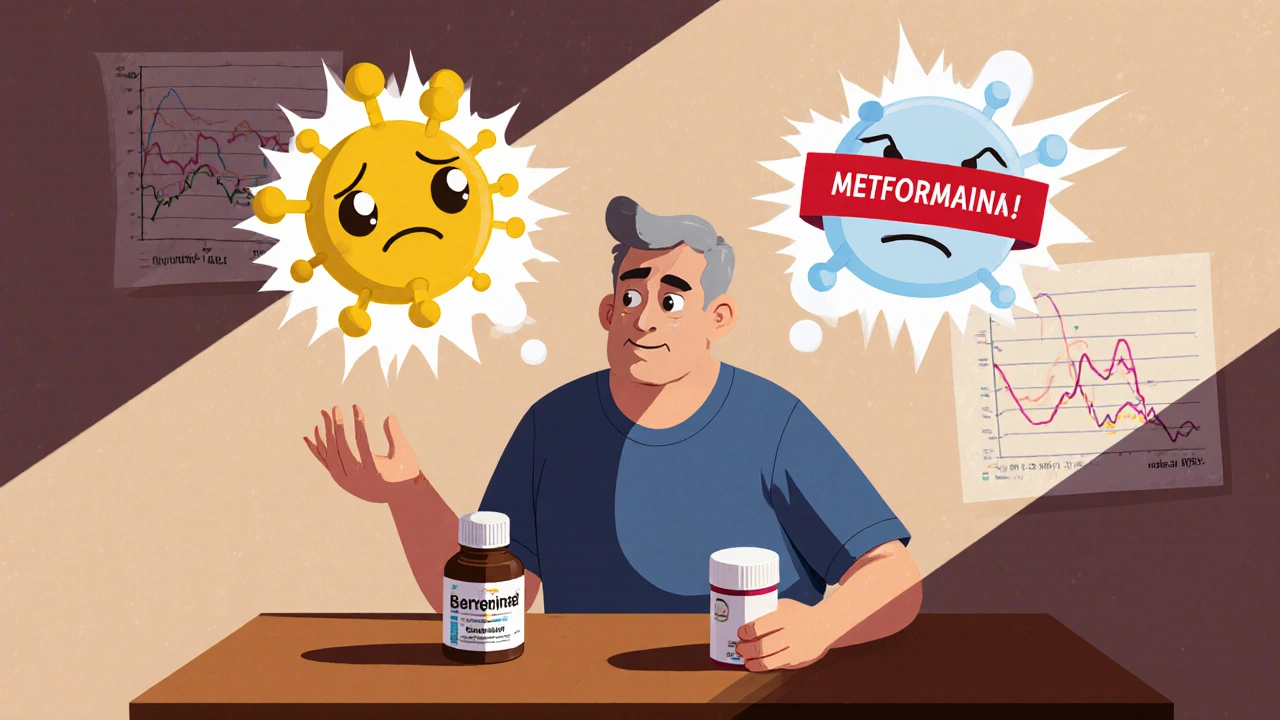
People with type 2 diabetes often turn to herbal supplements like goldenseal hoping for better blood sugar control. But what they don’t realize is that goldenseal might be quietly undermining their prescription medication-metformin. This isn’t just a theoretical concern. Real studies show it can lower how much metformin your body absorbs, and that could mean your blood sugar starts creeping up again-without you knowing why.
What’s Actually Happening in Your Body?
Goldenseal contains a compound called berberine, which has been shown in multiple studies to help lower blood sugar. That’s why many people take it. But berberine doesn’t just work on its own. It also interferes with the way your gut pulls metformin into your bloodstream. Specifically, it blocks a transporter called OCT1, which metformin relies on to get absorbed. The result? Less metformin reaches your system.
This isn’t a minor effect. A 2021 study from Washington State University found that when people took goldenseal alongside low doses of metformin (500-750 mg daily), metformin levels in the blood dropped by 20-25%. That’s like skipping a full dose every other day. At higher doses (2000-2550 mg), the effect disappeared-but that doesn’t mean it’s safe. You can’t just crank up your metformin dose to compensate. Higher doses come with more side effects like stomach upset, diarrhea, and vitamin B12 deficiency.
Why the Confusion? Blood Sugar Looks Better, But It’s a Trap
Here’s where things get tricky. In the same 2025 clinical trial, people taking goldenseal with metformin actually saw their HbA1c drop from 6.8% to 6.5%. That sounds good, right? But here’s the catch: berberine itself lowers blood sugar. So while metformin was being blocked, berberine was stepping in to fill the gap. Your numbers look fine-but you’re not getting the full benefit of your prescribed treatment. You’re relying on a supplement whose strength, purity, and timing vary wildly from product to product.
Think of it like driving with one foot on the gas and one on the brake. You’re moving forward, but you’re not in control. And if you stop taking goldenseal suddenly, your metformin levels will spike back up, but your blood sugar might also jump because you’ve lost berberine’s effect. This rollercoaster puts you at risk for both high and low blood sugar episodes.
Who’s Most at Risk?
If you’re taking metformin at a low dose-500 mg to 1000 mg per day-you’re the most vulnerable. The interaction is strongest here. People on higher doses (2000 mg or more) didn’t show significant drops in metformin levels, but that doesn’t mean it’s safe. You’re already pushing the limits of what your body can tolerate with side effects.
Older adults, especially those over 60, are also at higher risk. Berberine’s blood sugar-lowering effect weakens with age, according to a 2023 meta-analysis of 2,334 patients. So if you’re older and taking goldenseal, you might be losing the metformin effect without gaining much from berberine. That’s a double hit.
And if you have kidney issues? Be extra careful. Metformin is cleared through your kidneys. Even small changes in how it’s absorbed can throw off your whole balance.

What Do the Experts Say?
The MSD Manual and the Merck Manual both warn that goldenseal can reduce metformin levels while also increasing hypoglycemia risk through berberine. That’s a rare and dangerous combo: one part of the supplement weakens your medication, another part overpowers your body’s natural glucose regulation.
The American Diabetes Association doesn’t list goldenseal specifically in its 2024 guidelines-but it does say you should review all supplements with your doctor. The Endocrine Society went further in 2022, calling herbal interactions with diabetes drugs a “clinical concern.”
The FDA hasn’t issued a formal warning-but they don’t need to. The science is clear. And if your doctor doesn’t ask about supplements, you have to bring it up.
What Should You Do?
If you’re already taking goldenseal and metformin:
- Don’t stop either suddenly. That could cause dangerous blood sugar swings.
- Track your fasting and post-meal blood sugar daily for two weeks. Write it down.
- Get your HbA1c tested. If it’s rising even slightly, goldenseal might be the culprit.
- Talk to your doctor or pharmacist. Bring the supplement bottle with you. They need to see the exact product and dose.
If you’re thinking about starting goldenseal:
- Don’t. At least not without medical supervision.
- Ask your doctor if berberine supplements (without goldenseal’s other compounds) are a safer alternative.
- Remember: goldenseal is an endangered plant. Harvesting it harms ecosystems. There are better, regulated options.
What About Other Herbal Supplements?
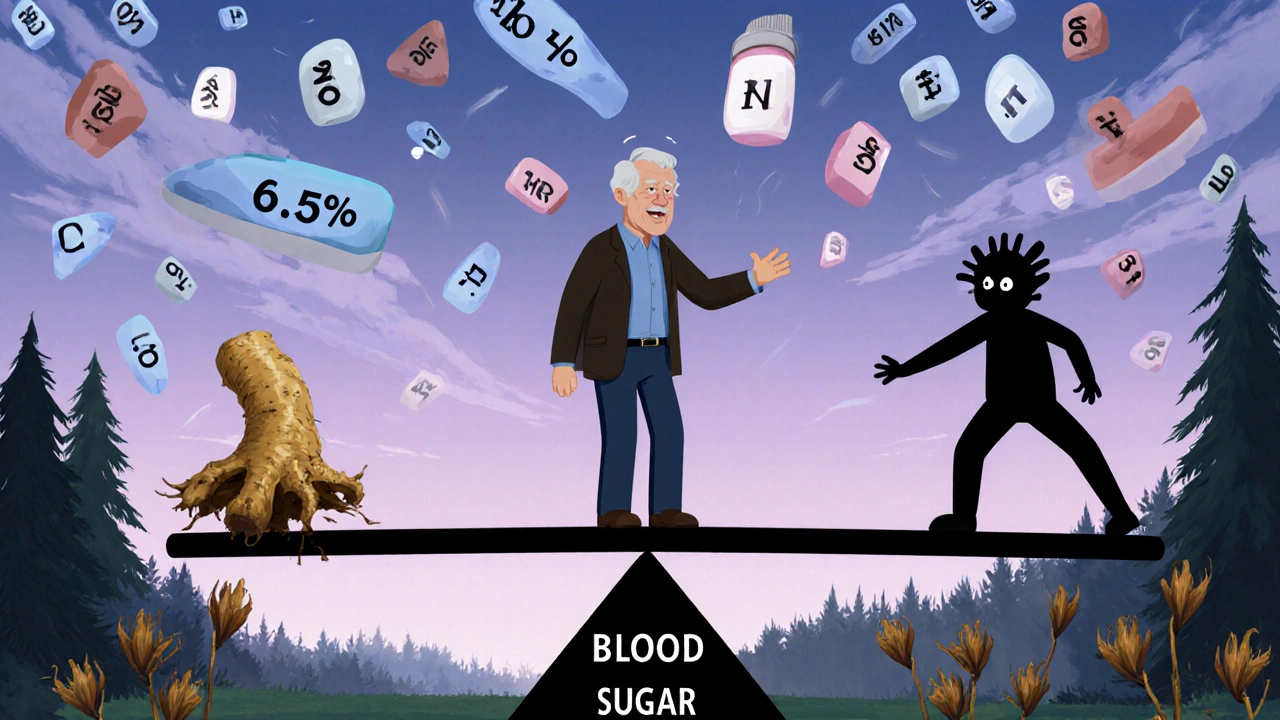
Goldenseal isn’t the only one. St. John’s wort, garlic, cinnamon, and bitter melon can all interact with diabetes meds. Some lower blood sugar too much. Others make your meds less effective. The key is consistency. If you’re going to take something, make sure your doctor knows-and monitor your numbers closely.
Supplements aren’t harmless just because they’re natural. They’re powerful chemicals. And when mixed with prescription drugs, they can change how your body works in ways you can’t predict.
Bottom Line
Goldenseal and metformin don’t play well together. Even if your blood sugar looks okay, you’re playing with fire. You’re risking unstable glucose control, unexpected highs and lows, and long-term complications. The fact that berberine lowers blood sugar doesn’t make this interaction safe-it makes it more dangerous because it hides the problem.
There’s no shortcut to good diabetes management. No herb replaces a consistent routine, proper dosing, and regular monitoring. If you want to try something natural, talk to your doctor first. There are safer, better-studied options out there. And your blood sugar deserves more than guesswork.


One comment
Been on metformin for 8 years and tried goldenseal last year because my friend swore by it. My fasting sugars went nuts for two weeks-no idea why until I read this. Stopped it cold. My HbA1c went from 6.4 to 6.8 in 3 months. Don’t let ‘natural’ fool you. This stuff is a chemical grenade in your gut.
Exactly. Berberine inhibits OCT1 transporters with an IC50 of 2.3 µM. Metformin’s bioavailability is OCT1-dependent. The 2021 Washington State study used LC-MS/MS plasma assays-solid methodology. This isn’t anecdotal. It’s pharmacokinetics 101.
ok but like… what if the universe wants you to take goldenseal? like maybe your soul needs the berberine? i mean, i got my blood sugar down to 89 after 3 weeks of tea and moonlight meditation. science is just a tool of the pharmaceutical cabal. also i think the FDA is run by robots from mars. 🌕💊
They don’t want you to know this because Big Pharma owns goldenseal plantations in the Himalayas and they’re secretly poisoning your water supply with glyphosate to make you dependent on metformin. The Endocrine Society? Paid by Novo Nordisk. The MSD Manual? A front. Even the FDA is compromised. They’ve been suppressing this for decades so you keep buying pills instead of healing with ancient Indian wisdom. You think your doctor cares? They’re paid by the same people who sold you this lie.
Stop being dramatic. If you’re on 2000mg metformin and your sugars are fine, you’re fine. No need to panic. Goldenseal’s not a poison. It’s just another herb. People have been mixing herbs and meds for centuries. You’re overthinking it. Just don’t be an idiot and take it with your breakfast.
Interesting. I’ve been tracking my glucose for two years now. I started goldenseal six months ago. My HbA1c dropped from 7.1 to 6.5. But my fasting numbers have been climbing slowly-up 8 mg/dL over three months. I didn’t connect the dots until now. I’m cutting it out this week and retesting. Thanks for the clarity.
As someone who grew up in rural Bengal, we used berberine-rich plants like daruharidra for generations. But we never mixed them with allopathic drugs. Our elders knew: nature works in harmony, not in competition. Modern pharmacology ignores context. You can’t isolate a compound, slap a label on it, and pretend it behaves the same in a pill as it does in a whole-plant decoction. This isn’t just about OCT1-it’s about losing the wisdom of holistic systems.
I get why people do this. I used to take cinnamon for my sugar too. Thought it was ‘safe’ because it’s in my spice rack. Then I started having weird lows after workouts. My endo asked me about supplements-I was embarrassed to admit it. Turns out, cinnamon + metformin = hypoglycemia risk. Point is: if you’re not telling your doctor, you’re not managing your health-you’re guessing.
Y’all need to stop being scared of herbs and start being smart about them. Goldenseal? Maybe not. But berberine capsules-standardized, lab-tested, from a reputable brand? Totally different. I take 500mg twice daily with meals. My A1c is 5.9. I don’t use goldenseal root powder-I use a purified extract. And yes, I told my doctor. He said ‘good job’ and didn’t judge me. You can do both: science and nature. Just don’t be sloppy.
Let me tell you something, folks-this isn’t just about blood sugar. This is about trust. Trust in your body. Trust in your doctor. Trust in the science. And trust that if something sounds too good to be true-like ‘herbs fix diabetes’-it probably is. Don’t let desperation make you dumb. Your pancreas doesn’t care if it’s natural or synthetic-it just wants balance. Keep it simple. Track. Talk. Adjust. That’s it.
I’m 67 and on 1000mg metformin daily. Took goldenseal for three months because my cousin swore it helped his arthritis. My sugar readings were all over the place-sometimes low, sometimes sky-high. I didn’t realize it was the supplement until I stopped it. My doctor was impressed I caught it myself. Bottom line: if you’re over 60, your body doesn’t handle herbal cocktails like it used to. Be gentle. Be cautious. Be informed.
While I appreciate the clinical data presented, I must emphasize that the article’s tone is alarmist and paternalistic. It assumes patients are incapable of self-regulation. Why not empower individuals to make informed decisions rather than instill fear? The notion that ‘natural’ equals dangerous is a modern myth. Perhaps the real issue is the medical establishment’s reluctance to integrate botanical medicine into standard care-not the supplement itself.
You’re not alone. I was terrified to tell my doctor I was taking turmeric and ginger supplements. I thought he’d roll his eyes. Instead, he said, ‘Tell me everything. That’s how we keep you safe.’ That moment changed everything. You don’t have to be perfect. You just have to be honest. Your health is worth that conversation.
so like… what if metformin is the real problem? what if the whole diabetes industry is built on lies? i mean, why do we even need pills? why not just eat less sugar? why not walk? why not sleep? why is everyone so obsessed with chemicals? i think goldenseal is the truth. i think the system is the disease. i think we’re all just cells in a giant machine and this post is a glitch in the matrix. also i saw a guy on tiktok who cured his diabetes with lemon water and moon phases. maybe he was right. maybe we’re all wrong. maybe nothing matters. maybe just breathe.