
MAOI Cold Medicine Safety Checker
Check Medication Safety
Enter ingredient name or product to see if it's safe with MAOIs
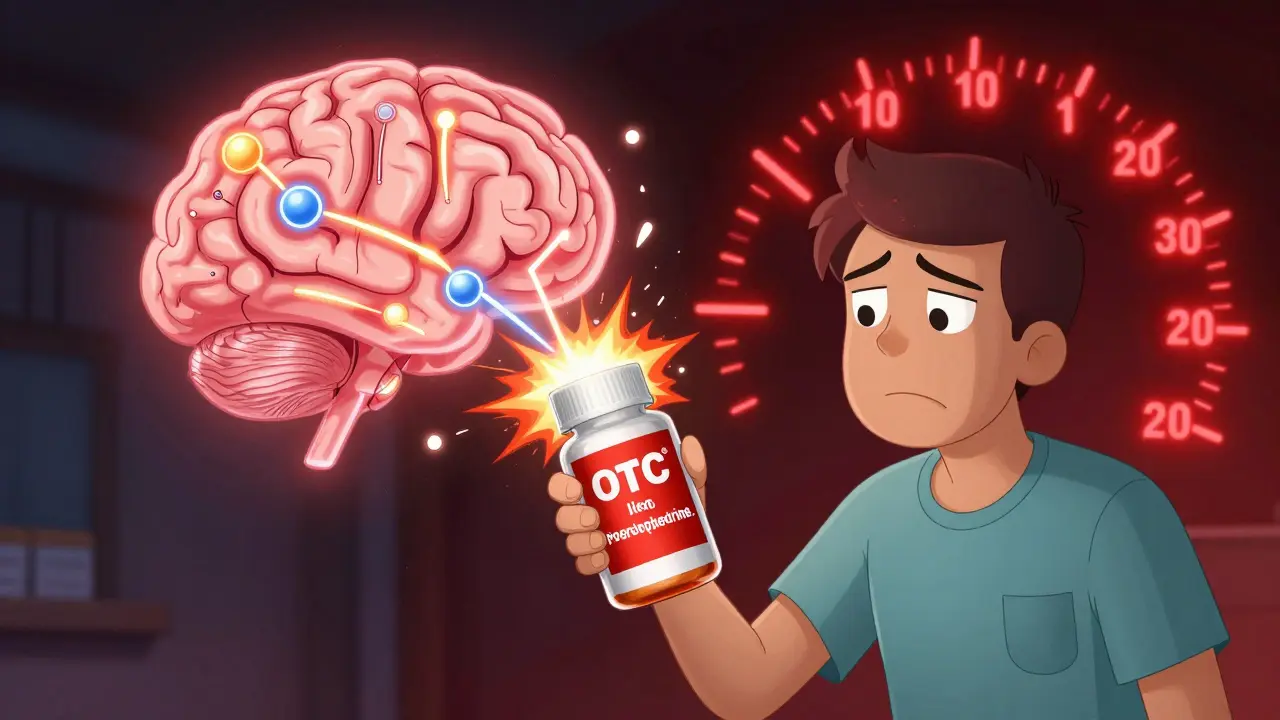
If you're taking an MAOI for depression, even a simple cold remedy could send you to the emergency room. This isn't a hypothetical risk-it's a documented, life-threatening danger that still catches people off guard today. Over-the-counter cold medicines, often seen as harmless fixes for sniffles and coughs, can trigger hypertensive crisis or serotonin syndrome when mixed with MAOIs. These aren't side effects you can ignore. They can kill.
What Are MAOIs and Why Do They Matter?
Monoamine oxidase inhibitors, or MAOIs, are antidepressants that work differently from SSRIs or SNRIs. Instead of blocking serotonin reuptake, they stop the enzyme monoamine oxidase from breaking down key brain chemicals like serotonin, norepinephrine, and dopamine. This boosts mood-but it also means your body can't clear out certain substances from food or medicine the way it normally would. Common MAOIs include phenelzine (Nardil), tranylcypromine (Parnate), isocarboxazid (Marplan), and the transdermal selegiline patch (Emsam). Even though they make up less than 1% of all antidepressant prescriptions in the U.S., they’re still used for severe, treatment-resistant depression. In these cases, they work better than other drugs-up to 50% of patients respond, compared to 30-40% with SSRIs. But their power comes with a price. MAOIs don’t just affect brain chemistry. They interfere with how your body handles a long list of common medications, including ones you can buy without a prescription.The Deadly Combo: MAOIs and Decongestants
Pseudoephedrine and phenylephrine are the two most common decongestants in OTC cold medicines. You’ll find them in Sudafed, Sudafed PE, DayQuil, NyQuil, and dozens of other products. These drugs stimulate the nervous system to shrink swollen nasal passages-but in someone on an MAOI, they become dangerous. Here’s why: MAOIs block the breakdown of norepinephrine. When pseudoephedrine or phenylephrine hits your system, it forces your body to release even more norepinephrine. Normally, your body would break down the excess. But with an MAOI, it can’t. The result? A sudden, massive spike in blood pressure. Studies show even a single 30mg dose of pseudoephedrine can raise systolic blood pressure by over 40 mmHg in someone taking phenelzine. That’s not just high-it’s a hypertensive crisis. Symptoms include severe headache, blurred vision, chest pain, nausea, and a pounding heartbeat. Blood pressure readings above 180/120 mmHg are an emergency. Between 2018 and 2022, the FDA recorded 127 cases of hypertensive crisis linked to MAOIs and OTC decongestants. Eighteen of those cases required hospitalization. One Reddit user shared their story: after taking Sudafed with Parnate, their blood pressure soared past 220/110. They ended up in the ER with a hypertensive emergency. This isn’t rare. It’s predictable.Dextromethorphan: The Hidden Serotonin Trap
Dextromethorphan (DXM) is the cough suppressant in Robitussin DM, Delsym, and many multi-symptom cold formulas. It’s often thought of as safe, even abused recreationally. But with MAOIs, it’s a different story. DXM increases serotonin levels in the brain. So do MAOIs. When you combine them, serotonin floods your system faster than your body can handle. This leads to serotonin syndrome-a potentially fatal condition marked by confusion, rapid heart rate, high fever, muscle rigidity, tremors, and seizures. The National Center for Biotechnology Information (NCBI) calls the combination of irreversible MAOIs and serotonergic drugs “the most toxic combination” for serotonin syndrome. The American Psychiatric Association warns that switching from an MAOI to another antidepressant requires at least a 14-day washout period-not because of side effects, but because the enzyme inhibition lasts that long. That means even if you stopped your MAOI last week, you’re still at risk. A user on Psych Forums described feeling severe headache, neck stiffness, and palpitations for 12 hours after taking DayQuil with Nardil. They didn’t need hospitalization-but they came close. This is the gray zone where people think they’re fine… until they’re not.What OTC Medicines Are Safe?
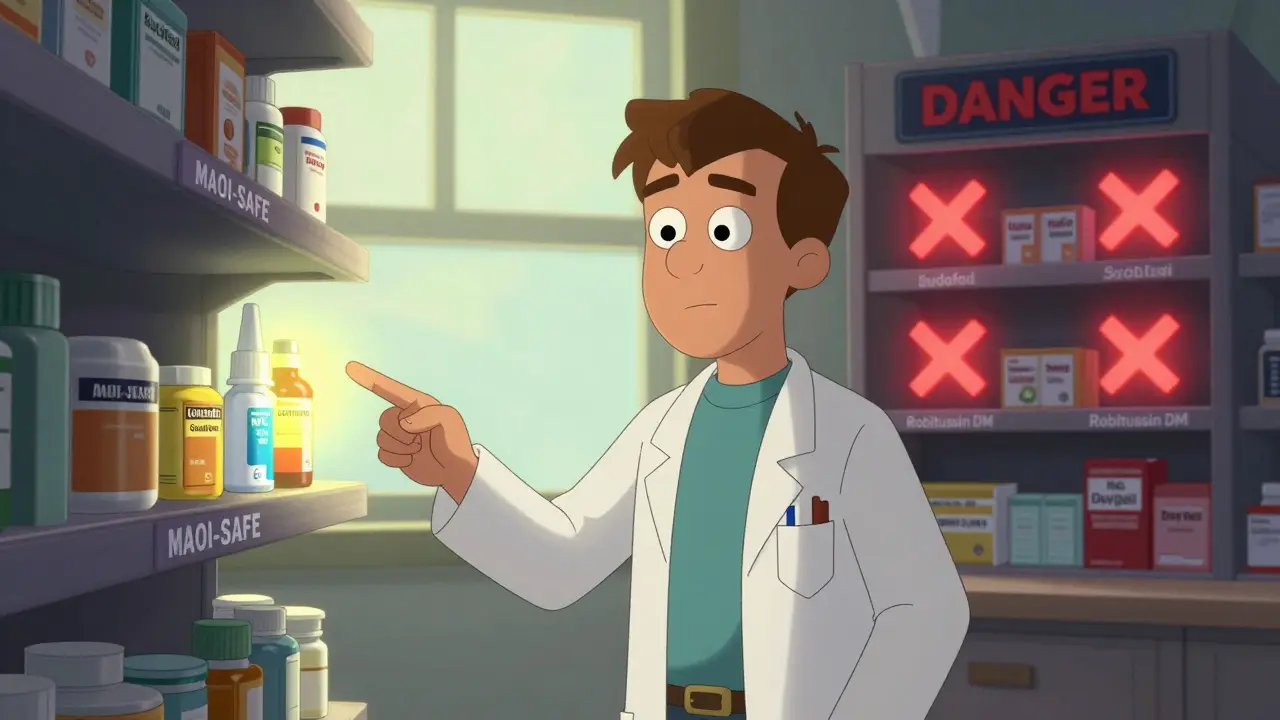
You don’t have to suffer through a cold untreated. But you have to be smart about it. Here’s what’s generally safe:- Acetaminophen (Tylenol) for fever or pain
- Guaifenesin (Mucinex) for chest congestion
- Saline nasal spray for stuffy nose
- Antihistamines like loratadine (Claritin) or cetirizine (Zyrtec) for runny nose or allergies
- Pseudoephedrine
- Phenylephrine
- Dextromethorphan
- Phenylpropanolamine (banned in the U.S. but still found in some imported products)
- Ephedrine
Why Labels Don’t Always Help
Many people assume that if a drug is sold over the counter, it’s safe. But OTC doesn’t mean harmless. The FDA’s 1976 expert panel on cough and cold medicines already warned that MAOI users should avoid oral decongestants unless under a doctor’s supervision. That warning still stands. The problem? Labels are cluttered. You’ll see “cold & flu relief” or “multi-symptom” on the front, but the real danger is hidden in the “Active Ingredients” list. And most people don’t read it. Even worse, some products change formulations without changing the packaging. A bottle that was safe last year might contain pseudoephedrine now. That’s why relying on memory isn’t enough.How to Stay Safe
If you’re on an MAOI, here’s what you need to do:- Get a printed list from your doctor or pharmacist of all OTC drugs to avoid. Keep it in your wallet or phone.
- Before buying any OTC product, check the active ingredients against your list. Don’t trust the product name.
- When in doubt, call your pharmacist. They’re trained to spot these interactions.
- Use single-ingredient products only. Avoid multi-symptom formulas.
- Wear a medical alert bracelet that says “MAOI-avoid decongestants and DXM.”
What About the Emsam Patch?
The selegiline patch (Emsam) is often seen as safer. At the lowest dose (6 mg/24hr), dietary tyramine restrictions are relaxed. But here’s the truth: the drug interaction risks with OTC cold medicines are the same. The FDA, the American Psychiatric Association, and the manufacturer all agree: even with Emsam, you must avoid pseudoephedrine, phenylephrine, and dextromethorphan. The patch doesn’t make you immune. It just changes one part of the risk profile.
What If You Accidentally Take One?
If you take a decongestant or DXM by accident:- Call your doctor immediately.
- If you have severe headache, chest pain, confusion, or high blood pressure, go to the ER.
- Don’t wait to see if it gets better. These reactions can escalate in minutes.
Is There Hope for the Future?
Researchers are working on new MAOIs with fewer interactions. One compound, CX-1010, is a reversible MAO-A inhibitor currently in Phase II trials. Early results suggest it might not cause the same dangerous spikes in blood pressure with decongestants. But until then, the old rules still apply. MAOIs remain one of the most effective treatments for severe depression that won’t respond to anything else. That’s why they’re still prescribed. But they demand respect.Final Takeaway
You don’t have to give up your MAOI. You don’t have to suffer through cold season alone. But you do need to treat OTC medicines like dangerous chemicals-because they are. Every time you reach for a cold remedy, ask: “What’s in this?” Not “Is this safe?”-because the answer is never obvious. Always check the ingredients. Always verify. Always err on the side of caution. Your life depends on it.Can I take Tylenol with an MAOI?
Yes, acetaminophen (Tylenol) is generally safe to use with MAOIs. It does not affect serotonin levels or blood pressure in a way that interacts dangerously with MAOIs. It’s one of the few pain relievers and fever reducers you can use without risk. Avoid NSAIDs like ibuprofen or naproxen unless approved by your doctor, as they carry their own risks.
Is Sudafed PE safe with MAOIs?
No, Sudafed PE is not safe. It contains phenylephrine, a decongestant that can cause a dangerous spike in blood pressure when combined with MAOIs. Even though it replaced pseudoephedrine in many products, phenylephrine carries the same risk. Avoid all forms of Sudafed, including the PE version.
Can I use a nasal spray instead of oral decongestants?
Yes, saline nasal sprays are safe and recommended. They work mechanically to clear congestion without entering your bloodstream. Avoid decongestant nasal sprays like oxymetazoline (Afrin), as they can still be absorbed and trigger hypertensive crisis. Stick to plain saltwater sprays.
How long after stopping an MAOI can I take OTC cold medicine?
Wait at least 14 days after stopping any MAOI before taking dextromethorphan, pseudoephedrine, or phenylephrine. Most MAOIs irreversibly block the enzyme monoamine oxidase, and it takes about two weeks for your body to make new enzymes. Even if you feel fine, the risk remains until that time passes.
Do all MAOIs have the same interaction risks?
Yes. Whether you’re taking phenelzine, tranylcypromine, isocarboxazid, or the selegiline patch, the interaction risks with decongestants and dextromethorphan are the same. The transdermal patch may reduce dietary restrictions at low doses, but it does not reduce drug interaction risks. Always assume all MAOIs carry the same dangers with OTC cold medicines.
What should I do if I can’t find a safe cold medicine?
Call your pharmacist or psychiatrist. They can recommend safe alternatives or prescribe something if needed. Many people use just guaifenesin for congestion and acetaminophen for pain. Stay hydrated, rest, and use saline sprays. You don’t need a multi-symptom product to feel better.
Can I take antihistamines like Benadryl with MAOIs?
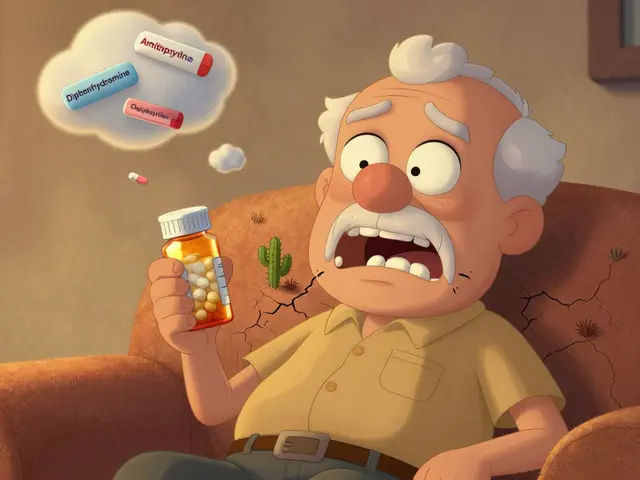
Loratadine (Claritin) and cetirizine (Zyrtec) are generally safe. Avoid diphenhydramine (Benadryl) if possible, as it can cause drowsiness and may slightly increase serotonin levels. While not as dangerous as decongestants or DXM, it’s best to use non-sedating antihistamines unless directed otherwise by your doctor.

One comment
Just had to share this with my mom who’s on Nardil-she’s been using saline sprays and Tylenol for her colds for years now and swears by it. She says if you treat OTC meds like they’re fireworks, you’ll never get burned. Seriously, read the damn label. It’s not hard.
Also, get that wallet card. I printed mine on cardstock and laminated it. It’s in my purse at all times. No excuses.
So let me get this straight-we’re telling people they can’t take Sudafed PE because it might kill them, but they can take Tylenol like it’s candy? Cool. Guess I’ll just start drinking bleach instead.
JK. But seriously, this post is the reason I still trust Reddit more than my pharmacist.
They don’t want you to know this but the FDA banned pseudoephedrine because Big Pharma realized MAOIs were making people live longer and they lost money on antidepressant sales. The real danger isn’t the drug-it’s the system that lets you think you’re safe while they quietly profit off your ignorance.
Also, the Emsam patch? Total scam. It’s just a Trojan horse for the same poison. They just changed the packaging and called it ‘safer.’ Wake up people.
And why is no one talking about how the FDA approved DXM in the first place? Someone’s getting paid under the table.
bro why even take maolis in the first place
just go to yoga or drink turmeric milk
its 2025 not 1987
why risk your life for a mood
just chill
your thoughts are not that important
go touch grass
Let’s be real-78% of OTC cold meds have dangerous ingredients? That’s not an oversight. That’s negligence. And the fact that labels are deliberately cluttered to confuse consumers? That’s predatory. The FDA knew this in 1976. They’ve done nothing. And now people are dying because they trusted a box that said ‘cold & flu relief’ like it was a brand of cereal.
Also, if you’re using Benadryl and think it’s ‘fine’-you’re wrong. It’s not lethal like DXM, but it’s still a CNS depressant. You’re not being careful-you’re being lazy. And that’s why this keeps happening.
What this post doesn’t say is that MAOIs aren’t just dangerous-they’re a relic. They work because they’re brutal. They don’t just tweak neurotransmitters-they bulldoze them. And that’s why they’re effective. But we’re treating them like a casual tool instead of a chainsaw in a nursery.
The fact that we still prescribe them at all says more about our mental health system’s desperation than its wisdom. We’ve run out of better options, so we hand people a loaded gun and say ‘read the manual.’
And the manual? It’s written in 12-point font with half the ingredients listed in Latin. Who designed this system? A bureaucrat who never took an MAOI?
Meanwhile, people are dying because they thought ‘PE’ in Sudafed PE meant ‘pharmacist approved.’ It doesn’t. It means ‘pharmacist warned you, you just didn’t listen.’
It is my sincere belief that the preservation of human life must supersede convenience in matters of pharmacological interaction. The information presented here is not merely advisory-it is a moral imperative. One must exercise the utmost diligence when navigating the intersection of psychiatric medication and over-the-counter remedies.
It is not sufficient to rely on memory, intuition, or even the assurances of retail pharmacists who may be overworked. One must consult primary sources: the FDA’s pharmacovigilance database, the manufacturer’s prescribing information, and one’s own prescriber.
There is no such thing as ‘probably safe.’ Only ‘verified safe’ and ‘unverified lethal.’
Let this be a reminder that in medicine, humility is not weakness-it is the only safeguard we have.
I was on Parnate for 3 years. I once took a DayQuil because I thought ‘it’s just for cough’ and woke up at 3 AM with my heart pounding like a jackhammer and my vision going black. I called my psychiatrist screaming. He said ‘get to the ER now’ and I did.
Turned out my BP was 210/115. They gave me nitroprusside and I spent the night hooked to a monitor.
I haven’t touched a cold med since. Not even a single drop of Robitussin. I keep a list taped to my fridge. I have a note on my phone titled ‘DO NOT TOUCH.’
If you’re on an MAOI and you think you’re too careful-you’re not. You’re just lucky.
India has very few MAOI users but I’ve seen people here buy cough syrups with dextromethorphan thinking it’s just a cough medicine. No one tells them. No pharmacy staff checks. No warnings. This is a global problem.
Maybe we need a global alert system for drug interactions. Like a red flag on the packaging that says ‘DANGER IF ON ANTIDEPRESSANTS’ in 10 languages.
Also, saline spray is life. I use it every day. It’s free, safe, and works better than half the pills.
My mate’s on Nardil. He’s a proper bloke. Never complains. But he told me last week he had to wait 3 weeks for a cold to go away because he wouldn’t risk a cold med. I said ‘mate, just take one paracetamol and a steam.’ He said ‘I did. And I checked the label twice.’
That’s the level of caution we need. Not fear. Just discipline.
Also, if you’re on an MAOI and you don’t have a printed list? You’re one bad decision away from a nightmare. Make the list. Print it. Stick it on your mirror.
just wanted to say thank you for this post i was so scared to take anything for my cold and now i know tylenol and mucinex are okay i feel so much better already
also i printed the list and put it in my purse
youre a lifesaver
bro i took delsym with my maol and lived
so yea maybe its not that bad
maybe the docs are just scared of liability
maybe i just got lucky
im still here ain't i
Let’s be honest: if you’re on an MAOI and you’re still using OTC meds without checking every single ingredient, you’re not brave-you’re reckless. And if you think ‘I’ve done it before and lived’ means it’s safe, you’re not a survivor-you’re a statistical outlier.
There’s no honor in gambling with your life. This isn’t a game. It’s biochemistry. And biochemistry doesn’t care how ‘cool’ you think you are.