
Antidepressant Side Effect Augmentation Tool
Your Main Side Effect
Results Area
Select a side effect to see evidence-based augmentation strategies.
Getting prescribed an antidepressant is often the first real step toward feeling better. But for many people, the relief from depression comes with a price: side effects that make life harder, not easier. Insomnia. Weight gain. Sexual dysfunction. Brain fog. These aren’t just minor annoyances-they’re the main reasons why nearly half of people stop taking their meds within six months. The good news? You don’t have to choose between feeling better mentally and feeling worse physically. There are proven ways to fight back against these side effects without ditching your antidepressant. This isn’t about swapping one drug for another. It’s about adding something smart, targeted, and backed by real data to make your treatment work without breaking you.
Why Side Effects Kill Treatment
It’s easy to think that if an antidepressant helps your mood, you should just power through the side effects. But that mindset is what leads to treatment failure. In clinical studies, side effects are the #1 reason people quit their meds-not lack of effectiveness. A 2010 study found that 40-50% of antidepressant discontinuations happen because patients can’t tolerate the side effects. That’s not weakness. That’s biology. SSRIs and SNRIs boost serotonin, which helps lift depression, but serotonin also controls sleep, appetite, and sexual function. Mess with that system, and you mess with your whole life.Trazodone for Insomnia: The Quiet Hero
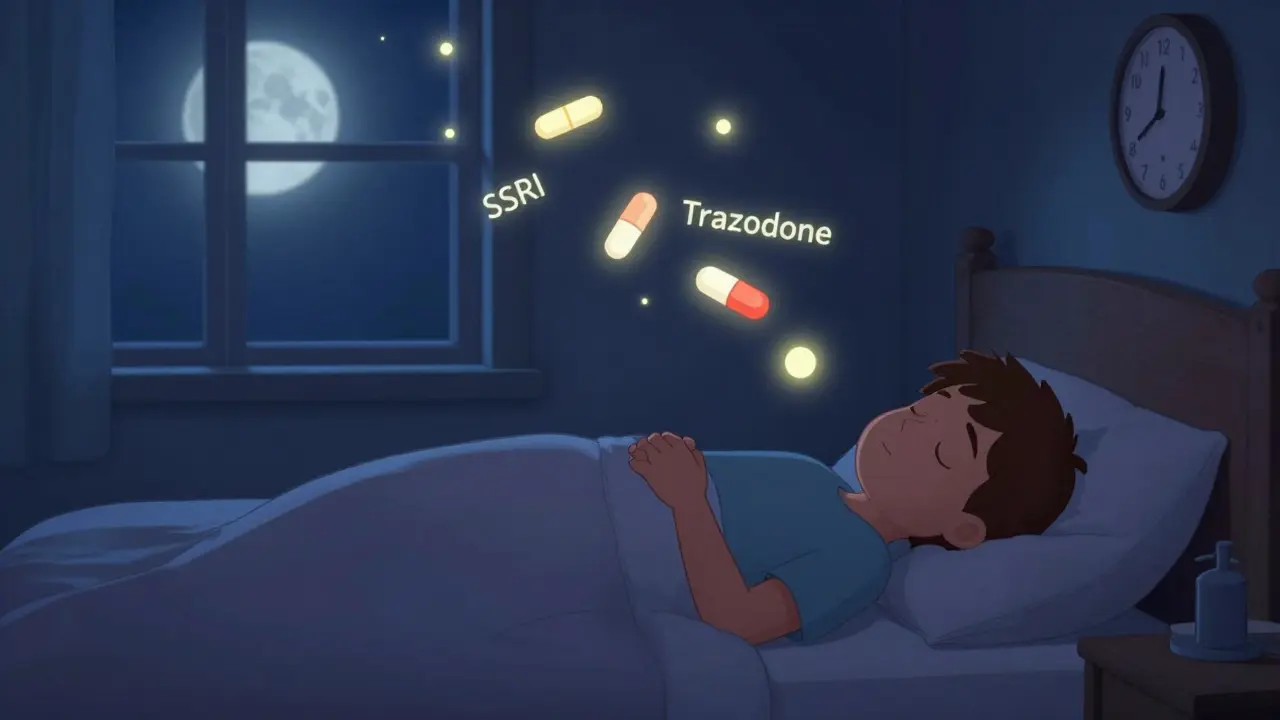
If you’re lying awake at night after taking your morning SSRI, you’re not alone. Up to 30% of people on drugs like sertraline or escitalopram struggle with sleep disruption. The fix? A tiny dose of trazodone-25 to 50 mg-taken at bedtime. This isn’t a sleep aid you buy over the counter. It’s a low-dose antidepressant that blocks serotonin receptors in a way that calms your brain without keeping you groggy the next day. Studies show trazodone at this dose improves sleep quality in 65% of people, compared to just 35% on placebo. One patient on Reddit said, “Prozac was ruining my sleep until my doctor added 25 mg traz at night-now I sleep through the night and keep my depression relief.” That’s the sweet spot: no dose increase of your main drug, no new depression symptoms, just better sleep. It’s so effective, it’s used in 78% of insomnia-related augmentation cases. The catch? Don’t take it during the day. It’s meant for nighttime. And avoid it if you have heart rhythm issues.Bupropion for Sexual Dysfunction: The Libido Fix
Sexual side effects are the most reported and least talked-about problem with antidepressants. Between 30% and 70% of people on SSRIs or SNRIs experience reduced desire, trouble getting aroused, or delayed orgasm. Many feel too embarrassed to mention it. But here’s the truth: bupropion (Wellbutrin) can fix this without wrecking your mood. Unlike SSRIs, bupropion works on dopamine and norepinephrine-two chemicals that drive motivation and sexual response. Adding 75 to 150 mg of bupropion daily to an SSRI has been shown to improve sexual function in 50-60% of users. In one study, 60% of people saw real improvement compared to only 20% on placebo. That’s not magic. It’s pharmacology. It’s why bupropion is the most prescribed augmentation agent for this issue, making up 65% of all cases. But it’s not for everyone. If you have anxiety, bupropion can make it worse in 15-20% of cases. And if you’ve ever had a seizure, don’t use it-your risk jumps from 0.1% to 0.4%. Talk to your doctor. Get your history checked. But if you’re struggling with this side effect, bupropion is your best shot.Topiramate for Weight Gain: The Double-Edged Sword
Weight gain is a common side effect of many antidepressants-especially mirtazapine, paroxetine, and sertraline. Some people gain 5 to 10 pounds in a few months. That’s not just about looks. It’s about diabetes risk, joint pain, and self-esteem. Topiramate (Topamax), originally an epilepsy and migraine drug, has shown promise here. At doses of 25 to 100 mg daily, it can help people lose 2.5 to 4.5 kg more than those on placebo over 12 weeks. One user on Drugs.com said, “The topiramate helped with weight but caused terrible brain fog-felt like I was thinking through cotton.” That’s the trade-off. It’s effective, but it can mess with memory and concentration. It’s not a first-line fix, but if you’ve tried diet and exercise and still gain weight, it’s worth discussing. Doctors usually start low-25 mg-and go slow. Monitor your thinking. If your focus slips, it’s not worth it. And never stop it cold turkey-it can trigger seizures.
Aripiprazole: Powerful, But Risky
Aripiprazole (Abilify) is often used to boost antidepressant effectiveness in people who haven’t responded well. But it’s also used off-label to tackle lingering symptoms like fatigue and emotional numbness. The problem? It’s not a side effect fix-it’s a new set of side effects. At 2 to 5 mg daily, it can improve mood in 57% of people who didn’t respond to antidepressants alone. But it also causes weight gain (3.5 to 4.5 kg in 6 weeks), restlessness (akathisia), and muscle stiffness. In one study, 7-12% of users had movement problems, compared to 2-4% on placebo. A patient on PatientsLikeMe wrote, “The 2 mg aripiprazole made me feel like I was crawling out of my skin-had to stop after 3 days.” The FDA approved a lower-dose version (Abilify MyCite) in 2022, which reduces akathisia by 30%. Still, it’s not a go-to for side effect management unless everything else fails. Use it only if your doctor is closely monitoring your weight, blood sugar, and movement.What Doesn’t Work (And Why)
Some fixes sound logical but fall flat. Buspirone (Buspar) was once thought to help with sexual side effects. It does, but only about 40% of the time-half as good as bupropion. Pindolol was studied for emotional blunting, but results are mixed and it’s rarely used. Dose reduction? Many try lowering their SSRI dose to ease side effects. But that often makes depression worse. Studies show augmentation works better than dose reduction for maintaining mood while reducing side effects. And never mix medications without medical supervision. Trazodone with SSRIs can raise serotonin too high. Bupropion with SNRIs can increase seizure risk. These aren’t DIY fixes.How to Get Started
If side effects are making you want to quit, here’s how to approach it:- Identify the #1 side effect bothering you-is it sleep, sex, weight, or fatigue?
- Check if it’s linked to your specific drug. SSRIs cause sexual issues. Mirtazapine causes weight gain.
- Ask your doctor about evidence-based augmentation for that specific problem.
- Start low. Go slow. Give it 2-4 weeks before deciding if it’s working.
- Track your symptoms. Use a simple journal: “Sleep: 5/10 → 8/10 after trazodone.”
- Don’t tolerate new side effects from the augmenting drug. If it’s worse than the original, stop.

The Bigger Picture
Augmentation isn’t about adding more pills. It’s about precision medicine. The goal is to keep you on the antidepressant that works for your depression-while removing the side effects that make you want to quit. The market for these strategies is growing fast. In 2022, 35% of depression treatments in the U.S. included augmentation, up from 18% in 2010. Kaiser Permanente cut discontinuations by 22% after standardizing these protocols. New tools are emerging. Genetic tests like Genomind can now predict how you’ll respond to certain drugs, helping doctors pick the right augmenting agent before you even start. And research into glutamatergic modulators like d-cycloserine shows promise for fixing brain fog without adding weight or restlessness. But here’s the bottom line: you don’t have to suffer through side effects to get better. There are real, tested ways to fix them. You just need to ask the right questions and work with a doctor who understands these tools. Your mental health matters. So does your quality of life. You deserve both.Can I just lower my antidepressant dose instead of adding another drug?
Lowering your dose might reduce side effects, but it often makes depression worse. Studies show augmentation with a targeted second drug works better than dose reduction for keeping your mood stable while easing side effects. For example, keeping your SSRI at full dose and adding low-dose trazodone for sleep gives you both benefits without losing antidepressant effect.
Is bupropion safe if I have anxiety?
Bupropion can make anxiety worse in 15-20% of people, especially if you already have panic attacks or generalized anxiety. It’s not the best choice if anxiety is your main issue. But if your anxiety is mild and your biggest problem is sexual side effects or fatigue, it might still be worth trying under close supervision. Always tell your doctor your full history.
How long does it take for augmentation to work?
Most augmentation strategies take 1 to 4 weeks to show noticeable results. Trazodone for sleep might help in 3-5 days. Bupropion for sexual function usually takes 2-3 weeks. Topiramate for weight loss takes longer-4 to 8 weeks. Don’t give up too soon. But if you develop new, intolerable side effects (like restlessness or brain fog) within the first week, talk to your doctor. You might need a different option.
Can I use over-the-counter supplements instead?
Supplements like melatonin or L-tryptophan may help with sleep, but they don’t reliably fix antidepressant-induced sexual dysfunction or weight gain. And they can interact with your meds. Melatonin with SSRIs can increase serotonin too much. Always check with your doctor before mixing supplements with prescription antidepressants.
Are these augmentation strategies covered by insurance?
Yes. Trazodone, bupropion, and topiramate are all generic medications and usually covered at low copays. Aripiprazole is more expensive but often covered if you’ve tried other options first. Most insurance plans recognize these as standard off-label uses for side effect management. Your pharmacy can check your specific plan, but you’re unlikely to face high costs.
What to Watch For
When you start an augmentation strategy, keep an eye out for:- New physical symptoms: tremors, sweating, dizziness
- Mood changes: increased anxiety, irritability, or emotional flatness
- Cognitive changes: memory lapses, trouble focusing
- Weight changes: gain or loss beyond what’s expected


One comment
Let me break this down for you people who think trazodone is some magic sleep potion. Trazodone at 25mg? That's just a placebo dose with extra steps. The real fix is cognitive behavioral therapy for insomnia. It's not sexy but it works longer than any pill. And don't get me started on bupropion for libido-dopamine isn't a magic wand. If you're having sex problems because of SSRIs, maybe your brain isn't the only thing that needs fixing. Lifestyle changes beat pharmaceutical band-aids every time.
OMG YES THIS. I was on Zoloft and my sex life was DEAD 😭 Then my doc added 75mg bupropion and BOOM-back to normal. Also slept better. I’m not even mad about the dry mouth. Worth it. 🙌
Topiramate for weight gain sounds like a bad idea. I tried it for migraines and I forgot how to spell my own name. You want to lose weight but end up forgetting your kids’ birthdays? That’s not a tradeoff thats a tragedy. Also why is everyone just accepting these drugs like they’re vitamins? We’re all just guinea pigs for Big Pharma
The data on augmentation is solid but you’re ignoring the elephant in the room. These are all temporary fixes. The real issue is that we’ve turned depression into a chemical equation instead of a human experience. Therapy doesn’t get covered. Diet and sleep don’t get studied. We just slap on another pill and call it progress. This isn’t medicine. It’s corporate triage.
As someone who’s been on SSRIs for 8 years and tried all these augmentations, I appreciate this breakdown. But I want to add something from my experience: the order matters. I tried trazodone first for sleep-it worked instantly. Then bupropion for libido-it took 3 weeks but was worth it. Topiramate? No. Brain fog was unbearable. Start low, go slow, track everything. And don’t be ashamed to ask your doctor for a second opinion. You’re not broken. You’re just being treated like a spreadsheet.
While the pharmacological interventions described are technically accurate, they reflect a troubling reductionist paradigm in modern psychiatric practice. The conflation of symptom management with therapeutic efficacy constitutes a fundamental epistemological error. One cannot address the phenomenology of depression through polypharmacy without first interrogating the socio-cultural determinants of its pathogenesis. The reliance on off-label augmentation strategies-however statistically significant-demonstrates a systemic failure to prioritize psychotherapeutic modalities, nutritional psychiatry, and circadian regulation as primary interventions. This article, though well-intentioned, perpetuates the medicalization of existential distress.
Ugh. Another ‘just add a pill’ article. I’m so tired of this. Topiramate? For weight gain? That’s like using a flamethrower to kill a mosquito. And bupropion? Please. I had a friend on it who turned into a rage monster. And trazodone? That’s just a sedative with a fancy name. Nobody talks about how these drugs are just band-aids on a bullet wound. The real problem? We don’t have real mental health care. We have pharmacy scripts and insurance forms. This isn’t treatment. It’s damage control.
Man, I love how this post doesn’t sugarcoat it. I was on 150mg sertraline and my libido was in the toilet. Tried everything-yoga, supplements, ‘just relax’. Then my psych added 150mg bupropion. Two weeks later, I was back to normal. Not ‘better’-normal. Like I used to be. And no, I didn’t turn into a caffeine-fueled maniac. I just felt like me again. Also, trazodone for sleep? Game-changer. No grogginess. Just deep, quiet rest. If you’re suffering, don’t suffer in silence. Ask your doc. They’re not magicians, but they’ve got tools.
One thing missing here is the role of exercise. I know it sounds basic but 30 minutes of cardio 4x a week cuts SSRI side effects by half. Weight gain? Gone. Sleep? Better. Sex drive? Back. And it doesn’t cost a dime. Trazodone and bupropion are great but they’re not replacements for moving your body. Also, if you’re on topiramate and your brain feels like mush? Cut the dose. Go slower. I’ve seen people go from 25mg to 100mg in 2 weeks and wonder why they can’t remember their own phone number. Patience is the real augmentation.
Big Pharma is selling you pills to fix the problems they made. Why do you think SSRIs cause weight gain and sex problems? Because they’re designed to keep you on them. They know if you feel better you’ll quit. So they make you worse first so you need more pills. Trazodone? Bupropion? Topiramate? All just more pills to keep you hooked. Wake up. This isn’t medicine. It’s a money machine.
Wait you actually tried bupropion and didn’t turn into a screaming lunatic? I tried it and felt like I was being electrocuted from the inside. My anxiety went from 7 to 11. And you’re saying that’s normal? This whole thing is a scam. I’d rather be depressed than feel like I’m going to die every time I take a pill. Your ‘fixes’ are just different kinds of hell.