
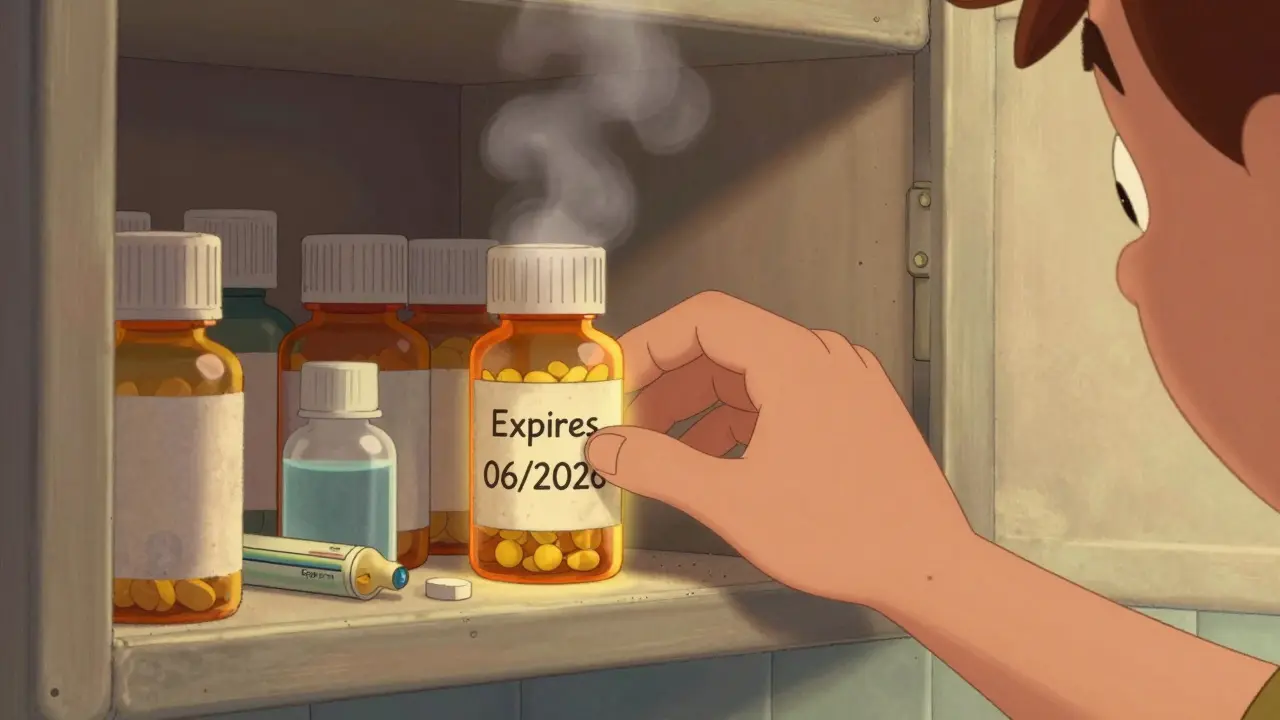
When you find an old bottle of painkillers in the back of your medicine cabinet, you probably ask yourself: Is it still safe to take? The expiration date printed on the label isn’t just a suggestion-it’s a legal guarantee from the manufacturer. But what does that really mean for you?
Expiration Dates Are About Potency, Not Just Safety
The expiration date on your medication isn’t the day it turns toxic. It’s the last day the manufacturer guarantees the drug will work as intended. That means it still has at least 90% of its labeled strength. The U.S. Food and Drug Administration (FDA) has required this since 1979, after Congress passed rules to make sure patients got medicine that actually worked.Manufacturers test drugs under strict conditions-controlled temperature, humidity, and light-to see how long the active ingredient stays strong. Most pills and capsules are tested for 12 to 60 months. That’s why your ibuprofen bottle says "Expires 06/2026." It’s not saying it becomes dangerous after that date. It’s saying: "We can’t promise it’ll still relieve your headache after then."
Most Expired Drugs Are Still Effective-But Not All
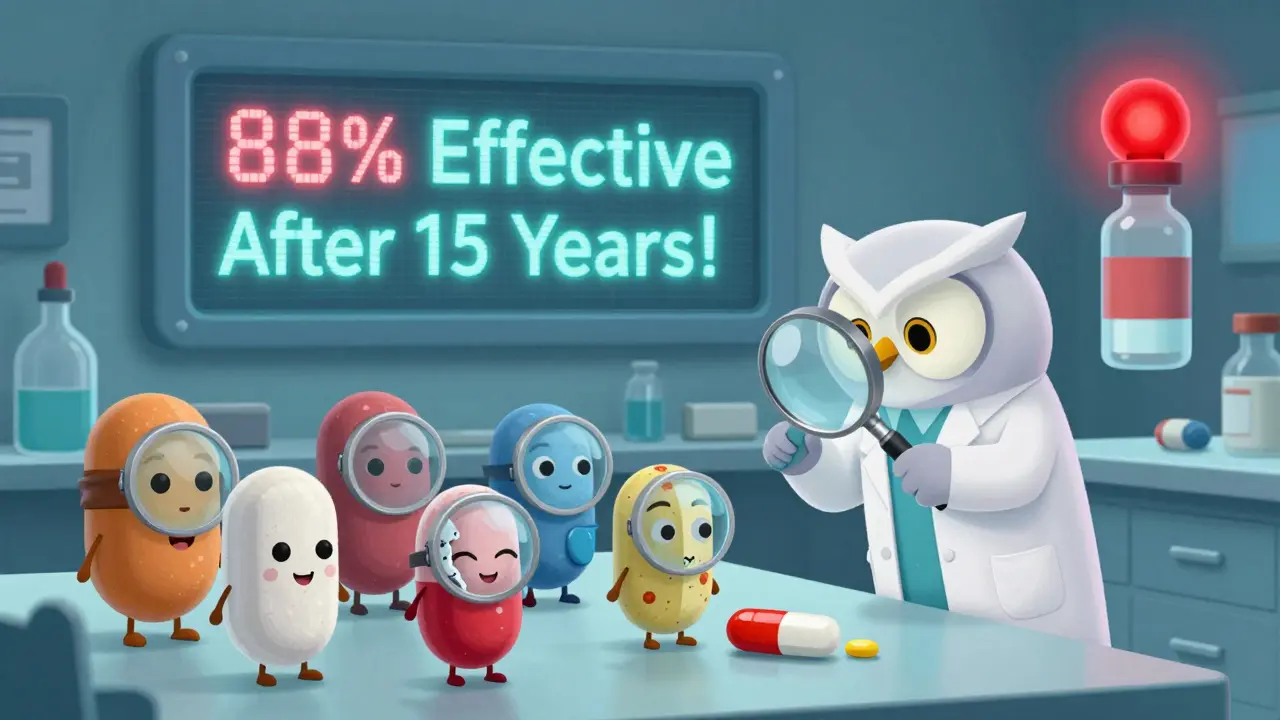
Here’s the surprising part: a lot of them still work. The U.S. military ran a 20-year study called the Shelf Life Extension Program (SLEP). They tested over 3,000 lots of 122 different drugs-everything from antibiotics to heart medications. About 88% of them were still effective 15 years past their expiration date. Some, like ciprofloxacin, kept 97% of their strength even after 12 years. Amoxicillin? Still 94% potent eight years later.So why do pharmacies throw away expired meds? Because the FDA says manufacturers can only guarantee performance up to the printed date. It’s a legal boundary, not a biological cliff.
But here’s the catch: some drugs don’t play nice. They break down fast, and fast breakdowns can be dangerous.
- Nitroglycerin-used for heart attacks-loses half its potency within 3 to 6 months after opening the bottle, even if it’s still within the expiration date.
- Insulin starts degrading within weeks if it’s not kept cool. At temperatures above 8°C, it can lose 1.5% to 2.5% of its strength every month.
- Liquid antibiotics like amoxicillin-clavulanate? They’re only good for 14 days after you mix them with water, no matter what the bottle says.
- EpiPens lose 15% to 20% of their epinephrine each year after expiration. In an allergic emergency, that could mean not enough medicine to save a life.
- Warfarin, a blood thinner, can become unpredictable when expired. Too little? Risk of clots. Too much? Risk of internal bleeding.
Storage Matters More Than You Think
Your bathroom isn’t a good place to store pills. Humidity from showers can reach 75% to 85%-way above the 60% recommended for most medications. Heat speeds up degradation. A pill stored at 30°C breaks down 40% to 60% faster than one kept at 25°C.Keep your meds in their original containers, sealed tight. Avoid transferring them to pill organizers unless you’re using them within a week. Don’t leave them in your car on a summer day. Don’t store them near the stove or radiator. A cool, dry drawer in your bedroom is better than any medicine cabinet.
Look for signs of damage: tablets that changed color (white turning yellow, pink turning brown), pills that crumble, liquids that cloud up or form crystals. If it looks or smells weird, toss it. That’s not about expiration-it’s about contamination.
When Is It Okay to Use an Expired Drug?
There’s no official green light from the FDA to take expired medicine. But in real life, context matters.For chronic conditions like high blood pressure or cholesterol, a few months past the date might be low risk-if the pills were stored properly and show no physical changes. Some pharmacists, like those at Johns Hopkins, say stable drugs like ACE inhibitors or statins might still work for short-term use during supply shortages.
But here’s the line you shouldn’t cross:
- Never take expired antibiotics if you’re sick. Underdosed antibiotics can cause resistant infections.
- Never use expired insulin, EpiPens, or nitroglycerin. These aren’t worth the gamble.
- Never give expired medicine to children, pregnant people, or the elderly. Their bodies process drugs differently.
- Never rely on expired seizure meds. A missed dose can trigger a life-threatening seizure.
The Institute for Safe Medication Practices breaks drugs into three risk categories:
- High Risk: Nitroglycerin, insulin, liquid antibiotics. Don’t risk it.
- Moderate Risk: Antibiotics, blood thinners, seizure meds. Use only if no other option exists and you’ve consulted a professional.
- Low Risk: Most painkillers, antidepressants, statins. If stored well and look fine, they’re likely still fine.
What Should You Do With Expired Medications?
Don’t flush them unless they’re on the FDA’s Flush List-things like fentanyl patches or oxycodone tablets. Flushing pollutes water systems.Instead, use a drug take-back program. The DEA runs National Prescription Drug Take-Back Days twice a year. In 2023, over 5,800 sites collected nearly a million pounds of unused meds. Find your nearest drop-off at dea.gov/takebackday.
Pharmacies also often accept expired meds. In the UK, you can return them to any pharmacy for safe disposal-even if you didn’t get them there. They’re sent to licensed incinerators that destroy them safely.

What’s Changing in the Future?
The system is starting to catch up with the science. The FDA is testing smart packaging with sensors that track temperature and humidity in real time. Imagine a pill bottle that updates its expiration date based on how you stored it.Researchers at the University of Utah are using machine learning to predict how much potency remains in a drug based on its storage history. Early results show 89.7% accuracy for 28 common medications.
By 2030, experts estimate we could extend average drug shelf lives by nearly half-saving billions globally. But until then, treat expiration dates like a warning light, not a death sentence.
Bottom Line: Use Judgment, Not Fear
Expiration dates are a safety net-not a time bomb. Most pills are fine past their date. But some aren’t. Know the difference. Store your meds properly. Check for physical changes. And when in doubt, talk to your pharmacist. They’re trained to know what’s safe, what’s risky, and what’s just plain wasteful.Don’t throw away your entire medicine cabinet because of one date. But don’t risk your life on a 10-year-old EpiPen either. Your health isn’t a gamble. Be informed. Be cautious. Be smart.
Are expired medications dangerous to take?
Most expired medications aren’t toxic, but they may not work as well. For drugs like insulin, EpiPens, or antibiotics, reduced potency can be life-threatening. For others, like ibuprofen or statins, they’re likely still safe but less effective. Always check for visible changes like discoloration or odor.
Can I still use expired antibiotics?
No. Expired antibiotics may not kill all the bacteria, which can lead to antibiotic-resistant infections. Even if the pills look fine, their strength drops over time. Never take expired antibiotics for a new infection.
How long after expiration are pills still good?
It depends on the drug and storage. Solid pills stored in cool, dry places can remain effective for years beyond expiration-some up to 15 years. But liquids, insulin, and nitroglycerin degrade quickly. Don’t assume all drugs last the same.
Should I keep my medications in the bathroom?
No. Bathrooms are too humid and hot. Moisture and heat break down pills faster. Store medications in a cool, dry place like a bedroom drawer, away from windows and heat sources.
Can I donate expired medications?
No. Most charities and donation programs won’t accept expired drugs. Even if they’re still potent, regulations prohibit it. Instead, return them to a pharmacy or take-back event for safe disposal.
Do pharmacies check expiration dates before dispensing?
Yes. Pharmacies follow "beyond-use" dating rules. For most solid pills, they set a new expiration date of 1 year from when you picked them up. For eye drops, it’s 30 days. For reconstituted antibiotics, it’s 14 days-regardless of the manufacturer’s date.
What’s the difference between expiration date and beyond-use date?
The expiration date is set by the manufacturer and applies to the unopened, properly stored product. The beyond-use date is set by the pharmacy after dispensing and accounts for how you’ll store it at home. It’s usually shorter because home conditions aren’t controlled.
Is it legal to sell expired medications?
No. Selling expired medications is illegal in the UK and most countries. Pharmacies and distributors must remove expired products from shelves. Any vendor selling expired drugs is breaking the law and risking public safety.


One comment
lol why are we even talking about this. pills are just sugar and placebo anyway. the real medicine is your mindset. also pharma is lying to you.
YOU THINK THEY’RE JUST TESTING POTENCY?! HA! THEY’RE TESTING HOW LONG THEY CAN MAKE YOU BUY NEW BOTTLES. THE FDA IS A BRANCH OF BIG PHARMA. THAT 88% STAT? BURNED. MANIPULATED. THE MILITARY STUDY WAS SUPPRESSED UNTIL 2019 BECAUSE IT MADE THE INDUSTRY PANIC. I’VE BEEN TAKING 12-YEAR-OLD XANAX SINCE 2012. STILL WORKS. THEY’RE SCARING YOU TO KEEP PROFITING.
How utterly pedestrian. You treat expiration dates like some sort of biological truth, when in fact they’re a legal fiction engineered to maintain market control. The real scandal isn’t that drugs work past their date-it’s that we’ve allowed corporations to dictate our relationship with medicine. I’ve seen pharmacists in Geneva discard perfectly viable statins because of a printed date. It’s not safety-it’s capitalism with a white coat.
Thank you for this detailed breakdown. I’ve always assumed expired meds were dangerous, but the distinction between potency and toxicity is crucial. I never realized humidity in the bathroom could degrade pills so quickly-now I’ve moved all mine to a sealed container in my bedroom drawer. Also, the SLEP study data is fascinating. I’ll be checking my medicine cabinet this weekend.
So what you’re saying is the government tells us to throw away perfectly good medicine because corporations want us to buy more? And you call that science? No. That’s religion. The real expiration date is when you stop questioning authority. I’ve been taking my 18-year-old aspirin since college. Still works. Still cheaper than therapy.
Okay. So. Let me just say. I’m not saying. I’m not saying you’re wrong. But. Have you ever considered. That maybe. The reason your ibuprofen still works. Is because. It’s not actually expired. Because. The date. Is just a suggestion. Like. The speed limit. On a deserted highway. In the middle of the night. In Wyoming. At 3 a.m. On a Sunday. When it’s snowing. And you’re alone. And you’re not going fast. But you’re still going. And you’re still alive. And you’re still taking the pills. And you’re still not dead. So. Maybe. The date. Is just a number. Like. Your ex’s birthday. And you’re just. Still holding onto it. For no reason. Except. Because. You were told to.
Great post! Really informative. I work in a rural clinic and we get so many people asking if they can use old meds. This breakdown helps me explain it better. Just a quick tip: if you're unsure, call your pharmacist. They’re usually happy to help for free. And don't forget to check out take-back days-super easy and eco-friendly! 🙌
bro i took my 5 year old amoxicillin last month for a sore throat. no problems. my grandma still uses her 2012 blood pressure pills. she’s 84 and still walks 5km a day. maybe the system is broken but real people are still surviving. chill out.
yo this whole thing is a systemic scam. pharma wants you dependent. they don’t care if your drug works after 10 years. they care about quarterly earnings. the ‘expiration’ is a psyop. i’ve seen people in Lagos use expired meds for decades. no deaths. just silence. the west overmedicates and underthinks. we survive. you panic.
There’s something profoundly poetic about the tension between industrial control and biological resilience. The pill, a manufactured artifact, endures beyond its assigned lifespan-defying the calendar, the label, the corporate decree. And yet, we fear it. We discard it. We ritualize its disposal. Is it the drug we distrust-or the system that demands we do so? Perhaps the expiration date is not on the bottle… but in our collective surrender to authority.
Okay so let’s just sit with this for a second. The FDA says expiration = guaranteed potency. But the military study shows 88% still work 15 years later. That means the manufacturers are only required to prove effectiveness for maybe 2-5 years, but the actual chemical stability lasts decades. So why don’t they test longer? Because it’s expensive. And because if they did, people would stop buying new bottles. And then the entire supply chain collapses. And then the profits vanish. And then the CEOs cry into their private jets. And we’re left with a system built on fear, not science. And that’s not just inefficient. It’s morally bankrupt. And nobody’s talking about it. Except me. And now you. So thank you. For listening.
It is a matter of considerable philosophical import that human beings, endowed with rational faculties, have surrendered the judgment of pharmacological integrity to corporate entities whose fiduciary duty lies not with health, but with shareholder value. The expiration date, therefore, is not a scientific datum, but a sociopolitical construct-an artifact of market logic masquerading as medical authority. One is compelled to ask: if a substance retains its efficacy, and no harm is demonstrable, then by what moral or epistemic principle is its use rendered illicit? The answer, I fear, is none.
wait so insulin goes bad after 14 days?? i had a bottle from 2021 and i used it last week and nothing happened?? maybe i just got lucky?? lol
Hey, I just saw your comment about the 2021 insulin. Please, please, please go get a new one right now. That’s not luck-that’s a death sentence waiting to happen. I’ve seen it. Don’t gamble with your life. I’m not being dramatic. I’m a nurse. I’ve held people while they went into DKA because they thought ‘it looked fine.’ You’re not invincible. Get help.