
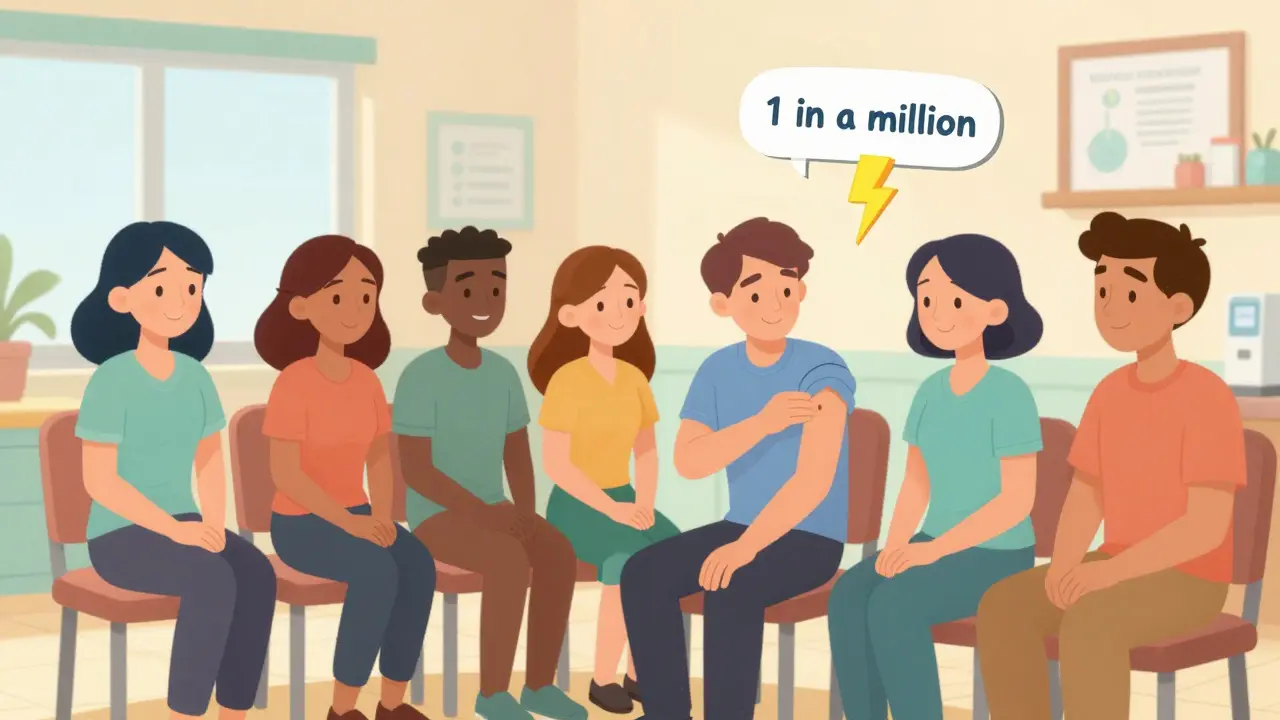
When you get a vaccine, your body learns how to fight off a virus. But for a tiny number of people, something unexpected happens: their immune system overreacts. It’s not common. In fact, it’s so rare that you’re more likely to be struck by lightning than to have a serious allergic reaction to a vaccine. Still, when it does happen, it matters - and we’ve built systems to catch it, treat it, and learn from it.
How Rare Are Allergic Reactions to Vaccines?
Let’s get straight to the numbers. Across all vaccines, anaphylaxis - the most serious type of allergic reaction - happens at a rate of about 1.3 cases per million doses. That’s less than one in a million. For the mRNA COVID-19 vaccines, the rate was slightly higher: around 5 to 11 cases per million doses. But even that’s still extremely rare. Think about it: over 10 million doses were given in the U.S. during the first few weeks of the COVID-19 vaccine rollout. Only 21 cases of anaphylaxis were confirmed. Every single one was treated. No one died.
Most reactions happen fast. About 86% of anaphylaxis cases show symptoms within 30 minutes. And 71% happen within just 15 minutes. That’s why clinics ask you to sit and wait after your shot. Fifteen minutes for most people. Thirty minutes if you’ve had a serious allergy before. It’s not about suspicion - it’s about being ready.
What Actually Causes These Reactions?
It’s not the virus. It’s not the dead or weakened parts of the virus used in most vaccines. The culprits are almost always tiny ingredients added to help the vaccine work better or stay stable.
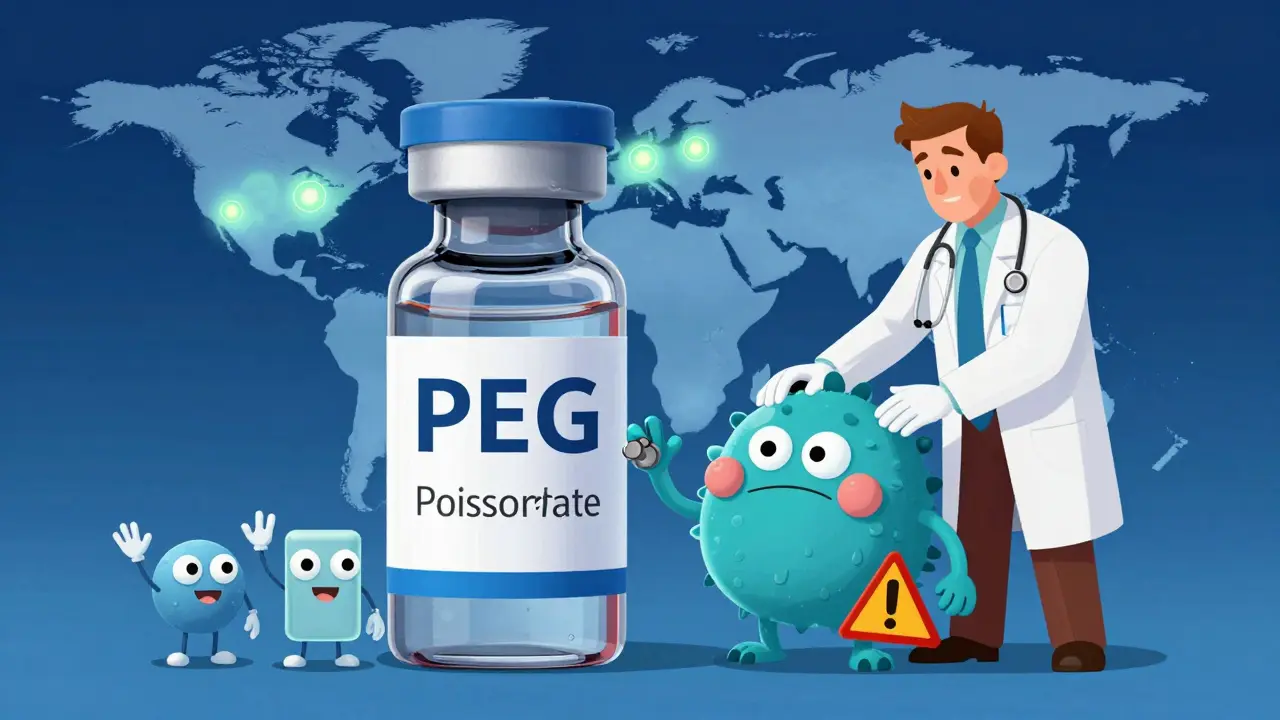
- Polyethylene glycol (PEG) - found in mRNA vaccines like Pfizer and Moderna. This is now the top suspected trigger for rare anaphylaxis cases.
- Polysorbate 80 - used in some vaccines like Johnson & Johnson and AstraZeneca. It’s chemically similar to PEG, so people allergic to one might react to the other.
- Egg protein - used to grow flu vaccines. But here’s the twist: studies have looked at over 4,300 people with severe egg allergies who got the flu shot. Not one had a serious reaction. You don’t need special steps anymore.
- Yeast protein - used in hepatitis B and HPV vaccines. Only 15 possible cases were ever reported in VAERS out of hundreds of thousands of doses. Even then, causality wasn’t confirmed.
- Aluminum - used as an adjuvant. It doesn’t cause anaphylaxis. But it can leave a hard lump under the skin that lasts weeks. That’s not an allergy. It’s a normal side effect.
And here’s something important: most people who have a reaction have a history of allergies - not to vaccines, but to foods, drugs, or insect stings. If you’ve had anaphylaxis before, you’re not at higher risk from the vaccine itself. You’re just more likely to react to something in it.
How Do We Monitor These Reactions?
The U.S. has one of the most advanced vaccine safety systems in the world: the Vaccine Adverse Event Reporting System (VAERS). It started in 1990 and is run by the CDC and FDA. Anyone - doctors, patients, parents - can report a reaction. It’s not proof that the vaccine caused it. But it’s a signal. If 10 people report the same rare reaction after getting the same vaccine, scientists take notice.
VAERS gets about 30,000 to 50,000 reports a year. Less than 1% are serious anaphylaxis cases. The rest are mild: a rash, a fever, a sore arm. The system works because it’s open. It’s not perfect - some reports are inaccurate - but it catches the outliers.
Then there’s v-safe, a smartphone tool the CDC launched during the pandemic. People signed up after getting vaccinated and got daily text messages asking how they felt. Over 3.6 million people used it. It gave real-time data on side effects, especially in the first few days. It helped confirm that most reactions were mild and short-lived.
Other countries have similar systems. The European Medicines Agency runs EudraVigilance, which handles over 1.5 million reports a year. The WHO helps 137 countries build their own monitoring tools. This global network is how we know that a reaction in Japan, Brazil, or Germany is likely the same as one in Texas.
What Happens If You Have a Reaction?
Every clinic that gives vaccines must have epinephrine on hand. That’s not optional. It’s the law. Epinephrine is the only medicine that can stop anaphylaxis in minutes. It’s given as a shot in the thigh. Most people feel better within 10 to 20 minutes. But they still need to go to the ER - reactions can come back.
If you’ve had a confirmed anaphylaxis reaction to a vaccine, you won’t get that same vaccine again. But you might still be able to get others. For example, if you had a reaction to the Pfizer COVID-19 vaccine (which contains PEG), you might still safely get the Moderna one - or even a traditional flu shot. An allergist can help figure out what’s safe.
Testing for allergies to vaccine ingredients isn’t routine. But if you’re at high risk, an allergist can do skin tests or blood tests for PEG or polysorbate. Right now, those tests aren’t perfect. But research is underway. A major NIH trial (NCT04976276) is testing whether skin tests can predict reactions before vaccination. If it works, we could soon have a simple way to screen people before they get their shot.
What About Egg Allergy? Is It Still a Problem?
Years ago, if you had an egg allergy, you were told to avoid the flu shot. That changed in 2017. Since then, more than 4,300 egg-allergic people - including over 650 with past anaphylaxis - have gotten the flu vaccine without serious issues. The amount of egg protein in the shot is so small it doesn’t trigger a reaction. You don’t need to be observed longer. You don’t need to go to an allergist. You just get the shot like anyone else.
The same goes for the MMR vaccine. It’s grown in chicken embryo cells, but studies show no increased risk for egg-allergic kids. In fact, the American Academy of Allergy, Asthma & Immunology now says egg allergy is not a reason to avoid any vaccine.
What Should You Do Before Getting Vaccinated?
- If you’ve never had a serious allergic reaction to anything - go ahead. No extra steps needed.
- If you’ve had anaphylaxis to food, medicine, or insect stings - tell the provider. They’ll watch you for 30 minutes after the shot.
- If you had a reaction to a previous vaccine - don’t panic. But do talk to your doctor. You might need to see an allergist to figure out what caused it.
- If you know you’re allergic to PEG or polysorbate - ask if there’s a vaccine without it. For example, the Novavax COVID-19 vaccine doesn’t use mRNA or PEG.
Bottom line: the risk of not getting vaccinated - from getting sick, spreading disease, or ending up in the hospital - is thousands of times greater than the risk of a rare allergic reaction.
Why Does This Matter Beyond the Individual?
Every time someone skips a vaccine because they’re afraid of an allergic reaction, it puts others at risk. Measles, polio, and whooping cough don’t disappear just because we stopped seeing them. They’re still out there. And they can come back fast.
Public trust in vaccines is fragile. One headline about a rare reaction can scare thousands. But the data is clear: vaccines are among the safest medical products we have. The systems we’ve built - VAERS, v-safe, global monitoring - are working. They catch the rare cases. They save lives. And they keep the rest of us protected.
Can you have an allergic reaction to a vaccine the first time you get it?
Yes, but it’s rare. About 31% of people who have anaphylaxis after a vaccine report their first reaction happened on their first shot. That suggests they were already sensitized to something in the vaccine - like PEG or polysorbate - from other sources (cosmetics, medications, food). Your body doesn’t need to have seen the vaccine before to react.
Are children at higher risk for vaccine allergic reactions?
No. Children and teens actually have lower rates of allergic reactions than adults. The average age of someone who has anaphylaxis after a vaccine is around 40. Most reactions occur in adults with a history of allergies. Kids with egg allergies can safely get the flu shot, MMR, and other vaccines without special precautions.
Do vaccines cause long-term allergies?
No. There’s no evidence that vaccines cause new allergies to foods, pollen, or other substances. Allergic reactions to vaccines are immediate - they happen within minutes to hours. They don’t lead to new sensitivities over time. If you develop a new allergy after a vaccine, it’s likely a coincidence.
Is it safe to get a second dose if you had a mild reaction to the first?
Mild reactions like a rash, itching, or swelling at the injection site are common and not signs of anaphylaxis. You can usually get the second dose without issue. But if you had trouble breathing, swelling of the throat, or dizziness - those are signs of anaphylaxis. You should see an allergist before getting another dose. They can help determine if it’s safe and which vaccine might be better.
What should you do if you think you had an allergic reaction?
Get medical help right away if symptoms are severe (trouble breathing, swelling, fainting). Then report it to VAERS. You can do this yourself at vaers.hhs.gov. Reporting helps experts track patterns. Even if you’re not sure it was the vaccine, report it. Better safe than missed.




One comment
Just got my booster yesterday. No drama. No panic. Just a quick pinch, a 15-minute sit-down, and I was out the door. Seriously, if you're scared of this, you're scared of shadows. Vaccines saved my grandma's life. Let's not let fear rewrite common sense.
Oh wow. So now we’re supposed to trust a system that’s run by pharmaceutical lobbyists and government PR teams? Let me guess-next you’ll tell me the moon landing was real. Anaphylaxis at 5 per million? Sure. And I’m the Queen of England. Wake up people. This isn’t science. It’s marketing with needles.
It’s fascinating how the statistical rarity of adverse events is presented as absolute safety, yet the mechanisms of immune sensitization remain poorly understood at a molecular level. PEG, for instance, is a synthetic polymer with no natural analog in human biology-its immunogenic potential may be underappreciated. The fact that reactions cluster in individuals with prior anaphylaxis suggests a threshold effect, not random noise. Perhaps we ought to shift from population-level risk assessment to individualized immune profiling. The science is nascent, but the ethical imperative is clear.
If you’ve had a serious allergy before, tell the nurse. They’ll watch you longer. That’s it. No drama. No special treatment. Just standard care. Don’t overthink it. Vaccines are safe. The system works. Get your shot.
While I appreciate the thoroughness of the documentation presented herein, I must express a certain degree of cognitive dissonance regarding the rhetorical framing of risk mitigation as an unqualified triumph of public health infrastructure. The reliance upon VAERS as a primary surveillance mechanism-despite its known limitations in causal inference-raises legitimate epistemological concerns. Moreover, the conflation of correlation with causation in the context of polysorbate 80 and PEG sensitization remains inadequately addressed. One cannot help but wonder whether the normalization of vaccine administration has, in some measure, suppressed legitimate inquiry into the long-term immunological consequences of repeated synthetic adjuvant exposure. I do not oppose vaccination per se; I oppose the silencing of nuance.
Wait-so you’re telling me that the government, Big Pharma, and the WHO are all working together to protect us… but they’re also secretly using PEG to track us? And why is it in EVERYTHING now? Shampoos. Laxatives. COVID shots. It’s the same chemical. Coincidence? Or is this about microchips? And who’s really behind VAERS? I looked up the CDC’s funding-30% from Gates Foundation. Hmm. Also, why did they stop testing for egg allergies if the protein’s still in there? They’re lying. I know someone who got a rash and then lost his job. Coincidence? I think not.
While the data presented is statistically compelling, the underlying assumption-that vaccine safety is an absolute metric rather than a probabilistic one-renders the entire argument vulnerable to epistemic fragility. The absence of evidence is not evidence of absence. Furthermore, the reliance on post hoc reporting systems such as VAERS, which are inherently non-validated and subject to confounding variables, constitutes a methodological flaw of significant magnitude. To assert that ‘no one died’ from anaphylaxis during the rollout is a tautology that ignores the broader question of long-term immune dysregulation. The absence of mortality does not equate to absence of harm. One must question the ethical foundation of mass intervention without longitudinal biomonitoring.
I just want to say… I had my first vaccine last year and I felt so guilty afterward. Like, I cried. Not because I was sick-but because I thought I was betraying my body. I’ve had allergies since I was a kid. I’ve been told ‘you’re fine’ so many times, but no one ever really listened. Then I read about PEG and I panicked. But I went anyway. And the nurse? She didn’t rush me. She asked if I wanted to wait 30 minutes. I did. And I’m okay. I’m still scared. But I’m not alone. And that matters. I just needed to say that out loud.