
COPD Medication Safety Checker
Enter medications you're taking (comma-separated). This tool identifies COPD-specific risks and suggests safer alternatives when possible.
Medication Safety Assessment
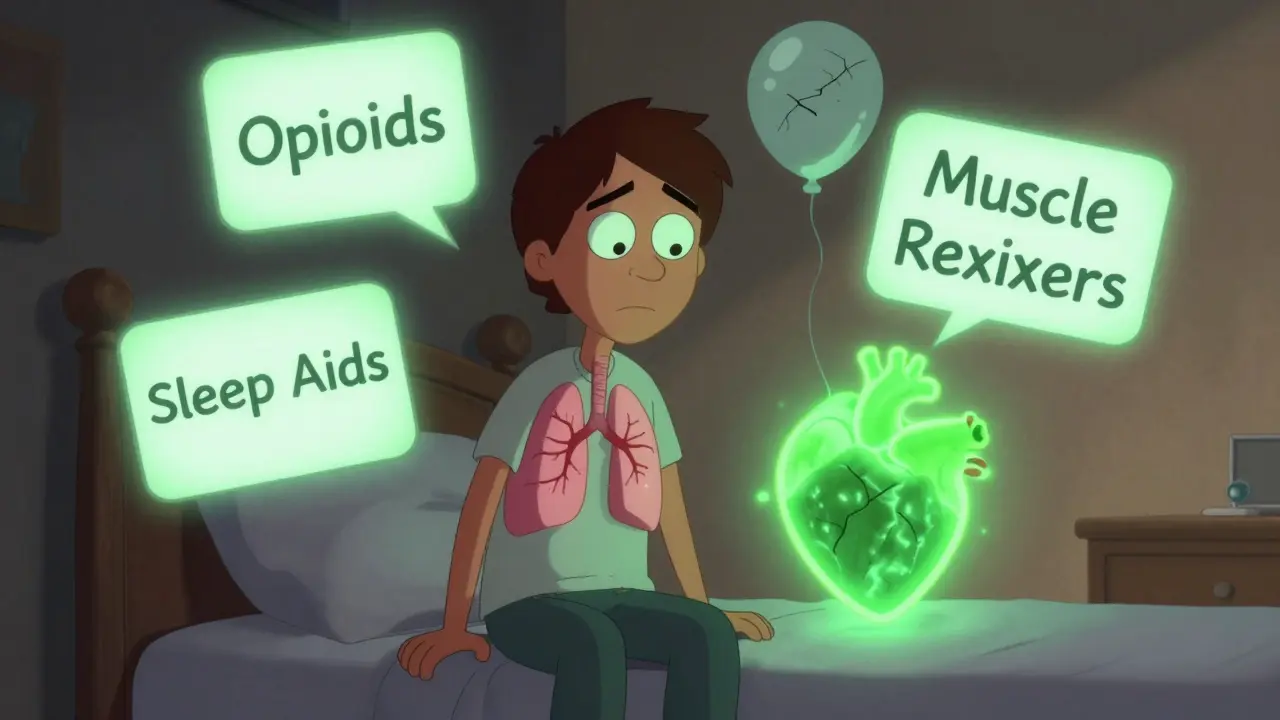
Living with COPD means every medication you take - even something as simple as a sleep aid or pain reliever - can either help or hurt your lungs. It’s not just about treating one condition. It’s about understanding how each drug interacts with your already fragile breathing. For millions of people with COPD, the wrong medication can trigger a hospital visit, or worse. The good news? Many of these risks are preventable. Knowing which drugs to avoid can cut down on flare-ups, reduce emergency trips, and help you breathe easier every day.
Why Some Medications Are Dangerous for COPD
COPD doesn’t just make breathing hard - it makes your body less able to handle extra stress. Your lungs are already working overtime just to get enough oxygen. When you add a drug that slows down your breathing, thickens mucus, or tightens your airways, your body can’t compensate. This isn’t theoretical. Research shows that about 15-20% of COPD hospitalizations come from medications that seem harmless on their own but become dangerous when combined with COPD.
The real danger often comes from combinations. A single opioid might be risky. But an opioid plus a sleeping pill? That’s a recipe for respiratory arrest. A 2022 study in Chest Journal found that this combo increases the risk of stopping breathing entirely by 400%. And it’s not rare. In 2021, nearly one in four COPD patients hospitalized for breathing trouble had recently taken a prescription sleep aid.
Opioids: The Silent Threat
Opioids like morphine, oxycodone, and hydromorphone are powerful painkillers. But for someone with COPD, they’re also silent killers. These drugs depress the part of your brain that tells your lungs to breathe. In healthy people, that’s not a big deal. In someone with COPD, even a small dose can drop oxygen levels dangerously low.
The CDC recorded 1,247 COPD-related deaths tied to opioids in the U.S. in 2021 - a 12% jump from 2019. And it’s not just about overdoses. Many patients take these drugs for chronic pain or even severe shortness of breath, thinking they’re helping. But studies show opioid use increases the risk of respiratory failure by 37% compared to non-opioid options.
There’s one exception: in advanced COPD, under strict supervision, doctors may use low-dose opioids to relieve breathlessness. But this is never done without continuous monitoring. If you’re on opioids and have COPD, your doctor should be checking your breathing regularly - not just your pain.
Benzodiazepines and Sleep Aids: A Deadly Mix
Stress, anxiety, and trouble sleeping are common in COPD. So many patients are prescribed benzodiazepines like alprazolam (Xanax) or diazepam (Valium), or sleep aids like zolpidem (Ambien) and eszopiclone (Lunesta). These drugs calm the nervous system - but they also calm your breathing.
One 2021 study found that 28% of COPD patients hospitalized for breathing problems had taken a sleep medication in the weeks before. The problem isn’t just the sleep aid itself. It’s how it multiplies the danger of other drugs. Combine it with an opioid? The risk of respiratory arrest jumps fourfold.
Many patients don’t realize these drugs are even a concern. They think, “It’s just for sleep.” But if your lungs are already weak, your brain doesn’t get the signal to breathe - and it doesn’t wake you up when oxygen drops. That’s how people stop breathing in their sleep and never wake up.
Muscle Relaxers: Hidden Risks
If you’ve had back pain or muscle spasms, you’ve probably heard of cyclobenzaprine (Amrix) or methocarbamol. These muscle relaxers work by calming nerve signals. But in COPD, that calming effect extends to the nerves that control your breathing.
A 2020 study in Mayo Clinic Proceedings found that 22% of COPD patients who started a muscle relaxer needed emergency care for breathing trouble within 30 days. That’s not a coincidence. These drugs don’t just relax muscles - they suppress the drive to breathe. And because they’re often taken for short-term pain, patients don’t expect them to cause long-term harm. But for someone with COPD, even a few days can be enough to trigger a crisis.
Non-Selective Beta-Blockers: The Hidden Trigger
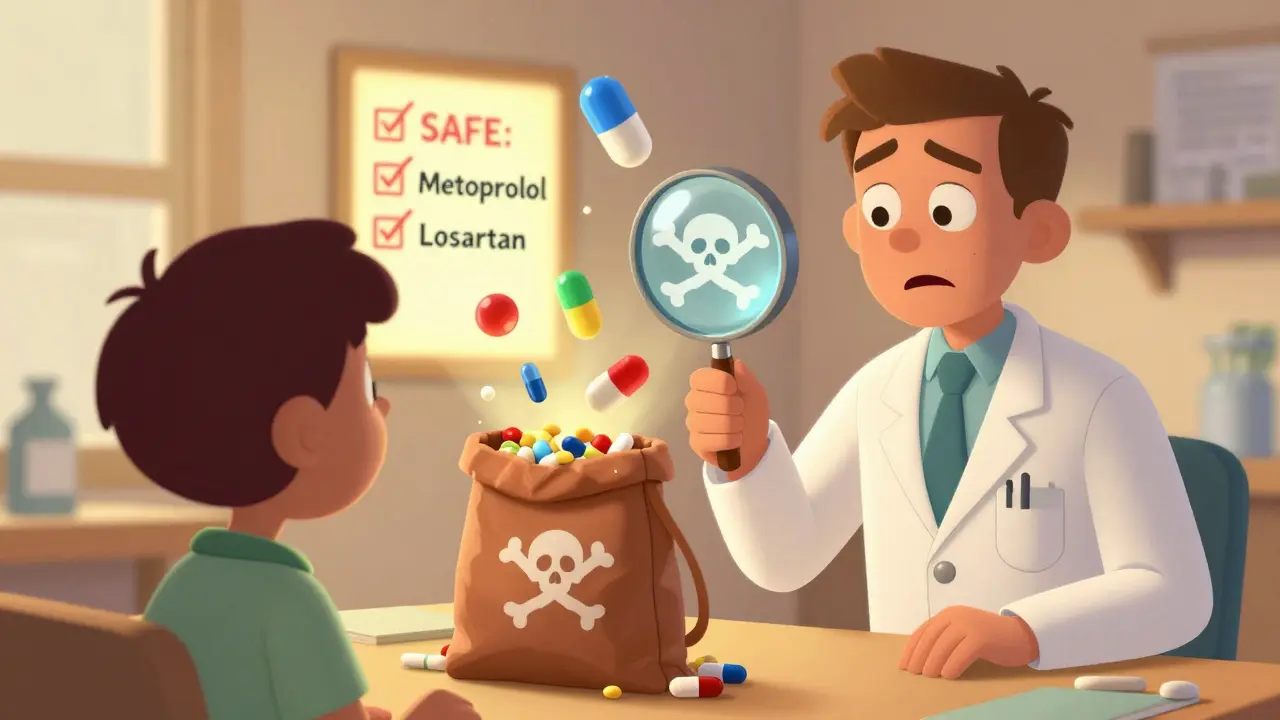
Many COPD patients also have heart disease. So doctors often prescribe beta-blockers to protect the heart. But not all beta-blockers are the same. Non-selective ones - like propranolol, nadolol, and timolol - block receptors in the lungs as well as the heart. That causes bronchoconstriction: your airways tighten up.
A 2022 meta-analysis in Respiratory Medicine found that non-selective beta-blockers increase the risk of a COPD flare-up by 31%. And here’s the scary part: 18% of COPD patients with heart disease are still being prescribed these drugs. That’s over 4,200 preventable hospitalizations in the U.S. every year.
The fix? Switch to cardioselective beta-blockers like metoprolol or bisoprolol. These target the heart and leave the lungs alone. One patient with 25 years of COPD reported that after switching from propranolol to metoprolol, his lung function (FEV1) improved by 15% in just three months. He had no idea his heart medication was making his COPD worse.
ACE Inhibitors and the Cough That Won’t Quit
ACE inhibitors like lisinopril and enalapril are common for high blood pressure. But they cause a persistent, dry cough in 12-20% of users. For someone with COPD, that cough isn’t just annoying - it can trigger a flare-up.
The cough is worse in certain groups: 35% of Asian patients, 25% of African American patients, and 15% of Caucasian patients. That’s not random. It’s genetic. And for COPD patients who already have a chronic cough, adding an ACE inhibitor is like pouring gasoline on a fire.
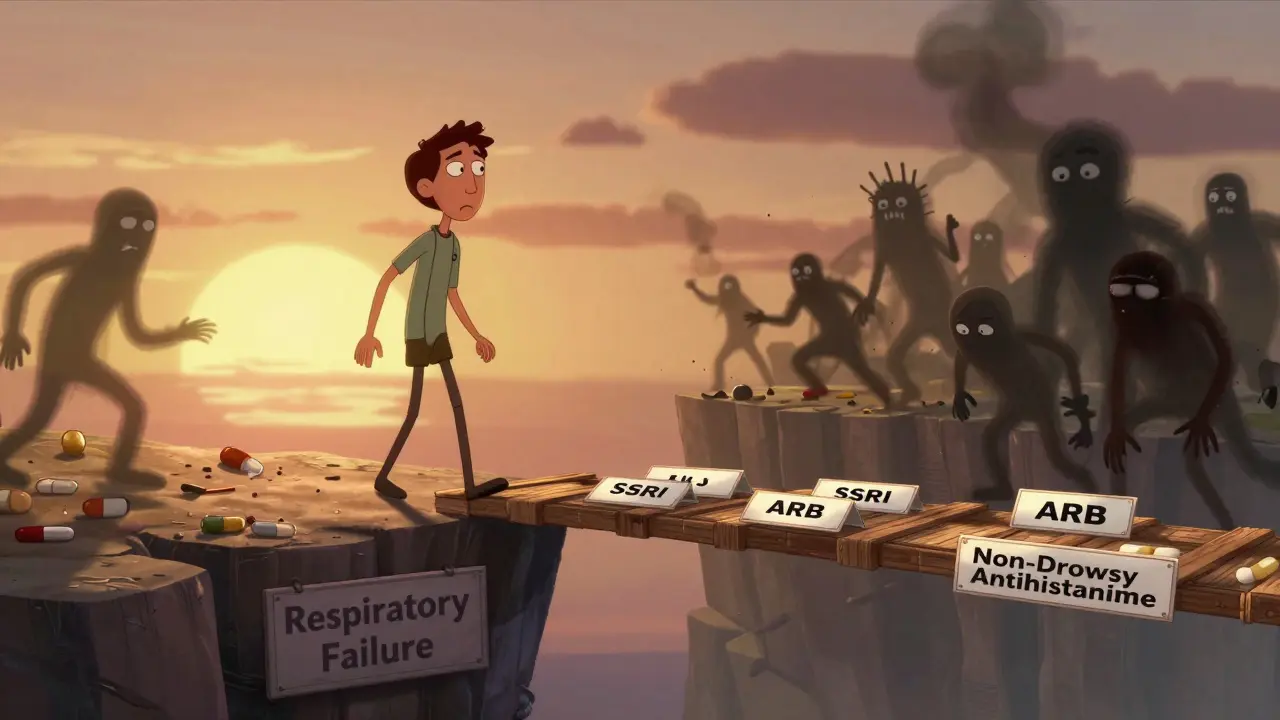
The solution? Switch to an ARB - angiotensin II receptor blocker. Drugs like losartan or valsartan work just as well for blood pressure but rarely cause cough. A 2022 review found ARBs reduce cough-related complications by 68% compared to ACE inhibitors. If you’re on an ACE inhibitor and your cough got worse after starting it, talk to your doctor. There’s a better option.
Antihistamines and Tricyclic Antidepressants: Thickening the Mucus
First-generation antihistamines - diphenhydramine (Benadryl), hydroxyzine, and chlorpheniramine - are common in allergy and sleep meds. But they have strong anticholinergic effects. That means they dry out your airways… and thicken your mucus.
A 2021 study in the Annals of Allergy, Asthma & Immunology showed these drugs increase sputum viscosity by 22-35% in COPD patients. Thick mucus is hard to cough up. That leads to blockages, infections, and flare-ups. The Beers Criteria, updated in 2023, lists these drugs as unsafe for older adults with COPD.
Tricyclic antidepressants like amitriptyline are even worse. A 2022 study found that 27% of COPD patients on TCAs had worsened breathing, compared to just 9% on SSRIs like sertraline or escitalopram. If you’re depressed and have COPD, ask about SSRIs instead. They work just as well - without the lung risks.
Antibiotics That Can Backfire
Clarithromycin (Biaxin) is often used for lung infections. But it’s a problem because it interferes with how your body breaks down opioids. A 2021 study showed it can boost opioid blood levels by up to 60%. That means a normal dose of oxycodone could become toxic when taken with clarithromycin.
Azithromycin is sometimes used long-term to prevent COPD flare-ups. But it carries its own risk: QTc prolongation. This is an electrical change in the heart that can lead to dangerous rhythms. For COPD patients who often have heart disease, this can be deadly - especially if they’re also on other drugs that affect the heart’s rhythm.
Always tell your doctor what else you’re taking. Even a common antibiotic can turn a safe medication into a dangerous one.
What You Can Do: Protect Your Lungs
The best defense is awareness. Most of these risks are preventable - if you know what to look for.
- Do a “brown bag” review every six months: bring all your pills - vitamins, OTC meds, supplements - to your doctor or pharmacist. They’ll spot hidden dangers.
- Ask: “Is this drug known to slow breathing, thicken mucus, or tighten airways?” If you’re not sure, ask for alternatives.
- Use the Anticholinergic Cognitive Burden Scale to check how many anticholinergic drugs you’re on. Even one or two can add up.
- Never stop or start a drug without talking to your care team. Even something as simple as switching from Benadryl to a non-drowsy allergy pill can make a difference.
Pharmacist-led medication reviews cut COPD hospitalizations by 29% and ER visits by 24%, according to a 2023 study. That’s not a small win. That’s life-changing.
Final Thought: Your Lungs Can’t Afford Guesswork
COPD is already hard enough. You shouldn’t have to worry that your pain medicine, sleep aid, or heart pill is making it worse. The medications on this list aren’t evil - they help millions of people. But for someone with COPD, they carry hidden dangers. The key isn’t to avoid all drugs. It’s to choose the right ones.
Speak up. Ask questions. Get your meds reviewed. Your next breath might depend on it.
Can I still take opioids if I have COPD?
Opioids are generally avoided in COPD because they can suppress breathing. In rare cases, doctors may prescribe very low doses for severe breathlessness in advanced COPD, but only under strict monitoring. Never take opioids without discussing the risks with your doctor. Even small doses can be dangerous.
Are all beta-blockers unsafe for COPD patients?
No. Non-selective beta-blockers like propranolol and nadolol are dangerous because they tighten airways. But cardioselective beta-blockers like metoprolol and bisoprolol are generally safe and may even help if you have heart disease. Always confirm which type you’re taking - and ask if a switch would be safer.
Why are sleep aids like Ambien risky for COPD?
Sleep aids like zolpidem (Ambien) and eszopiclone (Lunesta) reduce the brain’s drive to breathe. In COPD, your lungs are already struggling to get oxygen. These drugs can cause your breathing to slow so much that oxygen levels drop dangerously low - especially during sleep. Studies show they’re linked to 28% of COPD-related hospitalizations.
Can I take Benadryl if I have COPD?
Avoid diphenhydramine (Benadryl) and other first-generation antihistamines. They thicken mucus and make it harder to clear your airways, which can trigger a COPD flare-up. Use non-drowsy, non-anticholinergic alternatives like loratadine (Claritin) or cetirizine (Zyrtec) instead.
What’s the safest blood pressure medicine for someone with COPD?
Angiotensin II receptor blockers (ARBs) like losartan or valsartan are preferred over ACE inhibitors. ACE inhibitors often cause a dry cough that can worsen COPD symptoms. ARBs lower blood pressure just as well without the cough side effect - and are safer for COPD patients.
How often should I get my medications reviewed?
At least twice a year. Many COPD patients are on 5-10 medications, and interactions build up over time. A pharmacist-led review can catch dangerous combinations before they cause harm. Some clinics offer free medication reviews - ask your doctor about one.



One comment
India doesn't need this western nonsense. COPD? Just breathe through your nose and stop being weak. These meds are fine if you have discipline. All this fear-mongering is just Big Pharma pushing generic alternatives. My uncle in Delhi smoked 40 years and never saw a doctor. He's still alive. You're not sick because of medicine - you're sick because you're soft.
EVERYTHING here is a lie. The CDC? Fake. The studies? All funded by the WHO to push their globalist agenda. They don't want you to know that opioids are actually a miracle cure for COPD - they're just hiding it because the government wants you dependent on inhalers. And don't get me started on the vaccine-COPD link. I've seen the documents. They're deleting the truth. You think your doctor cares? Nah. They're paid by the pharmaceutical cabal. Wake up.
Oh honey. 😅 So you're telling me the same people who told us to take hydroxychloroquine for COVID are now warning us about Ambien? I mean, I appreciate the data... but also, can we please not treat every single drug like it's a ticking time bomb? I have COPD. I take melatonin. I take ibuprofen. I take my husband's leftover muscle relaxer when my back acts up (don't tell anyone). I'm not dying. Maybe the real issue isn't the meds... it's the anxiety around them? Just saying. 😊
Non selective beta blockers are dangerous period. Propranolol is a death sentence for COPD patients. I work in ER. Saw 3 cases last month alone. One guy took propranolol for anxiety and stopped breathing in his sleep. His wife thought he was just snoring. He was 52. No overdose. Just bad prescribing. Doctors dont read. Pharmacies dont flag. Patients dont ask. Thats the problem. Not the drugs. The system.
It's fascinating how we've turned medicine into a battlefield of fear. We're told every pill is a potential assassin... but what if the real danger is the isolation? The silence? The belief that we're broken and must live in constant suspicion of our own bodies? I've lived with COPD for 18 years. I take metoprolol. I take loratadine. I take a daily walk. I don't fear the drugs. I fear being told I can't live. The science is real. But so is the soul. Breathe. Not just with lungs. With trust.
Thank you so much for this!! I had no idea about the anticholinergic burden scale!! I just switched from Benadryl to Zyrtec last week and I feel SO much better!! My cough is way less, and I'm not as foggy!! I'm going to bring all my meds to my pharmacist next week!! I'm so glad I found this!! 😊🙏❤️
So... we're told to avoid opioids, sleep aids, muscle relaxers, beta-blockers, ACE inhibitors, antihistamines, TCAs, and even some antibiotics... and then we're told to get our meds reviewed every six months? I mean, if you take more than three pills, are you just a walking pharmacy disaster? It's like the medical world is a game of Jenga and we're all just trying not to pull the wrong block. Honestly? I'm just glad I still have my lungs. And my coffee. And my cat. And my ability to laugh at how ridiculous this all is.
James Lloyd here. I'm a respiratory pharmacist. The data is solid. Opioids + benzos = 400% higher risk of respiratory arrest. The numbers don't lie. But here's the thing: most patients don't know what they're taking. A 78-year-old woman came in last week with 11 prescriptions. She didn't know one was a muscle relaxer. We caught it. She's fine now. Your doctor isn't your enemy. But you have to be your own advocate. Ask: 'What does this do to my lungs?' That one question saves lives.
Oh, I see... so now we're supposed to believe that the pharmaceutical industry, which has been lying to us about opioids for decades, suddenly became our benevolent guardian of respiratory health? And we're to trust peer-reviewed studies? From journals that are funded by the same conglomerates that own the drug companies? I mean, really? The CDC reports? The Chest Journal? Please. The real danger isn't the medication. It's the illusion of safety. The quiet, systematic erasure of autonomy under the banner of 'evidence-based care.' I've read the original studies. They're riddled with conflicts. And yet... we're told to just 'ask your doctor.' As if the doctor isn't just another cog in the machine. I'm not going to be a statistic. I'm going to be a skeptic. And I'll die on my own terms.
Hey everyone. Just wanted to say thank you to the author. This is the kind of info that actually helps. I've been scared to take anything for my back pain because of COPD. Now I know to ask for non-anticholinergic options. And I'm going to get my meds reviewed. I used to think I was being paranoid. Turns out, I was just smart. You're not alone. We got this.
So let me get this straight. We're being told to avoid everything... except the one thing that's actually killing us: the medical system itself. You know what's really dangerous? The fact that you're told to trust your doctor when they're paid by the same companies that make the drugs they prescribe. The real COPD killer isn't Ambien. It's the illusion that medicine can fix what capitalism broke. I'm not taking anything. Not until we dismantle the entire system. I'm not a patient. I'm a resistance.