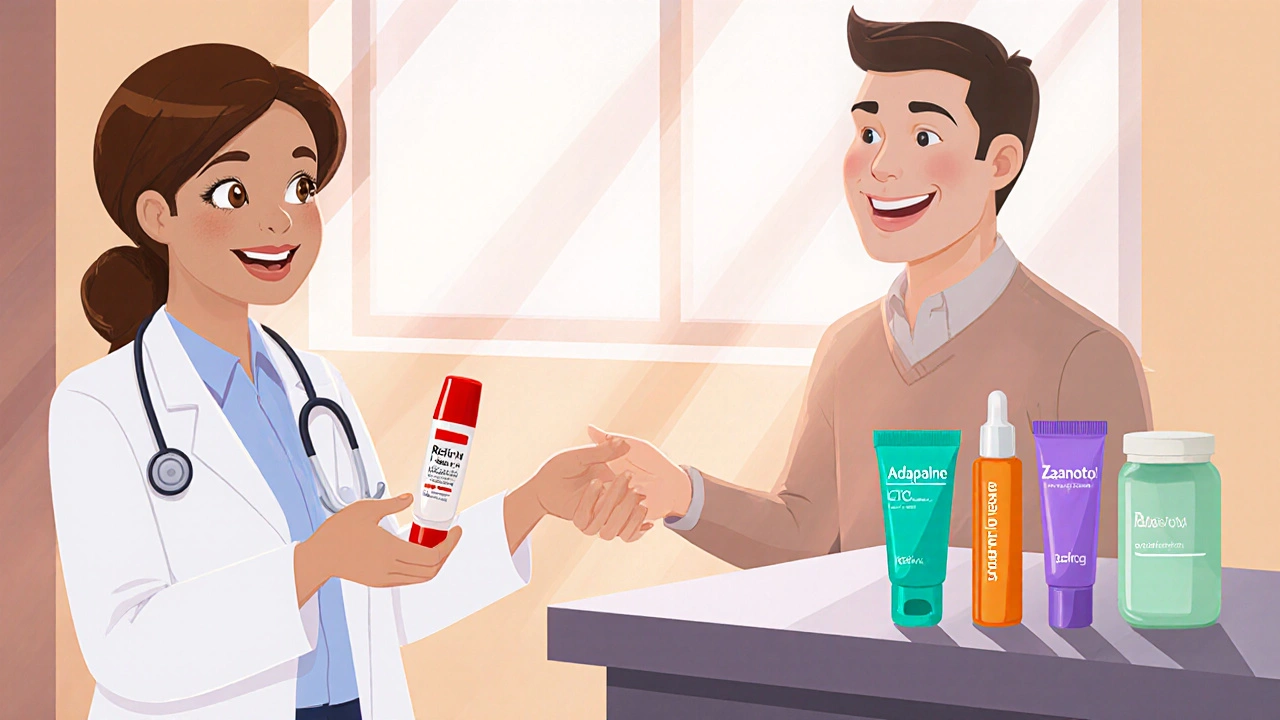
tretinoin alternatives
When you search for tretinoin alternatives, options that deliver similar acne‑fighting or anti‑aging results without the harsh side effects of classic tretinoin. Also known as retinoid replacements, it helps people who need gentler or more affordable solutions.
Understanding the original compound is useful, so let’s talk about tretinoin, a vitamin A‑derived retinoid prescribed for acne, hyperpigmentation, and fine lines. It works by speeding up cell turnover, which clears clogged pores but can also irritate sensitive skin. Because of that, many look for milder choices that still boost collagen and even skin tone.
The broader class, retinoids, encompasses both prescription‑strength and over‑the‑counter derivatives. Their common attribute is the ability to bind retinoic acid receptors, triggering the same cellular renewal pathways as tretinoin. However, potency, irritation potential, and formulation differ widely, which is why selecting the right one matters.
Common substitutes you’ll encounter
Two popular stand‑ins are adapalene, a synthetic retinoid approved for acne that tends to be less irritating than tretinoin and azelaic acid, a naturally occurring dicarboxylic acid that reduces inflammation and clears pores without the classic retinoid redness. Adapalene’s slower release makes it ideal for beginners, while azelaic acid doubles as a brightening agent for rosacea‑prone users. Both fit into the tretinoin alternatives category because they target the same skin concerns with distinct safety profiles.
Beyond these, you’ll see options like niacinamide, bakuchiol, and vitamin C serums. They don’t belong to the retinoid family but often appear in the same conversation because they support collagen synthesis or improve texture. When paired with a gentle cleanser and proper sunscreen, they can round out a regimen that avoids the burn‑and‑peel feeling of tretinoin.
Choosing the right alternative depends on three factors: skin sensitivity, budget, and treatment goals. If you’ve experienced excessive dryness, a lower‑strength adapalene or azelaic acid might be the sweet spot. For those on a tight budget, over‑the‑counter azelaic acid formulas or niacinamide creams deliver noticeable results without a prescription. And if anti‑aging is the main focus, combining a mild retinoid with vitamin C in the morning can give you the best of both worlds.
Below you’ll find a curated list of articles that break down each option in detail, compare costs, and explain when to switch from tretinoin to a gentler formula. Dive in to match the alternative that fits your skin type and lifestyle best.