
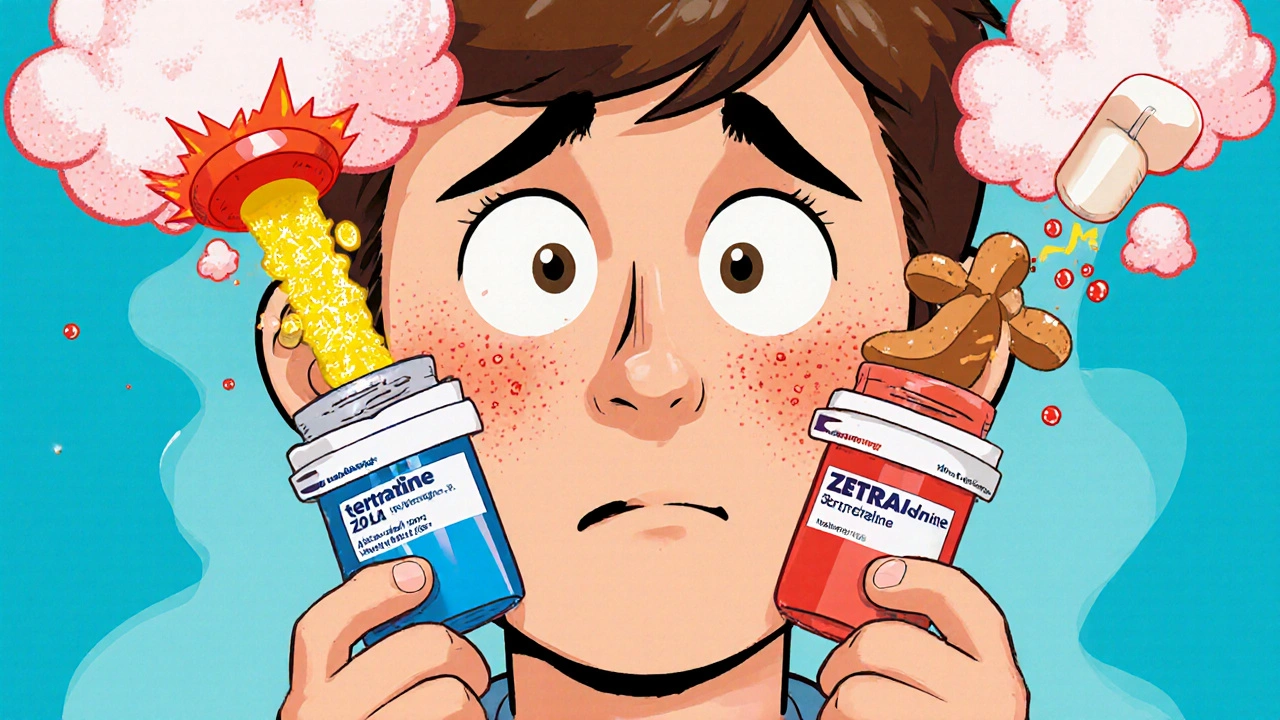
Most people assume that generic medications are just cheaper versions of brand-name drugs - and they’re right, mostly. But here’s something you might not know: generic medications can trigger allergic reactions even when the brand-name version never did. That’s not a myth. It’s happening right now, and many patients don’t realize why.
Generics have to contain the same active ingredient as the brand-name drug. That’s the law. But the rest? The fillers, dyes, preservatives, and binders? Those can be completely different. And for some people, those extra ingredients are the real problem.
Why generics cause reactions when brand names don’t
Let’s say you’ve taken brand-name Zoloft for years with no issues. Then your pharmacy switches you to the generic sertraline - and suddenly, you break out in hives. That’s not random. It’s likely the dye. Many generic versions of sertraline use tartrazine (FD&C Yellow No. 5), a common allergen. The brand version doesn’t have it. The generic does. And your body reacts.
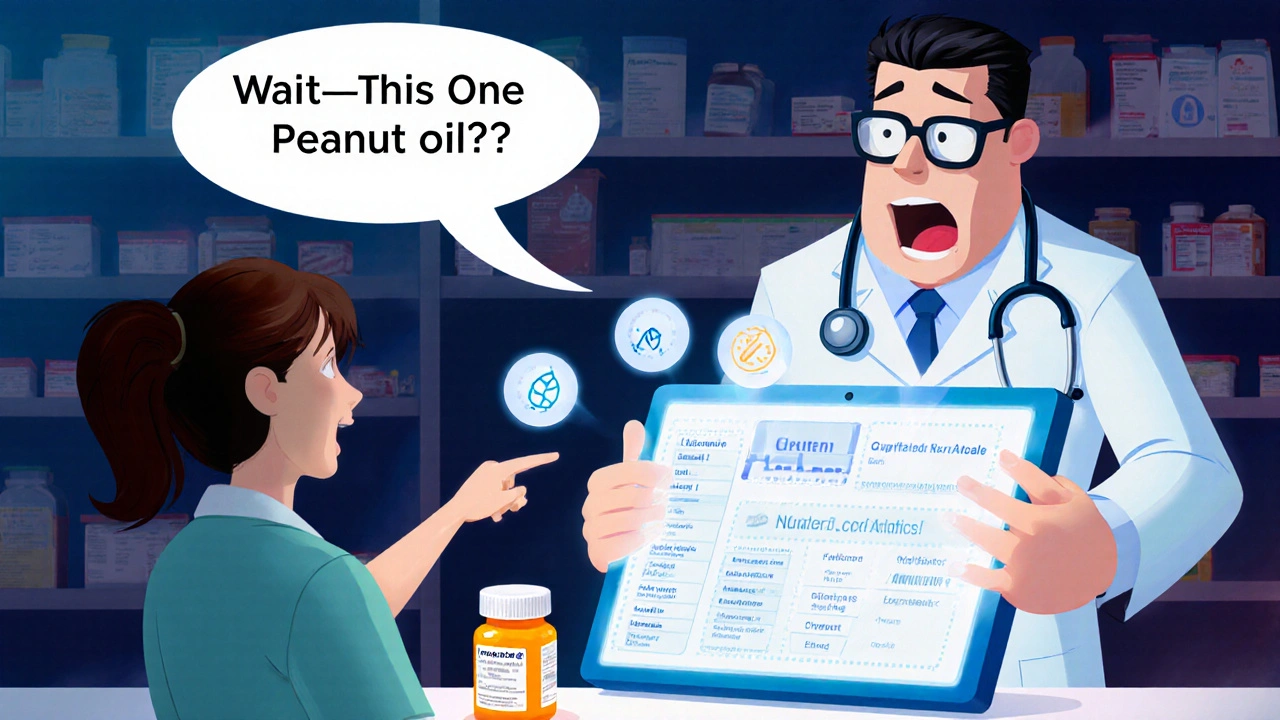
This isn’t rare. A 2021 study in the Journal of Allergy and Clinical Immunology found that 7.3% of people with documented drug allergies had reactions specifically because of differences in inactive ingredients in generics. The most common culprits? Lactose, gluten, tartrazine dye, and peanut oil - all things you might not even think of as drug ingredients.
Here’s the kicker: 83% of generic drugs contain at least one inactive ingredient that’s different from the brand version. And 27% of them include ingredients known to cause allergic reactions in sensitive people. Most patients - and even some doctors - never check. They assume "same drug, same effect." But your body doesn’t care about the active ingredient alone. It reacts to everything in the pill.
What allergic reactions look like - and how bad they can get
Allergic reactions to generics don’t always scream "emergency." Sometimes they start small. But they can turn fast.
Mild reactions usually show up as:
- Rash or red, itchy skin (68% of cases)
- Hives (42%)
- Itching without a visible rash (57%)
These might seem like a nuisance. But here’s what doctors warn: 65% of people who have a mild reaction to a generic will have a worse reaction the next time. That’s not a guess. It’s from the American Academy of Family Physicians. If you ignore a mild reaction, you’re playing Russian roulette with your next dose.
Moderate reactions involve more than one part of your body:
- Swelling of the face, lips, or tongue (29%)
- Wheezing or trouble breathing (31%)
- Nausea, vomiting, or stomach cramps (24%)
These aren’t just uncomfortable. They’re warning signs. Your immune system is escalating. If you’re having swelling or breathing issues, don’t wait to see if it gets better. It won’t.
Severe reactions - anaphylaxis - are life-threatening. Symptoms include:
- Throat tightness or feeling like your airway is closing (87%)
- Systolic blood pressure below 90 mmHg or a drop of more than 30% from normal (78%)
- Difficulty breathing or rapid breathing (over 30 breaths per minute) (92%)
- Dizziness, fainting, or loss of consciousness
According to a 2023 meta-analysis, anaphylaxis from generics happens in about 0.02-0.04% of doses. That sounds low - until you realize that over 90% of all prescriptions in the U.S. are generics. That means thousands of people are at risk every single day.
When to call 911 - not wait, not text your doctor
Here’s the rule: If you’re having symptoms from two or more body systems at once - call 911 immediately. That’s the standard from the National Institute of Allergy and Infectious Diseases (NIAID).
Examples:
- Hives (skin) + wheezing (lungs)
- Swelling (face) + nausea (stomach)
- Itching (skin) + dizziness (heart/blood pressure)
Don’t wait to see if it gets worse. Don’t drive yourself to the ER. Call 911. Epinephrine works best when given within 5-15 minutes of symptom onset. Delaying it by even 30 minutes can mean the difference between recovery and death.
If you have an epinephrine auto-injector (like an EpiPen), use it right away - even if you’re not 100% sure it’s an allergy. Better to use it and be fine than not use it and risk everything.
And yes - this applies to generics too. A 2022 FDA MedWatch report details a case where a patient with a known peanut allergy had anaphylaxis after receiving a generic version of propofol that contained peanut oil. The brand version didn’t have it. The generic did. And the patient didn’t know.
What to do after a mild reaction
If you only got a rash or mild itching - and it went away after a few hours - you might think, "It’s no big deal." But it is.
That mild reaction is your body’s first warning shot. Studies show that 65% of people who have a mild reaction to a generic will have a stronger one next time. That’s why the American Academy of Family Physicians says: call your doctor within 72 hours.
Here’s what you should ask for:
- "Which inactive ingredients are in this generic version?"
- "Can you compare the ingredients to the brand-name version?"
- "Is there a dye-free, gluten-free, or lactose-free version available?"
Thirty-eight percent of major generic manufacturers now offer these specialized versions. You just have to ask. Your pharmacist can check the FDA’s Inactive Ingredient Database - which lists over 1,200 ingredients and which drugs contain them.
Also, start keeping a "medication allergy passport." Write down every ingredient you’ve reacted to - not just the drug name. Include: lactose, tartrazine, gluten, peanut oil, magnesium stearate, etc. One pilot study found that patients who used this passport had 29% fewer adverse reactions. It’s simple. But it saves lives.
What your doctor and pharmacist need to know
Most doctors still just write "allergic to penicillin" in your chart. But that’s not enough. A 2022 AMA guideline says: document the exact formulation and suspected ingredient.
Example:
Wrong: "Allergic to amoxicillin." Right: "Reaction to generic amoxicillin - suspected magnesium stearate. Tolerated brand-name Amoxil."
Why does this matter? Because if you’re labeled "allergic to penicillin" without details, you might be denied life-saving antibiotics. A 2020 study found that 90% of people labeled as penicillin-allergic can actually take penicillin safely - if the allergy was misdiagnosed or triggered by an inactive ingredient.
Pharmacists are your next line of defense. A 2023 survey found that 41% of pharmacists see at least one patient per month with a reaction linked to inactive ingredients in generics. But only 42% of doctors asked about brand vs. generic reactions in 2019. That number jumped to 71% in 2023 - because patients started asking.
What you can do today to stay safe
You don’t need to avoid generics. But you do need to be smart about them.
- Check the label. Look at the "Inactive Ingredients" section on the bottle or package insert. If you see "lactose," "tartrazine," "gluten," or "peanut oil," and you’re allergic to any of them - ask for an alternative.
- Ask for the brand. If you’ve had a reaction before, ask your doctor to write "dispense as written" or "no substitutions" on the prescription.
- Keep a list. Write down every reaction - what drug, what version, what symptoms, how long it lasted. Bring it to every appointment.
- Get tested. If you’ve had more than one reaction, ask for allergy testing. You might not be allergic to the drug at all - just the filler.
- Teach your family. If you’re at risk for anaphylaxis, make sure someone close to you knows how to use an epinephrine injector and when to call 911.
Generic drugs are safe for most people. But safety isn’t about the drug - it’s about knowing what’s in it. And you have the right to know.
Can generic medications cause allergic reactions even if the brand name didn’t?
Yes. Generic medications must have the same active ingredient as the brand name, but they often contain different inactive ingredients like dyes, fillers, or preservatives. These can trigger allergic reactions in people who tolerate the brand version just fine. For example, a patient might react to tartrazine dye in a generic sertraline pill but not to the dye-free brand-name Zoloft.
What are the most common allergens in generic medications?
The most common allergens found in generic drugs are lactose (in 28% of oral generics), gluten (in 12%), tartrazine (FD&C Yellow No. 5 dye - in 15% of liquid generics), and peanut oil (in 8% of injectables). Magnesium stearate and other binders have also been linked to reactions in sensitive individuals, particularly those with known allergies to these substances.
When should I go to the emergency room for a reaction to a generic drug?
Go to the ER or call 911 immediately if you experience symptoms from two or more body systems - such as hives (skin) plus wheezing (lungs), or swelling (face) plus nausea (stomach). Also seek emergency care if you have throat tightness, trouble breathing, dizziness, fainting, or a sudden drop in blood pressure. These are signs of anaphylaxis, a life-threatening reaction that needs epinephrine right away.
Should I stop taking a generic medication if I had a mild rash?
Don’t stop without talking to your doctor, but don’t ignore it either. A mild rash could be your body’s first warning. Studies show 65% of people who have a mild reaction to a generic will have a worse reaction next time. Contact your doctor within 72 hours to identify the cause and switch to a safer version if needed.
How can I find out what’s in my generic medication?
Check the package insert or the pharmacy’s online profile for the list of inactive ingredients. You can also ask your pharmacist to compare the generic to the brand version using the FDA’s Inactive Ingredient Database. If you have known allergies, ask for a dye-free, gluten-free, or lactose-free version - 38% of major manufacturers now offer these alternatives.
Can I be tested for allergies to inactive ingredients in drugs?
Yes. Allergists can perform skin prick tests or blood tests for specific allergens like lactose, gluten, or dyes - though testing for some ingredients is less common. If you’ve had multiple reactions, ask for a referral to a drug allergy specialist. They can do supervised drug challenges to determine whether the reaction was to the active drug or an inactive component.
Are there generic medications without common allergens?
Yes. Many manufacturers now offer "dye-free," "gluten-free," or "lactose-free" versions of common generics. These are often listed in the Generic Pharmaceutical Association’s Transparency Report. Ask your pharmacist specifically for these versions - they’re not always the default option, but they’re available.
Why don’t doctors always know about these reactions?
Many doctors assume that because two drugs have the same active ingredient, they’re interchangeable in every way. Inactive ingredients aren’t always discussed during prescribing, and pharmacists may not always flag them unless asked. Also, patient reports of reactions are often underreported - up to 20% - because people don’t connect their rash to the medication. That’s why it’s up to you to speak up and ask questions.
What happens next - and how to protect yourself
The FDA is working on new labeling rules to make inactive ingredient warnings clearer. Full implementation won’t be done until 2025. Until then, you’re your own best advocate.
Don’t let the convenience of generics make you careless. The system works - if you know how to use it. Know your triggers. Ask questions. Keep a list. Speak up. Your next pill could be harmless - or it could be dangerous. The difference? Information.

One comment
bro i took generic sertraline last month and broke out in hives like wtf
thought it was laundry detergent lmao
now i check every pill like its a bomb
lactose? dye? gluten? im done trusting these pills
THIS IS THE FEDERAL PHARMACEUTICAL INDUSTRIAL COMPLEX’S MASTERPIECE OF SOCIAL ENGINEERING. They know people can’t afford brand names so they poison them with tartrazine and magnesium stearate-then blame the patient for being ‘sensitive.’ The FDA? A captured agency. The pharmacists? Complicit. And you? You’re a test subject in their $400B oligopoly. 🚨💉🧪 #BigPharmaLies
you think this is bad? wait till you find out some generics use TALC as a binder. TALC. The same shit they put in baby powder. And you know what happened to the people who used that? Lawsuits. Billions. But no one’s talking about it in the med schools. Why? Because the same pharma giants own the textbooks. This isn’t medicine-it’s Russian roulette with a prescription pad.
Just wanted to say thank you for writing this. I had a mild rash after switching to generic metoprolol and thought it was stress-until my allergist pointed out the dye. I now keep a little card in my wallet with every inactive ingredient I can’t tolerate. My pharmacist even printed me a custom label for my med bottles. 🙌 It’s small, but it saved me from anaphylaxis last year. If you’ve ever had a weird reaction to a generic, please, please, please talk to your pharmacist. They’re the real MVPs. 💊❤️
Stop ignoring rashes. Stop assuming it’s nothing. Your body is screaming. If you get hives from a pill, that’s not a coincidence-it’s a warning. Call your doctor. Ask for the ingredient list. Demand a dye-free version. You have power here. Don’t let laziness kill you. This isn’t drama. It’s survival. 🚨
so let me get this straight-some guy in a lab in India dumped gluten into a pill and now we’re supposed to panic? i’ve been on generics for 15 years and i’m fine. this is just fearmongering. you’re all hypochondriacs with too much time on your hands. get a life.
What if the real allergy isn’t to the dye, but to the assumption that medicine can be commodified? We’ve turned healing into a supply chain optimization problem. The body doesn’t care about cost-benefit analysis. It cares about purity. And we’ve stripped that away in the name of efficiency. So yes, the pill makes you itch-but the real sickness is the system that let this happen.
Imagine your body as a cathedral. The active ingredient is the altar-the sacred thing. But the fillers? They’re the stained glass, the incense, the bells. Some people can handle amber glass. Others? They’re allergic to the scent of burning resin. We treat meds like interchangeable widgets. But your immune system doesn’t think like a warehouse manager. It remembers. It reacts. And it doesn’t care if the label says ‘equivalent.’
Thank you for this comprehensive and evidence-based post. I am particularly interested in the reference to the FDA’s Inactive Ingredient Database. Could you clarify whether the database is publicly accessible via a web interface, or if access requires institutional login? Additionally, is there an API or downloadable dataset available for researchers? This information would greatly assist in developing patient-facing tools for medication safety.
why are we even talking about this? just take the brand name if you’re scared. problem solved. stop overthinking. life’s too short to read pill labels like they’re ancient scrolls. 🤷♂️
Oh please. You think you’re special because you got a rash? Millions of people take generics without issue. You’re not ‘allergic’-you’re just weak. And now you want the whole system to bend to your fragility? Grow up. The world doesn’t care that your body can’t handle a little tartrazine. Maybe you should stop taking pills altogether.
lol i just checked my generic lisinopril and it’s got lactose and FD&C Yellow No. 5
and i’m lactose intolerant
and i’ve been getting stomach cramps for 3 years
so yeah i’m gonna go scream at my doctor now
but seriously who the fuck designs this shit