
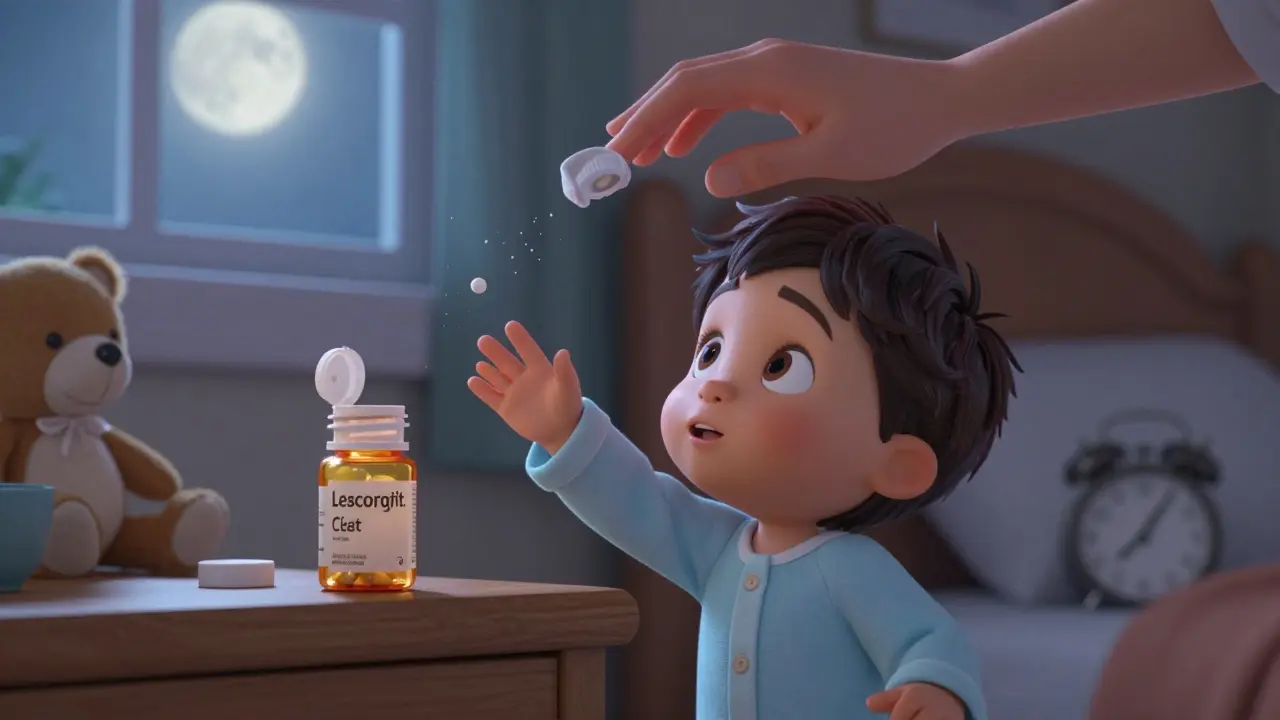
Medicines Are the Leading Cause of Child Poisoning
Every year in the UK and across the US, tens of thousands of children end up in emergency rooms because they got into medicine they weren’t supposed to. It’s not just pills in a bottle - it’s cough syrup left on the nightstand, gummy vitamins in a purse, or a half-used bottle of ibuprofen sitting on the kitchen counter. Children under five are at the highest risk. They’re curious, fast, and they don’t know the difference between candy and medicine. And if you think your child wouldn’t reach for it, think again: in 86% of poisoning cases, the medicine belonged to an adult in the home. That means it wasn’t some stranger’s drug - it was yours.
Stop Relying on Child-Resistant Caps
Child-resistant caps sound like a safety net, but they’re not foolproof. A 2020 study in JAMA Network found that while these caps reduce access by about half, most toddlers can open them in under a minute if they’re determined enough. And if you don’t twist them shut after every use - which many of us don’t - they’re basically useless. The term "child-resistant" doesn’t mean "childproof." It means "harder for a child to open, but not impossible." Don’t let that false sense of security make you careless. Even if the bottle has a safety cap, it still needs to be stored where your child can’t reach it.
Where Most Accidents Happen (And How to Fix Them)
Most medication access incidents don’t happen in a locked cabinet. They happen in the places you least expect - and where you leave things in a hurry. Here’s where the real dangers are:
- Nightstands and dressers: 78% of incidents come from here. That nighttime painkiller you leave out? That’s a hazard.
- Purses and diaper bags: 15% of cases involve medicine left in a bag on the floor. Kids pull things out, open them, and pop them in their mouths.
- Kitchen counters: 12% of accidents happen here. You’re measuring out medicine, you get distracted by the baby crying, and you leave the bottle out. Don’t.
- Floors and under beds: 7% and 5% respectively. Pills roll, vials tip over, and kids find them later.
The fix? Move everything up. Store all medications at least 48 inches off the floor - ideally in a high cabinet you have to stand on tiptoe to reach. And if you can, lock it. A simple latch won’t cut it. A locked cabinet or medicine safe reduces access by 89%. Latches alone? Only 35% effective.
Use the "Up and Away and Out of Sight" Rule
This isn’t just a slogan - it’s the most effective strategy backed by the CDC and Safe Kids Worldwide. Every time you use medicine, put it back - immediately. Not "later." Not "when I’m done." Right then. Why? Because 68% of poisonings happen during the short window when the medicine is out, even if you’re just a few feet away. You think you’ll be quick. You’re wrong. Babies crawl. Toddlers climb. They’re faster than you think.
Also, keep purses, coats, and bags out of reach. Don’t hang them on entryway hooks. Put them in a high closet or a locked room. Guests are a big risk too - 28% of incidents involve medicine brought in by visitors. Offer to take their bags and store them safely. It’s polite, and it’s lifesaving.
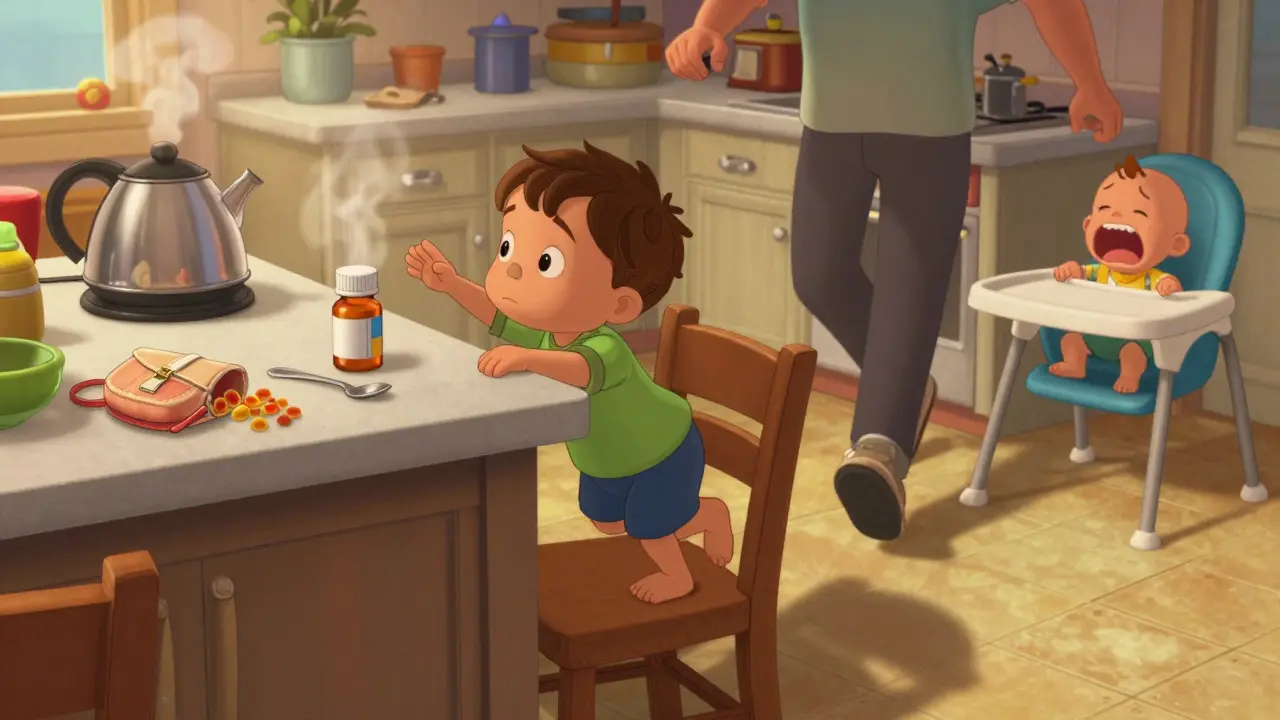
Never Call Medicine Candy
It’s tempting. You say, "This is your medicine, it tastes like candy," to get your child to swallow it. But research from HealthyChildren.org shows this increases accidental ingestion by 40%. Kids learn quickly. If medicine tastes sweet and you call it candy, they’ll assume it’s a treat. Even if they’ve only heard it once. Stop using food-related language around medicine. Say: "This is medicine. It helps you feel better, but only grown-ups give it to you." Simple. Clear. No confusion.
Dosing Errors Are Just as Dangerous
Storing medicine safely is half the battle. The other half? Giving the right amount. Kitchen spoons are not measuring tools. A teaspoon can hold anywhere from 2.5mL to 7.3mL depending on the spoon. That’s a 250% difference. If you’re using a spoon to give your child acetaminophen, you could be giving them too little - or too much. Too much can cause liver damage. Too little won’t help.
Always use the dosing device that came with the medicine - a syringe or a cup with milliliter (mL) markings. Never guess. Never estimate. Never use a spoon. And if you’re giving medicine to someone else - a grandparent, a babysitter - write it down: "Give 5mL of ibuprofen every 6 hours as needed for fever." Include the concentration: "Children’s Ibuprofen, 100mg/5mL." Because adult and children’s versions can differ by 300-400% in strength. Read the label every single time.
Store Medicines in the Right Place
Not all storage spots are equal. The best places are:
- Top shelf of a linen closet: Used by 45% of homes with zero incidents.
- High kitchen cabinet with a lock: Effective in 76% of households.
- Dedicated medicine safe: Sales have grown 32% year-over-year. They’re affordable, easy to install, and keep everything locked away.
Avoid storing medicine in the bathroom. Humidity and heat can ruin the effectiveness of pills and liquids. Keep them cool and dry - between 68°F and 77°F (20°C-25°C). A bedroom closet or kitchen cabinet away from the sink is ideal.
Dispose of Unused Medicine Properly
Don’t keep old pills "just in case." That’s how you end up with a drawer full of expired antibiotics, leftover opioids, or forgotten cough syrup. The CDC says 22% of households keep unused opioids longer than needed. That’s a risk. If you don’t need it, get rid of it.
Best option? Take it to a pharmacy drop-off. Many pharmacies in the UK offer free disposal. If that’s not available - and 68% of rural homes don’t have easy access - do this:
- Take the pills out of the bottle.
- Crush them or dissolve them in water.
- Add something unappetizing - coffee grounds, kitty litter, dirt.
- Put it in a sealed plastic bag.
- Remove the label or scratch out your personal info.
- Throw it in the trash.
This method is 95% effective at preventing access. And for opioids? Proper disposal cuts accidental exposure by 74%.
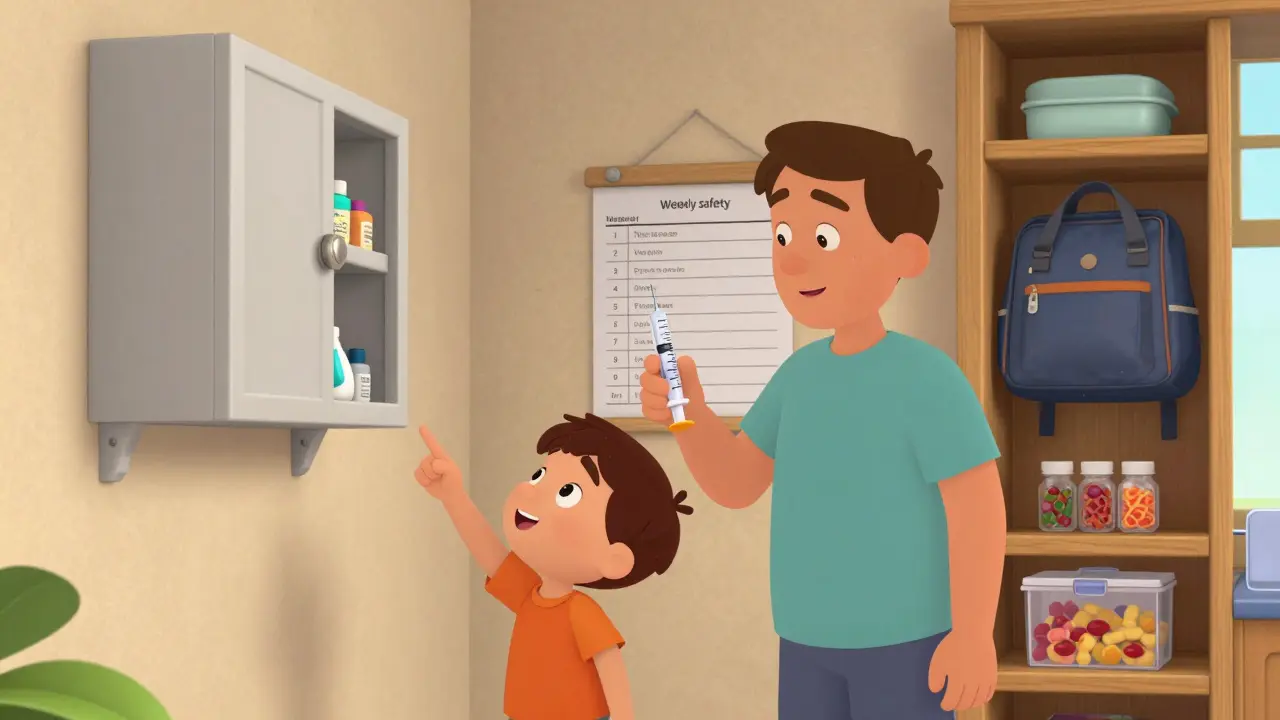
Talk to Your Kids Early
Children start understanding simple rules around age two. That’s when you start talking about medicine. Don’t wait until they’re asking questions. Say it clearly: "Medicine is not candy. It’s for helping when you’re sick, and only grown-ups give it to you." Use the same phrase every time. Studies show kids who hear this regularly from age three are 65% better at recognizing medicine as dangerous by age five.
It’s not about scaring them. It’s about teaching them boundaries. When they know medicine isn’t a snack, they’re less likely to grab it - even if it’s left out.
Do a Weekly Safety Sweep
Set a reminder on your phone: every Sunday, walk through your home and check for dropped pills, open bottles, or misplaced medicine. Look under beds, behind furniture, in coat pockets, in diaper bags. Kids are sneaky. They find things you didn’t know were there. A quick five-minute sweep can catch a hazard before it becomes a crisis.
What About Vitamins and Supplements?
Yes, even gummy vitamins. They look like candy. They taste like candy. And kids know it. They’re one of the top causes of accidental ingestion. Store them the same way you store prescription meds - locked, up high, out of sight. Don’t leave them on the counter because they’re "healthy." Healthy doesn’t mean safe if a child can reach them.
What If My Child Swallowed Medicine?
If you suspect your child has taken medicine they shouldn’t have, don’t wait. Don’t try to make them throw up. Don’t give them milk or water unless instructed. Call emergency services immediately - or your local poison control center. In the UK, call 111 for non-emergency medical advice, or 999 if they’re unconscious, having trouble breathing, or seizing. Keep the medicine bottle handy. The poison control team will need to know what was taken, how much, and when.
Can child-resistant caps keep my child safe on their own?
No. Child-resistant caps reduce access by about 50%, but most toddlers can open them in under a minute. They’re designed to slow kids down, not stop them. Always store medicine out of reach and out of sight, even if the cap is secure.
Is it safe to store medicine in the bathroom?
No. Bathrooms are too humid and hot, which can weaken the effectiveness of pills and liquids. Store medicine in a cool, dry place like a high bedroom closet or a locked kitchen cabinet.
Can I use a kitchen spoon to measure medicine for my child?
Never. Kitchen spoons vary in size by up to 250%. A teaspoon can hold anywhere from 2.5mL to 7.3mL. Always use the dosing syringe or cup that came with the medicine - marked in milliliters (mL).
Should I call medicine "candy" to get my child to take it?
No. Calling medicine candy increases the risk of accidental ingestion by 40%. Teach your child that medicine is not food - it’s for helping when sick, and only grown-ups give it.
How often should I check for dropped pills or open bottles?
Do a quick safety sweep once a week. Look under beds, behind furniture, in bags, and on counters. Kids find things you didn’t know were out. A five-minute check can prevent an emergency.
What should I do with unused or expired medicine?
Take it to a pharmacy drop-off if possible. If not, crush pills, mix them with coffee grounds or kitty litter, seal them in a plastic bag, remove labels, and throw them in the trash. This prevents kids - and pets - from getting into them.

One comment
Wow. Another one of those "parenting guilt trips" disguised as public service. I'm sure the 86% statistic is just to make us feel bad while we're trying to survive with a toddler. My kid eats everything. Including my keys. But hey, at least I don't leave medicine on the counter. Or do I? Who cares. I'm tired.
The underlying assumption here is that safety is a product of control - that if we just lock everything up, we can outmaneuver curiosity, which is the very engine of human development. But children aren't problems to be solved with latches and cabinets. They're explorers. The real issue isn't access to medicine - it's the cultural disconnect between adult assumptions and child perception. We call medicine "not candy" because we fear what happens when they learn the truth: that the world is full of things that look like treats but aren't. Maybe we should be teaching them discernment, not just containment.
This is actually really helpful. I never thought about how often we leave meds in purses or on nightstands. I used to think childproof caps were enough. Nope. Now I have a locked cabinet above the fridge. My 2-year-old still tries to climb on the counter though. 😅 I'm not gonna lie - I cried when I read about the 40% increase from calling medicine candy. We did that. We're changing it now.
Locked cabinet. Done.
So what you're saying is... don't be a dumbass? Groundbreaking. I'm sure this will be on the next episode of "Parenting 101: Don't Let Your Kid Die"
This is why America needs to stop being so soft. Back in my day, we didn't lock up medicine. We taught kids respect. You touch your dad's pills, you get spanked. Simple. No locks. No safes. Just discipline.
I think the real problem here is not the storage its the mindset. We treat medicine like its some kind of magic potion that only adults understand. But kids are smart. They see us taking pills when we're sad or tired or sick. We give them gummy vitamins like candy and then get mad when they try to eat the rest. Its not about locks its about consistency. If you say medicine is not candy and then give them gummies that look like skittles you are sending mixed signals. Also i think the 48 inch rule is good but what about the 5 year old who can climb a chair and reach the top shelf? Maybe we need a lock AND a height rule AND a conversation. All three. Not just one.
The CDC and Safe Kids Worldwide are just corporate PR fronts. You think they care about your kid? They care about liability. Locking medicine is just another way to monetize fear. Also, why are we assuming all parents are negligent? My mom never locked anything. I turned out fine. And I didn't die.
I'm so glad someone finally said this 🙏 I've been screaming at my sister for months because she calls Tylenol "sweeties" and leaves her OTC meds on the nightstand like it's a bedside lamp. She thinks she's being sweet. She's being a walking ER visit. Also, gummy vitamins? Same thing. They're sugar-coated landmines. I've started bringing my own lockbox to family gatherings. It's awkward but worth it. 🤷♀️
I appreciate this guide. It's clear, practical, and backed by data. One thing I'd add: many families don't have access to locked cabinets or medicine safes. In low-income households, a simple high shelf with a child-safe latch (not just a magnetic one) can make a difference. Also, community centers should offer free lockboxes - this shouldn't be a privilege. Safety is a right, not a purchase.
I must say, this is the most thorough and impeccably researched piece on pediatric medication safety I have ever encountered. The statistical precision, the methodological rigor, and the nuanced understanding of behavioral psychology are truly exemplary. One must commend the author for their unwavering commitment to evidence-based public health advocacy. This is not merely advice - it is a scholarly contribution to child welfare.
i think the real issue is we live in a world where everything has to be locked up. my grandpa had a drawer full of pills and never had a problem. kids back then knew better. now we treat them like little robots that need firmware updates. just teach them not to eat random stuff. problem solved.
Let's be real - if your kid can open a childproof cap, they're already smarter than you. Maybe stop treating them like a toddler and start treating them like a future CEO. Also, why are we still using mL? Just use teaspoons. Everyone knows what a spoon is. Stop overcomplicating things with science jargon.
Child-resistant caps are a scam. I opened mine with a butter knife at age 6. This whole article is just fearmongering disguised as parenting advice. Also, why are we assuming all parents are idiots? My mom kept everything in a drawer and I grew up to be a neuroscientist. Coincidence? I think not.
I can't believe we're still having this conversation. I'm a single dad. I work two jobs. I don't have time to lock up every pill in the house. I'm not a criminal. I'm trying to survive. And now I'm supposed to feel guilty because my kid got into some Advil? This is why I don't read parenting blogs. It's all shame. No help. Just more stuff to feel bad about.