
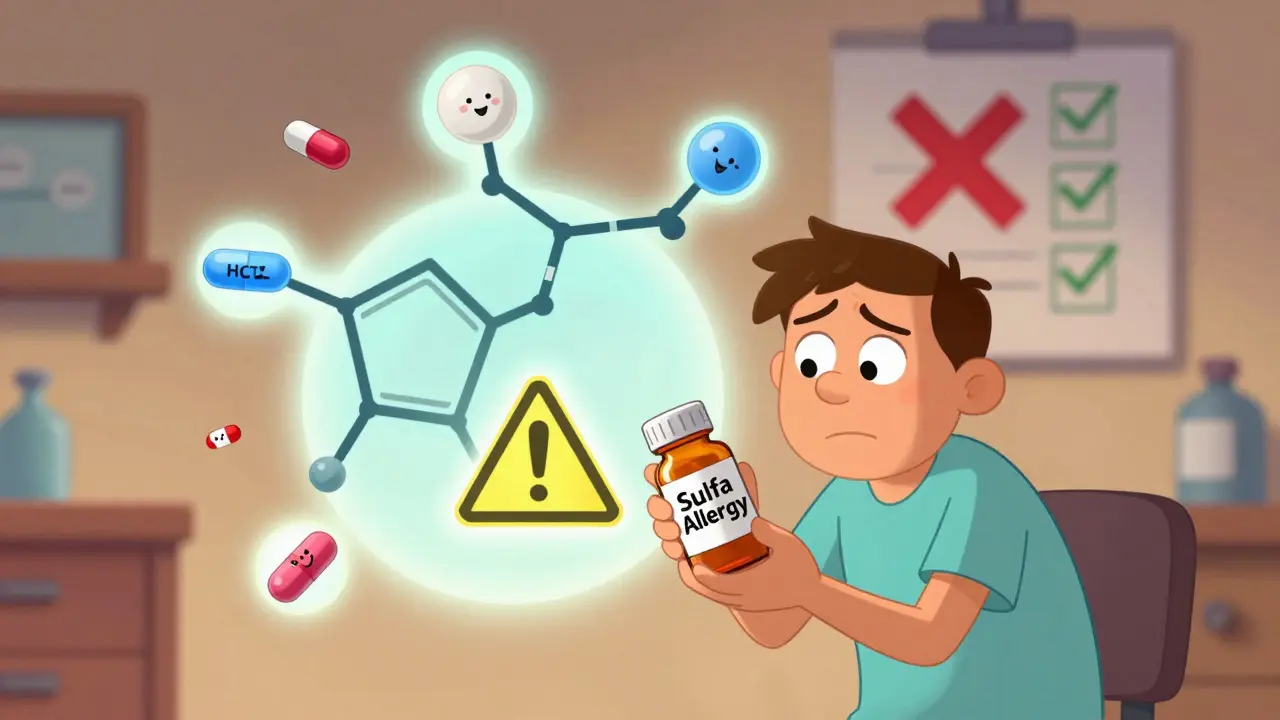
People often say they have a "sulfa allergy"-but what does that actually mean? Many patients avoid medications like blood pressure pills or diuretics because they were told they’re allergic to sulfa. But here’s the truth: sulfa allergy doesn’t mean you’re allergic to all drugs with sulfur in them. In fact, most of the time, it doesn’t mean you’re allergic at all.
What Is a Sulfa Allergy, Really?
The term "sulfa" is shorthand for sulfonamide antibiotics-drugs like sulfamethoxazole (in Bactrim or Septra), sulfadiazine, and sulfacetamide. These were among the first antibiotics ever developed, back in the 1930s. Today, they’re still used for urinary tract infections, ear infections, and some types of pneumonia. But here’s where things get messy. People confuse "sulfa allergy" with any reaction to a drug that has sulfur atoms in its chemical structure. That’s wrong. The real issue isn’t sulfur-it’s a specific part of the molecule called the aromatic amine group. Only sulfonamide antibiotics have this group. When your body breaks them down, it creates a reactive compound that can trigger an immune response in some people. About 3% of the population says they have a sulfa allergy. But studies show only about 1.5-2% actually have a true IgE-mediated allergy. The rest had rashes, nausea, or headaches that weren’t allergic at all. Still, once a label sticks in your medical record, it follows you everywhere. And that’s where the real danger lies.What Medications Are Safe? (Spoiler: Most of Them)
If you’ve been told you’re allergic to sulfa, you might have been told to avoid:- Hydrochlorothiazide (HCTZ)
- Furosemide (Lasix)
- Celecoxib (Celebrex)
- Acetazolamide
- Glyburide (for diabetes)
The One Big Exception
There’s one drug that does cross-react: sulfasalazine (Azulfidine). It’s used for ulcerative colitis and rheumatoid arthritis. Why? Because it breaks down in your body into sulfapyridine-a molecule that’s nearly identical to sulfamethoxazole. About 10% of people with sulfonamide antibiotic allergies react to it. So if you’ve been told you have a sulfa allergy and you’re prescribed sulfasalazine, talk to your doctor. But if you’re on HCTZ for high blood pressure, furosemide for swelling, or celecoxib for joint pain? You’re probably fine.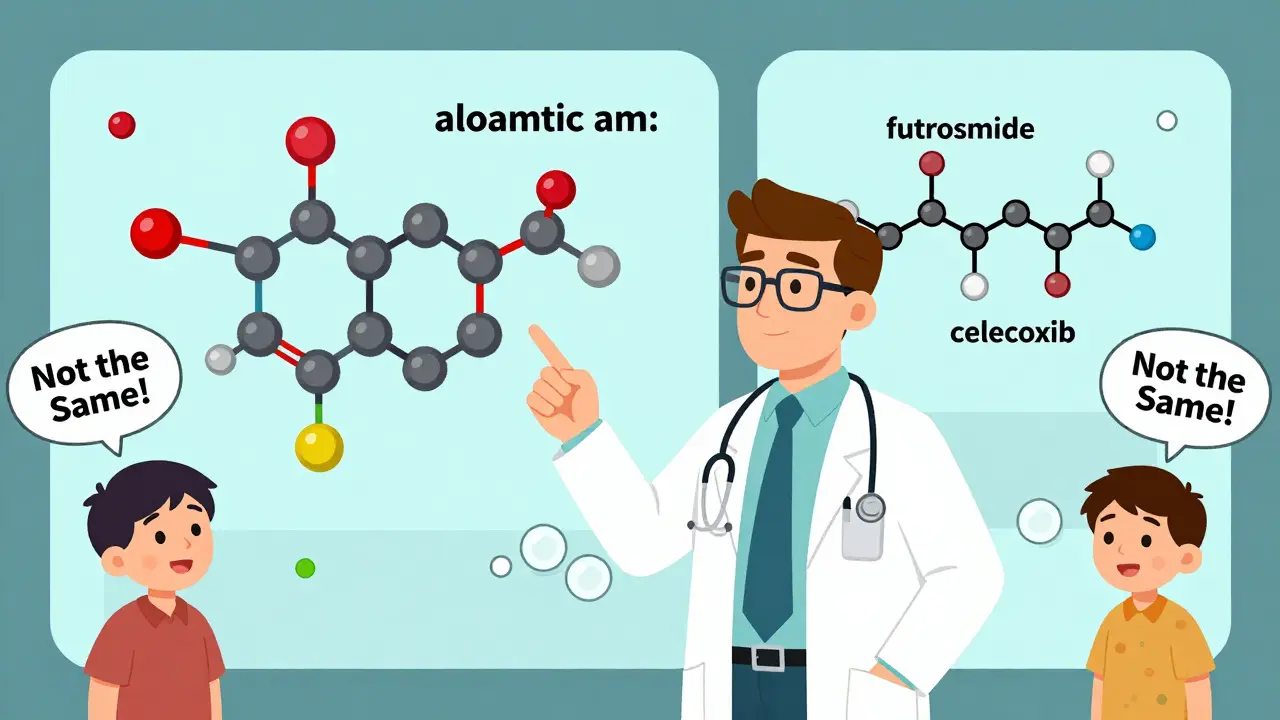
What About Sulfur, Sulfates, and Sulfites?
Another big myth: if you’re allergic to sulfa, you can’t have sulfites in wine or sulfates in Epsom salts. That’s not true. Sulfites are preservatives. Sulfates are salts like magnesium sulfate (used for preeclampsia). Saccharin is an artificial sweetener. None of these have the same structure as sulfonamide antibiotics. Your immune system doesn’t connect them. A 2023 Cleveland Clinic guideline says patients with sulfonamide antibiotic allergies can safely use all of these. Yet, many patients still avoid them out of fear. One Reddit user reported being denied furosemide for heart failure-even though three cardiologists said it was safe.Why Does This Misunderstanding Persist?
Because labels stick. A rash after taking Bactrim gets labeled "sulfa allergy"-and that label gets copied into every electronic health record. No one questions it. No one checks. A 2021 study found that pharmacist-led allergy reviews cut unnecessary restrictions by 68%. That means patients were getting the right meds-like HCTZ or furosemide-without being turned away. But here’s the cost of getting it wrong: patients with vague "sulfa allergy" labels are 2.15 times more likely to get broad-spectrum antibiotics like ciprofloxacin. Those drugs increase the risk of C. difficile infection-a dangerous, sometimes deadly gut infection. The CDC estimates that improper sulfa labeling contributes to 12.3% of antibiotic errors in hospitals. And it’s expensive. The AHRQ estimates the U.S. spends $1.2 billion a year on unnecessary alternatives, longer hospital stays, and complications from mismanaged allergies.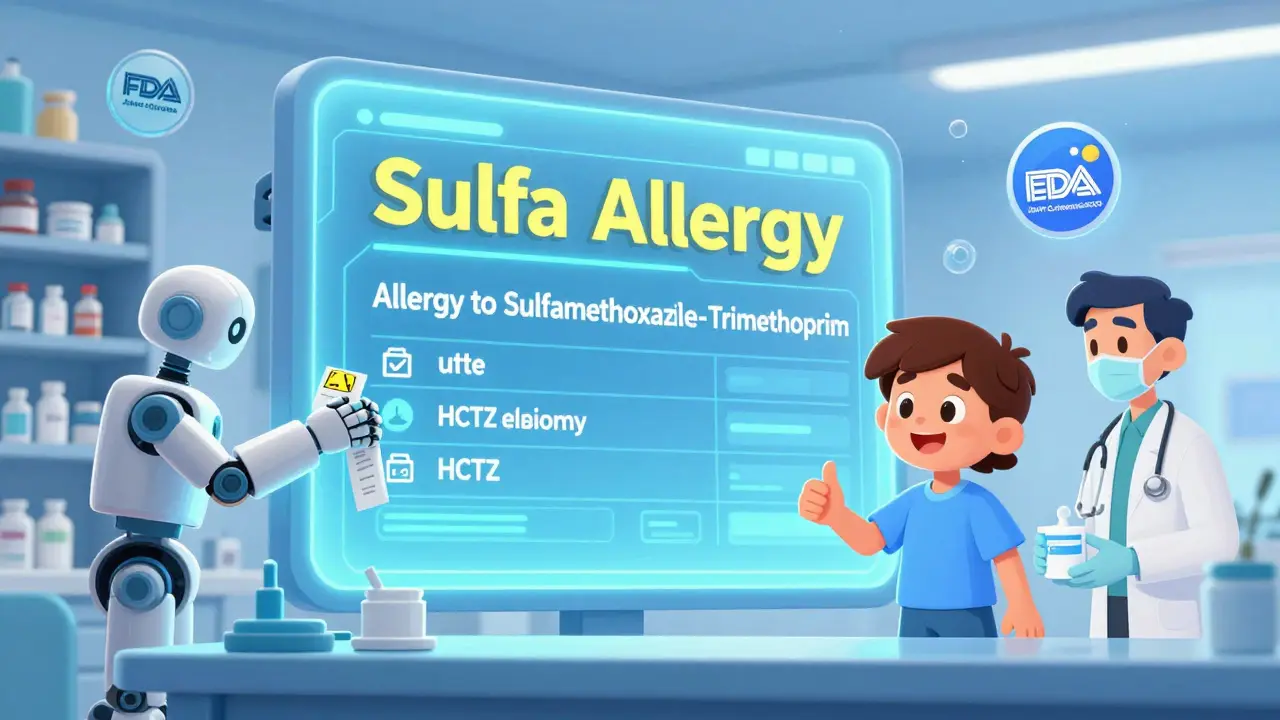




One comment
The pharmaceutical industry owns your doctor and your EHR system. They planted the "sulfa allergy" myth so you’d keep buying expensive alternatives. They don’t want you to know HCTZ is just as safe. They profit from fear. Wake up.
There’s a fundamental pharmacokinetic distinction here that’s being dangerously conflated. The sulfonamide moiety in antimicrobial agents contains an aromatic amine group that undergoes bioactivation to hydroxylamine metabolites-this is the hapten responsible for IgE-mediated hypersensitivity. Non-antibiotic sulfonamides lack this structural motif entirely, rendering them immunologically inert in this context. The literature is unequivocal: cross-reactivity is negligible. Yet clinicians persist in overlabeling. This isn’t just ignorance-it’s systemic medical malpractice.
Of course the FDA is finally doing something. Took them long enough. While other countries got their act together, we let Big Pharma run wild. Now we’re paying with C. diff outbreaks and billions wasted. If you’re American and you’ve been denied a diuretic because of a vague allergy label-you’ve been screwed by a broken system. Time to demand better. No more excuses.
Let me tell you something real. I had a rash after Bactrim in college. Thought I was allergic. Avoided everything with "sulfa" in it for 12 years. Then my cardiologist said, "Try HCTZ. You’re fine." I did. No problem. No hives. No drama. Just… life. Turns out I wasn’t allergic to medicine-I was allergic to misinformation. And guess what? So are half of you reading this. Stop living in fear. Your body isn’t broken. Your knowledge is.
This isn’t just about drugs. This is about control. Who gets to decide what’s safe for your body? Corporations? Doctors who don’t read the latest studies? The system wants you confused. It wants you afraid. It wants you to keep taking the expensive stuff. But here’s the truth: you have power. You can ask for a challenge. You can demand accurate documentation. You can refuse to be a statistic. Stop letting fear make your decisions. Fight back. Your health isn’t a marketing campaign.
Interesting. I wonder if this is just another case of overgeneralization in medicine. Like how people think penicillin allergies are common when they’re not. Maybe we’ve just trained ourselves to label anything weird after a drug as "allergy". I’ve seen it. Patient gets a headache after a pill. Next visit: "allergic to sulfa." No history. No testing. Just… assumed. It’s lazy. And dangerous.
Hey everyone, I’m from India and I’ve seen this exact thing happen here too. My aunt was told she couldn’t take furosemide because of a "sulfa allergy"-she had a mild rash from sulfamethoxazole 20 years ago. She was on a diuretic alternative that made her dizzy and caused kidney strain. Then a young pharmacist asked her: "Did you break out in hives or just get a little itchy?" She said, "Just itchy." The pharmacist said, "Then you’re probably fine." They did a supervised challenge. She’s been on HCTZ for three years now. No issues. Just needed someone to ask the right question. So to all the docs and pharmacists reading this: slow down. Listen. Don’t just copy-paste labels. We’re all just trying to get better.
This is the kind of post that changes lives. Seriously. I’m a nurse, and I’ve seen patients refuse life-saving meds because of a label they got from a 15-minute ER visit in 2008. We need more of this. Not just info-but action. Talk to your provider. Ask for a review. If they say "no," ask why. And if they can’t explain? Find someone who can. You deserve to be treated with science, not superstition. And if you’re a provider? Do better. Your patient’s life might depend on it.
They’re rewriting the rules now? Funny. The same people who told us to avoid sulfa for decades are now the ones writing the new guidelines. History doesn’t change. It just gets repackaged. And we’re still the ones paying the price. I’ve been avoiding celecoxib for years because of a rash I got from Bactrim. Now they say it’s fine? Cool. But what’s stopping them from saying the same thing about statins next year? Trust no one. Trust your body. And always question the narrative.
OMG YES 🙌 I’m a pharmacist and I’ve had patients cry because they were denied Lasix. One guy had heart failure and was told "no diuretics because sulfa allergy"-but his rash was from a 2005 UTI. We did a challenge. He cried again-but this time from relief. 🥲 Sulfites in wine? Sulfates in Epsom salts? Totally unrelated. Your body isn’t that dumb. Stop letting fear dictate your meds. You got this 💪❤️
If you’ve been told you have a sulfa allergy, don’t panic. Don’t assume the worst. Don’t avoid every medication with sulfur in it. Instead, ask: What exactly happened? When? How bad? Was it anaphylaxis? Or just a rash? If it was mild, you’re likely safe with non-antibiotic sulfonamides. And if you’re unsure? Ask for a drug challenge. It’s simple. It’s safe. And it could change your life. You don’t need to live in fear. You just need to ask the right questions.