
Drug Interaction Checker
Enter the medications you're currently taking. We'll check for common dangerous interactions mentioned in the article.
Important: This tool checks common interactions only. Always consult your pharmacist or doctor about all medications, supplements, and foods.
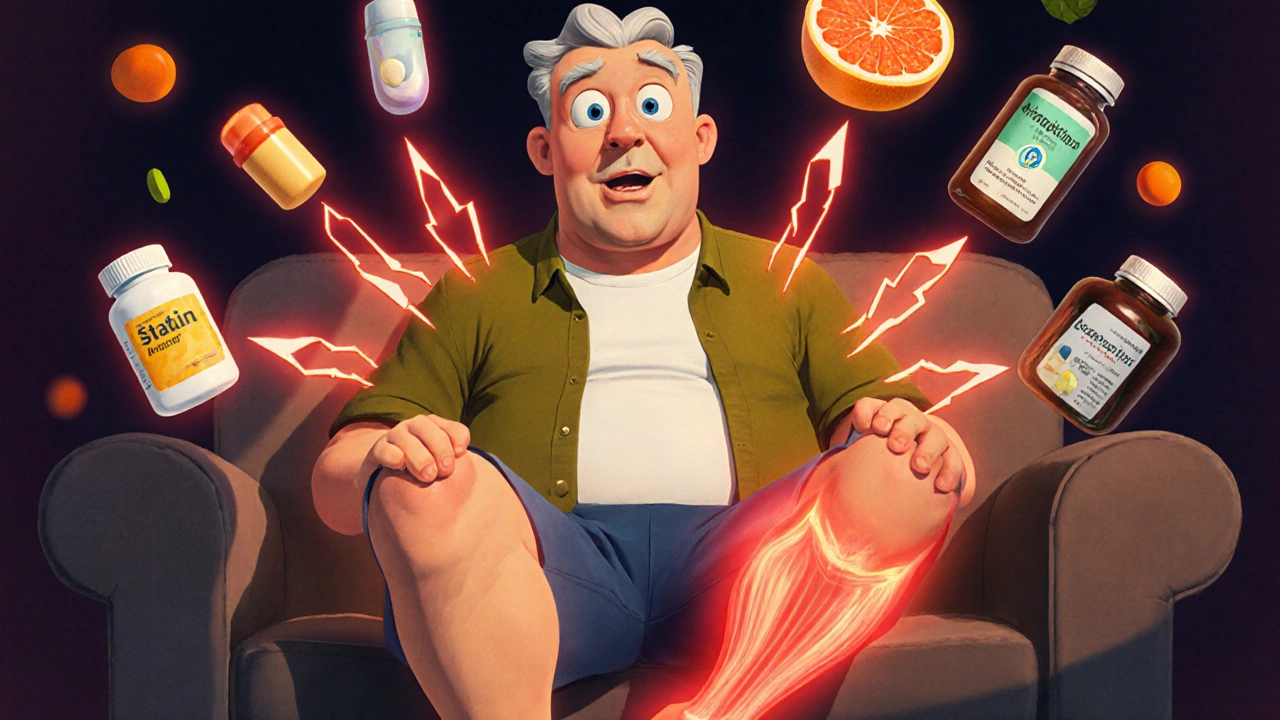
Every year, tens of thousands of people end up in the hospital not because their medication didn’t work, but because it worked too well-or in the wrong way. A common painkiller taken with an antibiotic. Grapefruit juice with a blood pressure pill. A sleep aid mixed with an antidepressant. These aren’t rare mistakes. They’re predictable, preventable, and happening right now to people you know.
Why Your Medication Suddenly Starts Acting Strange
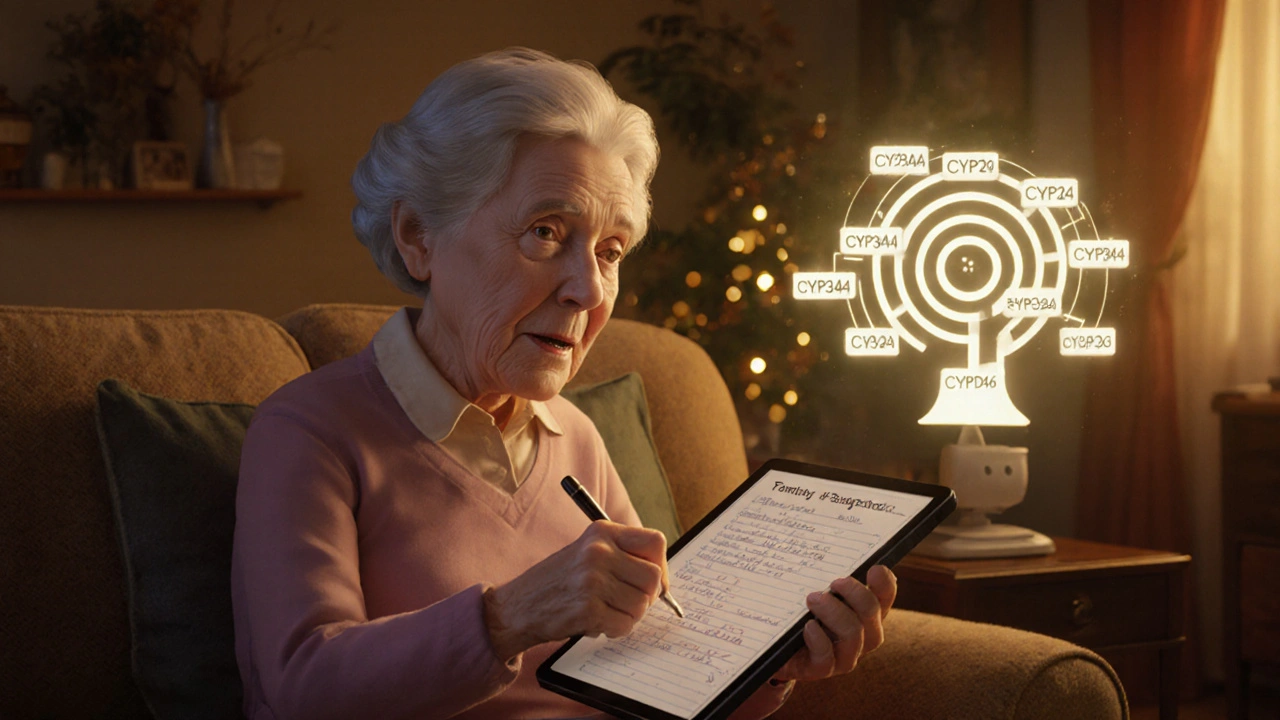
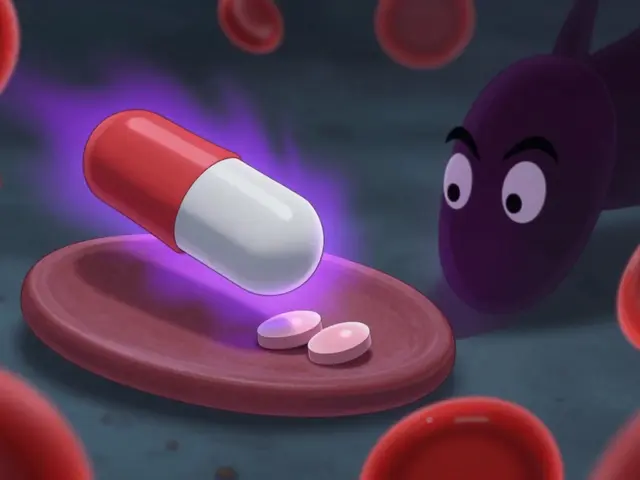
If you’ve ever taken a new drug and felt worse than before, you’re not imagining it. Sometimes, the problem isn’t the drug itself-it’s what else you’re taking. Drug interactions happen when two or more substances change how your body handles each one. This can turn a mild side effect into something dangerous: muscle pain so bad you can’t walk, bleeding that won’t stop, or a heartbeat that goes haywire. The body has a system for breaking down drugs, mostly through enzymes in the liver called cytochrome P450. One of the most important is CYP3A4. It processes about half of all prescription medications. When another drug blocks or overstimulates this enzyme, things go wrong. For example, clarithromycin (an antibiotic) can block CYP3A4. If you’re taking a statin like simvastatin for cholesterol, that blockage causes the statin to build up in your blood. The result? Severe muscle damage called rhabdomyolysis. Studies show this combo increases the risk by over eight times compared to safer antibiotics like azithromycin.How Food, Supplements, and Even Your Genes Play a Role
It’s not just other pills. Grapefruit juice is one of the most dangerous food-drug interactions out there. It doesn’t just affect one drug-it affects dozens. One glass can increase the blood levels of felodipine (a blood pressure medication) by 300%. That’s not a typo. It’s enough to cause dangerously low blood pressure or kidney damage. But not all blood pressure drugs react the same. Amlodipine? Almost no effect. That’s why you can’t just assume "all calcium channel blockers are the same." Supplements are another hidden risk. Vitamin K, found in spinach, kale, and broccoli, directly counters warfarin, a blood thinner. If you suddenly eat more greens, your INR drops. Your blood clots faster. No warning. No alert. Just a stroke waiting to happen. On the flip side, some herbal supplements like St. John’s wort can speed up drug metabolism, making your antidepressant or birth control pill useless. And then there’s your DNA. About 5% of people of European descent can’t process codeine properly because they lack the CYP2D6 enzyme. Instead of turning codeine into its active painkilling form, their body leaves it as is-meaning no pain relief. But others have too much of the enzyme. They convert codeine into morphine too fast. That’s how a child died after a tonsillectomy-given a standard dose of codeine for pain, it turned into a lethal morphine overdose.The Most Dangerous Drug Combos You Might Not Know About
Some combinations are so risky they’ve been pulled from the market. Cisapride, a stomach motility drug, was taken off shelves after more than 80 deaths linked to heart rhythm problems when combined with CYP3A4 inhibitors like erythromycin. Even today, certain antibiotics, antifungals, and HIV meds can trigger the same deadly rhythm disturbance called torsades de pointes when mixed with antiarrhythmics like amiodarone. Other high-risk pairs include:- Warfarin + aspirin: doubles the risk of major bleeding
- SSRIs + tramadol: can cause serotonin syndrome-a life-threatening surge in brain chemicals
- Statins + macrolide antibiotics: spikes muscle toxicity risk
- Verapamil + beta-blockers: can slow your heart to dangerous levels
- Fluoxetine + clopidogrel: blocks the heart drug from working, increasing stroke risk
Why Doctors Miss These Interactions
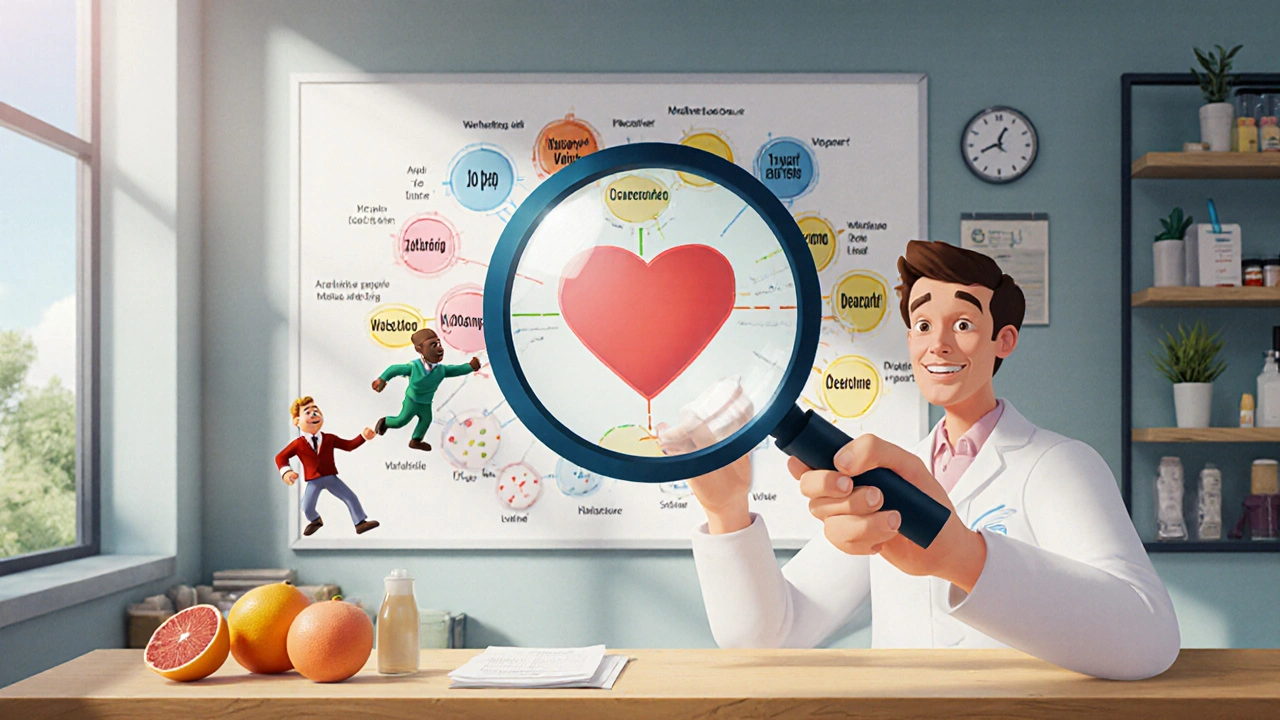
You’d think electronic health records would catch all this. They don’t. A 2023 survey of 3,500 doctors found that 74% felt overwhelmed by the number of drug interaction alerts. And here’s the kicker: 90-95% of those alerts are ignored. Why? Because most are low-risk noise-"Don’t take ibuprofen with lisinopril"-when what you really need is a red flag for "Don’t take clarithromycin with simvastatin." This is called alert fatigue. Doctors start tuning out. Nurses, who often catch more interactions than doctors, report seeing 40% of adverse events that were missed in the chart. One patient in Birmingham, UK, developed severe muscle weakness after starting a new statin. His doctor didn’t know he was also taking a common antifungal cream. The interaction was never flagged. He ended up in rehab for six weeks.How to Protect Yourself
You don’t need to be a pharmacist to avoid dangerous interactions. Here’s what actually works:- Keep a full list of everything you take. Not just prescriptions. Include supplements, herbal teas, over-the-counter meds, and even occasional painkillers. Write it down. Bring it to every appointment.
- Ask your pharmacist. Pharmacists are trained to spot interactions. When you pick up a new prescription, ask: "Is this safe with everything else I’m taking?"
- Know your high-risk drugs. If you’re on warfarin, statins, antiarrhythmics, or antidepressants, assume every new drug could interact. Double-check.
- Use a single pharmacy. If you get prescriptions from multiple places, your meds aren’t being reviewed together. One pharmacy means one pharmacist tracking all your drugs.
- Don’t assume natural = safe. Turmeric, ginseng, garlic pills-they all interact. Just because they’re sold in health stores doesn’t mean they’re harmless with your meds.
The Bigger Picture: Why This Matters More Than Ever
As we age, we take more pills. The average American over 65 takes four prescriptions. In the UK, that number is rising fast. With polypharmacy, the risk isn’t linear-it’s exponential. One interaction? Manageable. Five? A ticking bomb. The economic cost is staggering. Drug interactions contribute between $9 and $15 billion in avoidable healthcare costs in the U.S. every year. In the UK, NHS data shows that 1 in 20 hospital admissions for older adults is linked to a preventable drug reaction-many due to interactions. New tools are emerging. AI models can now predict dangerous combos with 89% accuracy. Some hospitals are starting to use genetic testing before prescribing. But until those become routine, the most powerful tool you have is awareness. And asking questions.What You Can Do Today
Don’t wait for a hospital visit to find out something went wrong. Right now, open your medicine cabinet. Write down every pill, capsule, and supplement. Then, call your pharmacist. Say: "I want to check if these are safe together." That one call could save you a trip to the ER-or worse. Drug interactions aren’t random. They’re predictable. And they’re preventable. You don’t need to understand cytochrome enzymes or pharmacogenetics. You just need to know your own meds-and be willing to ask.Can over-the-counter drugs cause dangerous interactions?
Yes. Common OTC drugs like ibuprofen, naproxen, and even antacids can interact with prescription medications. For example, taking ibuprofen with warfarin increases bleeding risk. Antacids with calcium or magnesium can reduce absorption of antibiotics like tetracycline by up to 90%. Always check with your pharmacist before taking any new OTC product, even if it’s "just for a headache."
Do herbal supplements really interact with medications?
Absolutely. St. John’s wort speeds up drug metabolism and can make birth control, antidepressants, and HIV meds ineffective. Garlic and ginkgo can thin the blood, increasing bleeding risk when taken with warfarin or aspirin. Even green tea can interfere with certain heart medications. There’s no regulation on herbal products, so their potency varies-and so does their risk.
Is grapefruit juice the only food I need to worry about?
No. Grapefruit is the most well-known, but other citrus fruits like Seville oranges and pomelos can have the same effect. Also, vitamin K-rich foods (kale, spinach, broccoli) interfere with warfarin. Alcohol can increase drowsiness with sedatives and raise liver damage risk with acetaminophen. Even high-sodium foods can reduce the effect of some blood pressure drugs. Diet matters more than most people realize.
Why do some people have worse side effects than others on the same drugs?
Genetics play a big role. About 3-10% of Caucasians are "poor metabolizers" of CYP2D6, meaning drugs like codeine, tamoxifen, or certain antidepressants build up to toxic levels. Others are "ultra-rapid metabolizers," meaning the drug gets broken down too fast and doesn’t work. These differences explain why two people on the same dose can have totally different reactions.
Should I get genetic testing for drug interactions?
It’s not necessary for everyone, but if you’re on multiple medications, especially for mental health, heart conditions, or chronic pain, it’s worth discussing. Tests like the GeneSight or Pharmacogenomic Panel can show how your body processes common drugs. Some hospitals in the UK now offer this for high-risk patients. The cost is around £200-£400, but it could prevent serious side effects down the line.
What should I do if I think I’m having a drug interaction?
Stop taking the new medication or supplement immediately and call your doctor or pharmacist. Don’t wait for symptoms to get worse. Signs include unusual fatigue, muscle pain or weakness, confusion, rapid heartbeat, unexplained bruising or bleeding, or severe dizziness. If you’re having trouble breathing, chest pain, or fainting, go to the emergency room. Keep a list of all your medications handy-this helps them act faster.

One comment
Just don’t take anything. 🤷♂️
My pharmacist once looked at my list and said, 'You’re basically a walking clinical trial.' I laughed. Then I cried. 🙃
It’s not just about drugs-it’s about the entire industrial-medical complex weaponizing biological vulnerability. We’re taught to trust the pill, the label, the doctor’s signature-but the system is built on statistical noise, not human truth. CYP3A4? A metaphor for how our bodies are reduced to biochemical equations in a world that no longer sees souls, only metabolites. The real interaction isn’t between simvastatin and clarithromycin-it’s between capitalism and mortality. And we’re all just collateral in the algorithm’s cold calculus.
It is unfortunate that many individuals fail to recognize the seriousness of polypharmacy. A simple, disciplined approach to medication management, coupled with professional consultation, can prevent the majority of these adverse events. The responsibility lies not solely with physicians but with the patient to act with diligence and respect for medical science.
they dont want you to know this because the pharma giants own the FDA and the doctors and the hospitals and the labs and the media and the vaccines and the ai that says its safe so dont trust any of it its all a scam to keep you sick and buying pills forever and they even put stuff in the water to make you need more meds bro
in america you die from pills but in nigeria we die from not having them at all so you people complain about interactions while we beg for one tablet a week this is why your system is broken
Look, the pharmacokinetics are real, but the real issue is that the healthcare system treats patients like data points. You got 12 meds? Cool, here’s a 30-second checklist. No one’s sitting with you, asking how you feel, watching your eyes when you say 'I’m fine.' The science is solid-but the delivery? Broken. And until we fix the human part, no AI or genetic test will save you.
They say grapefruit juice is dangerous but what about the government’s secret drug cocktails in the water supply? They want us docile. They want us dependent. They don’t want us thinking. This isn’t medicine-it’s control. And the FDA? Just another branch of the deep state.
It’s poetic, really-the liver, this ancient alchemist, turning poison into medicine and medicine into poison, all while we stare at our pill organizers like they’re sacred scrolls. We’ve outsourced our biology to pharmaceutical gods who speak in patent numbers and profit margins. CYP3A4 isn’t just an enzyme-it’s the ghost in the machine of modern medicine, whispering: 'You thought you were healing, but you were just rearranging your own demise.' We’re not patients. We’re test subjects in a ritual we didn’t consent to.
My grandfather took 7 pills a day. He never asked questions. He died quietly in his sleep. We found a bottle of expired antihistamines mixed with his blood thinner. No one ever checked. Just a quiet tragedy. Don’t be like him. Ask. Write it down. Even if it feels awkward.
Stop blaming the system. If you’re on 10 meds, you’re the problem. You’re the one who didn’t listen. You’re the one who took the supplement because ‘it’s natural.’ You’re the one who didn’t go to one pharmacy. Stop whining. Take responsibility.
I used to think I was just tired. Then I realized I was on three different meds that all caused drowsiness-and my doctor didn’t know I was taking melatonin on top of it. I felt so stupid. But the pharmacist? She looked at my list and said, 'Oh honey, no wonder you’re falling asleep at your desk.' We didn’t fix everything, but we cut two things. I haven’t felt this awake in years. Just… talk to someone. Even if it’s scary.
just had my pharmacist sit down with me for 20 mins and go through every pill, vitamin, and ‘herbal tea’ i was taking. turned out i was doubling up on ibuprofen and my blood pressure med was basically useless. she laughed and said ‘welcome to adulting.’ i cried. then i thanked her. this shit matters.
i started keeping a little notebook. meds, doses, times, even the weird tea i drink. my mom thought it was overkill. now she says it’s the best thing i’ve ever done. you don’t need to be a genius-you just need to care enough to write it down.
It’s fascinating, really-the way our bodies have evolved to metabolize complex compounds, and yet, we’ve created synthetic molecules that bypass or hijack these ancient pathways with terrifying precision. The cytochrome system, honed over millennia, now struggles to interpret a cocktail of patented pharmaceuticals, over-the-counter painkillers, and ‘natural’ supplements with unregulated potencies. It’s not just pharmacology-it’s evolutionary mismatch on a societal scale. And yet, we blame the patient for not reading the leaflet? The leaflet is written in 8-point font, buried under 14 pages of legalese. The system isn’t designed for comprehension-it’s designed for liability. We’re not failing medicine. Medicine is failing us. And until we redesign the communication, the warnings, the accountability-this will keep happening. Again. And again. And again.