Insulin On Board (IOB) Calculator
Enter Dose Details
Active Insulin Remaining
Enter details to see your result.
Your blood sugar is still high two hours after dinner. You check your meter, see a number that’s too high, and reach for your pen or pump to take a correction dose. It feels like the right thing to do. But if you took your mealtime insulin less than four hours ago, that extra dose might not be helping-it could be hurting.
This dangerous scenario is known as insulin stacking, which is the accumulation of short-acting or rapid-acting insulin in the bloodstream when multiple doses are administered before the previous dose has fully cleared. It is one of the most common causes of severe hypoglycemia (dangerously low blood sugar) in people managing diabetes. In fact, research from the Veterans Affairs Greater Los Angeles Healthcare System shows that nearly 40% of overnight low-blood-sugar events in hospitalized patients were directly caused by stacking insulin doses within a four-hour window.
Understanding how insulin works in your body-and specifically how long it stays active-is the only way to prevent this silent risk. Let’s break down exactly what insulin stacking is, why it happens, and how you can calculate safe dosing intervals to keep yourself out of the hospital.
What Is Insulin Stacking?
Insulin stacking occurs when you administer a new dose of rapid-acting or short-acting insulin while a previous dose is still working in your system. Think of it like adding more water to a bathtub that already has the tap running. If you don’t account for the water already flowing in, the tub overflows.
In medical terms, this means the total amount of active insulin exceeds what your body needs to lower your blood glucose at that moment. The result? Your blood sugar drops rapidly, often leading to shakes, confusion, sweating, and in severe cases, loss of consciousness or seizures.
The term "stacking" applies specifically to rapid-acting insulin analogs, such as insulin lispro, insulin aspart, and insulin glulisine. These insulins start working within 15 minutes, peak around 60-90 minutes, and remain active for 3 to 5 hours. Because they linger in your bloodstream longer than many people realize, taking another dose too soon creates an overlap that pushes insulin levels beyond therapeutic limits.
It’s important to note that insulin stacking does not typically apply to long-acting basal insulin, such as insulin glargine or insulin degludec. Basal insulins are designed to provide a steady background level of insulin over 24 hours or more. They require consistent daily dosing to reach a stable state, but because their action is slow and flat, they don’t cause the sharp spikes associated with stacking. Confusing these two types is a major pitfall-never treat basal insulin like a correction dose.
Why Does Insulin Stacking Happen?
You might wonder why someone would intentionally stack insulin. Usually, it’s not intentional at all. It happens because of a misunderstanding of how long insulin lasts in the body.
Here’s a typical scenario: You eat dinner at 6:00 PM and take 8 units of rapid-acting insulin. At 8:00 PM, you check your blood sugar and see it’s still elevated-maybe 220 mg/dL. Frustrated, you decide to take another 4-unit correction dose. By 10:00 PM, both doses are peaking simultaneously. Your liver releases stored glucose to compensate, but then the combined insulin effect kicks in hard. By 2:00 AM, your blood sugar crashes to 42 mg/dL, and you wake up shaking.
This pattern is incredibly common. A study published in PubMed (PMID: 24013982) clarified that 95% of a rapid-acting insulin’s glucose-lowering effect occurs within a four-hour window. Yet many people assume insulin is "done" after 2 or 3 hours. That assumption is where the danger lies.
Other factors contribute to stacking:
- Impaired kidney function: If your kidneys aren’t filtering efficiently, insulin stays in your body longer. Studies show renal impairment can extend insulin half-life by up to 30%, meaning a standard 4-hour rule might need to stretch to 5 or 6 hours for some individuals.
- Injection site issues: Injecting into scar tissue or areas with poor blood flow can delay absorption, making timing even harder to predict.
- Pump settings errors: Some insulin pumps allow manual boluses without checking residual insulin, leading users to accidentally override safety features.
The Hidden Cost of Ignoring Insulin On Board (IOB)
To prevent stacking, you need to understand one critical concept: Insulin On Board (IOB). IOB refers to the amount of rapid-acting insulin that is still active in your body from previous doses. It’s also called "active insulin" or "residual insulin."
If you don’t track IOB, you’re guessing every time you consider a correction dose. And guessing with insulin is risky.
Consider the data: According to the American Diabetes Association, approximately 8.4 million Americans use insulin therapy. Of those, hypoglycemia-related hospitalizations cost $1.1 billion annually in the U.S. alone. An NIH economic analysis estimates that about 35% of these costs are tied directly to insulin stacking errors. That’s hundreds of millions of dollars spent treating preventable lows.
But it’s not just about money. A 2021 JAMA Internal Medicine study found that recurrent hypoglycemia increases mortality risk by 2.5 times. For older adults or those with heart conditions, a single severe low can trigger arrhythmias or falls with life-threatening consequences.
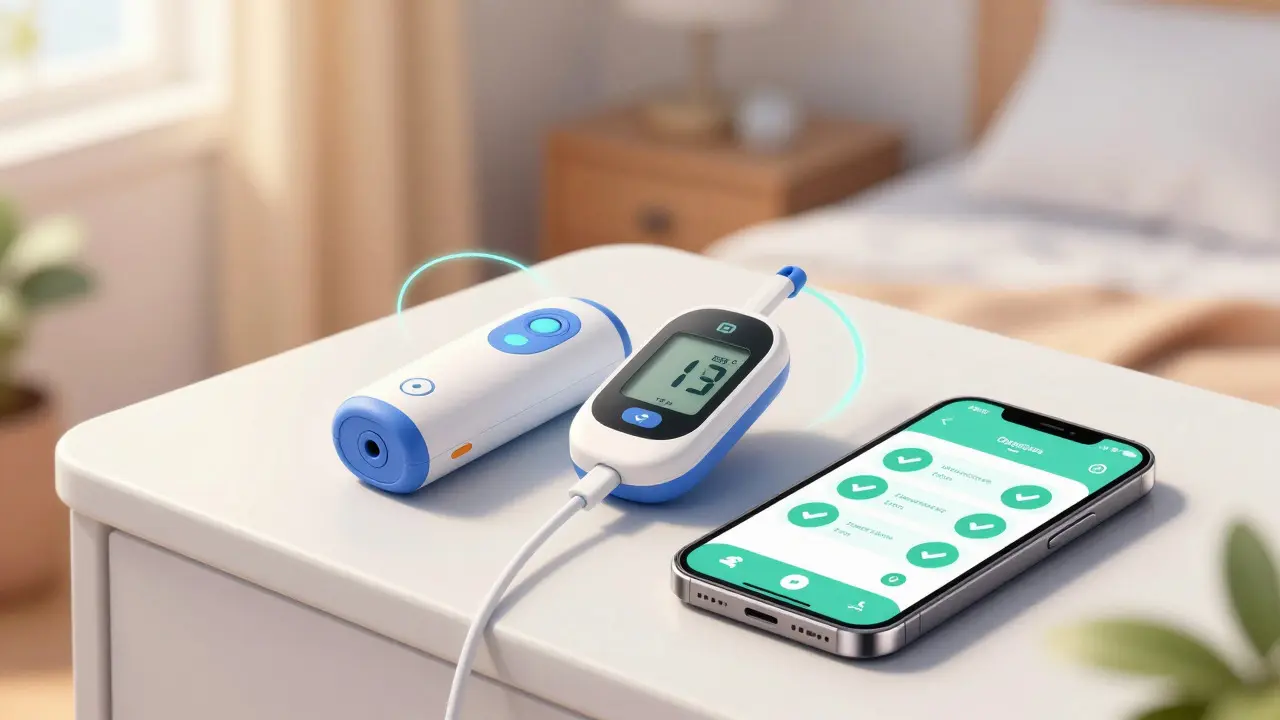
The good news? Tracking IOB is simple once you know how. Most modern insulin pumps and continuous glucose monitors (CGMs) calculate IOB automatically. But if you’re on multiple daily injections (MDI), you can do it manually using a logbook or app.
How to Calculate Safe Dosing Intervals
The golden rule for preventing insulin stacking is this: Do not administer a correction dose of rapid-acting insulin within 3 to 4 hours of your last dose unless you have accounted for the residual activity.
Here’s how to put that into practice:
- Know your insulin’s duration: Rapid-acting insulins (lispro, aspart, glulisine) last 3-5 hours. Short-acting regular insulin (Humulin R, Novolin R) lasts 5-8 hours. Adjust your waiting period accordingly.
- Use an IOB calculator: Many diabetes apps and pump systems include built-in IOB calculators. Enter your dose, time, and insulin type, and the tool tells you how much insulin is still active.
- Adjust correction ratios: If you have significant IOB, reduce your correction dose. For example, if your usual correction ratio is 1 unit per 30 mg/dL above target, but you have 2 units of IOB left, you might only take 0.5 units instead of 1.
- Wait it out: Sometimes the best action is no action. If your blood sugar is high but you have plenty of IOB, wait an hour and recheck. Often, the existing insulin will bring your levels down naturally.
For MDI users, keeping a detailed log is essential. Write down every bolus time, dose, and food intake. Review this log weekly to identify patterns. Are you consistently needing corrections within 2 hours of meals? That might mean your initial mealtime dose was too low-or your carb count was off.
If you use a CGM, look at your trend arrows alongside your IOB. A rising arrow with high IOB suggests you may need to adjust future doses, not add more now.
Technology That Prevents Stacking
Luckily, technology is catching up to the complexity of insulin management. Modern devices are designed specifically to stop stacking before it starts.
| Device Type | IOB Calculation | Stacking Alerts | Cost Range (2024) |
|---|---|---|---|
| Insulin Pump (e.g., Tandem t:slim X2) | Automatic (4-hour decay model) | Yes (audible/visual alerts) | $1,500-$2,500 |
| Tubless Pump (e.g., Omnipod 5) | Adjustable IOB duration | Yes (smartphone integration) | $2,000-$3,000 |
| Standalone Bolus Calculator (e.g., BolusGuard) | Manual input required | No (user-dependent) | $200-$300 |
| Smart Pen (e.g., InPen) | Bluetooth-synced tracking | Yes (app-based notifications) | $150-$300 |
The FDA issued guidance in 2022 requiring all new insulin delivery systems to incorporate stacking prevention features. This includes clear IOB displays and audible alerts when a user attempts to administer a dose too soon after the last one.
Data supports these tools. A Veterans Affairs project implemented electronic health record (EHR) alerts that prevented correction doses within 4 hours of previous administration. Within one year, true hypoglycemia events dropped by 50%. Nurses reported a 42% reduction in emergency interventions related to low blood sugar.
If you’re considering upgrading your technology, talk to your endocrinologist about whether a pump or smart pen makes sense for your lifestyle. Even if you stay on MDI, downloading a free IOB calculator app can make a huge difference.

Personalizing Your Insulin Action Curve
While the general guideline is 4 hours for rapid-acting insulin, your personal insulin action curve might be different. Factors like exercise, stress, illness, and hormonal changes can alter how quickly your body processes insulin.
A 2022 DIAMOND trial using continuous glucose monitoring found that 22% of patients had insulin activity lasting longer than 5 hours. If you fall into this group, sticking rigidly to a 4-hour rule could leave you under-correcting-or worse, over-correcting later.
How do you find your personal curve?
- Track everything: Use a CGM if possible. Record every dose, meal, exercise session, and blood sugar reading for at least 2-3 months.
- Look for patterns: Do your sugars drop sharply 4 hours after eating? Or do they continue falling at 5 or 6 hours?
- Consult your care team: Share your logs with your doctor or diabetes educator. They can help interpret trends and adjust your correction ratios or dosing intervals.
Remember, insulin is not one-size-fits-all. What works for your friend might not work for you. Personalization is key to safe, effective management.
Red Flags: When to Seek Help
If you experience any of the following, seek medical attention immediately:
- Blood sugar below 70 mg/dL with symptoms like confusion, slurred speech, or inability to swallow.
- Repeated episodes of hypoglycemia despite adjusting doses.
- Unexplained weight loss or frequent highs/lows that disrupt daily life.
Don’t hesitate to call your healthcare provider or go to the ER if you suspect severe hypoglycemia. Glucagon kits can reverse life-threatening lows, but professional evaluation is crucial to prevent recurrence.
Frequently Asked Questions
What is the safest time interval between insulin correction doses?
The safest interval is generally 3 to 4 hours for rapid-acting insulin. However, this depends on your individual insulin action curve. Always check your Insulin On Board (IOB) before administering a correction dose. If you have significant IOB remaining, reduce the dose or wait until the previous insulin has mostly cleared.
Can long-acting basal insulin cause stacking?
No, basal insulin (like Lantus or Tresiba) is designed to provide a steady background level over 24+ hours. It doesn’t cause the sharp peaks associated with stacking. However, taking extra basal doses too frequently can lead to overall excess insulin, so always follow prescribed schedules. Never use basal insulin as a correction dose.
How do I calculate my Insulin On Board (IOB)?
You can use online calculators, smartphone apps, or insulin pump features to calculate IOB. Manually, subtract the time since your last dose from your insulin’s total duration (e.g., 4 hours for rapid-acting). Multiply the remaining fraction by your dose. For example, if you took 8 units 2 hours ago, you have roughly 4 units of IOB left (half of 8).
What are the symptoms of insulin stacking-induced hypoglycemia?
Symptoms include shakiness, sweating, rapid heartbeat, anxiety, hunger, dizziness, blurred vision, and confusion. Severe cases can lead to seizures, unconsciousness, or coma. If you experience these symptoms, treat immediately with fast-acting carbs (like glucose tabs or juice) and monitor closely.
Does kidney disease affect insulin stacking risk?
Yes. Impaired kidney function slows insulin clearance, extending its half-life by up to 30%. People with chronic kidney disease may need longer intervals between doses (5-6 hours) and should work closely with their healthcare team to personalize their dosing schedule.
Are there apps that help prevent insulin stacking?
Yes, several diabetes management apps offer IOB calculators and stacking alerts. Popular options include mySugr, Tidepool, and Glooko. Many insulin pumps also integrate with these platforms to provide real-time data and warnings. Check with your provider for recommendations tailored to your device.