

Pediatric Doxycycline Safety Checker
Enter the details of the prescription to check against current medical guidelines regarding tooth discoloration risks.
For decades, parents and doctors operated under a strict rule: never give tetracycline antibiotics to children under eight. The fear was real and well-documented. These drugs caused permanent yellow or brown stains on developing teeth, leaving kids with visible marks for life. But medicine evolves, and so does our understanding of risk. Today, that blanket ban has cracked open, specifically for one drug in the family: doxycycline. This shift isn't just a minor tweak; it’s a critical update that saves lives from deadly diseases like Rocky Mountain spotted fever (RMSF). If you are a parent, caregiver, or healthcare provider, understanding exactly which tetracycline is safe, when it is safe, and why the rules changed is essential for making informed decisions.
The Science Behind the Stain
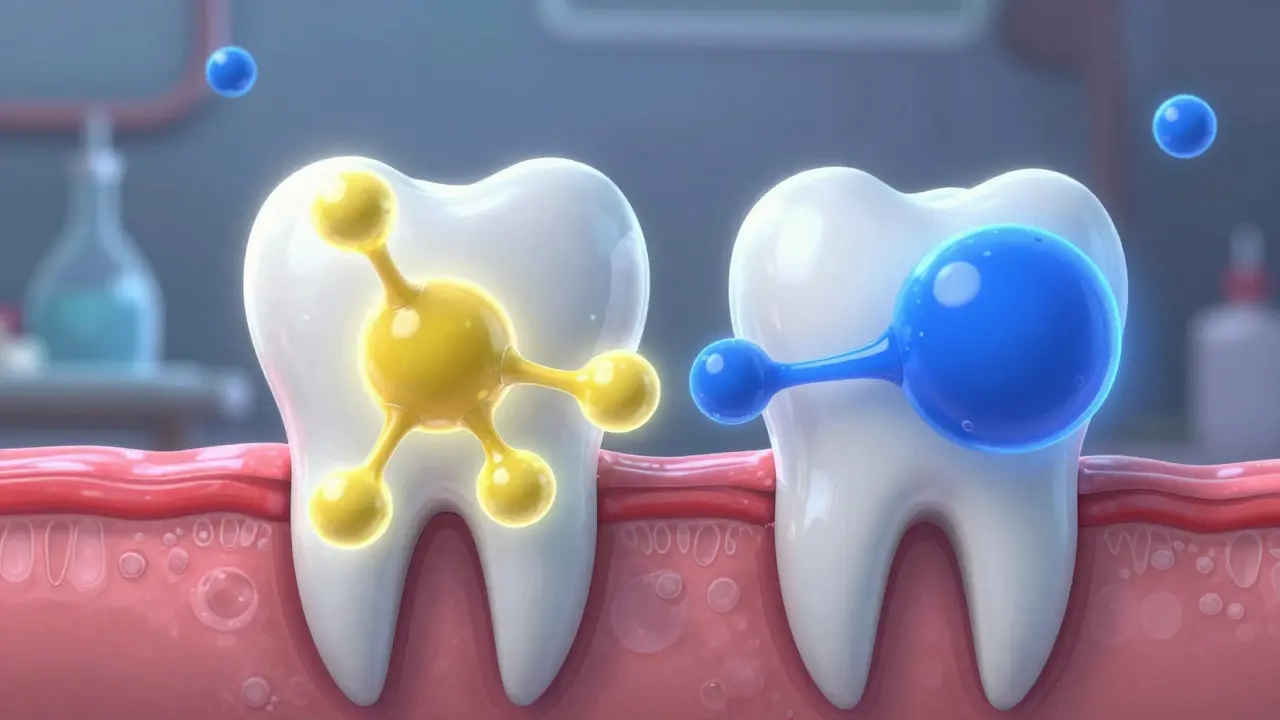
To understand why we changed the rules, we first need to look at how the problem started. Tetracyclines work by stopping bacteria from growing, but they have a side effect that affects hard tissues like bones and teeth. They bind tightly to calcium ions during the process of tooth mineralization. When this happens, a stable complex forms inside the tooth structure. As the tooth erupts through the gum, this complex appears as a bright fluorescent yellow band. Over time, exposure to sunlight turns that yellow into a nonfluorescent gray, brown, or red-brown hue. Anterior teeth usually show darker discoloration than molars because they get more light exposure.
The risk isn't uniform across all tetracyclines. Research shows that traditional tetracycline binds calcium at a rate of about 39.5%. In contrast, doxycycline binds calcium at only 19%. That difference in binding affinity explains why doxycycline poses a significantly lower risk to developing teeth. Furthermore, the timing matters immensely. Primary teeth calcify up to 10-14 months of age. Permanent anterior teeth develop from six months to six years, while permanent posterior teeth continue forming until around eight years old. Historically, any exposure during these windows was considered dangerous. However, severity correlates heavily with dose and duration. Discoloration becomes much more likely when cumulative doses exceed three grams or treatment lasts longer than ten days.
| Antibiotic | Calcium Binding Rate | Dental Risk Profile | Pediatric Use Status |
|---|---|---|---|
| Tetracycline | 39.5% | High | Avoid in children <8 years |
| Doxycycline | 19% | Low (for short courses) | Safe for all ages (<21 days) |
| Tigecycline | Not specified | High | Contraindicated in children <8 years |
Why Doxycycline Is Different
The pivot toward doxycycline safety didn't happen overnight. It took rigorous data collection to overturn decades of caution. A pivotal review published in the Annals of Pharmacotherapy in 2019 by Stultz and Eiland analyzed six studies involving over 338 patients exposed to doxycycline before age eight. Only six patients showed potential discoloration, and statistically, there was no significant difference between those exposed and controls. More recent evidence from a 2025 Frontiers in Pharmacology review reinforced this finding. Among 162 children who received doxycycline before age eight, only one premature infant under two months old exhibited discoloration in a deciduous tooth. The median administration duration in that study was just 8.5 days.
Experts attribute doxycycline's better safety profile to its unique pharmacokinetics. Unlike older tetracyclines, doxycycline allows for less frequent administration and lower total daily doses. This means less drug circulates in the body during critical tooth development phases. The Centers for Disease Control and Prevention (CDC) conducted blinded dental examinations comparing children who received doxycycline for suspected RMSF before age eight against unexposed controls. Dentists found no differences in tooth staining, color, or enamel strength. This robust evidence base gave regulators the confidence to update guidelines dramatically.
Clinical Guidelines and Current Recommendations
As of 2023, major health organizations including the American Academy of Pediatrics (AAP) and the CDC have aligned their guidance. They now recommend doxycycline as the first-line treatment for rickettsial diseases, such as Rocky Mountain spotted fever, in children of all ages. This applies even to infants. The key constraint is duration: the safety data supports short courses, typically defined as less than 21 days. For RMSF, treatment usually lasts 7-10 days, though other rickettsial infections might require up to 14-21 days.
This recommendation carries weight because RMSF is not a mild illness. Fatality rates range from 4% to 21% when treatment is delayed. Early administration of doxycycline prevents severe complications and death. The FDA updated doxycycline labeling in 2013 to remove the age restriction for RMSF treatment, yet hesitancy persisted among clinicians. A 2018 study of Tennessee providers revealed many still avoided prescribing doxycycline to young children due to lingering fears of tooth staining. The current guideline updates aim to eliminate that hesitation by providing clearer, evidence-backed language.
It is crucial to distinguish doxycycline from other agents in the class. Tigecycline, another tetracycline derivative, remains contraindicated for children under eight. Its structural properties differ enough that it does not share doxycycline's favorable dental safety profile. Similarly, standard tetracycline and minocycline should still be avoided in young children unless absolutely necessary and under specialist supervision. The "all-clear" signal applies strictly to doxycycline for specific indications.

Implementing Safe Prescribing Practices
For healthcare providers, implementing these guidelines requires clear documentation and communication. You must record the specific indication, dosage, and expected duration to justify pediatric use outside traditional age restrictions. This protects both the patient and the prescriber. Common challenges include pharmacy systems that may still flag pediatric doxycycline prescriptions automatically. Being prepared to override these alerts with clinical justification is part of modern practice.
Parental education is equally important. Many parents grew up hearing that tetracyclines ruin teeth. Addressing this concern directly builds trust. Explain that doxycycline is chemically different and that large-scale studies show no staining from short courses. Provide written materials from the CDC or AAP to reinforce verbal explanations. Reassure them that the benefit of preventing a potentially fatal infection far outweighs the negligible risk of dental changes.
- Confirm the diagnosis requires a tetracycline-class antibiotic.
- Select doxycycline specifically, avoiding other tetracyclines.
- Calculate the shortest effective course (usually 7-10 days for RMSF).
- Document the rationale clearly in the medical record.
- Educate the family on signs of improvement and rare side effects.
Long-Term Outlook and Future Directions
The landscape for pediatric antibiotic use continues to evolve. With long-term follow-up data showing no adverse dental outcomes in children treated with doxycycline, infectious disease experts predict broader acceptance. The American Academy of Pediatrics is expected to further clarify guidance in future editions of the Red Book, potentially expanding recommendations beyond rickettsial diseases as more safety data accumulates. Researchers are also examining whether doxycycline can safely treat other conditions in pediatrics, leveraging its proven safety profile.
However, vigilance remains necessary. While doxycycline is safe for short courses, prolonged use in very young children still warrants caution. The window for posterior permanent tooth development closes around age eight, but individual variations exist. Always weigh the necessity of continued therapy against potential risks. For now, the consensus is clear: for acute, life-threatening infections like RMSF, doxycycline is the right choice for every child, regardless of age.
Can doxycycline cause tooth staining in babies?
Current evidence suggests the risk is extremely low. Large studies, including a 2025 review, found almost no cases of discoloration in children under eight taking short courses of doxycycline. One case involved a premature infant under two months, but this was an outlier. For typical short-course treatments (less than 21 days), the risk is considered negligible compared to the life-saving benefits for diseases like RMSF.
Why is doxycycline safer than regular tetracycline for teeth?
Doxycycline binds to calcium in developing teeth at a much lower rate (19%) compared to traditional tetracycline (39.5%). Additionally, doxycycline allows for lower total daily doses and less frequent dosing, reducing the amount of drug available to interact with tooth structures during mineralization.
Is tigecycline safe for children under eight?
No. Tigecycline remains contraindicated for children under eight years old. Unlike doxycycline, it does not share the same favorable safety profile regarding dental development and retains the risk of causing tooth discoloration.
How long can a child take doxycycline safely?
Guidelines support short courses of less than 21 days. Most treatments for Rocky Mountain spotted fever last 7-10 days. Other rickettsial infections may require up to 14-21 days. Beyond this window, the safety data is less robust, and alternative antibiotics should be considered if possible.
What should I tell my doctor if I'm worried about tooth staining?
Express your concerns openly. Ask specifically about the type of tetracycline being prescribed. Confirm that it is doxycycline and that the course will be short (under 21 days). Request educational materials from reputable sources like the CDC or AAP to help you understand the current safety data.




One comment
So the rule is basically 'don't give them the stuff that actually stains teeth, doxycycline is fine because it barely binds to calcium'. It's not rocket science, but apparently we needed a decade of studies to admit that. 🙄
I mean, if you're worried about your kid having yellow teeth, maybe focus on the sugar intake rather than the life-saving antibiotic? But sure, let's panic over a 19% binding rate when the alternative is dying from RMSF. 😂🦷💀
its just so scary how they keep changing the rules every few years and then act like its a big discovery like yeah we knew this was safe for years but nobody wanted to tell us because they wanted to sell more fluoride or something i dont trust any of it
The epistemological shift regarding tetracycline derivatives necessitates a rigorous re-evaluation of clinical heuristics. The distinction between doxycycline's pharmacokinetic profile and traditional tetracyclines is not merely semantic but clinically significant. We must cease our adherence to outdated dogma that prioritizes aesthetic concerns over survival metrics in pediatric populations.
really good info here thanks for sharing 🙏 always nice to see clear data instead of just fear mongering especially for parents who are already stressed out
This is such a relief! I was so worried when my doctor mentioned doxycycline for my son's tick bite. Knowing that the AAP and CDC have aligned on this gives me so much confidence in the treatment plan. It’s great that we have evidence-based guidelines now. 🌟
Absurd. You want to inject chemical dyes into developing dentition and call it 'safe'? The FDA is clearly compromised by pharmaceutical lobbying. This is another example of American medical negligence where profit margins trump biological integrity. Doxycycline is a synthetic abomination.
As an infectious disease specialist, I can confirm that the shift in guidelines is driven by robust data, not lobbying. Rocky Mountain spotted fever has a high mortality rate if untreated, and doxycycline is the only effective first-line therapy. The risk of staining is negligible compared to the risk of death. We prioritize saving lives.
I know it sounds counterintuitive to give antibiotics to young kids when we’ve been told otherwise for so long, but reading through the studies really helps put things into perspective. It’s comforting to know that the medical community is listening to the data and updating their practices accordingly. I feel much better about trusting my pediatrician now. 💖
Just remember, this applies specifically to doxycycline for short courses. Don’t go buying random tetracyclines off the internet thinking it’s all the same. Stick to what the doctors prescribe and follow the duration limits. Stay safe everyone! ✨
they say it's safe but what about the long term effects on gut microbiome and immune system development? they are hiding the real studies that show doxycycline causes autoimmune issues later in life. wake up people. 🚫
The assertion that doxycycline poses no dental risk is empirically flawed. While the incidence may be low, the potential for irreversible harm remains a non-trivial variable in pediatric pharmacology. To dismiss parental concern as mere hysteria is to ignore the fundamental ethical obligation to minimize iatrogenic injury.