Imagine feeling a strange tingling in your fingers or around your mouth, followed by sudden muscle cramps that won't go away. For many people living with Hypoparathyroidism, these are not random glitches but daily realities caused by dangerously low blood calcium levels. This rare endocrine disorder happens when your parathyroid glands fail to produce enough parathyroid hormone (PTH), leaving your body unable to regulate calcium properly. Without PTH, calcium drops, phosphate rises, and your bones, nerves, and kidneys suffer the consequences.
If you’ve been diagnosed recently, or if you’re struggling to keep your levels stable on current medications, you’re not alone. Approximately 75-90% of cases occur after thyroid or neck surgery, but autoimmune issues and genetic conditions like DiGeorge syndrome also play a role. The challenge isn’t just taking pills-it’s navigating a complex balancing act between preventing painful symptoms and protecting your kidneys from long-term damage. Let’s break down exactly how modern medicine manages this condition, what the latest guidelines say about calcium and vitamin D supplementation, and where new treatments are heading.
Understanding the Core Problem: Why Your Body Needs Help
To manage hypoparathyroidism, you first need to understand why standard calcium supplements aren’t always enough. In a healthy body, the parathyroid glands release PTH when calcium levels drop. This hormone signals your bones to release stored calcium, tells your kidneys to reabsorb it, and activates vitamin D so your gut can absorb more from food. When those glands are missing or damaged, that entire system shuts down.
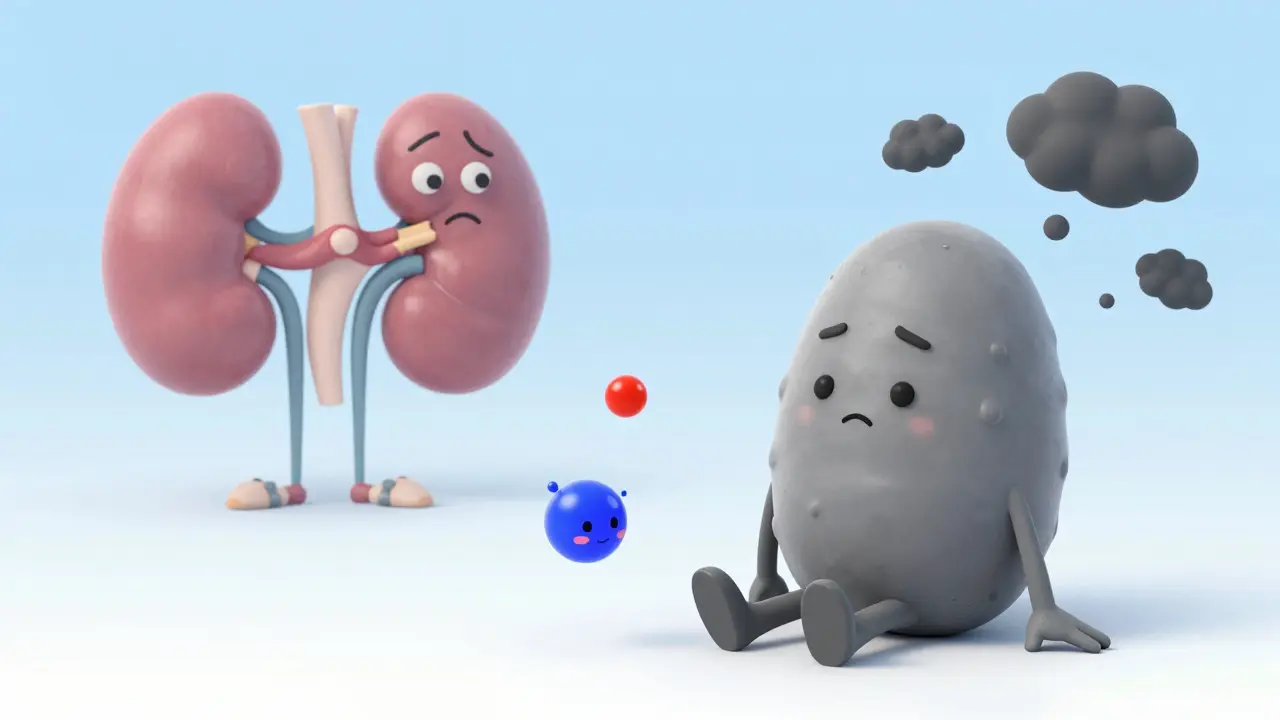
The result is hypocalcemia (low blood calcium) paired with hyperphosphatemia (high phosphate). High phosphate is particularly tricky because it binds to calcium, pulling it out of your bloodstream and depositing it in soft tissues, including your kidneys and brain. This is why simply dumping massive amounts of calcium into your system without monitoring can be dangerous. According to clinical guidelines from the Journal of Bone and Mineral Research (JBMR), the goal isn’t to return calcium to the middle of the normal range, but to keep it in the lower half-typically between 2.00 and 2.25 mmol/L (8.0-8.5 mg/dL). This sweet spot minimizes symptoms while reducing the risk of kidney stones and tissue calcification.
First-Line Treatment: Conventional Therapy Protocols
For most patients, conventional therapy remains the starting point. This approach doesn’t replace the missing hormone directly but works around it using two main tools: calcium supplements and active vitamin D analogues. Here is how experts typically structure this regimen based on 2022 JBMR and European Society of Endocrinology (ESE) guidelines:
- Calcium Supplementation: Start with 1,000-2,000 mg of elemental calcium daily, divided into smaller doses taken with meals. Taking calcium with food helps bind dietary phosphate, lowering blood phosphate levels naturally. Calcium carbonate is often preferred because it contains 40% elemental calcium, meaning you take fewer pills than with calcium citrate (21%). However, citrate may be better for those with low stomach acid.
- Active Vitamin D Analogues: Because your kidneys lack the PTH signal to activate regular vitamin D, doctors prescribe pre-activated forms like calcitriol (1,25-dihydroxyvitamin D) or alfacalcidol. Starting doses usually range from 0.25 to 0.5 mcg daily. These bypass the broken activation step, allowing your gut to absorb calcium efficiently.
- Maintenance Vitamin D3: Even on active analogues, you still need baseline cholecalciferol (Vitamin D3) at 400-800 IU daily to maintain overall bone health and keep 25-hydroxyvitamin D levels between 20-30 ng/mL.
This combination works for about 60-70% of patients. But here is the catch: it requires rigorous monitoring. You’ll likely need blood tests every 1-3 months initially to check serum calcium, phosphate, magnesium, and crucially, 24-hour urinary calcium excretion. If your urine shows more than 250 mg of calcium per day, you are at high risk for kidney stones and potential renal damage.
| Feature | Conventional Therapy | PTH Replacement (e.g., Natpara) |
|---|---|---|
| Mechanism | Bypasses PTH deficiency | Replaces missing hormone |
| Administration | Oral pills (multiple times/day) | Daily subcutaneous injection |
| Cost | $100-$200/month | ~$15,000/month |
| Kidney Risk | Higher risk of hypercalciuria | Lower urinary calcium excretion |
| Efficacy | Effective in 60-70% of patients | Reduces Ca/Vit D needs by 30-40% |
When Standard Care Fails: Advanced Options
About 25-30% of patients find conventional therapy difficult to manage. They might need excessive doses of calcium (>2 g/day) or active vitamin D (>2 μg/day) just to stay asymptomatic, leading to severe side effects like constipation, nausea, or worsening kidney function. If you fall into this category, or if you have persistent hypercalciuria despite diet changes, alternative therapies become relevant.
The most significant advancement has been recombinant human Parathyroid Hormone (PTH). Specifically, Natpara (rhPTH(1-84)) was designed to mimic natural PTH closely. After being withdrawn from the US market in 2019 due to manufacturing concerns, it returned in August 2020 with stricter safety protocols. Studies show it can normalize serum calcium in up to 89% of patients who struggled with pills, while significantly lowering urinary calcium output. Another option is teriparatide (Forteo), originally developed for osteoporosis, which some doctors use off-label for hypoparathyroidism. While effective, both options require daily injections and expensive specialty pharmacy distribution.
A newer contender on the horizon is TransCon PTH, a long-acting prodrug tested in the REPLACE-2 trial. It allows for once-daily dosing and showed promising results in stabilizing calcium levels without the peaks and valleys associated with shorter-acting hormones. As of 2026, regulatory approvals are pending in several regions, offering hope for reduced treatment burden.

Dietary Strategies: Food as Medicine
Your diet plays a critical supporting role in managing hypoparathyroidism. It’s not just about eating more calcium; it’s about controlling phosphate. Since your body can’t excrete excess phosphate efficiently, you must limit its intake to prevent it from binding with calcium.
Focus on these dietary adjustments recommended by the Cleveland Clinic and Parathyroid UK:
- Limit Phosphorus-Rich Foods: Avoid carbonated beverages (which contain phosphoric acid), processed meats, and hard cheeses. A single liter of soda can contain 500 mg of phosphorus, while an ounce of cheddar cheese holds 500 mg. Aim for a total daily phosphorus intake of 800-1,000 mg.
- Choose Smart Calcium Sources: Incorporate dairy products (300 mg per serving), kale (100 mg per cup), and broccoli (43 mg per cup). These provide bioavailable calcium without excessive phosphate.
- Sodium Restriction: Keep sodium under 2,000 mg/day. High sodium intake increases calcium loss in urine, worsening hypercalciuria.
- Magnesium Matters: Low magnesium (hypomagnesemia) impairs PTH action even in non-hypoparathyroid states. If your levels drop below 1.7 mg/dL, supplement with magnesium oxide or citrate. Maintaining magnesium above 1.9 mg/dL has been shown to reduce hypocalcemic episodes by 35%.
Monitoring and Long-Term Risks
Living with hypoparathyroidism is a marathon, not a sprint. The biggest long-term risks are chronic kidney disease and ectopic calcification (calcium deposits in organs like the brain or heart). Data from the HypoPT Natural History Study indicates that patients who consistently maintain serum calcium above 2.35 mmol/L face a 2.8 times higher risk of basal ganglia calcification on MRI scans after 15 years. This underscores why "normal" calcium isn’t always the target-lower-normal is safer for your kidneys.
You should monitor:
- Serum Calcium: Target 2.00-2.25 mmol/L (8.0-8.5 mg/dL).
- 24-Hour Urinary Calcium: Must stay below 250 mg/24h (6.25 mmol/24h).
- Serum Phosphate: Target 2.5-4.5 mg/dL.
- Magnesium: Target 1.7-2.2 mg/dL.
If you experience symptoms of acute hypocalcemia-such as perioral numbness, muscle spasms, or seizures-you need an emergency plan. Chewing 2-3 calcium tablets immediately can provide rapid relief. Always carry extra medication and know when to seek urgent care.
Is hypoparathyroidism curable?
Currently, there is no cure for permanent hypoparathyroidism. It requires lifelong management through medication and dietary adjustments. However, temporary cases following surgery may resolve if remaining parathyroid tissue recovers function over several months.
Can I get enough calcium from food alone?
In most cases, no. Dietary calcium absorption is insufficient to meet the body's needs without PTH stimulation. Supplements combined with active vitamin D analogues are necessary to maintain safe blood levels and prevent complications.
What are the signs of too much calcium?
Symptoms of hypercalcemia include nausea, vomiting, confusion, excessive thirst, frequent urination, and kidney stones. Regular monitoring of blood and urine calcium levels is essential to avoid these dangerous side effects.
Why do I need active vitamin D instead of regular vitamin D?
Regular vitamin D (cholecalciferol) requires activation by the kidneys, a process driven by PTH. Since your body lacks PTH, it cannot convert regular vitamin D into its active form effectively. Active analogues like calcitriol bypass this step, ensuring your body can absorb calcium.
How does magnesium affect my condition?
Magnesium is crucial for PTH secretion and action. Low magnesium levels can worsen hypocalcemia and make it harder to stabilize your calcium levels. Maintaining adequate magnesium through diet or supplements is a key part of comprehensive management.