
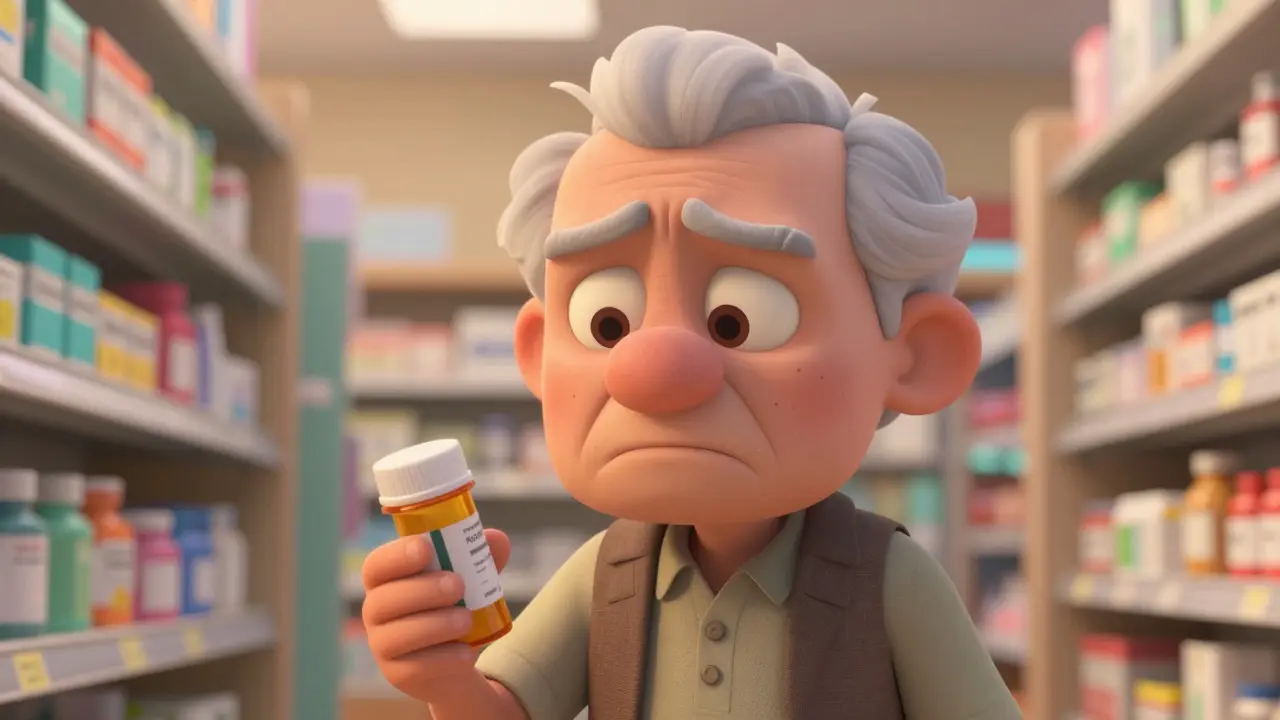
Imagine taking a medication meant to be taken once a day, but you accidentally take it four times instead. For a construction inspector in a documented case study, this mistake led to dangerous drowsiness while driving his seven-year-old daughter. This isn't a hypothetical scenario; it is a real risk caused by the confusion between two medical abbreviations: QD and QID. These two-letter codes look similar but mean vastly different things for your health. Understanding the difference is critical for medication safety in modern healthcare.
Despite warnings from major health organizations, these abbreviations still appear on prescriptions. This creates a silent danger for patients, especially the elderly or those managing complex medication regimens. The confusion stems from handwritten notes, outdated habits, and the visual similarity of the letters. However, the medical community is actively working to eliminate these risks through technology and new regulations. Knowing how to spot these errors and how to prevent them can save lives.
Key Takeaways
- QD means once daily, while QID means four times daily.
- Confusion between these abbreviations can lead to patients taking four times the intended dose.
- Major safety organizations like the Joint Commission have banned these abbreviations on official lists.
- Electronic health records are now implementing hard stops to prevent these errors.
- Patients should always ask for plain language instructions instead of Latin abbreviations.
What Do QD and QID Actually Mean?
To understand the risk, we need to look at the origins of these terms. Both abbreviations come from Latin medical terminology that has been used for centuries. QD is short for quaque die, which translates to "once daily." It indicates that a medication should be administered one time within a 24-hour period.
In contrast, QID stands for quater in die, meaning "four times daily." This specifies that the medication should be taken four times during the waking hours. It is important to note that QID does not necessarily mean every six hours on the clock. Instead, it refers to administration at approximately equal intervals during normal awake time, typically between 6 AM and bedtime.
The visual similarity is the root of the problem. A handwritten "QD" can easily look like "QID" if the ink bleeds or the handwriting is messy. Conversely, a poorly written "QID" might be misread as "QD" if the "I" is faint. This small difference in letters results in a massive difference in dosage. Taking a drug four times instead of once can lead to overdose symptoms, toxicity, or severe side effects.
Why This Confusion Is So Dangerous
The consequences of misinterpreting these abbreviations are severe. According to data from the U.S. Food and Drug Administration (FDA), abbreviation-related errors account for approximately 5% of all medication errors reported to their MedWatch system. QD and QID confusion represents a significant portion of these cases. The risk is not just theoretical; it causes real harm.
One specific case study highlighted by Pharmacy Times involved a patient who experienced excessive drowsiness and sedation. The patient continued to work and drive for a week before realizing the error during a refill request. This delay in recognizing the mistake highlights how dangerous the ambiguity can be. The Institute for Safe Medication Practices (ISMP) formally identified these abbreviations as high-risk in 2001. Despite this, the confusion persists.
The Joint Commission added these abbreviations to their "Do Not Use" list in 2004. This list is designed to help healthcare facilities eliminate error-prone practices. However, a 2015 study by the American Medical Association documented that approximately 30% of handwritten prescriptions still use these ambiguous abbreviations. This suggests that while policies exist, implementation in the real world, especially in smaller clinics, lags behind.
| Feature | QD (Once Daily) | QID (Four Times Daily) |
|---|---|---|
| Latin Origin | Quaque die | Quater in die |
| Frequency | 1 time per 24 hours | 4 times during waking hours |
| Typical Timing | Morning or Evening | Morning, Noon, Afternoon, Evening |
| Risk Level | High if misread as QID | High if misread as QD |
| Recommended Alternative | "Daily" or "Once a day" | "Four times a day" |

Who Is Most at Risk?
Not everyone faces the same level of risk when it comes to prescription errors. The American Geriatrics Society reported that elderly patients aged 65 and older account for 68% of documented QD and QID confusion cases. This makes sense because older adults typically manage multiple medications with complex regimens. Their cognitive load is higher, and vision issues might make reading small print on labels difficult.
Healthcare professionals with less experience are also vulnerable. Research from the University of California, San Francisco, found that error rates increase to 18.2% among healthcare professionals with less than five years of experience. This indicates that training and familiarity play a huge role in preventing these mistakes. Even with electronic systems, human oversight is required.
Patient surveys reveal that confusion is widespread among the general public. A survey by the National Patient Safety Foundation found that 63% of respondents admitted to being unsure about dosing frequency instructions at least once. "QD vs QID" ranked as the third most confusing prescription instruction after "take with food" and "take on empty stomach." This suggests that the problem is not just in the prescribing office but extends to how patients understand and follow instructions.
How Healthcare Systems Are Fighting Back
The industry is moving toward a future where these abbreviations are obsolete. In June 2023, the American Medical Association updated their prescribing guidelines to mandate writing out "daily" instead of "QD" in all circumstances. This is a significant shift from previous recommendations that merely suggested avoiding them.
Technology is playing a major role in this transition. Electronic health record (EHR) vendors like Epic and Cerner have implemented "hard stops" in their 2023 software updates. These hard stops prevent providers from saving prescriptions containing QD or QID abbreviations. This forces the provider to type out the full instruction, removing the ambiguity at the source. The American Medical Informatics Association reported that 87% of EHR systems now include built-in checks preventing this confusion, up from 42% in 2015.
Regulatory pressure is also increasing. The Centers for Medicare & Medicaid Services (CMS) implemented new Conditions of Participation effective January 1, 2024. These conditions penalize healthcare facilities with preventable medication errors exceeding national benchmarks. This financial incentive pushes hospitals and clinics to adopt safer prescribing practices more quickly.
The Agency for Healthcare Research and Quality (AHRQ) recommends specific steps for facilities. These include eliminating all abbreviations for frequency of administration and implementing mandatory computer alerts for medications typically dosed once daily when other frequencies are entered. Facilities implementing these measures typically see a 35-50% reduction in frequency-related errors within 6-9 months.
What You Can Do as a Patient
As a patient, you are the last line of defense against these errors. You have the right to understand exactly how to take your medication. When you receive a new prescription, do not hesitate to ask the pharmacist to explain the instructions in plain language. Ask them to spell out "once a day" instead of writing "QD" on the label if possible.
Here is a checklist you can use when picking up medication:
- Ask the pharmacist to read the instructions aloud to you.
- Confirm the frequency verbally (e.g., "Is this one pill every morning?").
- Check the label for plain language rather than Latin abbreviations.
- Keep a written log of your medications and dosing times.
- Report any confusion or unusual side effects to your doctor immediately.
Verbal verification is one of the most effective strategies. The University of Michigan Health System found that requiring pharmacists to conduct verbal verification of dosing frequency with every new prescription reduced errors by 67% in an 18-month study. You can request this verification if you feel unsure. It takes only a few seconds but can prevent a week of dangerous mistakes.

The Future of Safe Prescribing
The movement toward complete elimination of dangerous abbreviations is accelerating. The National Action Alliance for Patient Safety launched the "Clear Communication Campaign" in April 2023. This campaign has a goal of reducing abbreviation-related errors by 90% by 2026. It is backed by $45 million in funding from CMS to support training and technology upgrades.
Academic research continues to support these changes. A Johns Hopkins University study published in JAMA Internal Medicine in October 2023 demonstrated that adding visual aids to prescription instructions reduced QD and QID confusion by 82%. This suggests that the future of prescribing might involve icons or graphics alongside text to ensure clarity.
The economic impact of these errors is substantial. The Medicare Payment Advisory Commission estimates $2.1 billion in annual costs associated with medication errors related to prescription misinterpretation. This includes $780 million specifically attributable to frequency errors. By eliminating these abbreviations, the healthcare system can save money and, more importantly, protect patient lives. The American Pharmacists Association's 2023 position statement indicates that complete elimination represents one of the most cost-effective medication safety interventions available.
Frequently Asked Questions
What does QD mean on a prescription?
QD stands for the Latin phrase "quaque die," which means once daily. It indicates that the medication should be taken one time within a 24-hour period.
What does QID mean on a prescription?
QID stands for "quater in die," meaning four times daily. This usually means taking the medication four times during waking hours, not necessarily every six hours on the clock.
Why are QD and QID considered dangerous abbreviations?
They are visually similar and can be easily confused, especially in handwriting. Misreading QD as QID can lead to a patient taking four times the intended dose, causing overdose or severe side effects.
Should doctors still use QD and QID in 2026?
No. Major organizations like the Joint Commission and the American Medical Association recommend against using these abbreviations. Most modern electronic health records block them to prevent errors.
What should I do if I see QD or QID on my label?
Ask your pharmacist to clarify the instructions immediately. Request that the label be updated to use plain language like "once daily" or "four times daily" to avoid confusion.
Are there other abbreviations to watch out for?
Yes. Other high-risk abbreviations include BID (twice daily), TID (three times daily), and HS (at bedtime). The safest practice is to avoid all Latin abbreviations and use plain English.
How much do medication errors cost the healthcare system?
The Medicare Payment Advisory Commission estimates $2.1 billion in annual costs associated with medication errors related to prescription misinterpretation, with a large portion coming from frequency errors.
Who is most likely to be affected by this confusion?
Elderly patients aged 65 and older are most at risk, accounting for 68% of documented cases. They often manage multiple medications with complex regimens.
Can technology prevent these errors?
Yes. Electronic health records with "hard stops" can prevent providers from saving prescriptions with dangerous abbreviations. 87% of EHR systems now include these checks.
What is the "Do Not Use" list?
The Joint Commission maintains a "Do Not Use" list of abbreviations that are error-prone. QD and QID are on this list, meaning healthcare facilities should not use them to reduce patient risk.
Next Steps for Safer Medication Use
If you are a patient, review your current medication labels today. If you see any Latin abbreviations, contact your pharmacy to have them updated to plain language. If you are a healthcare provider, audit your prescribing habits and ensure your electronic system is configured to block these abbreviations. Safety is a shared responsibility. By eliminating the confusion between QD and QID, we can prevent unnecessary harm and ensure that every patient takes the right medication at the right time.




One comment
My grandmother almost got confused with her heart meds last year. It was scary seeing the label and not knowing if she should take it once or four times. I wish all pharmacies just printed the words out clearly. It really gives me peace of mind when I see plain English on the bottle. We need to keep pushing for this change in every clinic.
It sounds like a scary experience for your grandmother. I hope she is doing well now and that the confusion was resolved. It is good that you are paying attention to the labels.
It is so important that we advocate for ourselves when we go to the doctor. Asking for clarification is never a waste of time and it ensures everyone stays safe. I always write down the instructions before I leave the pharmacy counter. Small steps like this can prevent huge accidents down the road. We all want to be healthy and safe.
You think asking questions is enough when the system is broken? People need to realize they are responsible for their own safety. Blaming the doctors is easy but fixing the problem requires more than just asking. Stop acting like victims and take control of your own health.
waste of time writing this out when they know what they mean
no its not a waste its life or death stuff stop being lazy about it
Indeed, the transition to plain language instructions represents a vital step forward in patient safety protocols. The implementation of electronic health record constraints is particularly noteworthy in this regard. It is essential that healthcare providers adhere to these new guidelines strictly. Compliance will undoubtedly reduce the incidence of adverse events. We must support these regulatory changes wholeheartedly.
Your points regarding compliance are well taken and highly relevant. Strict adherence to the new guidelines is necessary for success. We must ensure that all facilities are held accountable for these changes.
Glad to see technology stepping in to help us out here.
The reliance on Latin abbreviations is an outdated practice that no longer serves the best interests of patients. We must recognize that clarity is paramount when human health is at stake. Every single error that occurs due to misinterpretation is a tragedy that could have been avoided. The statistics presented here are truly alarming for anyone working in healthcare. It is not enough to simply suggest changes; we must enforce them rigorously. Electronic systems are indeed the best tool we have to eliminate this ambiguity completely. However, technology alone cannot solve the problem without human vigilance. Pharmacists and doctors need to be trained to prioritize communication over speed. Patients also play a role in this by demanding clear instructions from their providers. Education campaigns should be launched to inform the public about these risks. The cost of errors is far higher than the cost of updating software systems. We cannot afford to ignore the financial burden placed on the system by these mistakes. Safety must be the top priority for every single stakeholder involved. Let us work together to make these dangerous abbreviations a thing of the past. The future of medicine depends on removing these archaic barriers to safety.
i work in a pharmacy and see this confusion constantly with new patients. the handwriting on scripts is often terrible and hard to decipher. we try our best to call the doctor but sometimes we just guess based on common sense. the new software updates are a huge relief for us behind the counter. it stops us from making a mistake before it even happens. plain english is just so much better for everyone involved. i hope all the old systems get upgraded soon because the old ones are risky.
Honestly people are just looking for something to blame. If you cant read the label then maybe you shouldnt be taking meds alone. Doctors write what they mean and if you get confused its on you.
This applies to international prescriptions too where translation adds another layer of confusion. The visual similarity is a universal problem regardless of the language spoken. We need global standards for medication labeling to ensure safety everywhere. Standardization would prevent these errors from crossing borders easily. It is a matter of public health security on a larger scale.
glad they are fixing this soon hope it helps everyone
Sure, because doctors will actually listen to patients asking for plain language instead of just scribbling whatever comes to mind. The system is designed to keep people confused so they keep coming back. Nothing is ever going to change until the money stops flowing.