
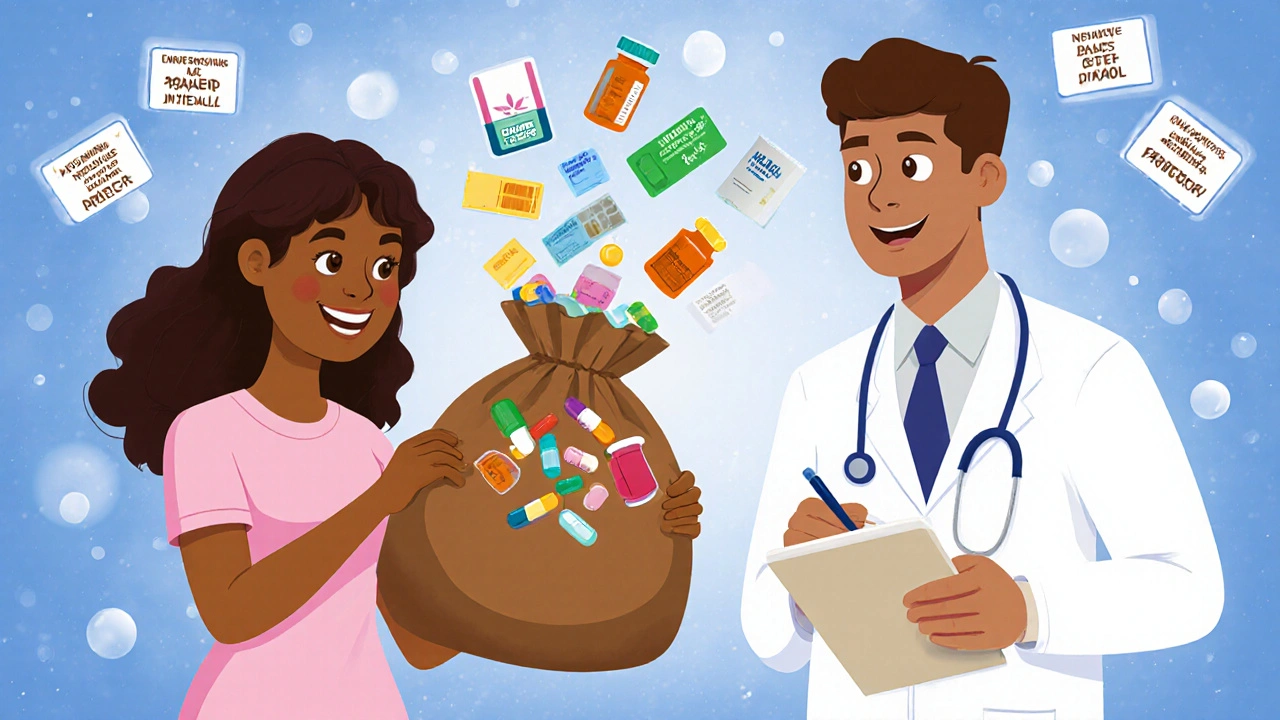
When you walk into a doctor’s office, ER, or hospital, the most important thing you can bring isn’t your insurance card or ID-it’s an accurate list of everything you’re taking. Not just prescriptions. Not just the ones you remember. Everything. Including that fish oil you started last month, the ibuprofen you take for your knees, the herbal tea your sister swears by for sleep, and the patch you use for back pain. Missing even one item can lead to a dangerous drug interaction, a missed allergy, or a treatment that makes you sicker instead of better.
Why Your Medication List Matters More Than You Think
Every year, tens of thousands of people in the U.S. are harmed because their medication history wasn’t fully known. Around 50% of all medication errors happen during transitions of care-like when you’re admitted to the hospital, moved to a different unit, or sent home. That’s not because doctors are careless. It’s because the system relies on memory, paper notes, and incomplete records. A 2023 study found that when patients brought all their medications in a bag to their appointment, medication discrepancies dropped by 40%. That’s the power of the brown bag method. It’s simple: gather every pill, capsule, liquid, patch, and supplement you take, put them in a bag, and bring them with you. No guessing. No forgetting. Even if you think your doctor has your records, they might not. Pharmacies don’t always talk to hospitals. Your primary care provider doesn’t automatically get updates from the specialist you saw last week. And over-the-counter meds? Sixty-seven percent of patients don’t mention them-until they have a reaction.What to Include on Your Medication List
Your list isn’t just for the doctor. It’s for nurses, pharmacists, EMTs, and even the person who checks you in. So make it thorough. Here’s what to write down:- Brand and generic names of all prescription drugs
- Dosage (e.g., 10 mg, 500 mg)
- How often you take it (e.g., once daily, every 6 hours)
- Why you take it (e.g., “for blood pressure,” “for anxiety”)
- All over-the-counter medicines (pain relievers, antacids, cold pills)
- Vitamins, minerals, and supplements (even if you only take them occasionally)
- Herbal remedies, teas, and alternative treatments (like turmeric capsules or melatonin gummies)
- Topical treatments (creams, patches, eye drops)
- Any allergies or past reactions (e.g., “rash from penicillin,” “stomach cramps from sulfa”)
How Technology Helps-And Where It Falls Short
Hospitals and clinics now use electronic systems to pull in your medication history. Services like Surescripts connect to over 98% of U.S. pharmacies and can show what you’ve filled in the last year. That’s huge. But here’s the catch: these systems still miss things. Cash-pay prescriptions? Often not recorded. Supplements bought online? Not tracked. Medications from foreign pharmacies? Not in the system. And if you’ve switched pharmacies or used mail-order services, your history might be split across multiple databases. Even the best tech can’t replace you. A 2022 study found that electronic systems alone caught only 52% of actual medication discrepancies. That means nearly half of the mistakes happen because the system didn’t know what you were really taking. Your voice is still the most reliable tool.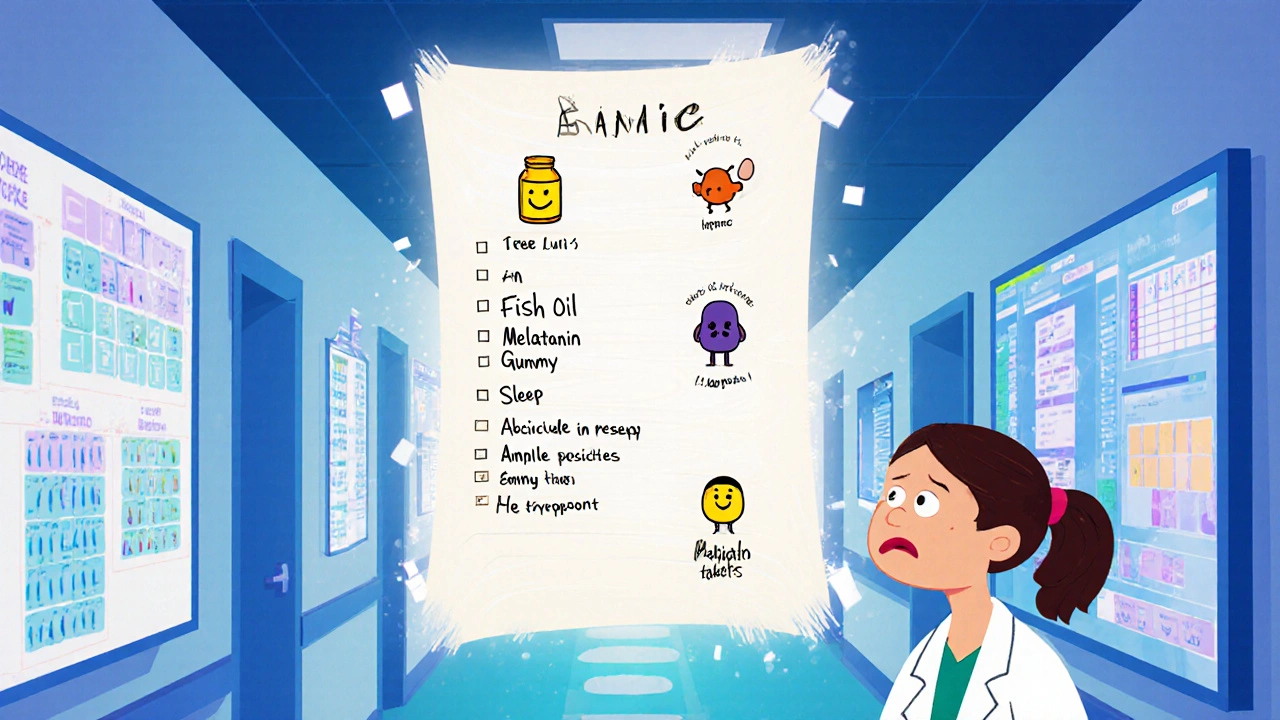
What Happens When You Don’t Speak Up
Imagine you’re admitted to the hospital for pneumonia. You’ve been taking blood pressure meds, a daily aspirin, and a sleep aid. You forget to mention the sleep aid because it’s “just melatonin.” Meanwhile, the hospital gives you a new antibiotic that interacts with melatonin, causing dangerous drowsiness. You fall out of bed. You break your hip. Your recovery takes months. This isn’t hypothetical. In 2022, Johns Hopkins reduced anticoagulant-related errors by 62% just by making sure every patient’s full medication list was reviewed before starting treatment. That’s not magic. That’s attention to detail. High-alert medications like insulin, blood thinners, and opioids are especially dangerous if dosed wrong. The Institute for Safe Medication Practices says accurate reconciliation is the single most effective way to prevent harm from these drugs. But it only works if you tell them what you’re really using.How to Talk to Your Provider-Without Feeling Awkward
Many people feel embarrassed about forgetting something, or worry they’ll sound like they’re questioning their doctor. But here’s the truth: doctors expect this. They want you to be involved. Use this simple script:- Situation: “I’m here for my follow-up, and I want to make sure we get my meds right.”
- Background: “I take X, Y, and Z, plus this supplement I started last month. I also take ibuprofen when my knee flares up.”
- Assessment: “I’m not sure if the new painkiller you prescribed interacts with the melatonin.”
- Recommendation: “Can we go over everything together and make sure nothing’s conflicting?”
What to Do If You’re Caring for Someone Else
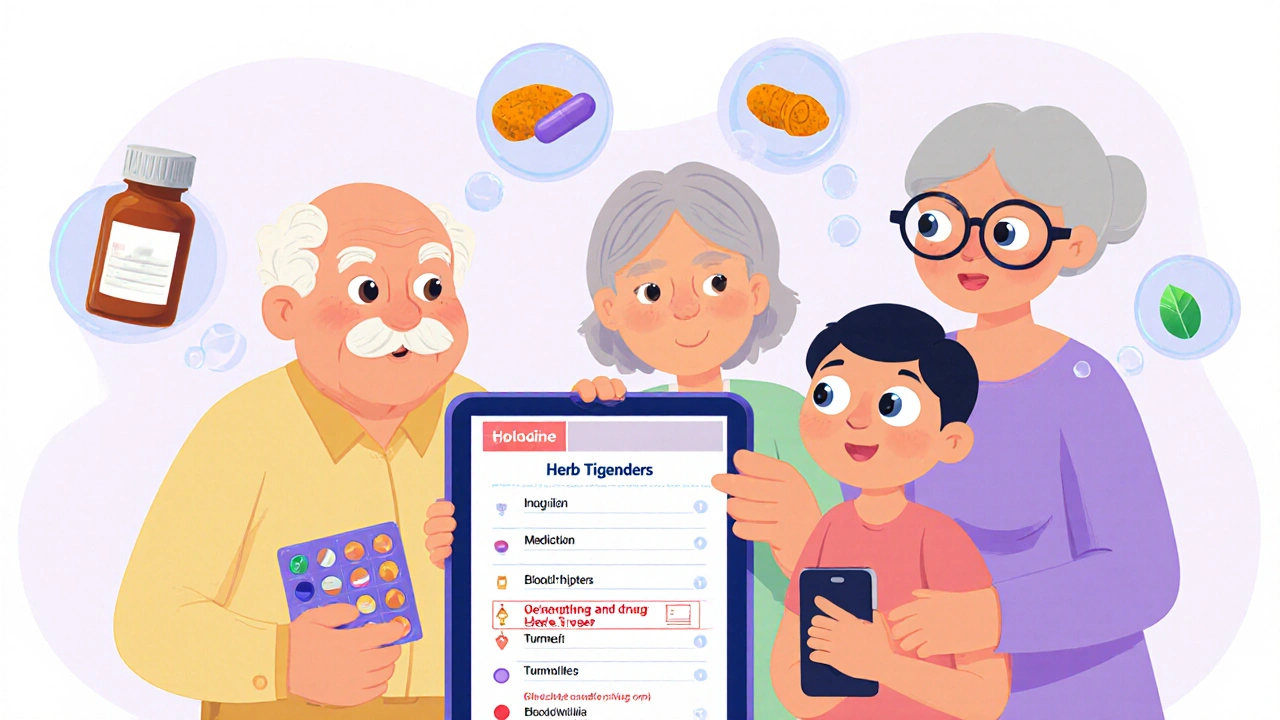
If you’re helping an elderly parent, a sibling with chronic illness, or a child with complex needs, your role is even more critical. A 2023 survey found that 83% of caregivers struggle to track multiple medications, and 41% have experienced at least one medication error in the past year. Here’s what works:- Use a pill organizer with days and times clearly labeled
- Set phone reminders for each dose
- Keep a shared digital list (Google Docs or a family app) that everyone can update
- Attend appointments with your loved one-don’t assume they’ll remember everything
- Call the pharmacy and ask for a printed list of all active prescriptions
What’s Changing-and What’s Coming
New rules are pushing systems to be more transparent. Since 2023, patients in the U.S. can view their full medication list through patient portals. That’s a big step. And by 2025, AI tools are expected to help flag potential interactions in real time, using your full history to predict risks before a new drug is even prescribed. The FDA is also working on clearer labeling for high-alert drugs to reduce confusion between similar-looking names. But none of this replaces your role. AI can’t know you stopped taking a drug because it made you nauseous. It can’t know you buy your vitamins from a store in another country. Only you can tell them that.Your Next Steps
You don’t need to be a medical expert to keep yourself safe. You just need to be prepared.- Today: Grab all your meds and make a list. Include everything-even the things you think don’t matter.
- This week: Share that list with your primary care provider. Ask them to confirm it’s accurate in your chart.
- Every time you get a new prescription: Update your list immediately.
- Before every appointment: Bring your brown bag. Even if you think you’ve told them before.
What if I forget to bring my meds to the appointment?
If you can’t bring your pills, at least have a written list with names, dosages, and why you take them. You can also call your pharmacy and ask them to fax or email a current list to your doctor’s office. But never rely on memory-studies show people forget or misremember up to 50% of their medications.
Do I need to tell my doctor about vitamins and supplements?
Yes. Many supplements interact with prescription drugs. For example, St. John’s Wort can make birth control, antidepressants, and blood thinners less effective. Garlic and ginkgo can increase bleeding risk during surgery. Even common ones like vitamin E or fish oil can interfere with medications. Always disclose them.
Can my doctor share my medication info with other providers without my permission?
Under HIPAA, providers can share your medication history for treatment purposes without your written consent. That means your ER doctor can access your primary care records if you’re admitted. But they can’t share it for marketing, insurance, or research without your permission. If you’re unsure, ask: “Can you confirm you’re sharing this for my care?”
How often should I update my medication list?
Update it every time there’s a change: a new prescription, a dose change, or if you stop taking something. Even if you’re just trying a new supplement for a few weeks, add it. Keep it current. A list that’s six months old is often inaccurate.
What if my doctor dismisses my concerns about a medication?
If you feel unheard, ask for clarification: “Can you explain why you think this is safe with my other meds?” If you still feel uneasy, ask for a second opinion or request a pharmacist consult. Many hospitals have clinical pharmacists who specialize in drug interactions-they’re trained to review your full list and flag risks.



One comment
Just brought my brown bag to my doc last week. She was shocked I had 17 items listed. Turned out I was double-dosing on magnesium because two different docs prescribed it. Saved me from a heart palpitation nightmare.
My grandma’s caregiver uses a Google Doc with color-coded tabs for meds, supplements, and allergies. We all update it after every appointment. It’s crazy how many times it caught errors before they happened. Tech ain’t magic, but shared docs? Game changer.
OMG YOU GUYS. This is just another Big Pharma ploy to make us dependent on pills!! Why not just eat turmeric and chant mantras? I stopped all meds after my third eye opened and now I heal with moonlight and lemon water. Your system is broken!!
...I just made a list... and printed it... and saved it to my phone... and emailed it to my mom... and my sister... and my doctor... and my pharmacist... and my cousin who works at CVS... and... I think I’m done...? ...right? ...please tell me I’m not overdoing it...
While the intent of this article is commendable, it presupposes a level of health literacy and access to technology that is not universally available. In rural communities, pharmacy records are often handwritten and inaccessible. The burden of documentation falls disproportionately on the patient, not the system.
I used to think my vitamins didn’t matter. Then I got hospitalized for a bleeding ulcer after taking fish oil and aspirin together. Turned out the ER nurse asked if I took anything else - I said ‘just the green pills.’ She said, ‘Green pills? Like the ones from that guy on YouTube?’ I didn’t even know they had names. Now I write everything down. Even the weird stuff.
Y’all are making this way too complicated. Grab your meds. Put ‘em in a bag. Walk in. Say ‘here’s everything I take.’ Boom. Done. No spreadsheets. No apps. Just your hands and your honesty. Doctors aren’t mind readers - but they’re not idiots either. Be simple. Be real.
Of course you need to bring your meds. But let’s be real - if your doctor can’t keep track of what you’re taking, maybe they shouldn’t be prescribing anything. I’ve seen guys with 15 prescriptions and zero clue what they’re for. That’s not patient error. That’s medical malpractice.
Let’s not romanticize the brown bag method. It’s a band-aid on a systemic failure. The real issue is interoperability between EHRs. Surescripts doesn’t include cash-pay meds from Walmart, and 80% of seniors buy supplements from Amazon. Until the FDA mandates universal digital tracking - including OTC and imports - we’re just rearranging deck chairs on the Titanic.
Wait… so you’re telling me the government doesn’t know what I’m taking? That’s insane. Are they tracking my Netflix? My Google searches? But not my melatonin? I’ve been told the CIA uses medication data to profile citizens. Are my supplements being used to predict my political views? I need to call someone.
😂😂😂 I told my doctor I take ‘energy pills’ and he said ‘which one?’ I said ‘the green ones from the guy who says he’s a monk.’ He looked at me like I was a raccoon in a suit. Then he wrote ‘unknown supplement’ in my chart. I’m basically a walking clinical trial now.
So we’re supposed to be the human API for a broken system? Cool. I’ll just manually sync my body with the hospital’s outdated database while they charge me $200 for a 7-minute visit. Thanks, capitalism. 🤡
My cousin in Lagos says when he goes to the clinic he brings his whole medicine shelf. They laugh at him. Then they thank him. In places where medicine is scarce, people know every pill matters. Maybe we’ve forgotten that. Not because we’re careless. But because we’re lucky.
While I applaud the sentiment, this article is a textbook example of American medical exceptionalism. In the UK, we have a centralized NHS record. Every prescription, every supplement, every herbal tincture is logged - and updated automatically via pharmacy integration. The fact that you need to carry a brown bag in 2024 is not a personal responsibility. It is a national scandal.