
Imagine picking up a box of insulin from your local pharmacy. The packaging looks right, but the liquid inside has a strange tint, or the seal feels loose. You hesitate. Is it just a manufacturing quirk, or is something seriously wrong? That hesitation is the first step in protecting public health. Reporting counterfeit medications isn't just about getting a refund; it's about stopping a bad batch before it hurts someone else.
The stakes are higher than most people realize. The World Health Organization estimates that 1 in 10 medical products in low- and middle-income countries is substandard or falsified. Even in highly regulated markets like the UK and US, these dangerous fakes slip through. If you spot one, you need to know exactly what to do. This guide walks you through how to identify red flags, preserve evidence, and file a report that actually gets results.
Spotting the Red Flags: What Counts as Counterfeit?
Not every weird-looking pill is a fake. Sometimes, manufacturers change the shape or color of a generic drug because their original supplier ran out of stock. But there are specific signs that suggest tampering or fraud. According to the FDA, falsified medicines are deliberately and fraudulently mislabelled medications created with the intent to imitate the identity or source of authentic medicine. That word "fraudulently" is key.
Look for these common warning signs:
- Packaging errors: Typos on the label, blurry printing, or missing lot numbers.
- Physical differences: Pills that crumble easily, have a different taste, or smell odd.
- Seal issues: Broken tamper-evident seals or bottles that look opened before purchase.
- Source concerns: Buying from an online pharmacy without a verified physical address or license.
If you bought a prescription drug from a reputable high-street pharmacy and it looks slightly off, call them first. They can verify the batch number against manufacturer records. But if you bought it online, from a friend, or abroad, treat it with suspicion until proven safe.
Preserve the Evidence Before You Act
Here’s where many people make a mistake: they throw the suspect product away immediately after taking it or feeling uneasy. Don’t do that. Your report’s success depends heavily on the physical evidence you provide. Dr. Paul Newton, a professor at Oxford University and director of a WHO collaborating centre, notes that reports containing serial numbers, batch numbers, and high-resolution images increase investigation success rates by 68%.
Before you dispose of anything, follow these steps:
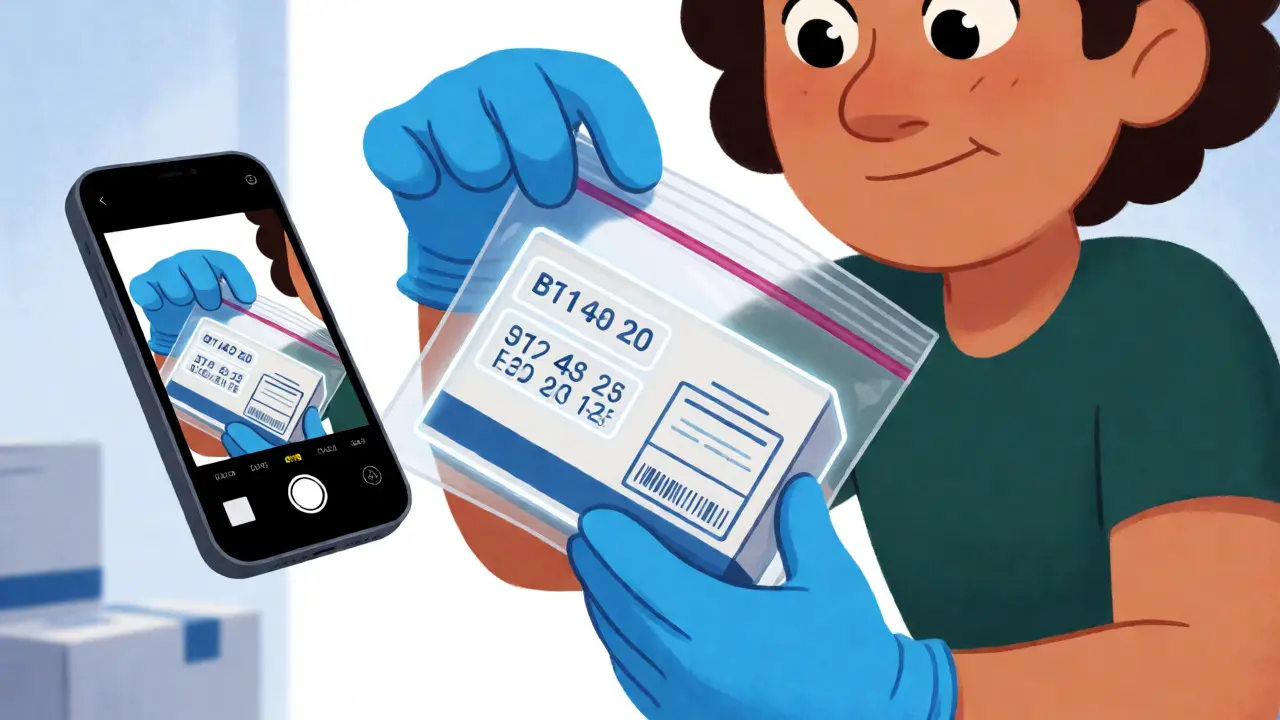
- Keep the packaging intact: Do not discard the box, blister packs, or bottle. These contain critical data like the National Drug Code (NDC) in the US or the Product Licence Number in the UK.
- Note the details: Write down the name of the medication, the strength (e.g., 50mg), the expiration date, and the lot/batch number printed on the pack.
- Save the receipt: Keep the proof of purchase showing where and when you bought it. If you bought it online, save the email confirmation and the seller’s website URL.
- Take photos: Snap clear pictures of the front and back of the package, focusing on any irregularities. Good lighting helps investigators see discrepancies you might miss.
Handling the product carefully matters too. If you suspect the tablet itself is contaminated, avoid touching it with bare hands if possible. Use gloves or place the item in a sealed plastic bag to prevent cross-contamination while you prepare your report.
Who to Contact: Choosing the Right Authority
Where you live determines who handles your complaint. In the United Kingdom, the primary regulator is the Medicines and Healthcare products Regulatory Agency (MHRA). The MHRA operates the Yellow Card scheme, which collects reports of adverse reactions and product quality defects. In the United States, the Food and Drug Administration (FDA) runs the MedWatch program. While the processes differ, the goal is identical: rapid identification of unsafe products.
| Authority | Region | Primary Channel | Best For |
|---|---|---|---|
| MHRA | United Kingdom | Yellow Card Scheme Online | Quality defects, side effects, suspected counterfeits in UK supply chain. |
| FDA MedWatch | United States | Online Form 3500 or Phone | Adverse events, product quality problems, therapeutic failure. |
| DEA Tip Line | United States | Phone (571-324-6499) or Web | Suspected illegal distribution, diversion, or controlled substance fraud. |
| Health Canada | Canada | Office of Controlled Substances | Theft, loss, or falsification of controlled substances. |
If you are unsure which agency to contact, start with the national health authority. If the issue involves a controlled substance like opioids or stimulants, law enforcement agencies like the DEA in the US often act faster than health regulators. Remember, you can also report directly to the manufacturer. Companies like Novo Nordisk and Eli Lilly have dedicated anti-counterfeiting teams that track suspicious batches globally.
How to File a MedWatch Report (US Focus)
For those in the US, filing a report via MedWatch is straightforward but requires patience. The FDA estimates that consumer reports take 12-15 minutes to complete. Here’s how to navigate the process efficiently.
You can submit reports online via the FDA’s MedWatch Adverse Event Reporting form (Form 3500) or by calling 1-800-FDA-1088. When filling out the form, be precise. Vague descriptions like "the pill looked weird" don’t help investigators. Instead, describe exactly what you saw: "The tablet was chipped on one edge," or "The imprint code 'M' was faint compared to previous prescriptions."
A critical part of the form asks for the "Product Quality Problem." Check boxes for issues like "Container/Packaging," "Labeling," or "Particulate Matter." If you suspect the drug is counterfeit, select "Suspect Product" or note it clearly in the narrative section. The FDA’s Drug Supply Chain Security Act (DSCSA) mandates that supply chain participants notify the agency within 24 hours of determining a product is illegitimate. As a consumer, you aren’t bound by this 24-hour rule, but reporting quickly speeds up the removal of bad stock from shelves.
One common frustration among consumers is the lack of immediate feedback. A survey by the National Consumers League found that while healthcare professionals rate MedWatch highly for comprehensiveness, consumers often feel unheard due to slow response times. To mitigate this, keep a copy of your submission reference number. If you don’t hear back within a few weeks, you can check the status online, though detailed case updates are rare for individual consumer reports.
Reporting in the UK: The Yellow Card Scheme
In the UK, the MHRA’s Yellow Card scheme is the go-to platform. It’s designed to be user-friendly for both patients and healthcare professionals. You can report suspected counterfeit medicines through the same portal used for side effects.
When reporting a quality defect, the system will ask you to categorize the issue. Select "Product Quality" rather than "Adverse Reaction" unless you suffered a health problem from the fake drug. Include the brand name, active ingredient, and dosage. Crucially, upload photos of the packaging. The MHRA uses these images to compare suspect products against known authentic samples in their database.
Pharmacists play a vital role here. If you bring a suspect item to your pharmacist, they have a professional duty to investigate and often report it themselves. However, you should still file your own report. Patient reports add weight to the data, signaling to the MHRA that a specific batch is causing widespread concern. In recent years, AI-powered image recognition tools have been piloted to help sort these reports faster, identifying patterns in packaging anomalies across thousands of submissions.
What Happens After You Report?
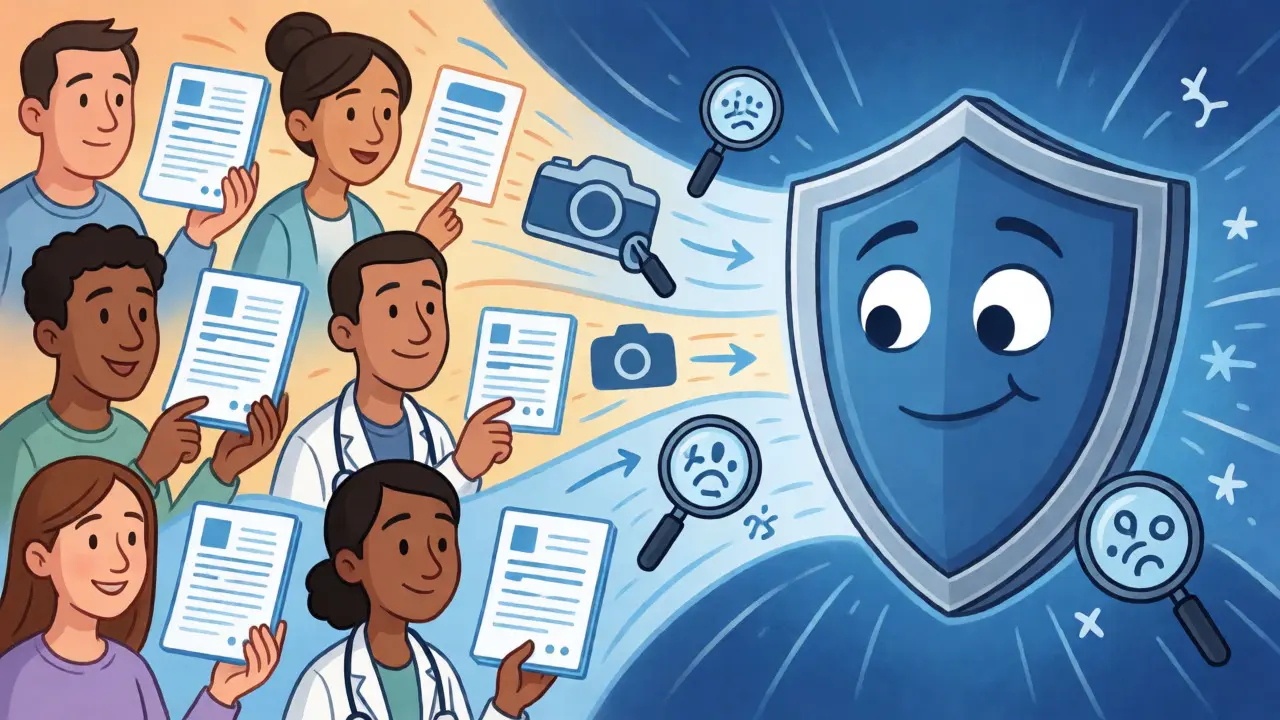
Once you hit submit, your report enters a triage queue. Regulators don’t investigate every single tip individually. Instead, they look for clusters. If ten people report the same lot number having a broken seal, that triggers an automatic investigation. If only one person reports it, it might sit in a database until more data accumulates.
If an investigation confirms the product is counterfeit, several things happen:
- Recall: The manufacturer issues a recall notice, pulling all units of that batch from pharmacies.
- Public Warning: Agencies may issue alerts advising patients to return unused doses.
- Law Enforcement Action: Police may raid warehouses or arrest individuals involved in the supply chain.
- Supply Chain Audits: Wholesalers and distributors linked to the bad batch undergo stricter inspections.
Be prepared for silence. You likely won’t get a phone call thanking you personally. But your report contributes to a larger dataset that shapes policy. For instance, timely reporting through MedWatch contributed to the removal of over 2,300 counterfeit drug products from US markets between 2015 and 2022. Each of those removals started with someone noticing something was off and speaking up.
Troubleshooting Common Reporting Issues
Sometimes, the reporting process hits snags. Here’s how to handle typical scenarios:
I threw the packaging away. Can I still report? Yes. Describe the product as best you can. Mention the pharmacy where you bought it and the approximate date. Regulators can sometimes trace the batch through the pharmacy’s dispensing records.
I bought it from an overseas website. Reporting to your national regulator (like the FDA or MHRA) is still useful, especially if the site ships locally. Also, report the website to the National Association of Boards of Pharmacy (NABP) in the US or similar bodies elsewhere. They maintain lists of non-compliant online pharmacies.
The pharmacy refused to replace my pills. If you suspect a counterfeit, don’t let the pharmacy dismiss you. Ask them to contact the wholesaler directly. If they remain unhelpful, file your regulatory report anyway. It creates a paper trail that protects you if health issues arise later.
Do I need to pay for shipping when returning a suspected counterfeit?
Typically, no. If a recall is issued, the manufacturer usually covers return costs. If you are reporting to a regulator, you generally send photos digitally. If you must mail a sample to the manufacturer, ask for a prepaid label. Always keep receipts for any postage costs incurred.
Can I report a medication purchased outside my country?
Yes. If you brought a medication into your home country and suspect it is fake, report it to your local health authority. They can coordinate with international partners, such as the WHO Global Surveillance and Monitoring System, to track the origin of the product.
What is the difference between substandard and falsified medicines?
Substandard medicines fail quality standards due to poor manufacturing or storage (e.g., degraded potency). Falsified medicines are deliberately fraudulent-they may contain the wrong ingredients, no ingredients, or incorrect labels. Both are dangerous, but falsified drugs involve criminal intent.
How long does an investigation take?
Timelines vary widely. Simple quality checks might resolve in weeks, while complex criminal investigations into counterfeit rings can take months or years. Reports submitted within 24 hours of discovery tend to lead to faster product removals than those filed days later.
Should I stop taking my medication if I suspect it is fake?
Consult your doctor or pharmacist immediately. Stopping certain medications abruptly can be dangerous. If you suspect a counterfeit, seek alternative treatment from a trusted source before discontinuing use, unless instructed otherwise by a medical professional.



One comment
It is rather amusing, is it not, that we have reached a point in our collective intellectual decline where the general populace requires a step-by-step guide to identify a fraud? The very concept of 'counterfeit' implies a sophisticated criminal enterprise, yet here we are, spoon-feeding the masses with basic visual cues. I suspect the true danger lies not in the obvious fakes, but in the subtle deviations from Good Manufacturing Practices that regulatory bodies conveniently overlook due to bureaucratic inertia. One must possess a certain level of discernment to distinguish between a mere packaging error and a systemic failure of oversight.
This is such a helpful breakdown! 🌟 I really appreciate how you emphasized keeping the evidence before tossing it out. So many people panic and throw away the box, which makes it impossible for pharmacists to help. Great reminder to stay calm and document everything first! 💪📸
youre all missing the point its not about the pill its about who controls the supply chain big pharma loves this narrative because it shifts blame to small online sellers while they ship us expired stock from warehouses in india and china nobody talks about that do they just follow the rules blindly like sheep
Sure... sure... go ahead and trust the system that already failed you once. 😒 It’s nice to pretend that filling out a form will actually stop a multinational corporation from cutting corners. But hey, if writing down your lot number gives you peace of mind, by all means, keep doing it. Just don’t expect the FDA to call you back when they realize your 'suspicious tablet' was just a manufacturing variance. 🙄
I’ve been reporting defects for years and honestly, the response time is abysmal. You file a report, send photos, and then hear nothing for months. Meanwhile, you’re still taking medication that might be compromised. It feels like we are just data points in their database rather than patients at risk. The lack of feedback loop is the biggest flaw in the current system.
Interesting info :) but what about countries where digital infrastructure is weak ? In India many rural areas still rely on local chemists who might not even know about Yellow Card or MedWatch equivalents . How does one report there effectively without internet access ?? :/
From a global health perspective, the distinction between substandard and falsified medicines is critical for epidemiological modeling. Substandard drugs often result from poor storage conditions-such as exposure to excessive humidity or temperature fluctuations-which degrade active pharmaceutical ingredients over time. Falsified drugs, conversely, involve intentional deception regarding composition or source. In low-income regions, the prevalence of falsified antimalarials has been documented to reach up to 35% in some studies, significantly contributing to drug resistance. Therefore, robust surveillance systems like the WHO Global Surveillance and Monitoring System are indispensable for distinguishing between quality failures and criminal activity, ensuring that interventions are appropriately targeted towards either logistical improvements or law enforcement actions.
Great article but why do we always assume the pharmacy is innocent? They buy from wholesalers who buy from distributors. If my pill looks wrong, I’m telling the pharmacist, and they look at me like I’m crazy. Then I have to drive across town to file an online report. Why can’t the pharmacy just handle it? They have the duty, right?
I think the key here is communication. Pharmacists are often overwhelmed, so approaching them calmly with specific details (like the lot number) helps them take it seriously. It’s not about blaming them, but working together to get the right product. Maybe suggest asking them to check the batch against the manufacturer’s website directly? That seems like a middle ground.
Agreed. Most pharmacists want to help but need proof. Bring the receipt and the box. It makes it easier for them to verify without assuming the worst.
the real issue is supply chain opacity blockchain would fix this but nobody wants to pay for it so we stick to paper trails and hope for the best lol
Important topic. Always check seals.
It is absolutely imperative that every citizen takes responsibility for their own health vigilance. We cannot simply hand over our well-being to faceless corporations and expect perfection. When you fail to report a suspicious medication, you are complicit in allowing potentially harmful substances to circulate among the vulnerable population. This is not merely a consumer choice; it is a moral obligation to protect the community. Shame on those who ignore these signs for the sake of convenience.
Too long. Who reads all this? Just say: check seal, keep box, call pharmacy. Done. Now I feel tired reading about 'triage queues'. Ugh.