
Why Your Balance Matters More Than You Think
If you’ve ever felt dizzy when standing up too fast, or wobbled on uneven pavement, you’re not alone. About 30% of adults over 65 fall at least once a year. Many of these falls aren’t just accidents-they’re symptoms of a deeper issue: a weak or damaged vestibular system. That’s the part of your inner ear that tells your brain where your body is in space. When it’s not working right, your balance goes haywire. And that’s not just inconvenient-it’s dangerous. The good news? You don’t have to live with it. Vestibular rehabilitation therapy (VRT) isn’t magic. It’s science. And it works. Studies show people who stick with it reduce their risk of falling by 53%. They cut their dizziness episodes by 42%. Their ability to focus on things while moving-like reading a phone screen while walking-improves by 68%. This isn’t about getting stronger. It’s about retraining your brain.How Vestibular Rehabilitation Actually Works
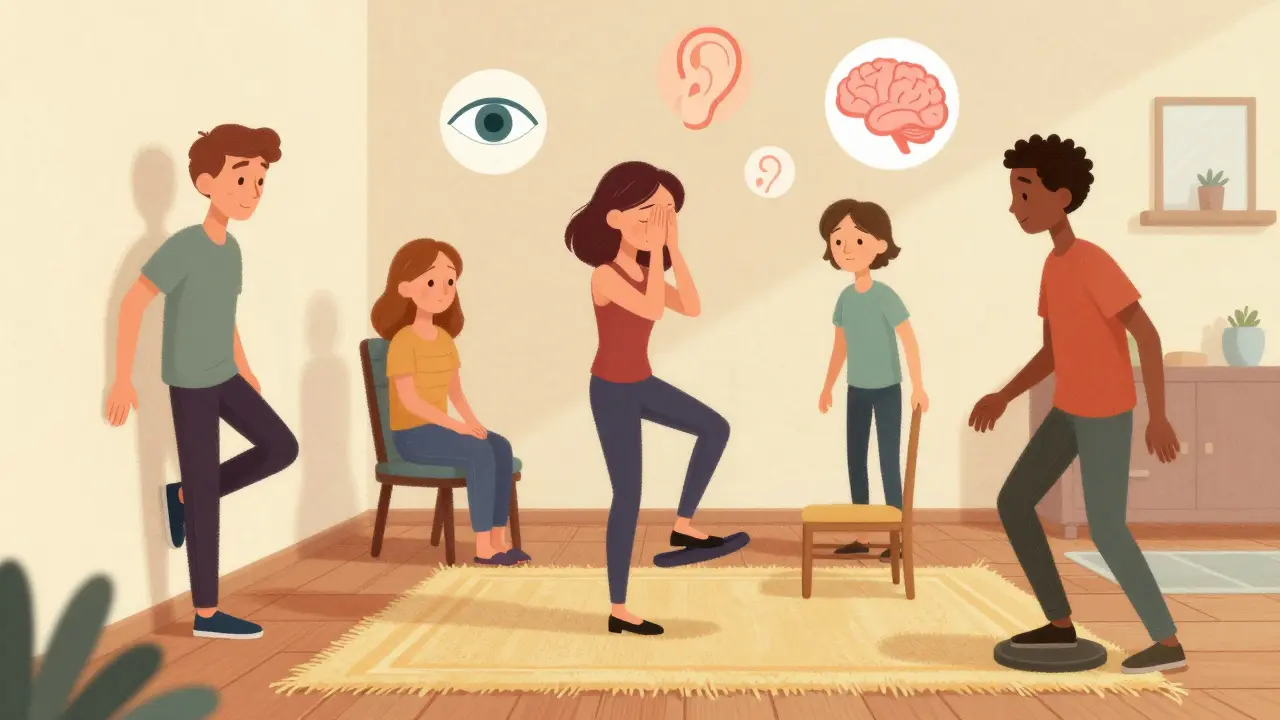
Your vestibular system is like a faulty GPS. It sends mixed signals to your brain. Your eyes say you’re standing still. Your inner ear says you’re spinning. Your feet feel unsteady. Your brain gets confused. That’s when dizziness, nausea, or the fear of falling kicks in. VRT doesn’t fix your inner ear. It fixes how your brain handles the noise. Think of it like upgrading software. Your brain learns to ignore the bad data and rely on better signals-from your eyes, your muscles, your joints. This is called neuroplasticity. It’s the same process that lets stroke patients relearn how to walk. The therapy is built around four goals:- Stabilize your gaze so you can read or look at your phone without things blurring when you move your head
- Improve your posture so you don’t tip over when you reach for something
- Reduce vertigo and nausea so you don’t feel sick just by turning over in bed
- Help you do daily tasks again-like walking to the kitchen, climbing stairs, or shopping without panic
The Five Core Exercises You’ll Actually Do
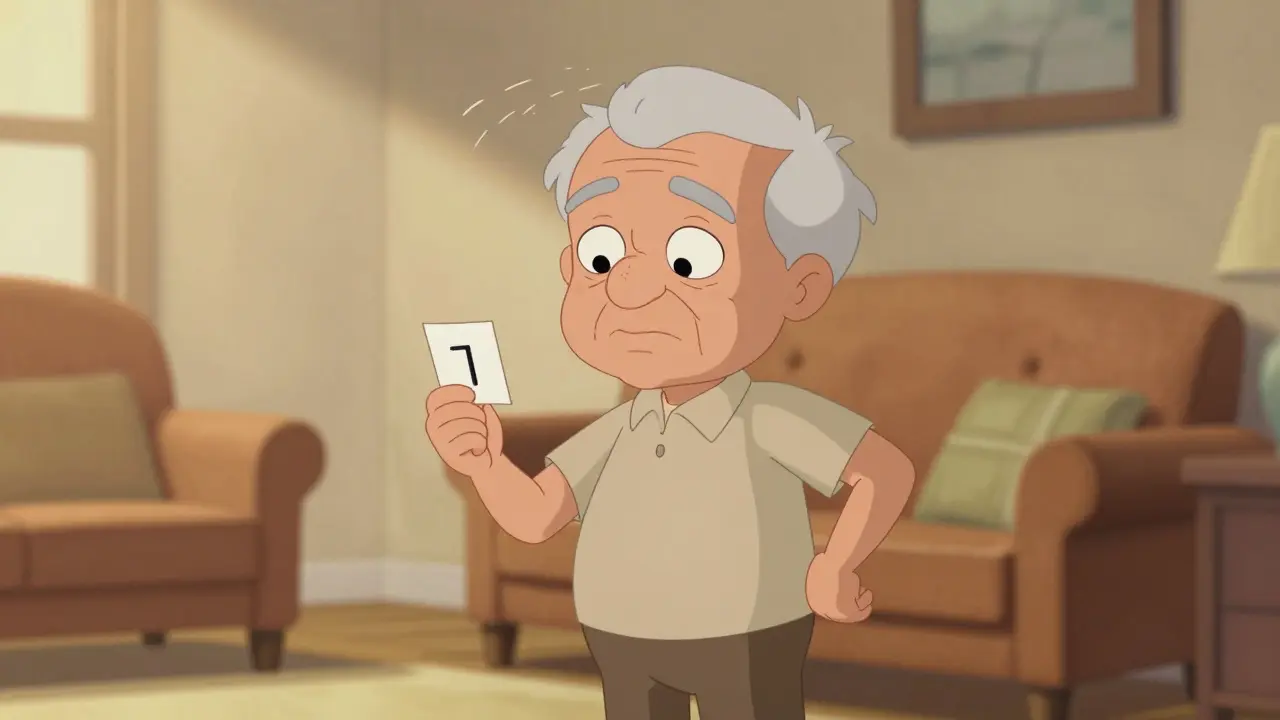
VRT isn’t about fancy machines or expensive gear. You don’t need a gym. You don’t need special equipment. Just a chair, a wall, and a little courage. Here’s what real VRT looks like:- Gaze Stability Training - Sit or stand still. Hold a card with a letter or small picture at eye level. Turn your head side to side slowly, keeping your eyes locked on the letter. Do this for 30 seconds, three times a day. This trains your eyes to stay focused even when your head moves.
- Balance Retraining - Stand with your feet together. Hold onto a chair if you need to. Then try it without holding on. Next, stand on one foot. Then close your eyes. Each step makes it harder. You’re forcing your body to rely on muscles and joints, not just your inner ear.
- Habituation Exercises - Do movements that make you dizzy-on purpose. Spin in a chair. Bend over quickly. Walk while turning your head. Do them slowly, in short bursts. The goal isn’t to avoid dizziness. It’s to teach your brain that it’s safe. After a few days, the same motion won’t trigger the same panic.
- Walking and Coordination Drills - Walk forward, then backward. Walk while turning your head. Walk on grass, then on a rug. Walk in a dim room. These aren’t drills for athletes. They’re drills for real life. Because falls don’t happen on flat, bright floors. They happen in the dark, on stairs, while reaching for a jar.
- Neck and Shoulder Mobility - Tight neck muscles can mess with your balance signals. Gentle stretches-tilting your head side to side, rolling your shoulders-help your brain get clearer input from your body.
Who Benefits the Most?
VRT isn’t just for older adults. It helps anyone with a vestibular problem.- People with BPPV (benign paroxysmal positional vertigo)-the most common cause of dizziness-affecting about 2.4% of the population
- Those with vestibular neuritis, where a virus damages the balance nerve
- People with Meniere’s disease, which causes spinning, hearing loss, and pressure in the ear
- Anyone recovering from a concussion or head injury
- And yes-older adults. About 65% of people over 65 have some form of dizziness. VRT cuts their fall risk in half.
What to Expect in the First Few Weeks
Let’s be honest: the first few days are rough. You’ll feel dizzy. You might even feel worse. That’s normal. It means your brain is being challenged. Most people start seeing changes in 2-4 weeks. By 6-8 weeks, 89% of patients regain the ability to do daily activities they’d given up-cooking, driving, even gardening. One Reddit user shared: “I was falling 3-4 times a week. After 12 weeks of daily exercises? Zero falls. I didn’t believe it would work. But it did.” The key? Don’t stop when it’s hard. Don’t avoid the movements that make you dizzy. That’s the whole point. You’re not trying to feel better right away. You’re trying to rewire your brain. And that takes repetition.
Why VRT Beats Medication and Surgery
Doctors often reach for pills first-meclizine, diazepam, anti-nausea drugs. But those just mask the problem. They make you drowsy. They don’t fix the root cause. And they don’t reduce your fall risk. Surgery? Rarely needed. Only for extreme cases, like tumors or severe inner ear damage. Most people don’t need it. VRT? It’s non-invasive. No side effects. No dependency. And it cuts healthcare costs. Falls cost the U.S. healthcare system over $50 billion a year. Preventing just one fall pays for a full course of VRT. Plus, VRT gives you control. You’re not waiting for a pill to work. You’re actively rebuilding your balance. That’s empowering.How to Get Started
You don’t need a referral to start. But you should talk to your doctor first. Rule out heart issues, low blood pressure, or other causes of dizziness. Then, look for a physical therapist who specializes in vestibular rehabilitation. Ask:- “Do you have experience with vestibular rehab?”
- “Will you create a personalized plan?”
- “Will you teach me exercises I can do at home?”
Real Progress Isn’t Always Obvious
You won’t wake up one day and feel “cured.” Progress is quiet. It’s subtle. Maybe you no longer need to hold the railing on stairs. Maybe you can walk to the mailbox without stopping. Maybe you stopped fearing the dark. Those are wins. Big ones. VRT doesn’t promise perfection. But it gives you back your safety. Your independence. Your confidence. And in a world where falling can mean hospitalization, surgery, or worse-those things are priceless.Can vestibular exercises help if I’ve had dizziness for years?
Yes. Even if you’ve had dizziness for years, your brain can still adapt. VRT works by retraining neural pathways, not healing damaged nerves. Studies show improvement in patients with chronic symptoms-even those who’ve tried medications without success. Consistency matters more than how long you’ve had the problem.
Do I need special equipment for vestibular rehab?
No. VRT uses everyday tools: a chair, a wall, a piece of paper with a letter on it. You don’t need a treadmill, balance pad, or expensive device. The exercises rely on your body and your brain-not gadgets. Some clinics use virtual reality now, but it’s not required for success.
Will vestibular exercises make me dizzy at first?
Yes, and that’s normal. The exercises are designed to gently challenge your balance system. Feeling dizzy during or right after is a sign the therapy is working. The goal isn’t to avoid dizziness-it’s to teach your brain that it’s safe. Dizziness usually lessens within days to weeks as your brain adapts.
How long does vestibular rehab take to work?
Most people notice improvement in 2-4 weeks. Significant gains-like walking without support or returning to daily activities-usually happen between 6 and 8 weeks. Some need up to 12 weeks, especially if they have multiple health conditions. The key is doing the exercises daily, even if only for 5-10 minutes at a time.
Can I do vestibular rehab on my own without a therapist?
You can start on your own, especially with basic exercises like gaze stability and standing balance. But a therapist helps you avoid mistakes-like doing the wrong exercise for your condition, or pushing too hard too fast. If your dizziness is severe, sudden, or paired with hearing loss or numbness, see a professional first. Self-guided rehab works best after a diagnosis and initial guidance.




One comment
I tried these exercises after my dad had a bad fall last year. We started with just the gaze stability thing-5 minutes a day. Didn’t think much would change. But after three weeks, he stopped needing his cane to walk to the kitchen. No magic, just consistency. Honestly, it’s the most hopeful thing we’ve seen in years.
You know what they don’t tell you? This is all part of the pharmaceutical-industrial complex’s plan to keep you dependent on pills. Why? Because drugs make money. Vestibular rehab? It’s free. It’s natural. It’s dangerous to the profit margins. They’ll never fund a study that proves you can fix your balance with a chair and a piece of paper. The NIH? They’re owned by Big Pharma. Look at the funding sources. The 2012 study? Look up who paid for it. They want you to believe in ‘neuroplasticity’ so you don’t ask why your doctor won’t give you the real solution: clean water, sunlight, and no EMF exposure. I’ve seen it in my own family-my cousin’s dizziness vanished after she got rid of her smart meter. Coincidence? I think not.
There’s something quiet beautiful about retraining your brain like this. It’s not about fixing a broken part-it’s about teaching your whole system to listen differently. I used to think balance was physical. Turns out it’s mental. Emotional, even. When you stop fighting the dizziness and start working with it, something shifts. It’s like your body finally stops screaming and starts whispering. And you learn to hear it. I didn’t realize how much fear had taken over my life until I started doing these exercises. Now I walk barefoot on the grass just to feel the ground. Small thing. Big shift.
The clinical efficacy of vestibular rehabilitation therapy is well-documented in peer-reviewed literature, particularly in the context of neuroplastic adaptation. The cited 53% reduction in fall incidence aligns with findings from randomized controlled trials conducted by the American Physical Therapy Association and corroborated by the Cochrane Collaboration. It is imperative that patients consult licensed physical therapists prior to initiating home-based protocols, as improper execution may exacerbate symptoms. Furthermore, while the exercises described are non-invasive and cost-effective, they should be tailored to individual diagnostic profiles, including but not limited to BPPV, vestibular neuritis, or post-concussive syndrome. Self-administered therapy without clinical oversight is not recommended.
I appreciate the thoroughness of this post. As a physical therapist specializing in geriatric rehabilitation, I can confirm that vestibular rehab is one of the most underutilized interventions in our field. Many patients are told to ‘just live with it’-which is unacceptable. The exercises outlined here are evidence-based, safe, and profoundly transformative when practiced consistently. I often tell my patients: ‘You’re not losing your balance-you’re relearning how to find it.’ That mindset shift alone changes everything.
OMG I tried the head turning thing and I felt like I was gonna die 😵💫 but then like 3 days later I was like wait i didnt fall when i walked to the fridge?? i think it worked?? also my cat stared at me like i was crazy but whatever
This is the only thing that worked after three years of dizziness. No meds. No surgery. Just five minutes a day. I did the gaze thing while brushing my teeth. Started with holding the chair. Now I can turn my head while reading the news. No more panic. No more fear. Simple. Effective. Done.
You think this is new? In Nigeria, we’ve been doing this for centuries. Grandmothers make you spin in circles until you stop falling. They call it ‘spirit cleansing.’ Turns out it’s just vestibular habituation. You people need a PhD to figure out what our aunties knew with their eyes closed. Also, you’re all ignoring the real problem: poor nutrition. No vitamin D, no magnesium, no vitamin B12. You think exercises fix everything? Try eating food first. Then do the spins.
Okay but why is everyone acting like this is some revolutionary breakthrough? I did these exact exercises in 2012 when I had vertigo. They worked. Big whoop. Also, the part about ‘no equipment needed’? Please. My therapist made me buy a $200 balance board, a foam roller, and a $50 app subscription. And the ‘no side effects’ line? Try doing these every day for six weeks and tell me you’re not exhausted, nauseous, and emotionally drained. This isn’t self-care. It’s a grind. And it’s sold like it’s yoga with benefits.