
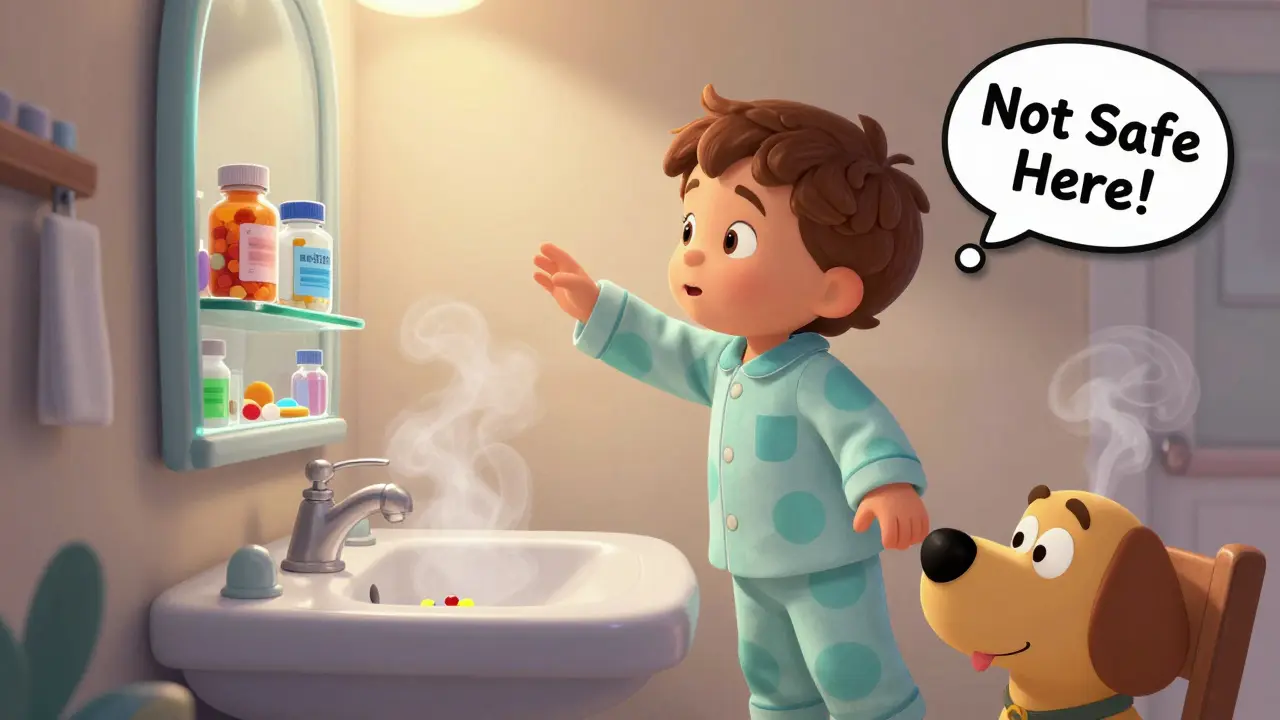
Every year, medication storage mistakes put thousands of children and pets in emergency rooms. It’s not just about forgetting to close the bottle-it’s about where you put it, how you handle it, and what you think is "safe enough." The truth? A childproof cap isn’t enough. A cabinet above the sink isn’t enough. And leaving a pill on the counter while you answer the door? That’s a recipe for disaster.
Why Your Bathroom Cabinet Is the Worst Place for Medications
Most people store medicines in the bathroom. It’s convenient. It’s where you take them. But here’s the problem: bathrooms are humid. Heat and moisture break down pills, making them less effective-or even dangerous. The CDC says 40% of households keep meds in the bathroom, even though humidity levels there can hit 80%. That’s bad for the medicine, and worse for your kids.And let’s not forget the cabinet. Kids climb. They jump. They pull out chairs to reach higher. Studies show most children under five can reach up to 4 feet high. A cabinet at 5 feet? Still not safe if it’s clear glass. A child can see the colorful pills inside-and they’ll try to get them.
Instead, pick a spot that’s high, locked, and out of sight. A bedroom closet with a combination lock. A kitchen cabinet above the fridge, with a child safety latch. A locked box on a top shelf in the laundry room. The goal isn’t convenience-it’s isolation. If your child can’t see it, can’t reach it, and can’t open it, you’ve done your job.
Pets Don’t Care About Childproof Caps
Dogs sniff out pills like they’re treats. Cats will paw at anything that looks interesting. And if a pill smells like chicken, beef, or peanut butter? Forget it. They’re getting it.The FDA reports that nearly a quarter of pet medication incidents happen because a human accidentally took their pet’s medicine. That’s right-your dog’s arthritis pill might look just like your painkiller. And if your cat’s thyroid med is sitting next to your blood pressure pill? That’s a deadly mix.
Separate them. Completely. Keep human meds in one locked container. Keep dog meds in another. Cat meds in a third. Don’t store them in the same drawer, even if they’re in different bottles. Pets have noses that can detect a single pill from across the room. And if you’re using a weekly pill organizer? Lock it. Even if it’s labeled "Mom’s meds." Your dog doesn’t read.
Gummy Vitamins Are Not Candy-But Your Kids Think They Are
Gummy vitamins, gummy melatonin, gummy probiotics. They look like candy. They taste like candy. And according to the CDC, they account for 30% of all childhood supplement ingestions-even though they make up only 15% of the market.Parents think, "It’s just a vitamin." But gummy supplements can contain iron, melatonin, or even caffeine. One gummy with high iron can send a toddler to the ER. And if your pet finds one? A single gummy can cause pancreatitis in dogs.
Store gummies the same way you store prescription pills. Locked. High. Out of sight. Don’t keep them on the counter "just for convenience." That’s how accidents happen.
The Two-Minute Rule: Secure It Before You Walk Away
The biggest mistake? Leaving meds out during use.Seattle Children’s Hospital found that 78% of pediatric poisoning cases happen because someone put a pill on the counter, the bed, or the table while giving it to a child-or while taking it themselves. Then they got distracted. The phone rang. The baby cried. The dog jumped up.
That’s why the "two-minute rule" exists: After every use, put the medication away within two minutes. Even if you’re going to take the next dose in an hour. Even if you’re just "going to be right back." Don’t trust memory. Don’t trust habits. Lock it. Immediately.
Set a reminder on your phone if you have to. Or say it out loud: "I’m putting this away now." Make it a ritual. It takes seconds. It saves lives.
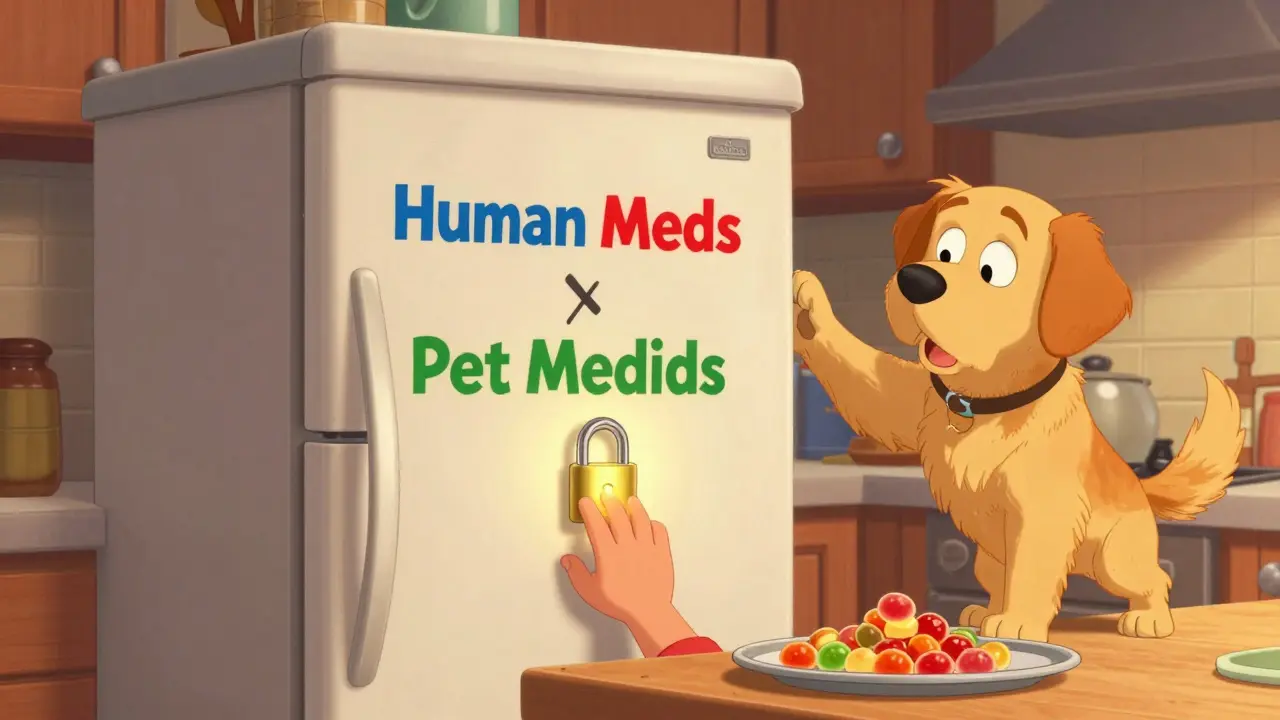
How to Store Medications Right: The Three-Zone System
Veterinary and medical experts agree: a smart storage system is layered. Here’s how to build it:- Zone 1: Immediate Use - Only the current dose. Keep it on a flat, clear surface while you’re administering it. Never on the edge of a counter or beside the sink. Use a small tray or plate.
- Zone 2: Short-Term Storage - All other daily meds. Locked container. At least 5 feet high. Out of reach and out of sight. Use a lockbox with a combination or key. The VADIC Safe Storage Bag (11" x 6") is one approved option.
- Zone 3: Long-Term Storage - Extra pills, seasonal meds, pet meds. Store separately by species. Label clearly. Keep in a different room if possible. Don’t mix human and pet meds in the same box-even if they’re in different bottles.
This system takes 15-30 minutes to set up. After that, accessing meds takes 2-3 seconds. And the safety gain? Huge.
Disposing of Old or Expired Meds: Don’t Flush, Don’t Trash
You don’t need to keep every pill forever. But you can’t just toss them in the trash or flush them down the toilet.Flushing contaminates water supplies. Throwing pills in the trash? A curious pet-or a teen looking for a buzz-can dig them out.
Here’s the safe way: mix the pills with something unappetizing. Coffee grounds. Cat litter. Used paper towels. Use a 1:1 ratio by volume. Seal it in a plastic bag. Put it in the trash. The EPA says this method is 92% effective at preventing reuse.
Some pharmacies and police stations have drop-off bins. Check with your local pharmacy or city website. If you can’t find one, the coffee grounds method is your best bet.
What Works in Real Homes (And What Doesn’t)
On Reddit, a parent named u/FamilySafetyFirst switched to a biometric safe after their 3-year-old opened a "childproof" cabinet. "It adds 10 seconds to my routine," they wrote, "but I sleep better now." Another parent on the American Kennel Club forum described how their Labrador pulled a pill from between the couch cushions. That’s why VCA Animal Hospitals recommends always opening pill bottles on a flat surface-never on the couch or bed.Parents who use lockable weekly pill organizers report 68% satisfaction. But 32% say it’s hard to manage multiple people’s meds. Solution? Use different colored containers. Label each one clearly. And lock them all.
And here’s the kicker: households with both kids and pets that follow the three-zone system are 74% more likely to keep meds secure than those who don’t. That’s not a guess. That’s data from the CDC’s Up & Away campaign.

What’s Changing in 2025
New rules are coming. By the end of 2024, the FDA required all pet medication labels to include clear instructions: "Store separately from human medications." If your dog’s pill bottle doesn’t say that yet, it’s outdated.Bluetooth-enabled safes are now on the market. They send an alert to your phone if someone opens them. Adoption is still low-only 18% of high-risk homes use them-but they’re growing fast.
And in some areas, new homes are starting to include built-in locked medicine cabinets as part of building codes. It’s not nationwide yet-but it’s coming.
Final Check: Is Your Medication Storage Safe?
Ask yourself these questions:- Can a child under five reach or see any of my meds?
- Are human and pet meds stored in separate locked containers?
- Do I lock away every pill within two minutes of using it?
- Are gummy vitamins stored like prescription drugs?
- Do I know how to dispose of old meds safely?
If you answered "no" to any of these, fix it today. Not tomorrow. Today.
Medication safety isn’t about being perfect. It’s about being consistent. One lapse can change a life. But one lock, one habit, one rule-can prevent it.
Can childproof caps alone keep kids safe from medications?
No. Childproof caps are designed to slow down kids, not stop them. Many children under five can open them within minutes, especially if they’ve seen an adult do it. The American Academy of Pediatrics and CDC both say locked storage is the only reliable method. Caps are a backup-not a solution.
What if I only have one locked box? Can I store human and pet meds together?
No. Human and pet medications have different chemical compositions. A dog’s painkiller can cause kidney failure in a cat. A human’s blood pressure pill can be deadly to a small dog. Even if they’re in separate bottles, storing them together increases the risk of accidental mixing. Use separate locked containers. Label them clearly.
Is it safe to store medications in the kitchen?
Yes-if you avoid the counter and the cabinet above the stove. Kitchens are ideal for storage because humidity is lower than in bathrooms. But keep meds away from heat sources, sunlight, and areas where pets can jump. A high cabinet with a lock, away from the sink and stove, is a good choice.
How do I dispose of old medications if there’s no drop-off location nearby?
Mix them with coffee grounds, cat litter, or used paper towels-use equal parts. Seal them in a plastic bag, then put them in the trash. This makes them unappealing and unusable. Never flush them or throw them in the trash unaltered. The EPA confirms this method is 92% effective at preventing reuse.
What should I do if my child or pet swallows a medication?
Call Poison Control immediately at 1-800-222-1222 (U.S.) or your local emergency number. Don’t wait for symptoms. Don’t try to make them vomit. Have the medication bottle ready when you call-this helps them give you the right advice fast. If it’s a pet, also contact your vet or an emergency animal clinic right away.
Next Steps: Make It Stick
Start today. Pick one spot in your home to be the new home for all your meds. Buy a lockbox if you don’t have one. Label it. Lock it. And teach everyone in the house: "Medicines aren’t candy. They’re not toys. They’re not for sharing."It’s not about being paranoid. It’s about being prepared. Because the difference between a safe home and a dangerous one isn’t luck. It’s a lock. A habit. A decision.



One comment
Childproof caps? Lol. My nephew opened one with a butter knife. 😅
I never thought about humidity breaking down meds... I kept everything in the bathroom because it was "convenient"... but now I feel like an idiot. Thanks for the wake-up call. I just moved everything to the locked closet above the fridge. Took 5 minutes. Worth it.
Let’s be real-gummy vitamins are the candy aisle’s Trojan horse. My 4-year-old calls them "sleepy bears" and tries to hoard them like dragon gold. I used to keep them on the counter because "I’m only taking one at a time." Now? They live in a lockbox with my insulin. The look on my dog’s face when he realized the gummy drawer was gone? Priceless. Also, he’s still mad.
This is such a gentle, thoughtful guide-and honestly, so needed. I’ve seen too many families panic because they didn’t realize how easy it is for little hands-or curious paws-to get to meds. I’ve started sharing this with my book club and even my yoga group. Small changes, big impact. Thank you for writing this with care.
It’s fascinating-our entire modern relationship with pharmaceuticals is predicated on a fundamental delusion: that we can outsource safety to caps, cabinets, and labels... while our biological instincts-curiosity, scent-driven foraging, distraction-remain unchanged since the Pleistocene. We’ve built skyscrapers but still store poison where a toddler can reach it. The tragedy isn’t negligence-it’s ontological arrogance.
My wife and I started using colored lockboxes after our cat knocked over my blood pressure pills. Blue for me, green for her, red for the dog’s heart med. We label everything like it’s NASA mission control. And yes, we still forget sometimes-but now we say it out loud: "Lock it." It’s dumb, but it works. Seriously, try it.
Wow. You really think putting meds in a "locked box" is the solution? What about teaching kids not to touch things? Or training pets to ignore pills? Nah, let’s just turn our homes into vaults. Classic overreaction. Next you’ll be locking up the salt shaker. 🤦♀️
Wait… you say don’t flush meds? But my neighbor’s cat got sick from the sewer… so I just threw mine in the toilet 😅💧