
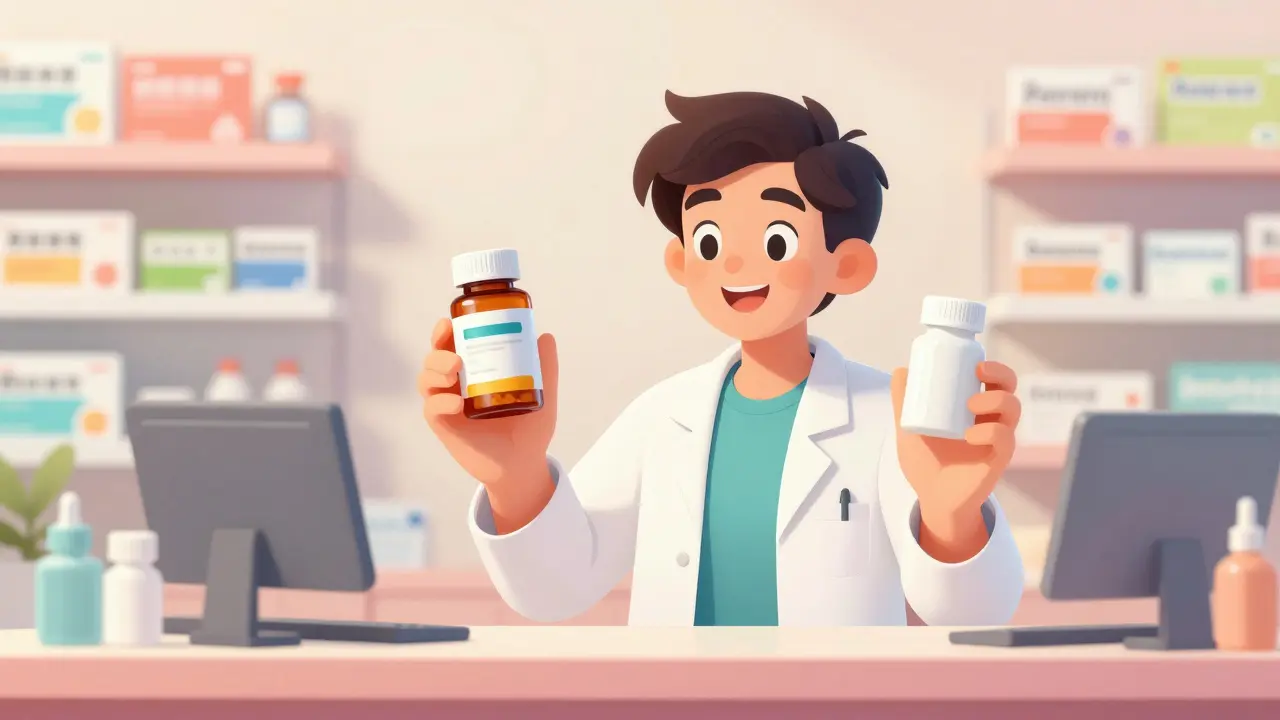
Did you know that generic drugs make up roughly 90% of all prescriptions filled in the United States? That is a staggering number. Yet, despite their dominance, many patients still hesitate to switch from expensive brand-name medications to their cheaper counterparts. The fear usually boils down to one question: "Is it actually the same drug?" The short answer is yes. But the long answer involves a rigorous regulatory framework established by the U.S. Food and Drug Administration (FDA) that ensures generics are not just similar, but therapeutically equivalent to their brand-name origins.
Understanding how this works demystifies the process and helps you feel more confident about your medication choices. It isn't magic; it's science, law, and strict testing protocols working together. Let’s break down exactly how the FDA guarantees that the pill in your hand performs just as well as the branded version, even if the price tag looks different.
The Legal Foundation: The Hatch-Waxman Act
To understand where we are today, we have to look back at 1984. Before this year, bringing a new drug to market was incredibly slow and expensive, and there wasn't a clear path for cheaper alternatives once patents expired. Congress passed the Drug Price Competition and Patent Term Restoration Act, commonly known as the Hatch-Waxman Act. This legislation created a balanced system. It allowed brand-name companies to keep their patents intact for a set time while creating a streamlined pathway for generic manufacturers to enter the market once those patents expired.
This act gave birth to the Abbreviated New Drug Application (ANDA) process. Unlike brand-name drugs, which require full clinical trials involving thousands of patients to prove safety and efficacy, generic drugs use an "abbreviated" application. They don’t need to repeat animal studies or large-scale human trials because the active ingredient has already been proven safe and effective by the original brand-name manufacturer. Instead, the generic maker must prove two critical things: pharmaceutical equivalence and bioequivalence.
Pharmaceutical Equivalence: The Same Active Ingredient
First, let’s talk about what’s inside the pill. For a generic drug to be approved, it must contain the exact same Active Pharmaceutical Ingredient (API) as the brand-name drug. This means the chemical compound that treats your condition is identical. If the brand-name drug contains 50mg of atorvastatin, the generic must also contain exactly 50mg of atorvastatin.
But it doesn’t stop at the ingredient list. The FDA requires that the generic match the brand-name drug in several other physical aspects:
- Strength: The dosage amount must be identical.
- Dosage Form: If the brand is a tablet, the generic must be a tablet. If it’s a capsule, it must be a capsule.
- Route of Administration: If you swallow the brand-name drug, you must swallow the generic. You can’t substitute an injectable for an oral pill.
You might notice differences in shape, color, or taste. These variations come from Inactive Ingredients, such as fillers, binders, dyes, and flavorings. While these don’t affect the therapeutic outcome, they can influence how the pill looks or feels. The FDA allows these differences as long as they don’t interfere with the drug’s performance or cause allergic reactions in sensitive individuals.
Bioequivalence: Does It Work the Same Way?
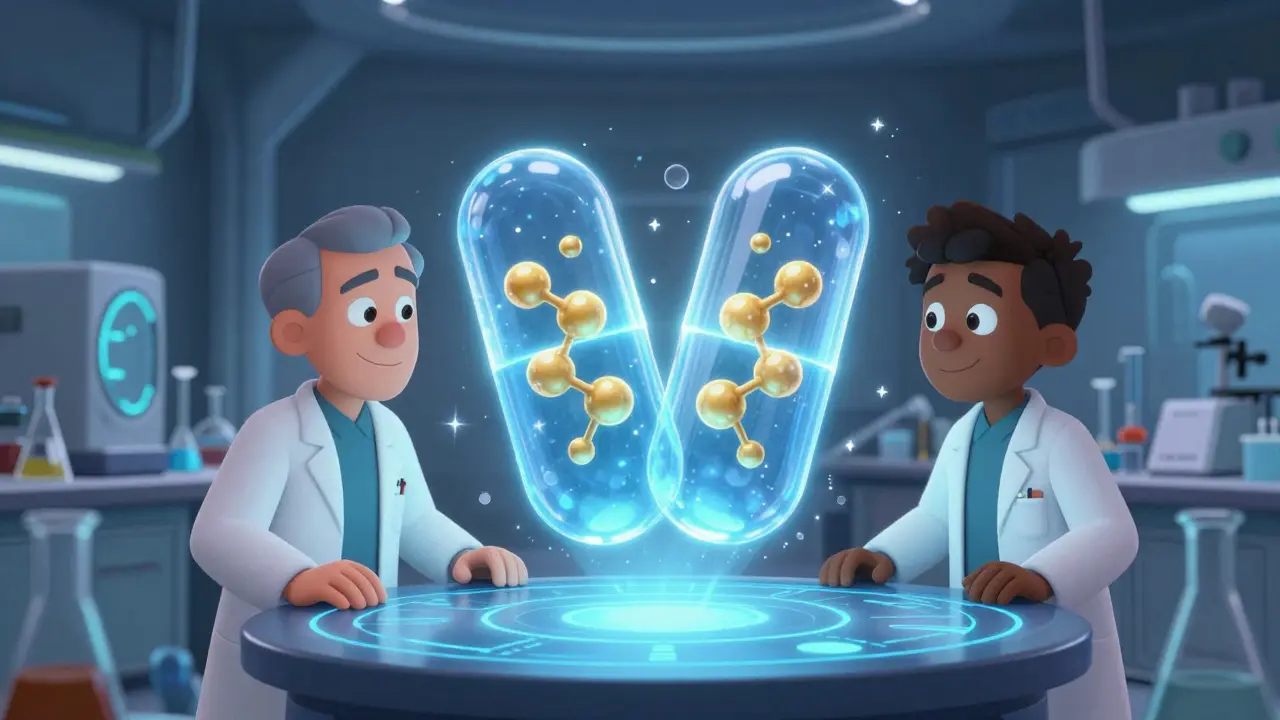
This is the core of the FDA’s safety standard. Having the same ingredient isn’t enough; the body must absorb it in the same way and at the same rate. This concept is called Bioequivalence.
To prove bioequivalence, generic manufacturers conduct specific studies on healthy volunteers. Typically, these studies involve 24 to 36 participants who take both the generic and the brand-name drug in a crossover design. Blood samples are taken over time to measure two key metrics:
- Cmax (Maximum Concentration): How high does the drug level peak in the bloodstream?
- AUC (Area Under the Curve): How much total drug exposure does the body receive over time?
The FDA sets strict statistical limits for these measurements. The 90% confidence interval for the ratio of the generic to the brand-name drug must fall within 80% to 125%. In plain English, this means the generic drug must deliver between 80% and 125% of the drug exposure compared to the brand. This range accounts for natural biological variability among people. If a generic falls outside this window, it is rejected.
| Drug Type | Confidence Interval Limit | Reason for Strictness |
|---|---|---|
| Standard Generics | 80% - 125% | Allows for normal biological variation while ensuring therapeutic equivalence. |
| Narrow Therapeutic Index (NTI) | 90% - 111% | Small changes in dose can lead to toxicity or lack of efficacy (e.g., warfarin, levothyroxine). |
For most drugs, the 80-125% rule is sufficient. However, for Narrow Therapeutic Index (NTI) drugs, the FDA applies stricter criteria. NTI drugs have a small margin between a helpful dose and a harmful one. Examples include warfarin (a blood thinner) and levothyroxine (for thyroid conditions). For these medications, the confidence interval must be tighter, typically between 90% and 111%, to ensure patient safety.
Manufacturing Quality and Impurity Control
Getting the right ingredient into the pill is only half the battle. The process of making the pill must be flawless. The FDA enforces Current Good Manufacturing Practices (cGMP) rigorously. These regulations cover everything from the cleanliness of the facility to the calibration of machinery and the training of staff.
One major area of focus is impurities. During manufacturing, unintended chemicals can form. The FDA follows international guidelines, specifically ICH Q3B and ICH M7, to limit these impurities. For example, genotoxic impurities-those that could damage DNA-are capped at a Threshold of Toxicological Concern (TTC) of 1.5 micrograms per day. This is an incredibly low amount, designed to eliminate any risk of cancer or genetic damage.
Manufacturers must also perform dissolution testing. This test measures how quickly the drug dissolves in the stomach or intestine. If a pill doesn’t dissolve properly, the body can’t absorb the medication. The FDA requires that the generic’s dissolution profile matches the brand-name drug’s profile unless there is a scientifically justified reason for a difference.
Complex Generics: The Rising Challenge
While simple pills like ibuprofen or metformin are straightforward to replicate, complex drugs pose significant challenges. Inhalers, eye drops, topical creams, and extended-release capsules have intricate delivery systems. For instance, a metered-dose inhaler must deliver the exact particle size to reach deep into the lungs. If the particles are too big, they get stuck in the throat; too small, and they’re exhaled before being absorbed.
The FDA reports a higher rejection rate for complex generic applications compared to conventional ones. To address this, the agency launched the Complex Generic Drug Products Initiative. Sometimes, bioequivalence studies alone aren’t enough. In these cases, manufacturers may need to provide additional data, such as pharmacodynamic assessments (how the drug affects the body’s function) or even small clinical endpoint studies.
Real-World Evidence and Patient Perception
Despite the rigorous science, patient perception varies. A 2022 study published in *JAMA Internal Medicine* analyzed 38,000 Medicare beneficiaries and found no statistically significant difference in clinical outcomes between brand-name and generic statins. Similarly, analysis of patient reviews on Drugs.com showed that 87% of users reported equivalent effectiveness for cardiovascular medications.
However, concerns persist, particularly with NTI drugs like levothyroxine. Some patients report feeling different symptoms when switching brands or manufacturers. While the FDA’s bioequivalence standards are strict, individual biology can vary. Pharmacists often recommend sticking with one manufacturer for NTI drugs to minimize variability. The FDA acknowledges these nuances and continues to refine its guidelines, including exploring AI-driven models to better predict impurity risks and enhance bioequivalence assessments for complex products.
The Economic Impact
The success of the generic drug model has profound economic implications. According to 2022 data from the Centers for Medicare & Medicaid Services (CMS), while generics account for 90% of prescriptions, they represent only 23% of total drug spending. This disparity highlights the cost-saving power of generics. By allowing multiple manufacturers to compete on price once patents expire, the FDA’s framework keeps healthcare costs manageable for millions of Americans. Without this system, the cost of essential medications would remain prohibitively high for many.
Future Directions
The landscape of generic drugs is evolving. The FDA is modernizing its approach through initiatives like the Generic Drug User Fee Amendments (GDUFA), which have reduced approval times by 35% since 2012. Future plans include using artificial intelligence to assess impurities faster and developing new methodologies for complex generics. Additionally, proposed rules may allow generic companies to update safety labeling independently, addressing a long-standing limitation where only brand-name holders could submit certain safety updates.
As science advances, so do the standards. The FDA remains committed to ensuring that every generic drug on the market is safe, effective, and truly equivalent to its brand-name counterpart. For patients, this means access to affordable care without compromising on quality.
Are generic drugs really the same as brand-name drugs?
Yes, in terms of active ingredients, strength, dosage form, and route of administration. The FDA requires generics to be bioequivalent, meaning they work in the body in the same way and at the same rate as the brand-name drug. Differences in inactive ingredients may affect appearance or taste but not therapeutic effect.
Why do some doctors prefer brand-name drugs?
Some physicians may prefer brand-name drugs for narrow therapeutic index medications or complex formulations where slight variations could impact patient stability. However, for most common conditions, generics are considered equally effective and are recommended due to lower cost.
What is the Hatch-Waxman Act?
The Hatch-Waxman Act, passed in 1984, created the legal framework for generic drug approval in the U.S. It balanced patent protection for innovators with a streamlined pathway (ANDA) for generic manufacturers to enter the market after patents expire, promoting competition and lowering drug prices.
How does the FDA test for bioequivalence?
The FDA requires studies on healthy volunteers comparing the generic and brand-name drugs. Blood levels are measured to determine Cmax (peak concentration) and AUC (total exposure). The generic must fall within an 80-125% confidence interval of the brand-name drug to be considered bioequivalent.
Can I switch between different generic manufacturers?
Generally, yes. All approved generics meet the same FDA standards. However, for narrow therapeutic index drugs like levothyroxine, some experts recommend staying with one manufacturer to avoid minor variations that might affect sensitive patients.



One comment
It is honestly laughable that people still think the FDA cares about your health more than Big Pharma's bottom line. The Hatch-Waxman act was a compromise, not a miracle cure for healthcare costs. You are ignoring the massive lobbying efforts that keep prices artificially high even for generics. Wake up.
hey man no need to be so harsh about it i guess ppl just dont know better lol. but yeah the system is kinda broken isnt it? its wild how much money goes into marketing instead of actual research sometimes.
The regulatory framework described in the article is quite robust, though I would argue that the enforcement mechanisms have been underfunded in recent years. The distinction between pharmaceutical equivalence and bioequivalence is critical here. Many laypeople fail to understand that while the active ingredient is identical, the excipients can vary significantly, which occasionally leads to hypersensitivity reactions in patients with specific allergies. It is not merely a matter of cost savings; it is a complex pharmacological balance.
I have been working in the pharmaceutical supply chain for over two decades now, and let me tell you, the sheer volume of documentation required for an ANDA submission is absolutely mind-boggling and frankly excessive in many ways because it creates bottlenecks that hurt consumers in the long run when there are shortages of certain generic medications due to manufacturing delays at one or two primary facilities that dominate the market share for that particular drug molecule. It is a fragile system that relies heavily on a few key players who often cut corners on quality control despite the cGMP regulations being on the books because the penalties are seen as just another cost of doing business rather than a deterrent against negligence.
This is a very important point regarding supply chain fragility! It is alarming how few manufacturers produce certain essential generics. We must advocate for greater transparency and perhaps domestic production incentives to ensure stability. Thank you for sharing your experience!
Exactly!! 🧬💊 The bioequivalence studies are super rigorous but the real issue is the NTI drugs like levothyroxine where even a tiny variance in absorption can mess up your whole hormonal balance 😩📉 It’s crazy how some patients feel different on different generic brands even if they meet the 80-125% criteria. Pharmacists should really be tracking this better! #HealthcareTruth
i totally get what u mean about the thyroid meds. my sister has had issues switching brands all the time. she feels fine on one but then gets sick on another even tho they r supposed to be the same. doctors rnt always helpful with this stuff they just say its placebo effect but it clearly isnt for her.
In many developing nations, the reliance on generics is absolute, yet the quality control varies wildly compared to the strict FDA standards mentioned here. While the US benefits from rigorous bioequivalence testing, patients elsewhere often face substandard medications that fail dissolution tests entirely. This disparity highlights a global inequity in access to safe pharmaceuticals. The economic argument for generics holds true only if the safety net is intact, which it unfortunately is not worldwide.
That is such a profound perspective on global health equity 🌍✨ We often forget that the luxury of strict regulation is not universal. It makes you wonder if we could export some of these monitoring frameworks to help stabilize medication quality in other regions. Knowledge sharing is key! 💡
The article fails to adequately address the ethical implications of patent term restoration. While it balances innovation with competition, it essentially extends monopolies at the expense of public health. The 80-125% bioequivalence range is statistically sound, but it does not account for individual patient variability in metabolism, which can render 'equivalent' drugs clinically distinct for outliers. This is a systemic flaw that prioritizes statistical averages over individual patient outcomes.