
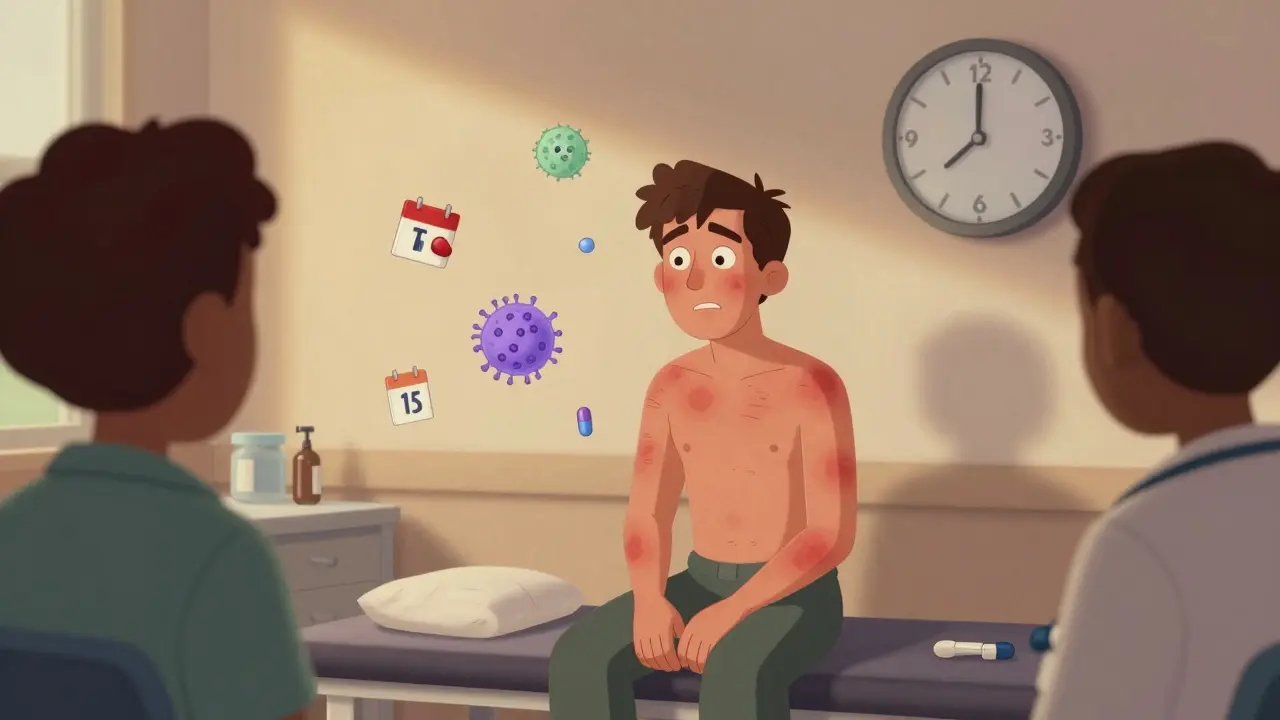
Most people know that some medications can cause side effects - nausea, dizziness, or a rash that shows up right away. But what if the reaction doesn’t show up until days or even weeks after you’ve taken the drug? That’s when things get dangerous, and most people don’t see it coming.
Why Delayed Reactions Are Different
Not all bad reactions to drugs happen fast. Immediate reactions - like hives or trouble breathing within minutes of taking a pill - are usually caused by IgE antibodies. These are the classic allergies people talk about. But delayed reactions are something else entirely. They’re driven by your immune system’s T-cells, which take time to wake up, multiply, and attack.
These reactions typically appear between 5 days and 8 weeks after starting the medication. That’s why they’re so easy to miss. You might think the rash or fever is from a virus, a new soap, or even the flu. By the time you connect it to the drug, the damage might already be spreading.
The Most Common Types of Delayed Reactions
There are several serious forms of delayed drug reactions, each with its own timeline and symptoms.
- Maculopapular exanthema (MPE): This is the most common - about 80-90% of all delayed reactions. It looks like a flat, red rash with small bumps. It usually shows up around day 8 after starting the drug and can last 1-3 weeks after you stop taking it. It’s often mild, but it can be the first sign of something worse.
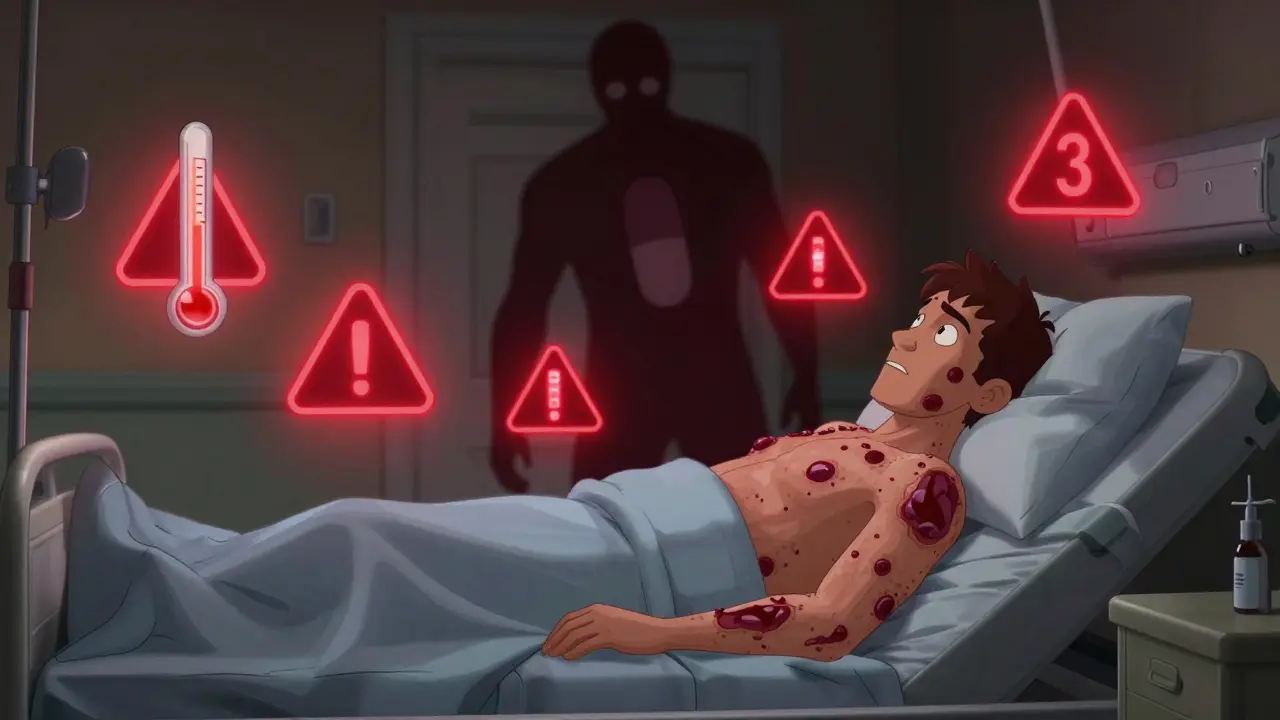
- Drug Reaction with Eosinophilia and Systemic Symptoms (DRESS): This one is sneaky. It starts with a fever over 38.5°C, swollen lymph nodes, and a rash. Then, your liver, kidneys, or lungs might get involved. Blood tests show high eosinophils (a type of white blood cell) and abnormal liver enzymes. DRESS usually hits around 3 weeks after starting the drug, but it can take up to 8 weeks. What’s scary? Even after you stop the drug, symptoms can flare again at 3-4 weeks. About 8% of people with DRESS don’t survive.
- Stevens-Johnson Syndrome (SJS) and Toxic Epidermal Necrolysis (TEN): These are medical emergencies. The skin starts to blister and peel - like a severe burn. SJS affects less than 10% of your skin surface; TEN affects more than 30%. They usually show up 1-2 weeks after taking the drug. Mortality for TEN can hit 30% if over half your skin is involved.
- Acute Generalized Exanthematous Pustulosis (AGEP): This one comes fast with hundreds of tiny, sterile pustules all over your body. It’s rare but intense. It usually resolves within 15 days after stopping the drug, but it can leave behind dark patches on the skin that last for months.
Which Drugs Cause These Reactions?
Some drugs are far more likely to trigger delayed reactions than others. The biggest culprits are:
- Anticonvulsants: Carbamazepine, phenytoin, lamotrigine - these are the top offenders for DRESS and SJS/TEN. In some populations, taking carbamazepine can be life-threatening if you carry the HLA-B*15:02 gene.
- Antibiotics: Especially penicillins and sulfonamides like sulfamethoxazole. Even though they’re common, they cause 32% of all delayed drug reactions.
- Allopurinol: Used for gout. If you’re of Asian descent and carry the HLA-B*58:01 gene, this drug can trigger a deadly DRESS reaction.
- NSAIDs: Like ibuprofen or naproxen. Less common than antibiotics or anticonvulsants, but still responsible for 18% of cases.
Here’s the kicker: if you’ve had a reaction to one drug in a class, you’re at higher risk for reactions to others in the same group. For example, if you reacted to carbamazepine, you’re more likely to react to oxcarbazepine or phenytoin.
Genetics Play a Big Role
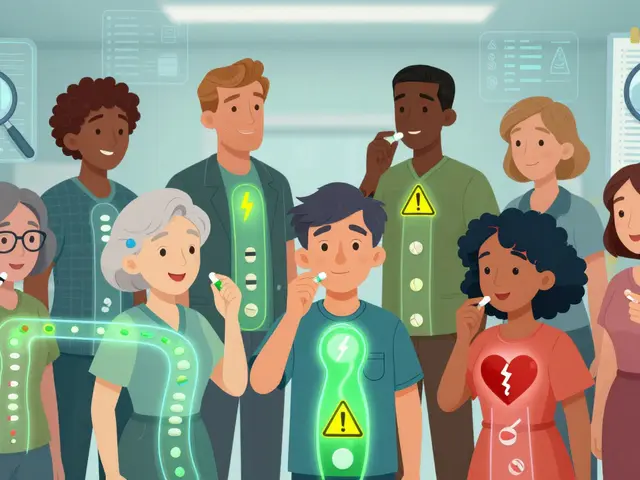
Not everyone who takes a risky drug will have a reaction. Why? Genetics.
Some people carry specific genes that make their immune system overreact to certain drugs. These aren’t random. They’re tied to specific populations:
- HLA-B*15:02: Found in 8-15% of people in Southeast Asia (Thailand, Malaysia, China). Carrying this gene makes you 1,000 times more likely to develop SJS from carbamazepine.
- HLA-B*58:01: Common in East and Southeast Asians. If you have this gene and take allopurinol, your chance of DRESS is nearly 100%.
- HLA-A*31:01: Linked to carbamazepine and oxcarbazepine reactions in Europeans and Japanese populations.
That’s why in places like Taiwan and Hong Kong, doctors now test patients for these genes before prescribing these drugs. In the U.S., the FDA recommends testing for HLA-B*58:01 before giving allopurinol to Asian patients. It’s not yet standard everywhere - but it should be.
What Happens When You’re Diagnosed?
Diagnosing a delayed reaction isn’t easy. There’s no single blood test. Doctors rely on:
- Timing: Did symptoms start 5-56 days after starting the drug?
- Symptoms: Does it match DRESS, SJS, or AGEP criteria?
- Exclusion: Could it be an infection? Autoimmune disease? Other causes?
The RegiSCAR scoring system is used by specialists to confirm the diagnosis. It’s 88% accurate when used properly.
One of the biggest mistakes? Continuing the drug because the rash looks "mild." That’s how SJS turns into TEN. Stopping the drug within 48 hours of symptom onset can cut mortality by 35%.
Treatment: Stop the Drug - Fast
The most important step? Stop the drug immediately. No exceptions. Even if you think it’s just a rash.
After that:
- Corticosteroids: Prednisone (0.5-1 mg/kg/day) is the first-line treatment for DRESS and SJS. It’s tapered slowly over 2-4 weeks to prevent rebound.
- Cyclosporine: Used in severe DRESS cases, especially if the liver or kidneys are damaged. It can work faster than steroids alone.
- Supportive care: IV fluids, wound care for skin peeling, eye exams for SJS survivors (35% develop chronic dry eyes or scarring).
Don’t use antibiotics unless there’s a confirmed infection. Many patients are wrongly given antibiotics for these rashes - which can make things worse.

What Survivors Say
Real people who’ve been through this describe it as life-changing.
One Reddit user, u/ChronicRashSurvivor, wrote: “Lamotrigine gave me DRESS. Fever hit day 22. Liver enzymes peaked at 1,240. I was in the hospital for 18 days. Took 5 months to feel normal again. I still can’t take any new meds without panic.”
Another, AllergyWarrior87, described AGEP: “I had over 10,000 pustules. It looked like I was covered in acne. They cleared in 12 days, but the dark spots stayed for six months.”
Studies show 68% of DRESS patients need hospitalization. 42% get liver damage. 28% have kidney problems. And 22% develop autoimmune diseases within two years after recovery.
What You Should Do
If you’re on a high-risk drug - like carbamazepine, allopurinol, or sulfamethoxazole - and you develop:
- A rash after 5+ days
- Fever
- Swollen glands
- Unexplained fatigue or nausea
Stop the drug and call your doctor right away. Don’t wait. Don’t assume it’s "just a virus."
If you’re of Asian descent and about to start allopurinol or carbamazepine, ask your doctor: “Have you checked my HLA status?” If they say no, ask for a referral to a pharmacogenetic specialist.
Keep a list of all drugs you’ve reacted to - even mild ones - and share it with every new provider. Many delayed reactions recur if you’re exposed again.
The Future: Better Prevention
Scientists are making progress. New blood tests can detect T-cell activation before a rash appears. Serum CXCL10 levels above 150 pg/mL predict DRESS severity with 87% accuracy. TCR sequencing can spot carbamazepine-specific immune cells with 92% sensitivity.
AI systems are being trained to flag high-risk drug-gene combinations in electronic health records. By 2030, experts predict a 35-50% drop in deadly reactions thanks to routine genetic screening.
But right now, the best tool is awareness. If you take a medication and something doesn’t feel right after a week - listen to your body. It might be telling you something life-saving.

One comment
This is the kind of info every patient needs to know before signing up for a new prescription. I wish my doctor had mentioned this when I started lamotrigine. I thought the rash was just stress-related until it got worse. Thank you for laying this out so clearly.
So many people brush off rashes after meds like they’re nothing. This post should be mandatory reading for anyone on anticonvulsants or antibiotics. I’m sharing this with my entire family.
While the data presented is statistically significant, the generalization of genetic risk across entire populations is scientifically flawed. HLA-B*58:01 prevalence varies significantly even within India, and blanket screening protocols ignore socioeconomic barriers to testing. The FDA recommendations are a start but remain insufficient without infrastructure.
Let me guess - Big Pharma doesn’t want you to know this because they’d have to change their labels and lose billions. They’ve known about T-cell reactions for decades but buried the data. Now they’re pushing genetic testing like it’s a new idea when they’ve been suppressing it since the 90s. The FDA? A puppet. The system is rigged.
So we’re supposed to trust a system that gave us thalidomide, Vioxx, and now this? The real tragedy isn’t the reaction - it’s that we’re still treating patients like lab rats instead of humans. At least we’re getting better at blaming genes instead of drugs. Progress.
It’s funny how we fear the unknown in our bodies but never question the unknown in the pills we swallow daily. We trust chemistry we can’t see, prescribed by people we’ve met once. Maybe the real medicine is asking more questions - not just stopping the drug.
I’ve seen two friends go through DRESS. One recovered. One didn’t. The thing nobody talks about is the guilt - you feel like you failed your body by not noticing sooner. This post saved me from another unnecessary prescription. Thank you.
They’re testing genes but not the doctors. My cousin got prescribed allopurinol in Texas and was told "Asian genes don’t matter here." She ended up in ICU. The medical system is broken and they’re selling fear as prevention. You think they care about you? They care about liability.
As someone who works with international patients, I’ve seen how cultural attitudes toward medication shape outcomes. In some communities, stopping a drug is seen as weakness. This post bridges a critical gap between clinical knowledge and public awareness. Well done.
India has the highest number of drug reactions globally and yet we’re still prescribing carbamazepine like candy. The government won’t fund genetic screening because it’s "too expensive." Meanwhile, people die quietly in rural clinics while bureaucrats debate cost-benefit ratios. This isn’t science - it’s negligence dressed in white coats.
It’s alarming how many people still think "mild rash = no big deal." If your skin is reacting, your entire immune system is screaming. You don’t get a second chance with SJS. If you’re reading this and you’ve ever brushed off a drug rash - stop. Now. Go get tested. Your life isn’t a gamble.
Just got prescribed sulfamethoxazole yesterday. I’m checking my HLA status tomorrow. Better safe than sorry.