
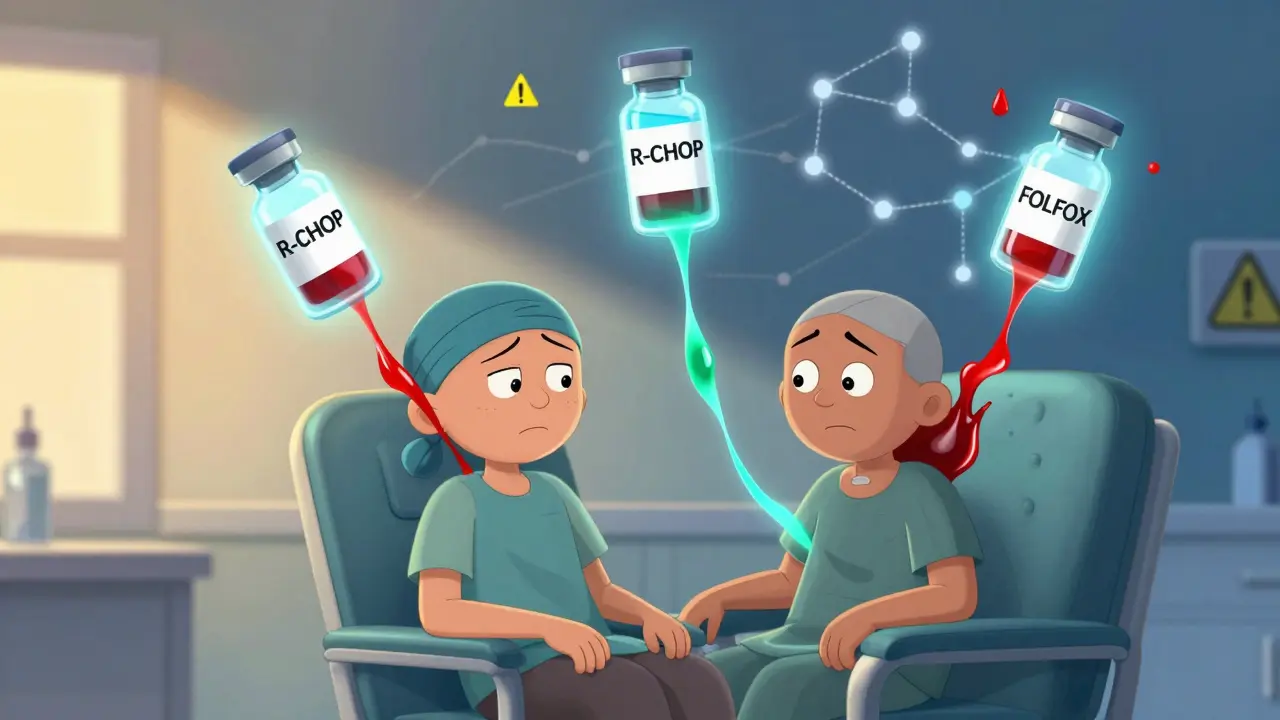
When you’re fighting cancer, every dose matters. Not just the amount, but how your body absorbs it, how it interacts with other drugs, and whether the generic version you’re given works just as well as the brand-name one. This isn’t theoretical-it’s life or death. And when doctors prescribe cancer medication combinations, the bioequivalence of each component becomes a high-stakes puzzle.
Why Bioequivalence Matters More in Cancer Treatment
Bioequivalence means two drugs-brand and generic-deliver the same amount of active ingredient into your bloodstream at the same rate. For most medications, a 20% variation (80-125% confidence interval) is acceptable. But cancer drugs? That’s too wide. Many chemotherapy agents have a narrow therapeutic index. That means the difference between an effective dose and a toxic one is tiny. Take methotrexate or vincristine: a 10% change in blood levels can mean the difference between tumor shrinkage and nerve damage. When you’re combining three or four of these drugs-like in R-CHOP or FOLFOX-the math gets dangerous. Even if each generic component passes bioequivalence tests individually, their interactions might not match the original combo. The FDA and EMA require bioequivalence studies using healthy volunteers, usually in a crossover design. But healthy people aren’t cancer patients. Their liver function, gut absorption, and immune status are completely different. A generic drug that works fine in a 28-year-old volunteer might behave unpredictably in a 65-year-old with liver metastases and chemo-induced inflammation.The Complexity of Combination Regimens
Most cancer treatments today aren’t single drugs. About 70% of regimens use combinations. That’s where the real trouble starts. Take FOLFOX: 5-fluorouracil, leucovorin, and oxaliplatin. Each is a separate molecule. Each has its own absorption rate, protein binding, and metabolism pathway. If you swap out the generic version of oxaliplatin from one manufacturer and the generic 5-FU from another, you’re not just changing two drugs-you’re changing two *interactions*. The original combo was tested as a fixed unit. Generics are approved individually. That’s a gap. And it’s not just small molecules. Modern regimens mix chemotherapy with biologics like trastuzumab or rituximab. Biologics aren’t even eligible for bioequivalence testing. They need biosimilarity studies-full clinical trials comparing safety and efficacy. But when you combine a biosimilar with a generic chemo drug, regulatory agencies have no clear path to ensure the whole system works as intended. A 2023 study from the Gulf Cancer Consortium found 42% of oncologists had seen unexpected side effects or reduced effectiveness after switching to generic components in combination therapy. One case involved a patient on R-CHOP who developed severe neuropathy after a switch to a different generic vincristine. The active ingredient was the same, but the formulation changed the peak concentration in the blood. That’s not bioequivalence failure-it’s bioequivalence misapplication.What the Regulators Are Doing (and Not Doing)
The FDA’s Orange Book lists therapeutically equivalent drugs with an “A” rating. There are nine A-rated versions of anastrozole. Easy. But for combination products? Almost none have an “A” rating because they’re not tested as combinations. The FDA’s 2024 launch of the Oncology Bioequivalence Center of Excellence is a step forward. So is their draft guidance endorsing physiologically based pharmacokinetic (PBPK) modeling. These computer simulations can predict how a generic version might behave in a cancer patient’s body, including interactions with other drugs. But it’s still new. Most hospitals aren’t using it. The EMA is stricter. For high-risk combinations, they now require clinical endpoint studies-not just blood level tests. If a generic combo doesn’t prove it improves survival or reduces tumor size like the brand, it doesn’t get approved. That’s expensive. So many companies avoid it. Meanwhile, India’s drug regulator accepts standard bioequivalence studies for 92% of oncology generics. The EU requires additional clinical data for 83%. The U.S. sits in the middle. That creates chaos. A generic approved in India might be banned in Germany. A hospital in Chicago might stock it anyway because it’s cheaper. Patients get mixed signals.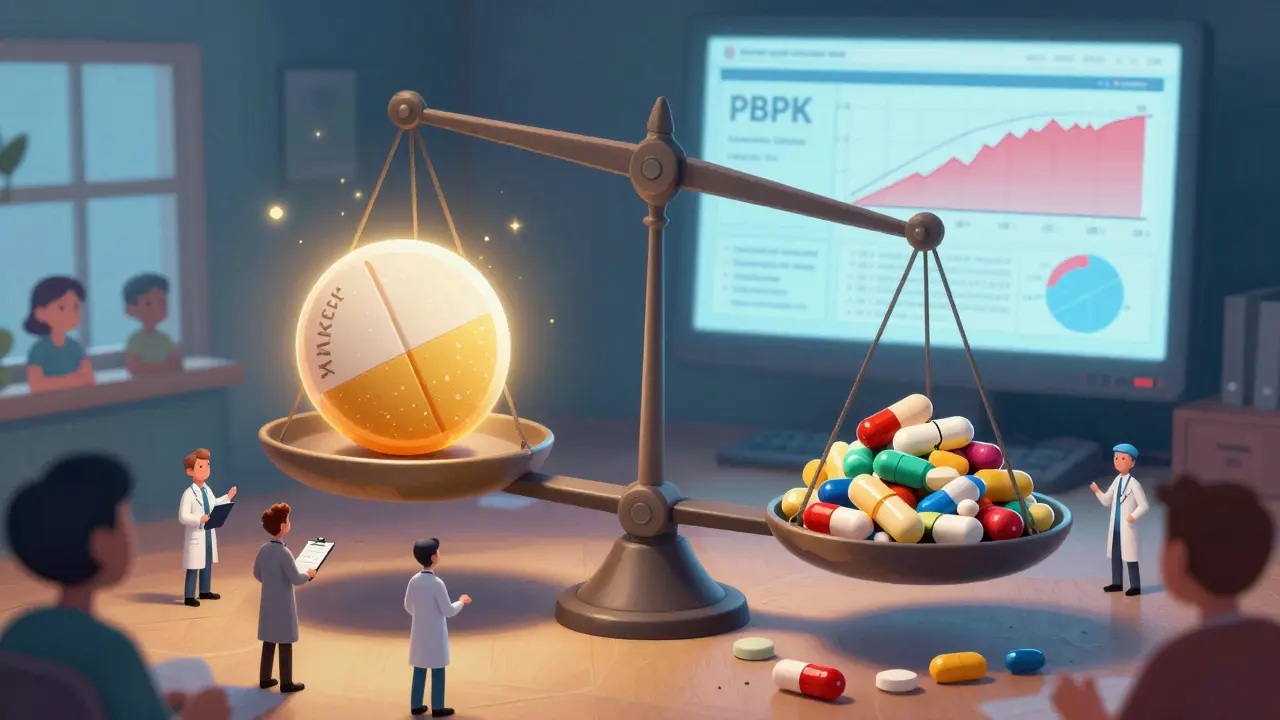
Real-World Consequences
A 2023 survey of 250 U.S. oncology pharmacists found 57% had witnessed toxicity or reduced efficacy after substituting a single generic component in a combination. One pharmacist described a patient on capecitabine and oxaliplatin who developed hand-foot syndrome so severe they had to stop treatment. The brand capecitabine had been replaced with a generic from a new supplier. The formulation changed the dissolution rate. The drug hit the bloodstream faster. Too fast. On the flip side, there are wins. At MD Anderson, a study of 1,247 patients switching from branded Xeloda to generic capecitabine showed no difference in survival or side effects. The key? The generic was part of a fixed-dose combination tested as a unit. The manufacturer didn’t just copy the API-they copied the entire delivery system. But those cases are rare. Most generics are approved as standalone drugs. When they’re combined, it’s like mixing different brands of paint and hoping the color stays the same. It often does. But sometimes, it doesn’t.Who’s Paying the Price?
Cost savings are real. Generic paclitaxel costs 70% less than the brand. Trastuzumab biosimilars save $6,000-$10,000 per cycle. The U.S. could save $14.3 billion a year if generics were used safely. But patients are scared. A 2024 survey by Fight Cancer found 63% of patients worry about generics in combination therapy. 41% would demand the brand name-even if they had to pay more. That’s not ignorance. That’s experience. They’ve seen friends lose hair, get sick, or relapse after a switch. They don’t trust the system. Hospitals are stuck. Formulary committees want to cut costs. But they also don’t want lawsuits. So 68% now require extra clinical data before approving a generic for combination use. That slows things down. Patients wait. Treatments get delayed.



One comment
Generics in chemo are a gamble and the regulators are playing russian roulette with lives
The FDA’s 80-125% bioequivalence window is archaic for oncology. Narrow therapeutic index drugs demand 90-111% CI - period. PBPK modeling isn’t optional anymore, it’s the baseline. India’s 92% approval rate isn’t progress, it’s negligence. We’re not saving money - we’re sacrificing outcomes. If your generic oxaliplatin hasn’t been tested in combination with 5-FU and leucovorin under simulated tumor microenvironments, it shouldn’t be on the shelf. This isn’t about cost. It’s about biological fidelity.
Why are we letting western regulators dictate how africa gets cancer meds? We dont need their fancy models or clinical trials - if the pill looks the same and costs less, it works. Our people are dying waiting for ‘perfect’ science. Let us have the generics - even if they’re not ‘tested together’ - because waiting for approval kills faster than cancer.
I’ve reviewed over 300 oncology formulary submissions at my hospital. The data is unequivocal: when a combination’s components are sourced from different manufacturers - even if each is FDA-approved - the variance in plasma concentration profiles increases by 18–22% compared to branded combos. This isn’t anecdotal. It’s pharmacokinetic reality. The UCSF alert system? We implemented it. Substitutions dropped by 71%. Patients reported less anxiety. Pharmacists stopped getting called at 2 a.m. because someone’s platelets crashed. It’s not a luxury - it’s clinical hygiene.
Look I get the fear. I’ve seen patients cry because they were switched to a generic and their nausea got worse. But I’ve also seen the same patient thrive on a generic because the brand was causing liver toxicity they didn’t know about. The problem isn’t generics - it’s the lack of communication. If we told patients upfront which parts are generic and why we chose them - and gave them a way to report side effects in real time - trust would build. We don’t need more regulations. We need more transparency and more listening.
It is, unequivocally, a regulatory failure of monumental proportion. The current paradigm - wherein individual drug components are assessed for bioequivalence in isolation, without regard to synergistic or antagonistic pharmacokinetic interactions within the context of a multi-agent regimen - is not merely inadequate; it is dangerously obsolete. The EMA’s requirement for clinical endpoint studies in high-risk combinations represents the minimum acceptable standard. The FDA’s reliance on healthy volunteer models, while statistically convenient, is ethically indefensible in the context of oncology. The absence of a unified, internationally harmonized framework for combination bioequivalence is not an oversight - it is a systemic abandonment of patient safety.
Just had a patient ask me if the generic vincristine was the same as the brand. I showed her the FDA’s Orange Book entry - no ‘A’ rating for R-CHOP combos. She said, ‘So why are they letting us take it?’ I didn’t have a good answer. We need a label - like ‘This combo hasn’t been tested as a unit’ - right on the prescription. No jargon. No fine print. Just a warning. Patients deserve to know when they’re part of an experiment.
My uncle got switched to a generic version of capecitabine after his insurance denied the brand. He developed hand-foot syndrome so bad he couldn’t hold a coffee cup. We found out later the dissolution profile was 30% faster. The pharmacy didn’t even tell us it was a different maker. No one checks. No one tracks. The system is broken. We need a national registry - every generic switch logged, every side effect reported. Not just for lawsuits - for science. We owe that to the next person.