

Getting your medications right isn’t just about picking up prescriptions. It’s about understanding when to take them, why you’re taking them, and what to do when things go off track. That’s where a Medication Action Plan (MAP) comes in - a personalized, living guide made with your care team to help you stay on track, avoid mistakes, and feel more in control.
What Exactly Is a Medication Action Plan?
A Medication Action Plan isn’t just a list of your pills. It’s a step-by-step roadmap built around your life. Think of it like a workout plan, but for your meds. It answers questions like: “What happens if I forget my afternoon pill?” or “Why am I taking this blue tablet if I don’t have pain?” It includes your full list of medicines - prescriptions, over-the-counter drugs, vitamins, and even herbal supplements. But more than that, it turns that list into actions. For example: “Take your blood pressure pill with breakfast, every day. If you miss it, take it within 4 hours. If it’s past noon, skip it.” These plans were made official in the U.S. through Medicare Part D in 2006, and since then, they’ve become a standard tool for people managing three or more chronic conditions. In Germany, since 2016, anyone on three or more prescribed medicines gets a paper-based plan from their pharmacist - and it’s updated every time they pick up a new prescription.Why Do Medication Action Plans Work?
People who use a personalized MAP are 25% to 40% more likely to take their medicines correctly. That’s not a small boost - it’s life-changing. For someone with diabetes, heart disease, and high cholesterol, missing a dose can mean a trip to the ER. A good plan cuts that risk by 32% over a year, according to CMS data from 2018 to 2022. One reason it works is because it turns confusion into clarity. In a 2021 survey of Medicare beneficiaries, 70% said having a clear action plan reduced their confusion about when to take each medicine. Another big win? People who helped create their own plan said they finally understood why they were taking each drug. That understanding makes sticking to the plan feel less like a chore and more like self-care. But here’s the catch: Generic templates don’t work. A Johns Hopkins study found that patients given pre-printed, one-size-fits-all plans showed no improvement in adherence. The plan has to fit you.Who’s Involved in Making the Plan?
This isn’t something you do alone. It’s a team effort. Your care team might include:- Your doctor - they know your diagnoses and why each medicine was prescribed.
- Your pharmacist - they spot interactions, check for duplicates, and know how your pills work together.
- Your nurse or care coordinator - they help you navigate the system and set realistic goals.
- YOU - your daily routine, your fears, your memory issues, your budget, your preferences. This is the most important part.
How to Start Building Your Plan
You don’t need to wait for your doctor to bring it up. You can ask for a Medication Action Plan at your next appointment. Here’s how to get started:- Collect everything. Bring every pill bottle, box, or jar to your appointment - even the ones you haven’t taken in months. Include OTC painkillers, sleep aids, vitamins, and herbal teas. Don’t assume your doctor knows you’re taking them.
- Write down your questions. What confuses you? Do you forget doses? Do you skip pills because they make you dizzy? Do you take them with food or without? Write it all down.
- Ask for a Comprehensive Medication Review (CMR). This is a 30- to 60-minute session where your pharmacist or care team goes through every medicine with you. It’s often free if you’re on Medicare Part D or certain private plans.
- Request a written plan. Don’t settle for a verbal summary. Ask for a printed or digital copy you can keep at home, in your wallet, or on your phone.
What Should Be in Your Plan?
A good Medication Action Plan includes these key pieces:- A complete list of all medications - names, doses, how often to take them, and why.
- Clear action steps - not just “take your pill,” but “take your metformin with breakfast, right after brushing your teeth.”
- What to do if you miss a dose - “If you forget your evening blood thinner, take it as soon as you remember - but never double up.”
- Warning signs - “If you feel unusually tired or your ankles swell, call your doctor. These could be signs your heart medicine needs adjusting.”
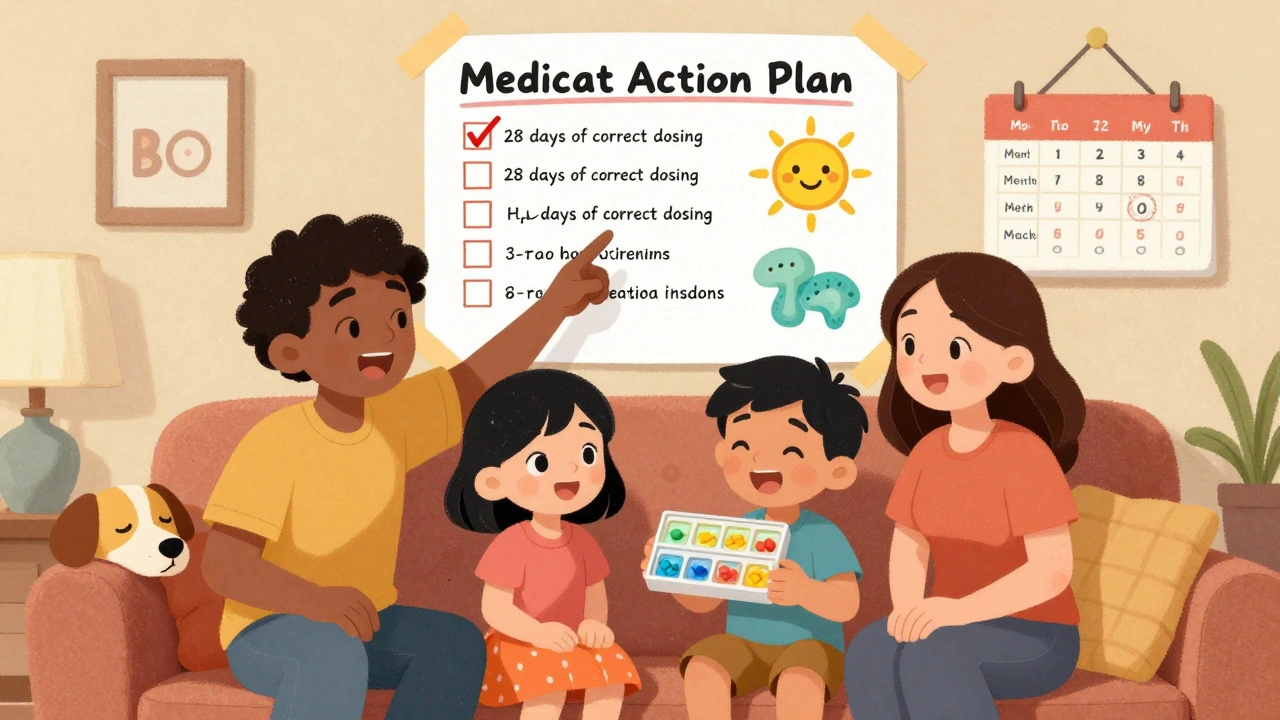
- Measurable goals - “Aim to take all your morning pills correctly for 28 days in a row.”
- Who to contact - Phone numbers for your pharmacist, doctor, and after-hours advice line.
Common Mistakes to Avoid
Even with the best intentions, people mess up. Here’s what to watch out for:- Using medical jargon. “Take 10 mg of lisinopril daily” doesn’t help if you don’t know what lisinopril does. Ask for plain language: “This pill lowers your blood pressure.”
- Ignoring your routine. If you never eat breakfast, don’t make a plan that says “take with breakfast.” Change it to “take when you wake up.”
- Not updating it. If your doctor adds a new pill or stops one, your plan must change. Keep it current.
- Assuming your doctor knows everything. If you got a sleep aid from a different clinic, or you started taking turmeric for joint pain, your main doctor might not know. Tell them.
What If Your Care Team Doesn’t Offer This?
You’re not alone. A 2022 University of Michigan study found 43% of eligible patients never received a written action plan. But you have rights. If you’re on Medicare Part D and take 8 or more chronic medications (or 5+ since 2023), you’re entitled to a free Medication Therapy Management (MTM) session - including a MAP. Call your plan’s customer service and ask: “Am I eligible for a Comprehensive Medication Review? Can I get a written Medication Action Plan?” If you’re not on Medicare, check with your private insurer. Many employer plans now offer similar services. Even if they don’t, your local pharmacist can still help you make a plan - often at no cost.Keeping Your Plan Alive
A Medication Action Plan isn’t a one-time document. It’s a tool that grows with you. - Update it every time your meds change - even if it’s just a dose adjustment. - Review it every three months with your pharmacist or doctor. - Keep a copy in your wallet, on your fridge, and on your phone (take a photo). - Share it with family members or caregivers who help you. Some people use apps now. CVS, Walgreens, and others offer free apps that sync with your MAP and send reminders. But don’t rely on tech alone. A paper copy is still your backup.The Bigger Picture
Medication errors cause 280,000 hospital stays in the U.S. every year. That’s not just a statistic - it’s someone’s parent, sibling, or friend. A well-made Medication Action Plan is one of the simplest, cheapest, and most effective ways to prevent that. It’s not about being perfect. It’s about being prepared. It’s about knowing what to do when things go wrong. It’s about having a plan that speaks your language, fits your life, and puts you in charge. You don’t have to wait for your doctor to bring it up. You don’t have to figure it out alone. Ask for your Medication Action Plan. Bring your pills. Bring your questions. Bring your life. Your care team is there to help you build it - together.Do I need a Medication Action Plan if I only take one or two medicines?
Even if you’re on just one or two meds, a Medication Action Plan can still help - especially if you’ve had side effects, confusion about timing, or trouble remembering doses. The plan isn’t just for people with many conditions. It’s for anyone who wants to be sure they’re taking their medicines safely and correctly. If you’re unsure why you’re taking a pill or what to do if you miss it, a plan can clear that up.
Can my pharmacist really help me make this plan?
Yes - and in many cases, they’re better equipped than your doctor to do it. Pharmacists are medication experts. They know how drugs interact, what side effects to watch for, and how to simplify complex regimens. In Germany, pharmacists are legally required to update patients’ medication plans every time they dispense a new medicine. In the U.S., pharmacists in Medicare Part D programs are trained to conduct full medication reviews and create personalized action plans. Don’t hesitate to ask yours.
What if I don’t understand the medical terms on my plan?
Say so. Right away. A good Medication Action Plan uses plain language - not jargon. If it says “take 20 mg of atorvastatin,” ask, “What does this do? Why am I taking it?” Your pharmacist or doctor should explain it in simple terms: “This lowers your bad cholesterol to protect your heart.” If they don’t, ask for a revised version. Your plan should make sense to you - not just to a clinician.
How often should I update my Medication Action Plan?
Update it every time your medications change - whether your doctor adds, stops, or changes a dose. Also, review it every three months, even if nothing’s changed. Your body, routine, or health goals might have shifted. A plan that worked last winter might not fit your summer schedule. Keep it alive. A static plan is useless.
Can I use my phone to manage my Medication Action Plan?
Absolutely. Many pharmacies offer free apps that let you scan your pill bottles, set reminders, and track doses. Some even sync with your MAP and alert you if you’re about to take two pills that shouldn’t be mixed. But don’t rely on your phone alone. Always keep a printed copy - in your wallet, on your fridge, or with a caregiver. Tech can fail. Paper doesn’t.



One comment
So let me get this straight - in Germany, your pharmacist updates your med plan every time you walk in for a new pill, even if it’s just ibuprofen from the shelf? Meanwhile in the US, my doctor still thinks ‘as needed’ means ‘whenever I remember’ and my pharmacy won’t print anything unless I beg like I’m asking for a free coffee.
Who’s the real healthcare system here? The one that treats meds like a living thing? Or the one that treats patients like a spreadsheet?
wait… so this map thing is just a government psyop to track what pills you take? next they’ll put gps chips in your tylenol bottles and call it ‘personalized care’
my uncle in delhi got a ‘medication plan’ after he took 3 aspirins for a headache - next thing he knew, the bank froze his account because ‘he might be suicidal’
they’re building the database one pill at a time. i’m not taking the paper. i’m burning it.
also - who wrote this? nasa? the cia? the pharma lobby? i need answers.
I’m a nurse and I’ve seen this work wonders - especially for elderly patients who are on 8+ meds and feel overwhelmed.
One of my patients, Mrs. Ruiz, used to mix up her blood pressure pills with her diabetes ones. She’d take them all at night and wake up dizzy. We made a color-coded chart with pictures - coffee cup for morning, dinner plate for evening. She stuck it on her fridge. Now she hasn’t been to the ER in 18 months.
It’s not fancy. It’s not high-tech. It’s just clear, simple, and made with HER in mind. If your care team won’t help you make one - ask again. And again. You deserve this.
bro i just take my pills when i remember. sometimes i forget. sometimes i take two. no big deal right?
but then my cousin got sick last year cause he mixed his heart pill with his sugar pill. i never knew that could kill you.
so yeah maybe i should make a list. maybe i should ask the pharmacist. maybe i should stop being lazy.
thanks for the reminder. i’ll do it this week. promise.
25-40% improvement? CMS data from 2018-2022? That’s not statistically significant. The margin of error exceeds the reported effect size. Also, self-reported adherence is notoriously unreliable - people lie to clinicians. The Johns Hopkins study you cited found zero improvement with generic templates - which is obvious. But you’re implying personalized plans are magic. They’re not. They’re paperwork. And paperwork doesn’t fix noncompliance. It just gives doctors a checkbox to tick.
Also - who approved this study? The same folks who profit from Medicare Part D? Coincidence? I think not.
you people act like this is some revolutionary breakthrough. it’s not. it’s basic fucking responsibility. if you can’t keep track of your own pills, maybe you shouldn’t be allowed to drive, let alone manage your own health.
my grandma took 12 pills a day for 15 years. she never had a ‘plan’. she had a pillbox. she had a routine. she had discipline. you want to live? learn to be responsible. stop outsourcing your brain to a piece of paper.
This is so good. 🙌
My mom’s MAP saved her life after her stroke. She had 7 meds. She didn’t know what half of them did. Now she has a laminated card in her purse, a reminder on her phone, and a copy on the fridge. We all know what to do if she misses one.
Thank you for writing this. I’m sharing it with everyone I know.
Let’s be real - if you need a plan to take your pills, you’re not ready to be an adult. This isn’t a parenting blog. It’s a medical article. You don’t need a color-coded chart to remember to take your blood pressure medicine. You need to grow up.
And why are we giving pharmacists legal authority to update your meds? Next thing you know, they’ll be prescribing antidepressants after you buy cough syrup.
This is the slow creep of infantilization. And it’s disgusting.
Medication Action Plan. What a euphemism. It’s not a plan. It’s a surrender. You’re handing your autonomy over to a bureaucracy that doesn’t know your life, your rhythm, your pain - only your diagnosis.
The real question isn’t how to make a plan. It’s why we’ve been reduced to needing one at all. We’ve turned healing into a compliance exercise. And that’s not healthcare. That’s control dressed in white coats.
Germany’s system? Cute. But we’re the United States of America. We don’t need some European nanny-state policy. We have freedom here. Freedom to manage your own damn health. If you can’t handle your meds, maybe you shouldn’t be on them.
Also - why are we letting pharmacists do doctor work? That’s a license violation. That’s liability. That’s socialism with a pharmacy sticker.
It’s not about adherence. It’s about epistemic humility.
We’ve been trained to see the body as a machine to be optimized. But the MAP - that’s the first step toward recognizing that health is a *narrative*. Not a protocol. Not a checklist.
You’re not a patient. You’re a storyteller. Your pills are characters. Your routine is the plot.
And if you don’t co-author your own story? Who will?
Let’s not romanticize this. A Medication Action Plan is a compliance artifact born of fragmented care delivery, regulatory incentives under Medicare Part D, and pharmacoeconomic risk mitigation strategies. It’s a structural workaround for systemic dysfunction - not a clinical innovation.
And while visual aids and patient co-creation are laudable, they’re band-aids on a hemorrhage. The real problem? Polypharmacy in aging populations without integrated care models. Until we fix that, this is just performative medicine.