
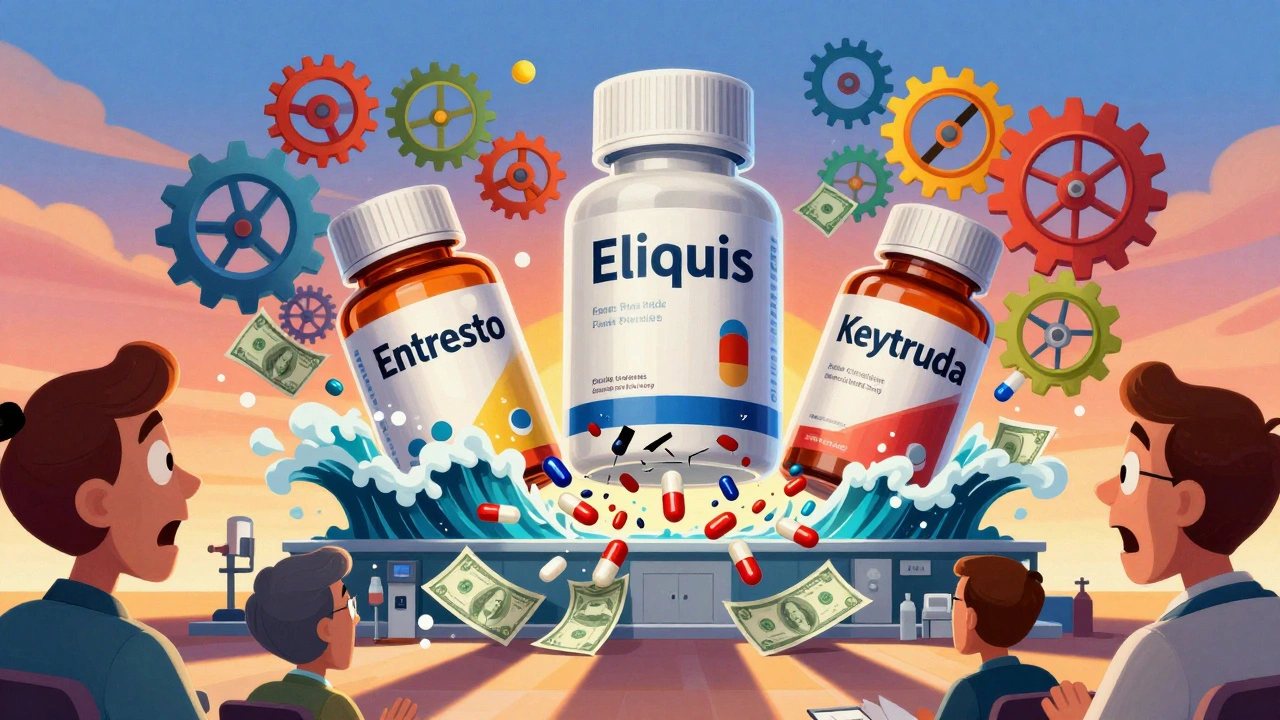
By mid-2025, the pharmaceutical industry will face its biggest financial shake-up in decades. Dozens of top-selling drugs will lose patent protection, opening the door for cheaper generics and biosimilars. This isn’t just a legal technicality-it’s a seismic shift that will cut drug prices by up to 90%, change how doctors prescribe, and reshape the entire market. The blockbuster patent expirations starting in 2025 aren’t scattered events-they’re a coordinated wave, with over $187 billion in annual sales at risk over the next five years.
What’s Expanding in 2025? Entresto Leads the Way
The first major hit comes in July 2025, when Novartis’ Entresto (sacubitril/valsartan) loses its core patent protection in the U.S. Entresto, used to treat heart failure, brought in $7.8 billion in global sales in 2024. Patients currently pay $150 to $300 a month for the brand. Once generics arrive, that could drop to $20-$40. Hospitals and pharmacy benefit managers are already preparing: 87% of hospital pharmacy directors surveyed by ASHP in October 2024 have started formulary changes and staff training. The FDA approved the first generic version of sacubitril ahead of schedule in October 2024, signaling that manufacturers are ready to flood the market the moment the patent expires.2026: Eliquis Hits the Cliff
Just over a year later, in November 2026, Bristol Myers Squibb and Pfizer’s Eliquis (apixaban) will lose protection for its key crystalline form patent. Eliquis generated $13.2 billion in sales in 2024 alone-making it one of the most profitable drugs ever. Unlike Entresto, Eliquis competes in a crowded anticoagulant market. Once generics enter, prices will plummet fast. The FTC found that generic versions of similar blood thinners cut prices by 85% within six months. With multiple generic manufacturers already in line, Eliquis could lose over 90% of its market share within two years. Retail pharmacies are bracing for a surge in prescriptions-many are already updating their systems to automatically switch patients to generics.2028: The $30 Billion Giant-Keytruda
The biggest blow comes in 2028, when Merck’s Keytruda (pembrolizumab) loses its core patent. Keytruda, a cancer immunotherapy, was the top-selling drug in the world in 2024, with $29.3 billion in global revenue. It’s used for melanoma, lung cancer, and over a dozen other cancers. Unlike small-molecule drugs, Keytruda is a biologic-meaning its generic version, called a biosimilar, is far more complex to produce. But that doesn’t mean it’s safe from competition. JPMorgan analyst Christopher Schott predicts Merck could lose $15 billion in annual revenue within 18 months of biosimilar entry. The FDA has already received over 30 biosimilar applications targeting Keytruda. Even though biosimilars take longer to gain traction-typically capturing only 30-40% of the market in the first year-the long-term pressure on price and market share will be relentless. Merck has already announced a $12 billion investment in next-gen cancer drugs to offset this loss.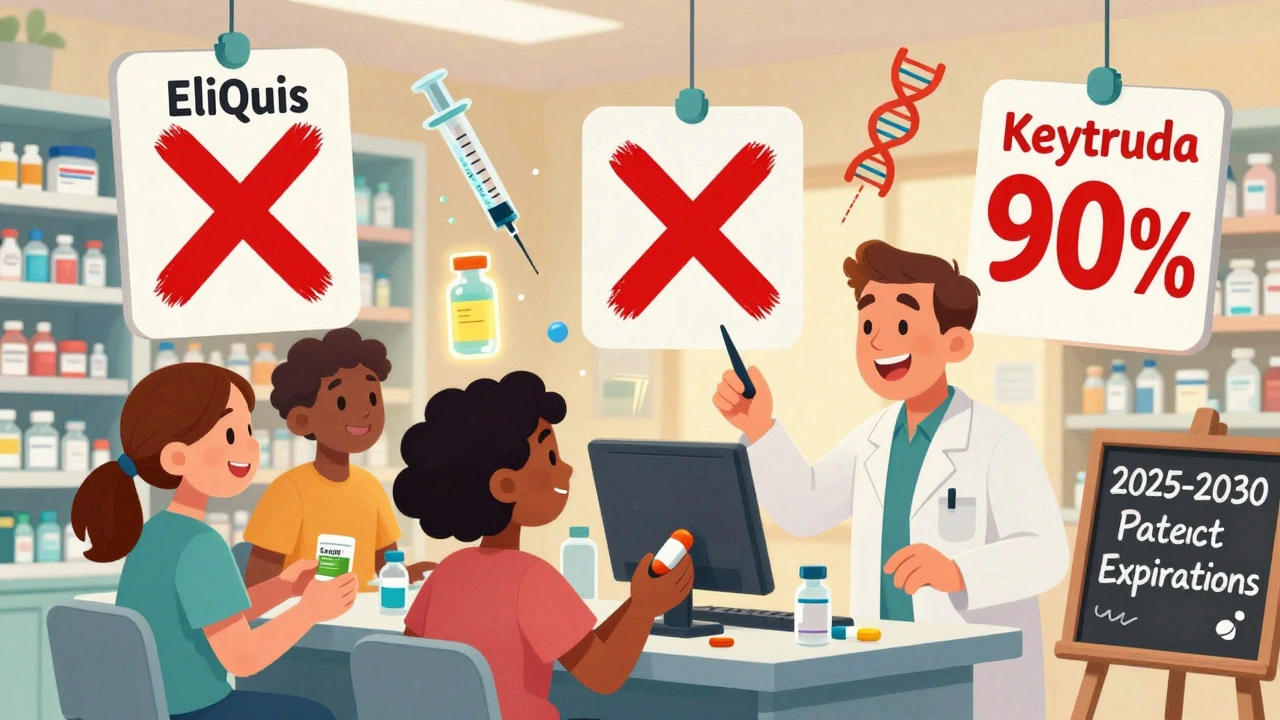
Other Major Drugs on the 2025-2030 Expiration List
The patent cliff doesn’t stop at three drugs. A total of 65 blockbuster medications with annual sales over $100 million are set to lose protection between 2025 and 2030. Here’s a snapshot:- Trulicity (dulaglutide) - Eli Lilly’s diabetes drug, $7.1 billion in 2024. Patent expires in 2027. Generic versions will likely hit fast-diabetes generics have the quickest adoption rates.
- Ibrance (palbociclib) - Pfizer’s breast cancer drug, $5.3 billion in 2024. Patent expires in 2026. Biosimilars are already in development.
- Humira (adalimumab) - Though its U.S. patent expired in 2023, biosimilar competition is still ramping up. Its $21 billion sales decline in 2024 showed how fast market share can vanish.
- Stelara (ustekinumab) - Janssen’s immunology drug, $6.9 billion in 2024. Patent expires in 2027.
- Revlimid (lenalidomide) - Bristol Myers Squibb’s blood cancer drug, $12.5 billion in 2024. Patent expires in 2026.
Together, these drugs represent 77% of the $187 billion in at-risk revenue, with oncology and cardiovascular drugs leading the pack.
Why This Wave Is Different
Past patent cliffs-like the one in the early 2000s with Lipitor-were big, but nothing compares to this. Three things make 2025-2030 unique:- Scale: The total value at risk is nearly double the previous peak.
- Complexity: Many of these are biologics, which require years of testing to replicate and face more legal hurdles.
- Concentration: A handful of companies-Merck, Bristol Myers Squibb, Novartis, Eli Lilly-are losing 40-50% of their revenue from just five drugs.
Dr. David Epstein, former CEO of Novartis and now a professor at Harvard, called it “the most concentrated wave of blockbuster expirations in pharmaceutical history.” Companies aren’t just losing sales-they’re losing their primary growth engines. Amgen, for example, stands to lose 52% of its 2024 revenue from expiring patents.
Who Wins? Who Loses?
The winners are clear: patients, insurers, and generic manufacturers. The Congressional Budget Office estimates these expirations will save the U.S. healthcare system $312 billion between 2025 and 2035. Patients on Entresto or Eliquis could save thousands a year. Pharmacy benefit managers are already negotiating 60% price cuts with drugmakers ahead of expiration.Generic companies are racing to get approvals. Teva leads with 37 products in development, followed by Mylan and Sandoz. The Association for Accessible Medicines says generic manufacturers spend an average of $2.6 million and three years per drug to get approval.
The losers? The big pharma companies that built their business models around these drugs. Merck, Bristol Myers Squibb, and Novartis are all shifting focus-buying smaller biotechs, investing in gene therapies, and trying to launch new drugs before the patents run out. But innovation takes time. In the meantime, their stock prices and earnings will feel the pressure.
How Are Providers Getting Ready?
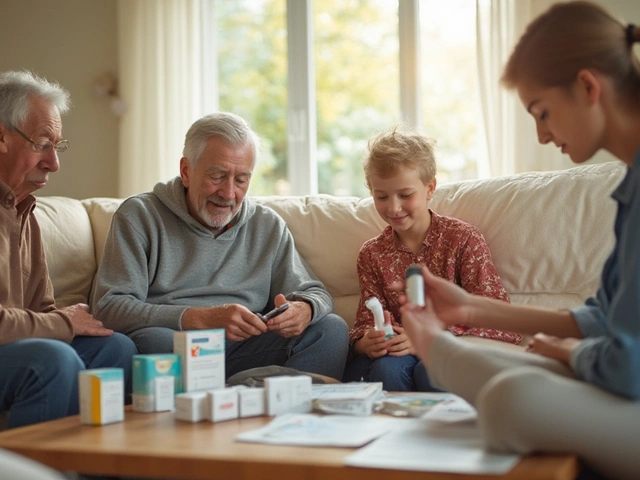
Doctors, pharmacists, and hospitals aren’t waiting. On physician forums like Sermo, cardiologists are already telling patients: “Get ready for a cheaper version of Entresto next year.” Pharmacists are training staff on substitution rules. In 42% of hospitals, early switch programs are already in place-patients are being moved to generics before the patent even expires to avoid disruptions.But there are gaps. Only 28% of U.S. states have laws allowing pharmacists to substitute complex generics like Entresto without a doctor’s note. That’s a problem-patients might not get the switch unless someone pushes it. The American Medical Association recommends at least six months of preparation per drug class to train staff, update EHR systems, and educate patients.
What Comes Next?
The 2025-2030 patent cliff isn’t the end-it’s the beginning of a new era. With $187 billion in revenue evaporating, the industry will consolidate. Goldman Sachs predicts a 30% rise in pharma mergers through 2026. Some companies will survive by pivoting to gene therapies and precision medicine. Others will shrink or be bought out.For patients, the future looks brighter: lower costs, more access, and better affordability. For the industry, it’s a painful but necessary reset. The drugs that changed medicine are now becoming commodities-and that’s exactly how it should be.
What does it mean when a drug loses its patent?
When a drug loses its patent, other companies can legally make and sell identical or very similar versions. For small-molecule drugs, these are called generics. For biologics, they’re called biosimilars. Once generics enter, prices usually drop by 80-90%, and most patients switch within a year.
Why is the 2025-2030 patent cliff so big?
It’s because multiple blockbuster drugs-many of them the top sellers in their categories-were approved in the early 2000s and all have 20-year patent terms. Their patents are expiring at once. Add to that the rise of biologics, which have longer exclusivity periods and more complex patents, and you get a perfect storm of revenue loss for big pharma.
Will all these drugs become generic right away?
Not exactly. Small-molecule generics can launch within months of patent expiry if the manufacturer is ready. Biosimilars take longer-18 to 24 months on average-because they require more testing. Some companies also delay entry with legal challenges, but by 2026, most of the major drugs will have at least one generic or biosimilar on the market.
How will this affect my prescription costs?
If you’re taking Entresto, Eliquis, or Keytruda, your out-of-pocket costs could drop by 80-95% once generics or biosimilars arrive. Many patients currently pay $100-$300 a month-after expiration, those same drugs may cost $20-$50. Insurance plans will also see lower drug spend, which could lead to lower premiums over time.
Are there any risks in switching to a generic?
For small-molecule drugs like Eliquis or Entresto, generics are required by the FDA to be identical in effectiveness and safety. For biologics like Keytruda, biosimilars are highly similar but not identical. In most cases, they work just as well, but some patients may need to be monitored closely during the switch. Always talk to your doctor before switching.
What should I do if I’m on one of these drugs?
Start asking your doctor or pharmacist about generic alternatives. Many insurers will automatically switch you once generics are available. If you’re worried about cost, ask if your pharmacy offers discount programs or if your drug is on a preferred list. Don’t stop taking your medication-just start planning ahead.

One comment
Entresto generics hitting the market is just the beginning of the pharma collapse. These companies built empires on patent monopolies and now they’re scrambling like rats off a sinking ship. The FDA approved generics early? That’s not progress-that’s a sign the system was rigged for too long. Patients finally get a break, but don’t expect Big Pharma to go quietly.
There’s a typo in the second paragraph: ‘The first major hit comes in July 2025, when Novartis’ Entresto (sacubitril/valsartan) loses its core patent protection in the U.S.’ - the apostrophe after Novartis should be an apostrophe-s. Minor, but it undermines credibility when the rest is so meticulously researched.
India will dominate this generics wave. We’ve been manufacturing high-quality, low-cost drugs for decades while Western pharma sat on their patents and charged $300 for a pill that costs $2 to make. The U.S. pays inflated prices because they’re too lazy to build their own supply chains. Now they’re crying because the bill finally came due. Good. Let them feel the pinch.
This is actually really exciting. I work in hospital logistics and we’ve already started training staff on switching protocols. The savings are insane-imagine a diabetic on Trulicity going from $1,200/month to $80. That’s not just a drug change-it’s life-changing for so many people. We’re seeing patients cry when they find out they’ll finally afford their meds. This is what healthcare should look like.
Let’s be real-this isn’t a cliff, it’s a landslide. Big Pharma spent the last 20 years turning medicine into a casino where the house always wins. Now the chips are falling, and guess what? The players who actually needed the drugs are the ones who win. Eliquis for $20? Keytruda for $150? That’s not a loss-it’s justice. The real tragedy? It took this long to get here.
Biologics are a scam. The FDA lets companies patent tiny modifications to biologics to extend monopolies for decades. Keytruda’s patent isn’t being challenged because it’s hard to replicate-it’s because the legal system is rigged. The real biosimilars? They’ve been ready since 2022. The delay? Lawyers. Lobbyists. Greed. This isn’t science-it’s corporate warfare.
Did you know the FDA approved generic Entresto in October 2024? That’s not a coincidence. The government’s been quietly setting this up since 2020. They knew the revenue collapse was coming and they’re using it to break pharma’s grip. The real story? This was planned. The public just doesn’t know how deep the rot went. Wait until you see what happens when Medicare starts negotiating prices directly after this.
So let me get this straight-we’re celebrating a 90% price drop on life-saving drugs… but the companies that developed them are now going to cut R&D? That’s like applauding the demolition of a bridge and then wondering why no one’s building new ones. The irony is delicious.
Let’s not pretend this is altruism. These generics aren’t coming because Big Pharma suddenly got conscience-they’re coming because the FTC, Congress, and state attorneys general have been hammering them with antitrust lawsuits for years. The patents were always weak. The real winners? The lawyers. The real losers? The investors who thought these drugs were forever cash cows.
From the UK, I’ve watched this unfold with awe. We’ve had generics for years-our NHS negotiated prices before the patents even expired. The U.S. system is a disaster waiting to collapse. But this moment? It’s a chance to rebuild. If we learn from Europe and make access a right, not a privilege, this could be the start of something beautiful. Not just cheaper drugs-fairer medicine.
For anyone on Eliquis or Keytruda: don’t panic. Your doctor will guide you. Your pharmacy will notify you. And when the generic comes, it’s not a downgrade-it’s a victory. I’ve seen patients go from skipping doses to living full lives because they can finally afford their meds. This isn’t just economics-it’s dignity.
Interesting. I wonder if the stock dips will be worse than expected.
I’m a nurse who’s watched patients cry because they couldn’t afford their meds. This isn’t just about numbers-it’s about people sleeping at night because they can pay for their heart pills. The system was broken. This is the reset we needed. Not perfect, but better. Thank you for writing this.
Let’s be honest-this is just the first step. Once generics take over, the next target will be insulin, then vaccines, then mental health meds. The pharma-industrial complex is a cancer. The FDA’s approval process is a joke. Biosimilars? They’re just placebo-grade knockoffs with fancy labels. You think $20 is cheap? Wait till you see the side effects from the Indian-made versions. This isn’t progress-it’s a public health gamble.