
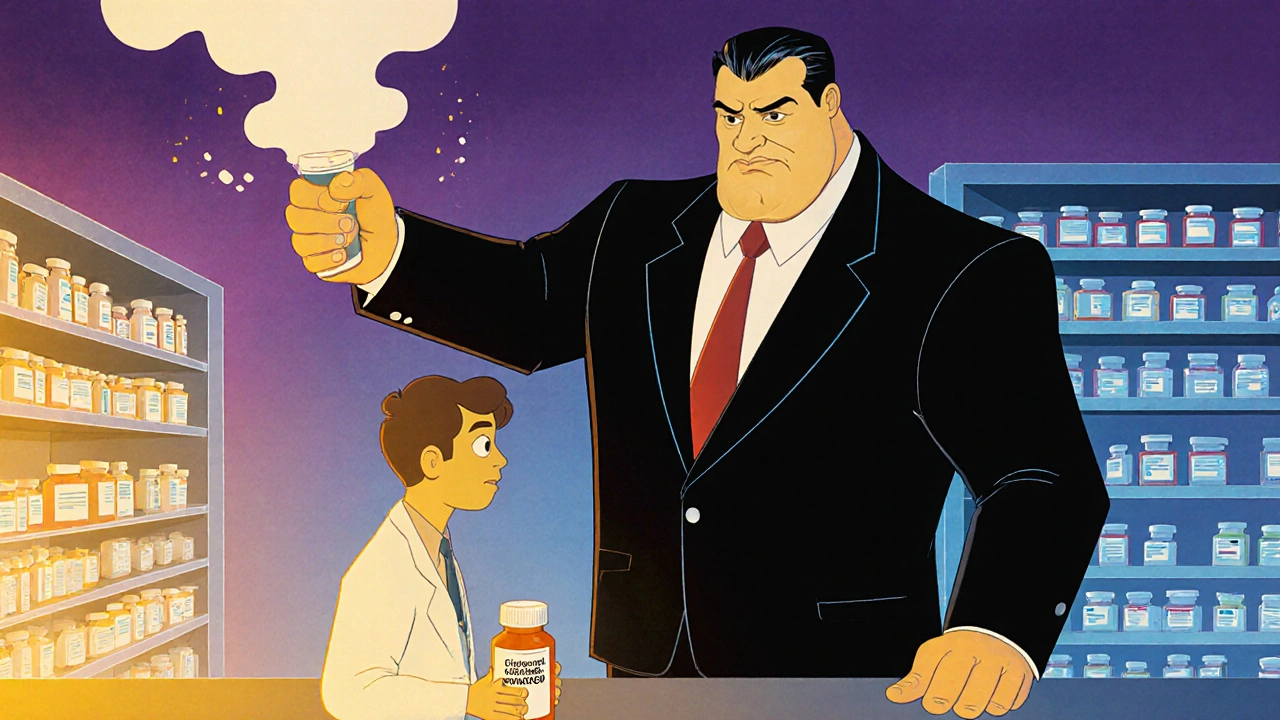
When you fill a prescription for a brand-name drug, you might expect your pharmacist to swap it for a cheaper generic version - and in most states, they’re legally allowed to do just that. But what if the drugmaker made sure that version no longer exists? That’s not a glitch in the system. It’s a deliberate tactic called product hopping, and it’s costing Americans billions every year.
How Generic Substitution Is Supposed to Work
The idea behind generic substitution is simple: once a brand-name drug’s patent expires, pharmacists can legally give you an identical, cheaper version. These generics aren’t knockoffs. They’re required by the FDA to have the same active ingredients, strength, and effectiveness as the original. The law assumes patients will switch to the lower-cost option - and most do. In states with automatic substitution rules, generics typically take over 80% of the market within months of launch. This system was designed by Congress in 1984 with the Hatch-Waxman Act. It gave drugmakers a limited monopoly to recoup research costs, but also created a fast track for generics to enter the market. The goal was competition - lower prices, better access. But over time, some brand-name companies found ways to break the rules without technically breaking the law.Product Hopping: The Legal Loophole
Product hopping isn’t innovation. It’s manipulation. Here’s how it works: a company knows its patent is about to expire. Instead of letting generics take over, they introduce a slightly changed version of the drug - maybe a new pill shape, a slow-release formula, or a different delivery method. Then they pull the original version off the market. Why does this matter? Because state substitution laws only apply to drugs that are still available. If the original drug is gone, the pharmacist can’t substitute the generic - there’s nothing to substitute from. Patients are forced to switch to the new version, which is still under patent and still expensive. And once they’re on the new version, most won’t go back. The most famous case is Namenda. In 2014, Actavis withdrew the original immediate-release version of Namenda (used for Alzheimer’s) just 30 days before generics could hit the market. They replaced it with Namenda XR, an extended-release version. The result? Generic manufacturers couldn’t compete. Even though their pills were identical in effect, the substitution law didn’t apply because the original was gone. The Second Circuit Court of Appeals ruled in 2016 that this was illegal anticompetitive behavior - one of the first times a court said product hopping could violate antitrust laws.Why Courts Are Split
Not every court sees it that way. In 2009, AstraZeneca switched patients from Prilosec to Nexium - another acid reflux drug - and kept selling Prilosec. The court dismissed the antitrust claim because the original drug was still available. The difference? Availability. If the old version stays on shelves, courts often say adding a new option is just competition. But if the old version vanishes, it’s a trap. This inconsistency has created a legal gray zone. Some judges treat product hopping like normal business strategy. Others see it as a rigged game. The FTC’s 2022 report called this confusion a major problem: “Courts have ignored the crucial role state substitution laws play in enabling generic competition.”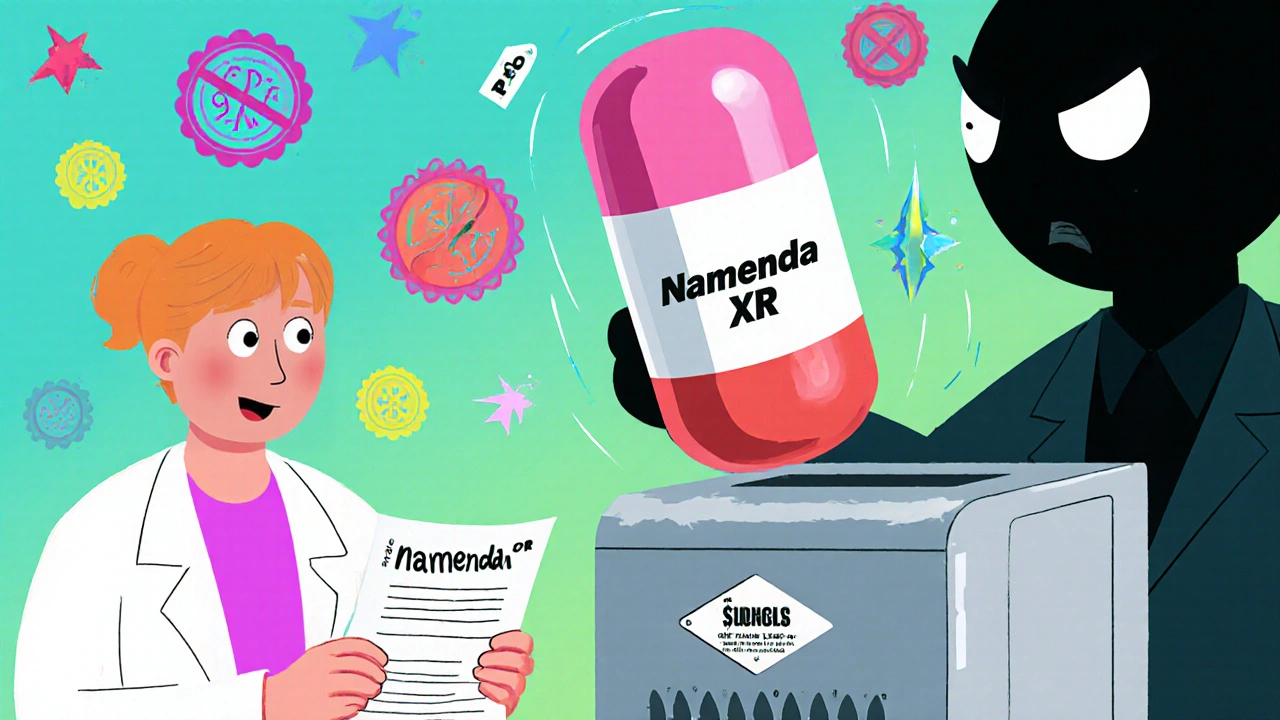
Another Trick: Blocking Generic Samples
Even when generics try to enter the market, they often hit another wall: access to the original drug. To prove their product works the same, generic makers need a sample of the brand-name drug to test against. But many brand-name companies use FDA-mandated safety programs - called REMS - to deny access. These programs were meant to control dangerous drugs. But companies have twisted them into barriers. In one study, over 100 generic manufacturers said they couldn’t get samples of 40 different drugs. One analysis estimated this blocked more than $5 billion in generic sales each year. It’s not about safety. It’s about delay. As law professor Michael A. Carrier put it, “The denial of samples makes no economic sense unless the goal is to harm competitors.”The Financial Toll
The cost isn’t abstract. It’s in your wallet, your insurance bill, and your tax dollars. - Revlimid, a cancer drug, jumped from $6,000 to $24,000 per month over 20 years - all while patent extensions and product hopping kept generics out. - Humira, Keytruda, and Revlimid alone cost the U.S. an estimated $167 billion more than they would have if generics entered on time, compared to Europe. - In the Ovcon case, a birth control pill maker introduced a chewable version, then pulled the original. Generic sales dropped from 85% to under 20%. These aren’t rare cases. They’re standard practice.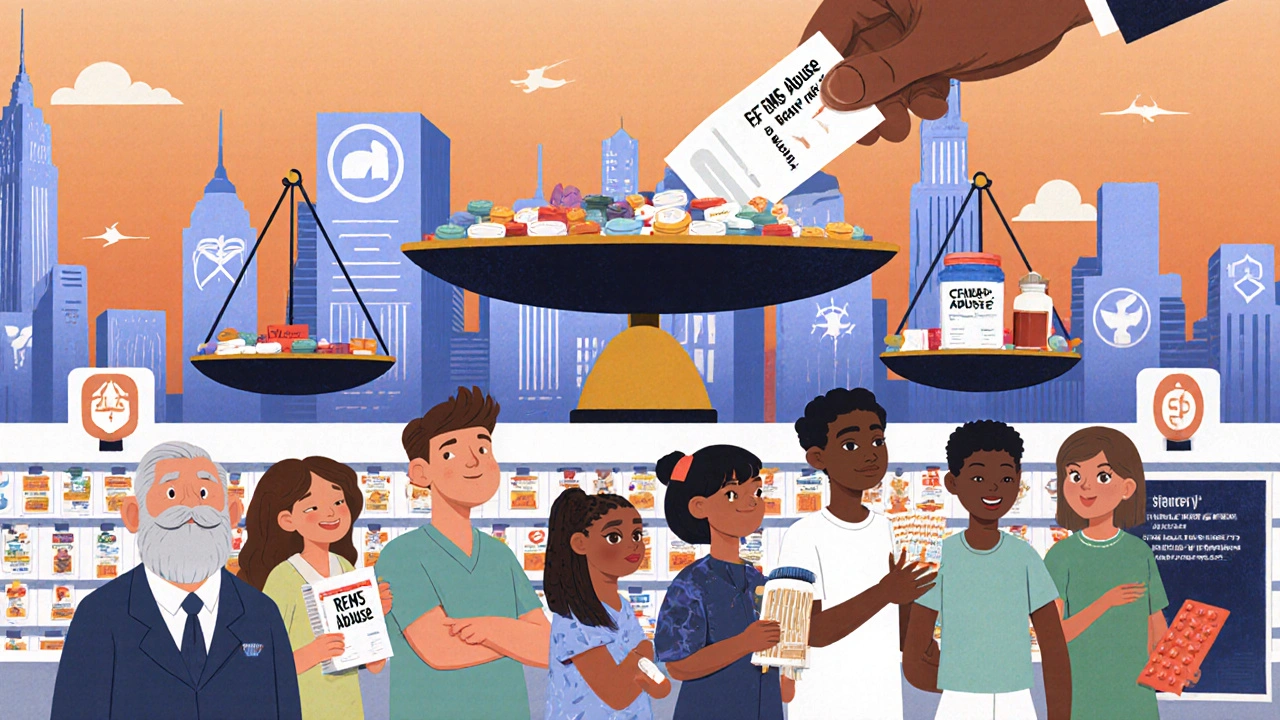
Enforcement Is Starting to Catch Up
The FTC has been fighting back. In the Namenda case, they got a court order forcing Actavis to keep selling the old version for 30 days after generic entry. In the Suboxone case, Reckitt Benckiser was accused of spreading false claims that the original tablet form was unsafe - pushing patients toward a newer, patented film version. The FTC won a settlement in 2019 and 2020 after the court found this was coercive. The Department of Justice has also stepped in - but mostly against generic manufacturers. Teva paid a $225 million fine in 2023 for price-fixing with other generic makers. That’s not the same issue, but it shows regulators are watching the whole system. State attorneys general have been active too. New York’s AG sued Actavis in 2014 and won an injunction to block the withdrawal of Namenda IR. That case became the blueprint for future challenges.What’s Next?
The tide is turning. The FTC’s 2022 report was a wake-up call. Congress is holding hearings. Lawmakers are considering bills to clarify that withdrawing a drug solely to block generics is an antitrust violation. Experts agree: the current system is broken. Companies shouldn’t be allowed to game the law by making tiny, meaningless changes to their drugs just to avoid competition. And pharmacists shouldn’t be forced to stand by while patients pay hundreds more for the same medicine. The solution isn’t to stop innovation. It’s to stop pretending that a new pill shape is innovation when the real goal is to keep prices high.What Patients Can Do
You can’t change the law alone. But you can be aware:- If your prescription suddenly switches to a more expensive version with no medical reason, ask your doctor why.
- Ask your pharmacist if a generic is available - and if not, why.
- Check if the original version of your drug was recently pulled from the market.
- Report suspicious changes to your state’s attorney general or the FTC.
What is product hopping in the pharmaceutical industry?
Product hopping is when a drugmaker introduces a slightly modified version of an expiring brand-name drug - like a new pill form or extended-release formula - and then pulls the original version off the market. This blocks pharmacists from substituting cheaper generics because the original drug no longer exists. The goal is to keep patients on the expensive version, even though the new version offers no real medical benefit.
Is product hopping illegal?
It depends. Courts have split on this. In the 2016 New York v. Actavis case, the Second Circuit ruled that withdrawing a drug just before generics enter is illegal anticompetitive behavior. But in other cases, like In re Nexium, courts allowed similar moves because the original drug stayed on the market. The key factor is whether the original version was completely removed. If it was, it’s more likely to be seen as antitrust violation.
How do REMS programs help block generic drugs?
REMS (Risk Evaluation and Mitigation Strategies) are FDA safety programs meant to control dangerous drugs. But brand-name companies use them to deny generic manufacturers access to the original drug needed for testing. Without a sample, generics can’t prove their product is bioequivalent - so they can’t get FDA approval. Over 100 generic companies have reported being blocked this way, delaying competition and costing billions in lost savings.
How much money does this cost consumers?
An estimated $167 billion was wasted on just three drugs - Humira, Keytruda, and Revlimid - because generic entry was delayed in the U.S. compared to Europe. Revlimid’s price jumped over 300% in 20 years. In some cases, product hopping has reduced generic market share from 80% to under 20%, forcing patients to pay hundreds or thousands more per month.
What’s the FTC doing about it?
The FTC has taken legal action in multiple cases, including Namenda and Suboxone, winning court orders to force companies to keep selling older versions during generic entry. They’ve also published reports urging Congress and state legislatures to strengthen substitution laws. In 2022, they released a major report detailing 15 years of product hopping cases and called for clearer rules to prevent these tactics.
Can pharmacists refuse to substitute a generic?
In most states, pharmacists are required to substitute a generic if it’s available and the prescriber didn’t say “dispense as written.” But if the original brand-name drug has been withdrawn from the market, substitution isn’t allowed - even if a generic exists. That’s the loophole companies exploit. Pharmacists can’t substitute a drug that’s no longer on the shelf.
Are there any laws being proposed to fix this?
Yes. Several bills have been introduced in Congress to make it illegal to withdraw a drug solely to block generic competition. Some proposals would require companies to provide samples to generic makers or ban REMS abuse. States like New York and California have already passed laws giving attorneys general more power to investigate these practices. Legal experts predict more legislative action in 2025-2026.



One comment
So let me get this straight companies can just yank a drug off the shelf so generics cant compete and nobody calls this theft
This is the most beautiful example of corporate evil I've seen in years. Not just greedy but *lazy* greedy. They dont innovate they just delete. The fact that courts are split on this is criminal. We're not talking about a new feature here we're talking about a full on bait and switch where the patient is the sucker. And the worst part nobody talks about it because the people getting screwed arent the ones with the loudest voices. This is why America is falling apart.
This is such an important issue. I'm from India where generics save lives every day. Seeing this happen in the US breaks my heart. The system was built to help people but now it's being used to hurt them. I hope more people speak up about this. Change is possible if we all care.
Bro this is insane. I had to pay $800 for a pill last month because my pharmacist said the original was gone. I thought it was just bad luck. Turns out Big Pharma pulled a fast one. And the worst part? No one in my family even knew this was a thing. We just paid. We need to start talking about this at dinner tables not just on Reddit. This is our money they're stealing.
Interesting. Important. Necessary.
I've seen this happen with my mom's medication. She switched to a new version and didn't realize the price jumped. I didn't know it was a tactic until now. Thank you for explaining it so clearly. I'm going to talk to her doctor about it.
Wait wait wait. This is just the tip of the iceberg. Did you know that some of these REMS programs are secretly controlled by the same companies that own the patents? And they're not even following FDA guidelines. The FDA is asleep at the wheel. And don't even get me started on how the lobbyists bought off Congress. This isn't a loophole. This is a full-on heist. The whole system is rigged. And the people who get hurt? The ones who can't afford to fight back.
so like if my pharmacist can't give me the cheap version because the original is gone then why dont they just make a law that says the generic can still be substituted even if the brand is gone?? like why is this so hard??
you think this is bad wait till you find out the vaccines are part of the same scheme. the same companies that do product hopping are the ones pushing the mRNA shots. they're not here to help you they're here to control you. the government knows. the FDA knows. but they're all in on it. why do you think they let them get away with it? because they're paid off. and the pills you're taking? they're not even real. they're just nanobots tracking you. you think this is about money? no. it's about control. wake up.
So let me get this straight. We're paying $24k a month for a pill that's basically the same as a $5 generic and the reason is... they changed the color? and the court system is like 'eh whatever'? I mean I get that capitalism is brutal but this is like if McDonald's pulled the Big Mac so you had to buy the McFlurry with extra fries just to get a burger. And then sued you for complaining. I'm not mad. I'm just disappointed.
People like you think this is a problem but you dont understand. These companies spent billions developing these drugs. The generics are just copycats. They dont have the same quality. The system is designed to reward innovation not punish it. If you want cheap pills go to India. Dont expect the American system to be your personal discount pharmacy. This is what happens when you reward laziness over hard work.
Could you explain how the REMS system is supposed to work normally? I've heard of it but never understood how it got twisted like this. Is there a way to report a company for blocking samples? I want to know if there's a real path to fix this.
While I appreciate the emotional appeal of this narrative, one must consider the broader economic and legal frameworks at play. The pharmaceutical industry operates under a complex regulatory ecosystem that balances innovation incentives with public health imperatives. To unilaterally impose legislative remedies without accounting for the long-term implications on R&D investment may inadvertently undermine the very foundation of medical advancement. One must not confuse the appearance of exploitation with the reality of market dynamics governed by intellectual property rights and contractual obligations. The solution, therefore, lies not in reactive legislation but in nuanced regulatory refinement.