
Nocebo Effect Risk Estimator
This tool helps you understand how likely you are to experience symptoms driven by expectation rather than pharmacology. Answer the questions below honestly.
Your Assessment
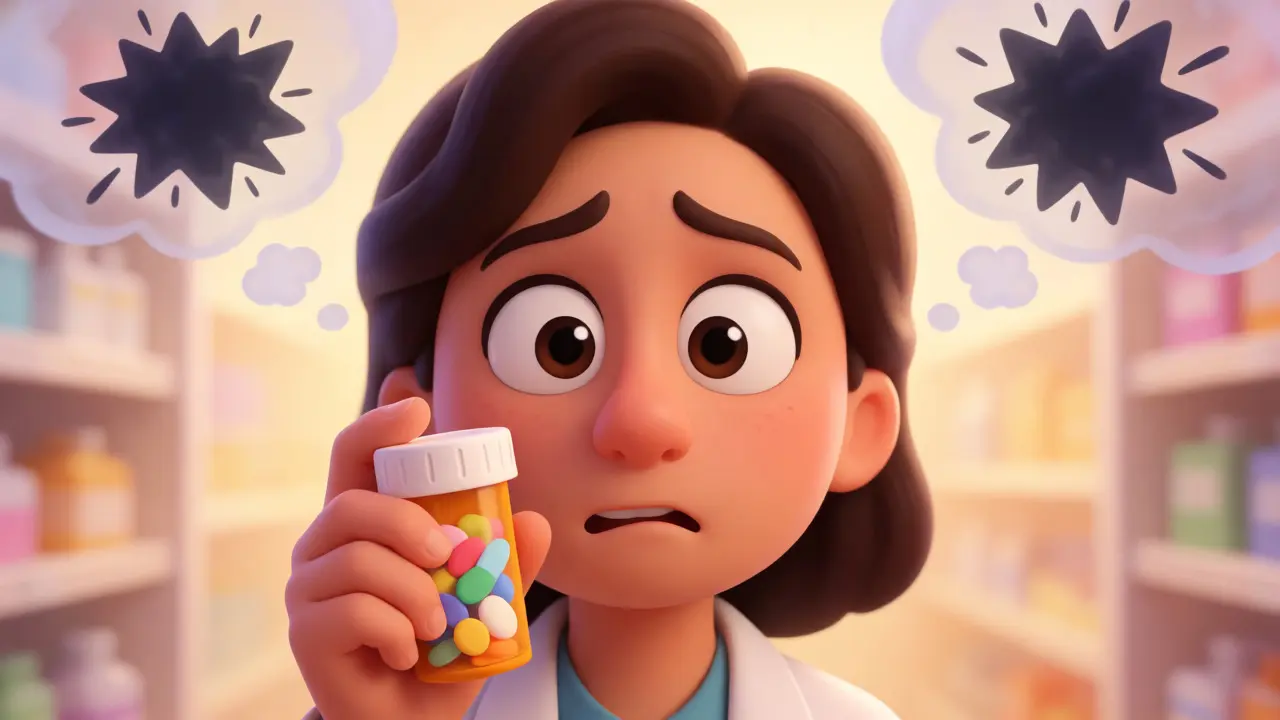
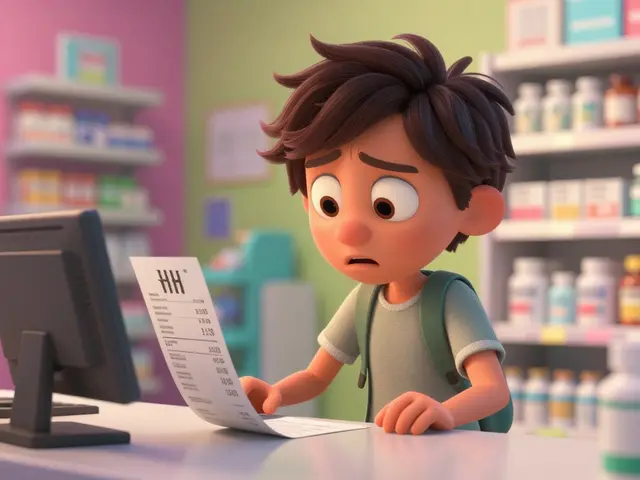
You just started a new prescription. The doctor handed you the box, warned you about potential nausea or headaches, and sent you on your way. Two days later, you feel exactly as described. But here is the twist: what if those symptoms weren't caused by the drug itself? What if they were created by your brain because you expected them to happen?
This isn't imagination or weakness. It's a documented physiological phenomenon called the nocebo effect. While most people know about the placebo effect-where belief in a treatment helps it work-the nocebo effect is its darker twin. It happens when negative expectations trigger real physical symptoms, even from inactive substances or harmless treatments. In clinical trials, roughly 20% of people taking sugar pills report side effects. That’s not a rounding error; that’s one in five patients suffering because their mind anticipated harm.
What Is the Nocebo Effect?
The term comes from Latin, meaning "I will harm." It describes a situation where a patient experiences worsening symptoms or new adverse effects due to negative expectations rather than the pharmacological action of a drug. Unlike the placebo effect, which enhances healing, the nocebo effect undermines it. It’s a psychobiological response, meaning your mental state directly influences your body’s physiology.
This isn't just "in your head" in a dismissive sense. Neuroimaging studies show that expecting pain activates the anterior cingulate cortex and insula-the same brain regions involved in processing actual pain. Your brain doesn't distinguish well between a threat you see coming and a threat that actually arrives. If you believe a pill will make you sick, your brain prepares your body for sickness. This preparation can manifest as real nausea, fatigue, or dizziness.
How Expectations Shape Reality
Why does this happen? It boils down to how we process information. When a pharmacist lists every possible side effect of a new medication, your brain latches onto the scary ones. This is partly due to negativity bias-we pay more attention to threats than benefits. But it’s also learned behavior. If you had a bad reaction to antibiotics as a child, your brain creates a strong association between that class of drugs and discomfort. Next time you take a similar drug, even if it’s chemically different, your brain hits the panic button.
Consider the case of venlafaxine in New Zealand. When the brand changed, reports of side effects spiked significantly after media coverage highlighted the switch. The active ingredient remained identical. The only variable was the narrative surrounding the change. Patients who heard rumors of lower quality reported more issues. Those who didn’t hear the news reported fewer. This demonstrates that external information, not just internal biology, drives these perceptions.
Placebo vs. Nocebo: A Clear Distinction
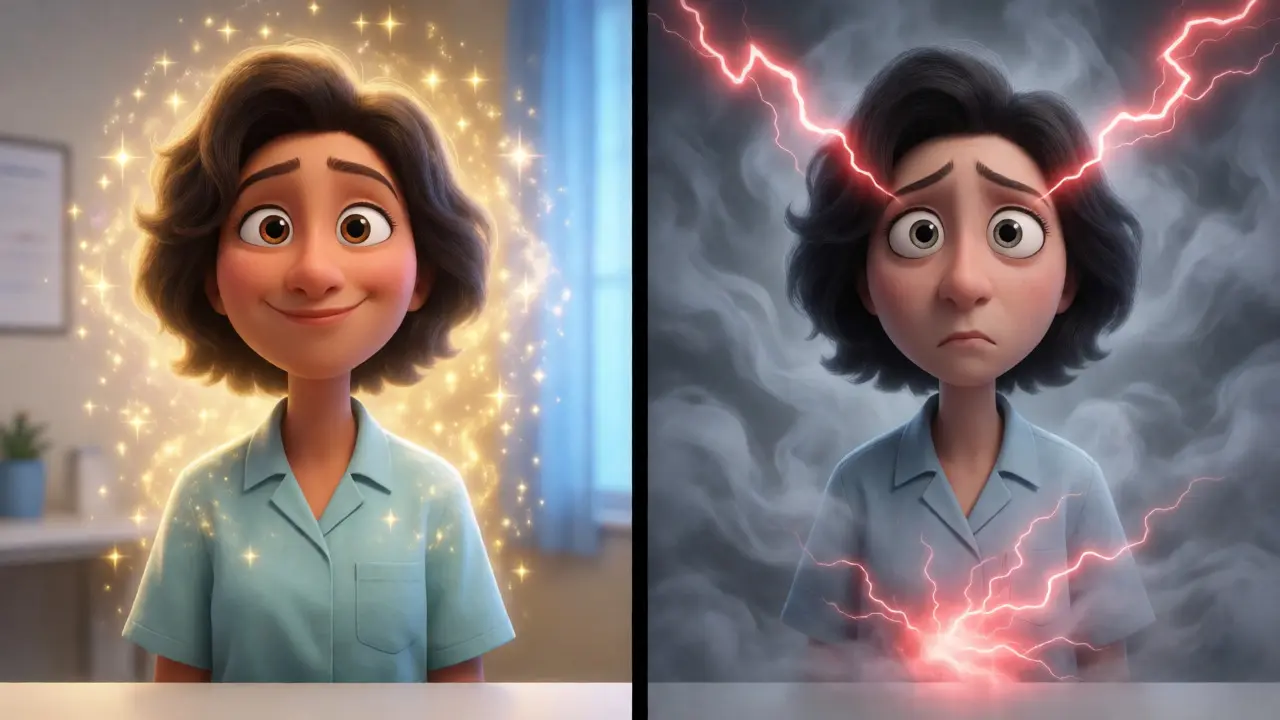
People often confuse the two, but they operate differently. Placebo effects rely on positive expectations enhancing therapeutic outcomes. Nocebo effects rely on negative expectations reducing efficacy or creating harm. Both are non-specific effects of treatment-meaning they aren't caused by the drug molecule itself but by the context of care.
| Feature | Placebo Effect | Nocebo Effect |
|---|---|---|
| Primary Driver | Positive expectation of benefit | Negative expectation of harm |
| Clinical Impact | Enhances pain relief or mood | Increases perceived side effects |
| Brain Activity | Releases endorphins/dopamine | Activates cholecystokinin/pain pathways |
| Trial Dropout Rate | Low (beneficial) | ~10% (due to perceived adverse events) |
A landmark study on the opioid remifentanil illustrates this powerfully. When patients were told the drug would help, its pain-relieving effect doubled compared to when they received it without explanation. But when researchers told another group that the drug might increase pain sensitivity after the initial relief wore off, the analgesic effect vanished completely. The drug was the same. The molecules didn't change. Only the expectation did.
Who Is Most Vulnerable?
Not everyone is equally susceptible to nocebo responses. Research highlights specific groups at higher risk. Women report approximately 23% more side effects than men in placebo-controlled trials, suggesting biological or social factors amplify these expectations. People with anxiety or depression are 1.7 times more likely to experience nocebo effects. Why? Their brains may be primed to scan for threats, making them hyper-aware of bodily sensations.
- Anxiety and Depression: Heightened vigilance leads to misinterpreting normal bodily noise as symptoms.
- Pessimistic Outlook: Individuals who generally expect bad outcomes are more prone to nocebo responses.
- Suggestion-Prone Personalities: People highly influenced by authority figures or media narratives.
- Previous Negative Experiences: Past trauma with medications creates strong associative memories.
If you’ve ever switched from a brand-name drug to a generic and felt instantly worse, despite the pharmacist confirming the ingredients are identical, you’ve likely experienced a nocebo response. The change in packaging, price, or name triggers a subconscious doubt about quality, which manifests as physical discomfort.
Mitigating the Nocebo Effect
So, how do you stop your brain from sabotaging your treatment? Communication is key. Healthcare providers play a massive role here. How a doctor frames risks matters more than the risks themselves. Saying "This drug causes nausea in 5% of people" sounds scarier than "95% of people tolerate this drug well," even though the statistics are identical. This is called framing, and it significantly impacts patient adherence.
For patients, awareness is the first step. Recognizing that some symptoms might be expectation-driven allows you to test reality. Keep a symptom diary. Note when you start a med and when symptoms appear. Often, the timing aligns more closely with reading the leaflet or hearing a warning than with the drug’s absorption rate. Discuss your concerns openly with your doctor. Ask questions like, "Is this symptom common, or am I over-worrying?"
Healthcare systems are starting to adapt. Some clinics now use "balanced framing" techniques, ensuring patients understand both benefits and risks without overwhelming them with worst-case scenarios. Training doctors to deliver bad news gently can reduce discontinuation rates by up to 22%. It’s not about hiding risks; it’s about presenting them in a way that doesn’t trigger unnecessary fear.
The Economic and Clinical Cost
The nocebo effect isn’t just annoying; it’s expensive. When patients quit effective medications because they perceive side effects that aren’t pharmacologically driven, healthcare costs rise. They visit doctors again, try new drugs, and face delayed recovery. Studies suggest 15-20% of medication discontinuations are linked to perceived side effects, many of which could be nocebo-mediated. Globally, this represents billions in wasted resources and lost productivity.
Pharmaceutical companies are beginning to recognize this. Regulatory bodies like the FDA and EMA are reviewing how patient information leaflets are written. Listing every rare side effect might satisfy legal requirements, but it can harm public health by triggering nocebo responses. The challenge is balancing transparency with psychological safety.
Can the nocebo effect cause serious harm?
Yes, while often mild, nocebo effects can lead to severe consequences like medication non-adherence, which may result in disease progression. In extreme cases, intense stress responses triggered by nocebo expectations can exacerbate cardiac or gastrointestinal conditions.
Is the nocebo effect the same as faking symptoms?
No. Patients experiencing nocebo effects feel genuine physical symptoms. These are not fabricated or imagined; they are real physiological changes driven by brain-body interactions, such as increased muscle tension or altered gut motility.
Do generic drugs cause more nocebo effects than brand names?
Studies show that switching from brand to generic often increases reported side effects due to nocebo mechanisms, even when active ingredients are identical. Patient perception of lower quality or trust in the brand drives this difference.
How can I tell if my side effects are nocebo or real?
It can be difficult to distinguish alone. Consult your doctor. They may suggest a trial period, dose adjustment, or switching meds to see if symptoms persist. Tracking symptom onset relative to information exposure can provide clues.
Does reading the side effect list make things worse?
Research suggests yes. Detailed listing of rare side effects can increase their reporting frequency. This is why some guidelines recommend discussing major risks verbally while providing comprehensive data in written form for reference.


One comment
Most people here are clearly too stupid to understand basic neuroscience. 😒 The article states that 20% of sugar pill users report side effects. That is a massive number. If you can't handle the side effect list, maybe you shouldn't be taking medication at all? 🙄 It's called personal responsibility, look it up.
oh please stop with the elitist attitude aurelio. not everyone has your fancy degree or whatever. i take my meds and if they make me feel like shit then its the drugs fault not my brain. americans always think they know everything about health but half of them are on antidepressants anyway lol. also why do we even have these long leaflets? just give us the info we need and shut up. its annoying as hell.
The framing argument in this piece is absolutely delicious. 🍷 It’s fascinating how healthcare providers weaponize language without realizing it. Saying "5% risk" versus "95% safety" triggers entirely different neural pathways. I’ve noticed this in my own practice; when I present data neutrally, patients adhere better. It’s not just about being nice, it’s about cognitive architecture. We really need to rethink informed consent forms because frankly, most of them are designed for legal protection rather than patient understanding. 😐
While Ms. Crane makes a valid point regarding linguistic framing, she overlooks the regulatory rigidity involved. Informed consent is not merely a communication tool; it is a legal shield. Physicians cannot arbitrarily omit rare side effects due to fear of litigation. The nocebo effect is real, but so is the liability landscape. One must balance psychological comfort with medicolegal necessity. It is a complex equilibrium, not a simple matter of 'being nicer' to patients.
this hits close to home honestly
i had a bad reaction to an antibiotic years ago and now whenever i get sick my stomach hurts before i even swallow the pill. its scary how much our brains control our bodies like that. i try to remind myself that the pain might not be real but its hard when its happening in real time. hope more doctors start talking about this stuff gently
Omg yes!! 👏👏 The part about the generic drug switch totally resonated with me. I literally felt dizzy just looking at the new packaging. It’s wild how our senses trick us into thinking something tastes or feels different when it’s chemically identical. I’m going to start keeping a symptom diary like the article suggests. Maybe if I track it, I can break the cycle of panic! 📝✨ Who else tries to trick their brain like this?
You guys are overthinking this! 😂 Your brain wants you to suffer so it gives you suffering. Simple as that. Just laugh at it! When I get a headache from reading the warning label, I tell my brain, "Nice try, loser," and drink some water. Works every time. Stay positive and ignore the noise! You got this! 💪
that advice is useless for someone with actual anxiety disorders. telling them to just laugh it off ignores the physiological reality of their condition. it's not a mindset issue it's a nervous system response.