
Antibiotic & Dairy Timing Calculator
You just picked up a prescription for a stubborn infection. The pharmacist hands you the bottle with a quick warning: "Don't take this with milk." You nod, but later that morning, you pour your usual coffee with creamer or grab a yogurt for breakfast. It feels like a small thing, right? A splash of milk shouldn't matter. But in the world of pharmacology, that splash can be the difference between curing an infection and watching it linger.
The relationship between antibiotics is medications used to treat bacterial infections by killing bacteria or inhibiting their growth and dairy products is not a myth. It is a well-documented chemical reaction that happens inside your stomach. When certain antibiotics meet calcium, they bind together. This binding creates a large, insoluble complex that your body simply cannot absorb. Instead of entering your bloodstream to fight the bacteria causing your illness, the drug stays trapped in your gut and leaves your body unchanged. This means you are effectively taking a lower dose than prescribed, which can lead to treatment failure and potentially more serious health risks.
The Chemistry Behind the Interaction
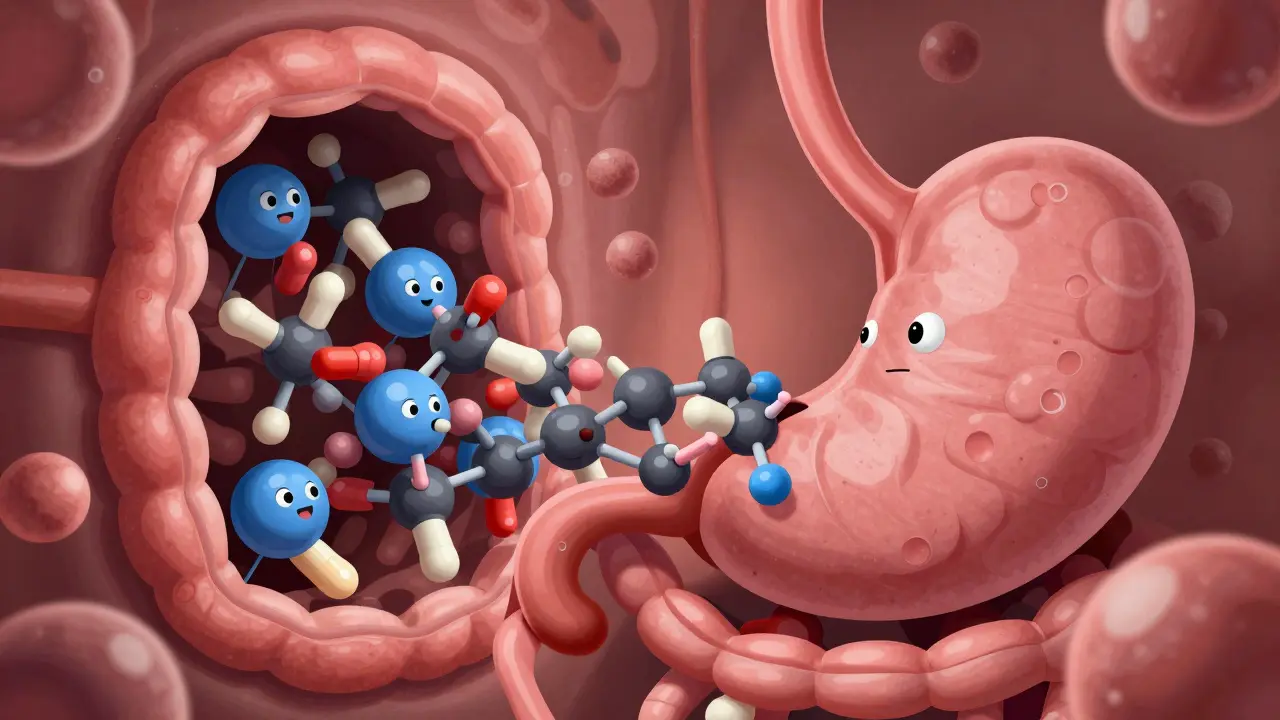
To understand why timing matters, we need to look at what happens on a molecular level. The primary culprit here is calcium. Dairy products like milk, cheese, and yogurt are rich in calcium ions (Ca²⁺). Certain classes of antibiotics have a chemical structure that acts like a magnet for these ions. This process is called chelation.
When you swallow an antibiotic tablet along with a glass of milk, the calcium ions latch onto the antibiotic molecules in your gastrointestinal tract. They form a new compound-a chelate-that is too large and insoluble to pass through the intestinal wall into your blood. Think of it like trying to push a boulder through a keyhole. The door (your intestine) only lets small, soluble things through. The antibiotic-calcium complex is that boulder. It gets stuck. Consequently, the amount of active drug reaching your infection site drops significantly.
This isn't a minor reduction. Studies published in the Journal of Clinical Pharmacology and other medical journals show that depending on the specific antibiotic and the type of dairy consumed, absorption can drop by anywhere from 20% to over 90%. If your doctor prescribed a 100 mg dose to kill off a specific bacteria, and you only absorb 30 mg because of that morning latte, the bacteria may survive. Worse, surviving bacteria can develop resistance, making future infections harder to treat.
Which Antibiotics Are Affected?
Not every antibiotic reacts with dairy. In fact, many common ones do not. Knowing which class of medication you are taking is crucial for managing your diet while sick.
| Antibiotic Class | Interaction Severity | Common Examples | Recommended Separation Time |
|---|---|---|---|
| Tetracyclines | High | Doxycycline, Tetracycline, Minocycline | 2 hours before or 4 hours after dairy |
| Fluoroquinolones | Moderate to High | Ciprofloxacin, Levofloxacin | 2 hours before or 4-6 hours after dairy |
| Beta-Lactams (Penicillins/Cephalosporins) | Low to None | Amoxicillin, Azithromycin, Cephalexin | No strict separation required |
Tetracyclines are a class of antibiotics derived from Streptomyces bacteria, effective against a wide range of pathogens are the most sensitive to this interaction. Drugs like doxycycline and minocycline rely heavily on proper absorption to work. Research indicates that taking tetracycline with milk can reduce its bioavailability by up to 75%. Yogurt can be even worse due to its higher calcium concentration and lower pH, which accelerates the binding process.
Fluoroquinolones are a broad-spectrum antibiotic group that interferes with bacterial DNA replication, such as ciprofloxacin, also suffer significant absorption losses. A study in Clinical Pharmacology & Therapeutics found that ciprofloxacin plasma concentrations dropped by 70% when taken with milk and by 92% with yogurt. For serious infections treated with these drugs, such as urinary tract infections or pneumonia, this reduction can be clinically dangerous.
On the flip side, beta-lactam antibiotics like amoxicillin and azithromycin generally do not interact with calcium. You can usually take these with food or dairy without worrying about reduced efficacy. However, always check your specific prescription label or ask your pharmacist, as formulations can vary.
The Critical Window: Timing Is Everything
If you are prescribed a tetracycline or a fluoroquinolone, you don't necessarily have to give up dairy for life. You just have to manage the clock. The goal is to ensure the antibiotic passes through your stomach and into your intestines where it can be absorbed before any calcium arrives.
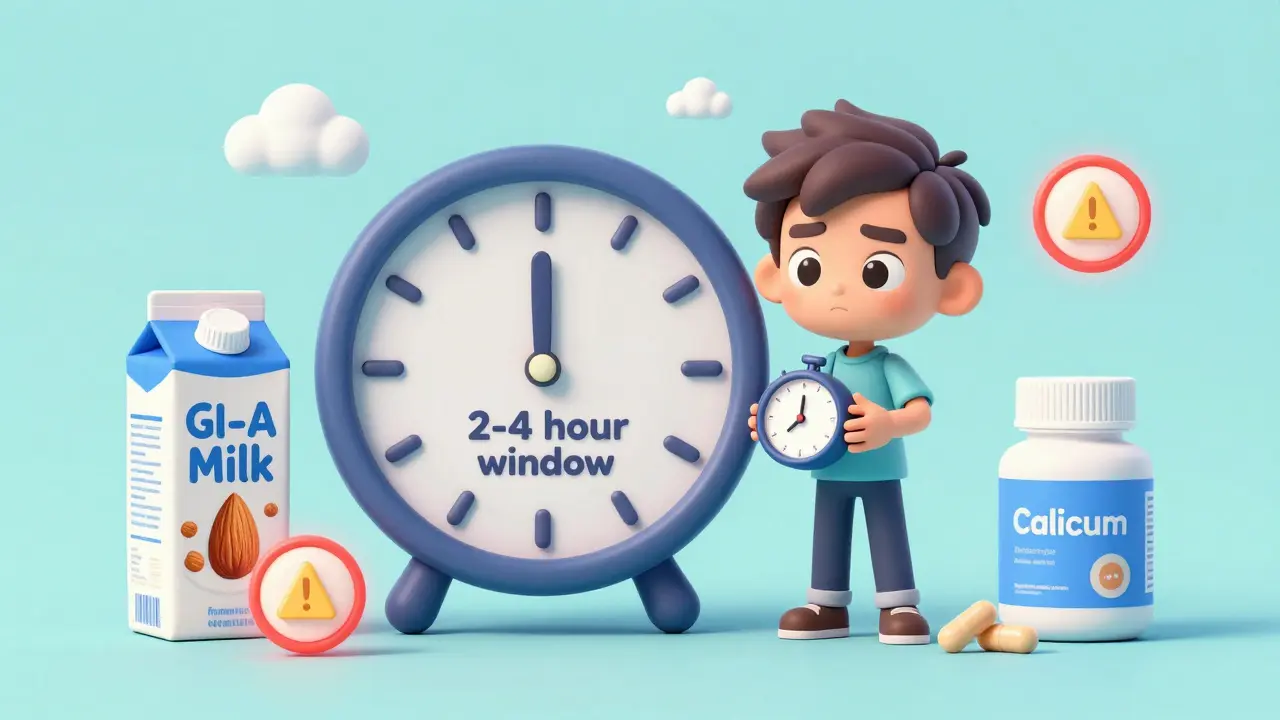
The general rule of thumb established by clinical guidelines is the "2-4 hour window." You should take your antibiotic at least two hours before consuming any dairy product, or wait at least four hours after eating dairy before taking the pill. This gap allows your stomach to empty and the drug to move into the absorption phase without interference.
Why four hours after? Because digestion takes time. If you eat a heavy meal with cheese or drink a large glass of milk, those calcium ions remain in your digestive system for several hours. Taking the pill immediately after might seem safe if your stomach feels empty, but chemically, the calcium is still there waiting to bind with the drug.
For fluoroquinolones, some experts recommend an even longer separation-up to six hours after dairy consumption-especially for patients with slower gastric emptying rates, such as older adults or those with certain metabolic conditions. The European Medicines Agency has noted that individual factors like body mass index (BMI) can influence how quickly drugs move through the gut, suggesting that personalized timing might be necessary for optimal results.
Hidden Sources of Calcium
One of the biggest pitfalls patients face is thinking they are avoiding dairy when they are actually consuming hidden calcium. The interaction isn't limited to cow's milk. Any source of high bioavailable calcium can trigger the same chelation process.
- Fortified Plant Milks: Almond, soy, and oat milks are often fortified with calcium carbonate or tricalcium phosphate to match the nutritional profile of cow's milk. These forms of calcium bind just as aggressively as dairy calcium.
- Antacids: Many over-the-counter heartburn remedies contain calcium carbonate (e.g., Tums, Rolaids). Taking an antibiotic with an antacid is a common mistake that can neutralize the drug's effect.
- Calcium Supplements: If you take a daily calcium pill for bone health, it must be spaced out from your antibiotic dose by the same 2-4 hour margin.
- Iron and Zinc Supplements: While not dairy, these minerals also chelate with tetracyclines and fluoroquinolones. They require the same careful timing.
It is also worth noting that butter and cream have lower calcium content than milk, yogurt, or hard cheeses. A tiny splash of cream in your coffee might not cause a significant interaction, but a cup of whole milk definitely will. When in doubt, assume it contains enough calcium to interfere and separate accordingly.
Practical Strategies for Patients
Living with a 4-hour separation window can disrupt your routine, especially if you take medication twice a day. Here are some practical tips to help you stay compliant without sacrificing your favorite foods.
- Use a Timer: Set alarms on your phone for "Take Meds" and "Dairy OK." Visual cues help reinforce the habit until it becomes automatic.
- Choose Your Dosing Times Wisely: If you take your antibiotic in the morning, take it first thing upon waking with water. Wait two hours before having your coffee with milk or cereal. If you take it at night, consider taking it before dinner or well after bedtime snacks.
- Read Labels Carefully: Check your vitamin supplements and plant-based milk cartons for added calcium. Look for phrases like "fortified with calcium" or "source of calcium."
- Talk to Your Pharmacist: If the timing restrictions are too difficult to manage, ask if there is an alternative antibiotic in a different class (like a beta-lactam) that does not interact with dairy. Do not switch medications on your own; always consult your healthcare provider.
- Consider Formulation Differences: Some newer formulations, like doxycycline monohydrate, may have slightly different absorption profiles, but the standard advice remains to avoid concurrent dairy intake unless explicitly told otherwise by your prescriber.
Patient experiences shared on healthcare forums highlight the frustration of these restrictions. Many report nausea when taking tetracyclines on an empty stomach, which tempts them to eat something to settle their gut. Unfortunately, dairy is often the go-to comfort food, leading to accidental interactions. If nausea is an issue, try taking the antibiotic with a non-dairy snack like crackers or fruit, provided your doctor approves. Never skip a dose because you ate dairy; instead, contact your pharmacy for advice on how to proceed.
The Bigger Picture: Antibiotic Resistance
Why is all this fuss about timing so important? Beyond your immediate recovery, proper antibiotic absorption plays a role in the global fight against antimicrobial resistance. When antibiotics are not absorbed correctly, subtherapeutic levels of the drug circulate in your body. This environment doesn't kill the bacteria; it stresses them. Stressed bacteria are more likely to mutate and develop resistance mechanisms.
The World Health Organization estimates that millions of deaths annually are linked to resistant infections. By ensuring your medication works as intended, you protect yourself and contribute to preserving the effectiveness of these life-saving drugs for everyone. Simple actions like timing your pills correctly are powerful tools in this effort.
Can I take amoxicillin with milk?
Yes, generally speaking. Amoxicillin belongs to the beta-lactam class of antibiotics, which does not significantly interact with calcium. You can take it with food or dairy to help prevent stomach upset, though taking it on an empty stomach may allow for slightly faster absorption. Always follow your specific prescription instructions.
How long should I wait after drinking milk to take doxycycline?
You should wait at least 4 hours after consuming milk or other dairy products before taking doxycycline. Alternatively, you can take the doxycycline 2 hours before drinking milk. This separation ensures that the calcium does not bind to the antibiotic in your stomach, allowing for proper absorption.
Does almond milk interact with antibiotics?
It depends on whether the almond milk is fortified. Most commercial almond milks are fortified with calcium carbonate or tricalcium phosphate. These forms of calcium can interact with tetracyclines and fluoroquinolones just like dairy calcium. Check the nutrition label for added calcium. If it is not fortified, the risk is minimal.
What happens if I accidentally take my antibiotic with yogurt?
If you accidentally take your antibiotic with yogurt, do not panic. Do not take an extra dose to make up for it, as this could lead to toxicity. Contact your pharmacist or doctor for advice. They may suggest monitoring for symptoms of the infection returning. In many cases, a single instance may not completely ruin the course of treatment, but consistent errors can lead to treatment failure.
Can I take antacids with ciprofloxacin?
No, you should avoid taking antacids containing calcium, magnesium, or aluminum with ciprofloxacin. These minerals bind to the drug and drastically reduce its absorption. You should separate the doses by at least 2 to 6 hours, depending on the specific antacid and antibiotic formulation. Consult your pharmacist for precise timing based on the brands you are using.