
Medication Warning Sign Checker
Check Your Symptoms
This tool helps identify early warning signs documented in medical studies. It is not a diagnosis.
Important: If you're experiencing any symptoms below, contact your prescriber immediately. Do not stop medication abruptly without medical guidance.
Your Results
When you start a new medication for depression, anxiety, or another mental health condition, you’re hoping for relief-not a worsening of your inner turmoil. But for a small but dangerous number of people, the very drugs meant to help can trigger sudden, terrifying suicidal thoughts or urges. This isn’t rare. It’s documented. And it happens fast.
It Starts with Restlessness
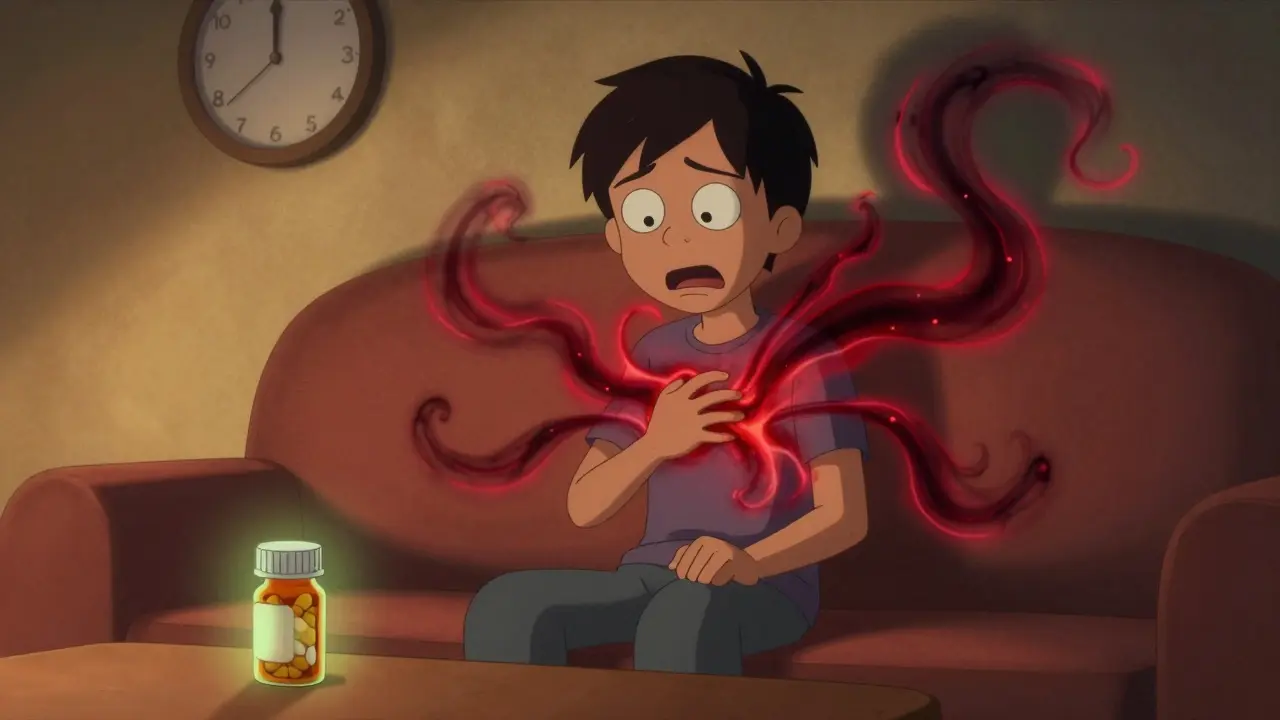
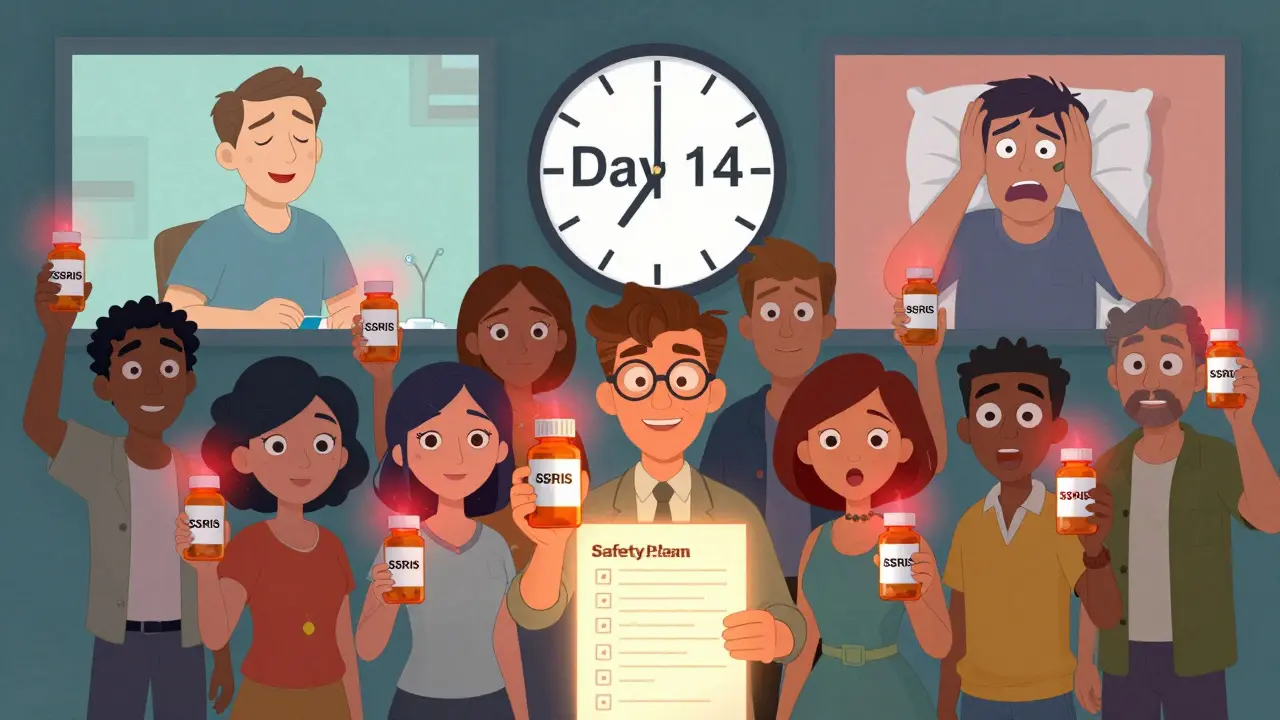
The most common warning sign isn’t sadness. It’s restlessness. Not just feeling fidgety. Not just being impatient. It’s an unbearable, internal agitation that makes you feel like you’re being pulled apart from the inside. You can’t sit still. You pace. You can’t sleep. You feel like your skin is too tight. This isn’t normal anxiety. It’s akathisia, a drug-induced motor and emotional state that research shows precedes suicide attempts in over 70% of medication-related cases. A 1990 study by Teicher and colleagues tracked six patients who started SSRIs and developed suicidal urges within two weeks. Every single one reported this crushing restlessness first. By day 14, three had attempted suicide. When the medication was stopped, the urge vanished within days. This pattern repeats across studies. The FDA calls this the "activation syndrome"-a mix of agitation, panic, insomnia, and impulsivity that emerges when the brain’s chemistry is shaken too quickly.Thoughts That Don’t Belong to You
Another red flag is when suicidal thoughts feel alien. Not like your usual dark moments, but like someone else is whispering in your head. Patients describe it as: "I didn’t want this. I don’t believe this. But I can’t make it stop." This is called ego-dystonic thinking-thoughts that clash with your core identity. You know you’re not this person. But the thoughts are loud, persistent, and terrifyingly convincing. One 2024 case study followed a 19-year-old woman who started duloxetine for anxiety. Within five days, she began having intrusive images of jumping off a bridge. She told her doctor, "I don’t want to die. But I keep seeing it. I think I’m losing my mind." Her doctor didn’t recognize it as a drug reaction. She tried to harm herself two weeks later. After stopping the medication, the thoughts disappeared completely. No therapy. No crisis intervention. Just stopping the drug.Impulsivity Turns Thoughts Into Actions
Depression alone doesn’t always lead to suicide. It’s the combination of deep sadness and sudden impulsivity that’s deadly. Medications can lower your brain’s natural brakes. You start making decisions without thinking. You text a friend saying "I can’t do this anymore." You buy a rope. You drive to a bridge. You don’t plan it. You just do it. Stanford researchers found that 78% of medication-triggered suicide attempts happen within the first 28 days. That’s not a coincidence. It’s the window when the drug is ramping up in your system and your brain hasn’t adapted yet. Aggressive dosing-starting high to "get results fast"-increases this risk by 63%. Gradual titration, even if it takes longer to feel better, cuts that risk dramatically.
It’s Not Just Antidepressants
Most people assume this only happens with SSRIs or SNRIs. It doesn’t. Antibiotics like doxycycline have shown up in studies as having the highest causality score for suicidal adverse reactions among non-psychiatric drugs. How? It may interfere with liver enzymes that regulate retinoid levels, which affect mood pathways. Other surprising offenders include painkillers like piroxicam, asthma drugs like formoterol, and even cancer treatments like paclitaxel. The JMIR Public Health and Surveillance study in 2024 identified nine drugs with unreported suicide risks on their labels. That means millions of people are taking these without knowing they could trigger this reaction. The FDA’s 2023 review confirmed that 100% of antidepressant labels now warn about this-but most other medications still don’t.Who’s Most at Risk?
Age is the biggest factor. People under 24 are 2.3 times more likely to experience medication-triggered suicidality than those over 24. That’s why the FDA’s black box warning applies to children, teens, and young adults. But it’s not just age. - History of a prior suicide attempt: 47% higher risk - Family history of suicide: 32% higher risk - Co-occurring anxiety disorder: 58% higher risk - Starting a new drug or increasing the dose: highest-risk period Interestingly, if you don’t respond to the medication after a few weeks, your risk of sudden suicidal behavior actually drops by 22%. That’s because the dangerous activation phase usually happens early-before the drug has had time to work. Persistent depression without agitation is less likely to trigger an immediate crisis.What Should You Do?
If you or someone you love starts a new medication and begins feeling:- Uncontrollable restlessness or pacing
- Suicidal thoughts that feel foreign or forced
- Sudden impulsiveness or reckless behavior
- Insomnia, panic attacks, or extreme irritability


One comment
I wish more doctors would talk about akathisia like this. I was on sertraline for 3 days and felt like my bones were vibrating. No one believed me until I nearly jumped out a window. Stopped it. Everything vanished. No therapy needed.
Just say no to 'give it time' when your body screams.
This is absolutely critical information-and I can’t believe it’s not standard protocol to hand every patient a one-page warning sheet before prescribing anything that affects serotonin. I’ve seen friends go from ‘I’m fine’ to ‘I need to die’ in under 72 hours after a new Rx. The FDA’s black box warning is a start-but it’s buried in 47 pages of legalese. We need plain-language alerts. Like, printed on the pill bottle. Like, ‘IF YOU FEEL LIKE YOU’RE BEING PULLED APART FROM INSIDE-CALL YOUR DOCTOR. NOW.’
people just dont get it. its not about meds. its about weak minds. if you cant handle your thoughts then maybe you shouldnt be taking anything. i mean, look at me. i take antibiotics for acne and i feel like a warrior. you just need discipline. stop being so dramatic.
I’m a nurse and I’ve seen this too many times. A teen comes in for anxiety, gets prescribed an SNRI, and within a week they’re texting their mom ‘I hate myself’ and ‘I’m not me anymore.’
Doctors are so focused on ‘getting them stable’ they forget to ask: ‘Do you feel like you’re losing your mind?’
That question saves lives.
My sister started fluoxetine and started pacing the house at 3am. We thought she was just stressed. Turns out it was the drug. She didn’t even tell her doctor because she didn’t think it mattered. Don’t assume it’s ‘just you.’ It might be the pill.
So let me get this straight... you're telling me that a pill can make you want to kill yourself... but only if you're young, emotional, and didn't read the 12-page consent form? 😏
Also, doxycycline? For acne? I'm gonna stop taking mine and just let my face be a battlefield. #pharmaisacrime
This is why I never take meds unless I have to. I had a cousin who started Lexapro and within 10 days he was driving his car into a tree saying ‘it’s the only way out.’ He survived. But his brain never fully came back. The system doesn’t care. They just want you to take the pill, pay the bill, and move on. We’re not patients. We’re data points.
The entire mental health industrial complex is built on this exact paradox: we’re told to trust science, yet the science is deliberately obscured by pharmaceutical lobbying. The fact that 100% of antidepressants carry warnings but only 12% of antibiotics do-even though doxycycline has a higher causality score-is not an oversight. It’s a business model. The FDA is a regulatory body in name only. They approve, they don’t protect. And patients are the collateral damage in a trillion-dollar game of Russian roulette with pharmacokinetics.
I’m from Canada and we have the same issue. My nephew got prescribed citalopram at 17. Two weeks later he was talking to strangers like they were his dead grandma. His mom thought he was having a spiritual awakening. Turned out it was the meds. Stopped it. He’s fine now. Just… don’t ignore the weirdness.
My therapist told me to wait two weeks before worrying. I didn’t. I called my doctor on day three. They said I was being dramatic. I went to the ER. They admitted me. Turned out I had akathisia. I’m alive because I listened to my body. Not the clock.
I started venlafaxine and felt like I was being rewired. I cried for no reason. I wanted to scream. I thought I was broken. Then I told my doc and she said ‘ohhh that’s the activation phase’ and switched me. I’m on a different med now and I feel like me again. You’re not crazy. It’s the drug. 💪❤️
restlessness is the key. i didnt even know the word akathisia till now. but i felt it. and i knew it wasnt me. stop the pill. dont wait.