

Tetracycline Photosensitivity Risk Calculator
Your Sun Sensitivity Risk
Select your antibiotic to see your risk level and personalized protection advice
Your Risk Level
Personalized Protection Plan
How Much Sunscreen Should You Apply?
For full-body coverage: Apply at least 2 mg/cm² (about 1 oz or a shot glass full)
What Is Tetracycline Photosensitivity?
You’re taking tetracycline or doxycycline for acne, Lyme disease, or a respiratory infection. You go outside for a quick walk, and by lunchtime, your skin is red, burning, and peeling - like you spent all day at the beach without sunscreen. But you didn’t. This isn’t just bad luck. It’s tetracycline photosensitivity.
This isn’t rare. About 5 to 10% of people on tetracycline-class antibiotics get it. Some develop blistering sunburns after just 15 minutes in the sun. Others notice their nails lifting off the nail bed weeks later. A few even get stubborn brown patches that last for months. And most of them had no idea this could happen.
The problem isn’t the sun itself. It’s what happens when tetracycline in your skin meets UV-A light (320-425 nm). The drug absorbs that light, triggers a chemical reaction, and creates free radicals that shred your skin cells. Think of it like your skin being slowly burned from the inside out. The damage isn’t just painful - it can leave lasting marks.
Which Antibiotics Carry the Highest Risk?
Not all tetracyclines are the same when it comes to sun sensitivity. If you’re on one of these, your risk level changes dramatically.
- Doxycycline: Highest risk. Up to 18.5% of people on high doses (1200 mg/day) develop reactions. Even at 100 mg daily, it’s the most common culprit. It’s also linked to nail separation (onycholysis) and skin blistering.
- Demeclocycline: Moderate to high risk. Often used for kidney conditions, but it’s a known photosensitizer.
- Tetracycline HCl: Moderate risk. Older version, still used, still dangerous in the sun.
- Minocycline: Lowest risk. Only about 2% of users get reactions. It’s the go-to for people who work outside or live in sunny climates.
- Sarecycline and Omadacycline: Newer options. Early data shows much lower photosensitivity rates - under 5% - but they cost 10 to 40 times more than generic doxycycline.
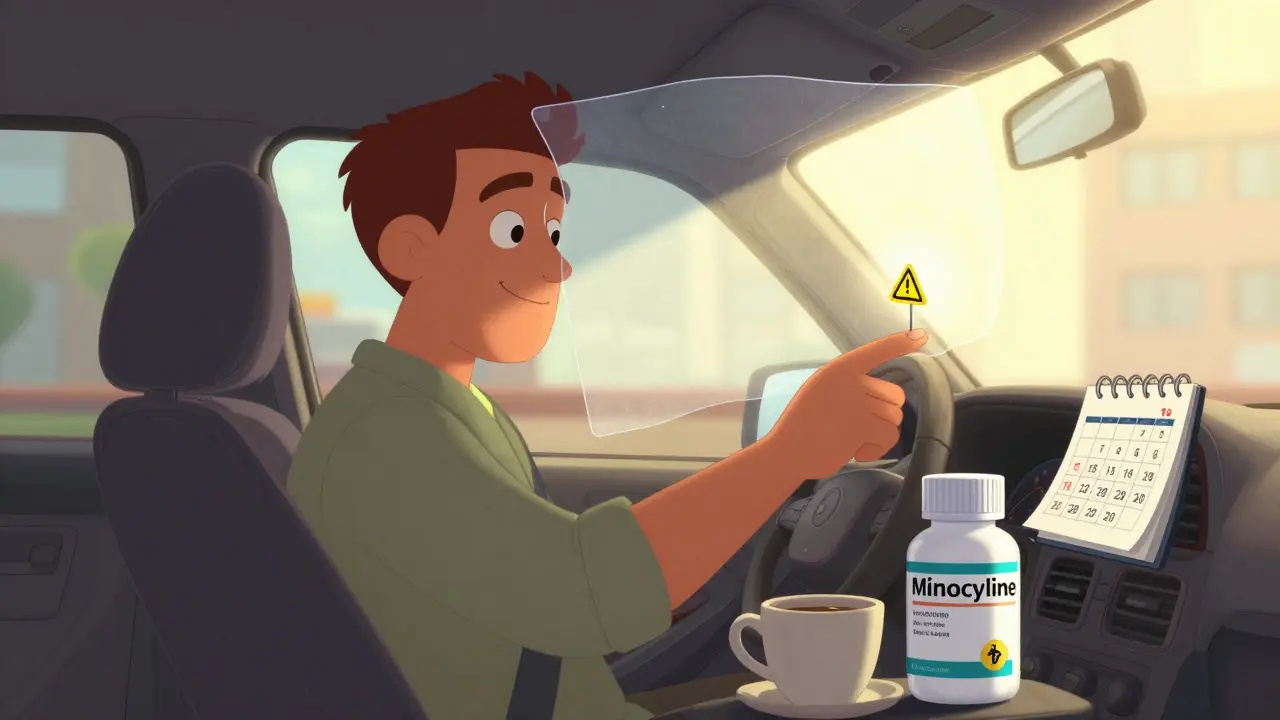
If you’re choosing between doxycycline and minocycline for acne, and you’re outdoors a lot, minocycline might be the smarter pick - even if it’s a bit pricier. For a 30-day supply, doxycycline costs around $30. Minocycline? About $45. That’s less than a daily coffee over a month for significantly less sun risk.
What Does It Look Like?
Photosensitivity doesn’t always mean a bad sunburn. Here’s what it actually looks like in real patients:
- Sunburn-like redness: Comes on fast - within hours of sun exposure. Often worse on the neck, shoulders, and back of hands.
- Blisters and peeling: In severe cases, skin breaks open. This isn’t just discomfort - it increases infection risk.
- Dark patches: Up to 70% of people get hyperpigmentation after the redness fades. These brown spots can stick around for months or even years.
- Nail problems: About 15-20% of users notice their nails lifting from the nail bed. It usually starts at the tip and grows out slowly. Some also get yellow or brown discoloration.
- Pseudoporphyria: A rare but serious reaction. Skin becomes fragile. Tiny blisters form after minor bumps or sun exposure. Scarring and small white bumps (milia) follow. This happens in 2-3% of users, mostly with tetracycline itself.
One Reddit user, a dermatologist, shared: “I’ve had three patients on doxycycline 100 mg twice a day develop full nail separation. All had to stop the drug. None knew it was possible.”

Why Most People Don’t Know About This Risk
You’d think doctors would warn you. But they often don’t.
A 2022 survey by the American Academy of Dermatology found that 68% of patients who suffered photosensitivity reactions said their provider never mentioned sun risks. That’s not negligence - it’s oversight. Many prescribers focus on the infection, not the side effects. Patients assume antibiotics are safe if they’re common. They’re not.
Even the FDA’s warning labels are vague. They say “increased sun sensitivity” - but don’t explain how quickly it can happen, how severe it can get, or how to actually prevent it.
Here’s the truth: You don’t need to be on the beach to get burned. Walking to your car, sitting by a window, even driving in the sun can trigger it. UV-A rays penetrate glass. Your office window? It’s not protecting you.
How to Protect Yourself - For Real
Most advice says “use sunscreen.” That’s not enough. Here’s what actually works:
- Use mineral sunscreen, not chemical. Zinc oxide and titanium dioxide physically block UV-A rays. Chemical sunscreens (like avobenzone) don’t block the full 320-425 nm range. Look for SPF 50+ with zinc oxide as the first active ingredient. CeraVe Mineral SPF 50 is a top choice - 4.3 out of 5 stars from over 1,200 reviews.
- Apply enough. Most people use 25-50% of the recommended amount. You need 2 mg per cm². That’s about a shot glass full for your whole body. For your face? A nickel-sized dollop. Reapply every 2 hours - even if it’s cloudy.
- Avoid sun between 10 a.m. and 4 p.m.. That’s when UV-A is strongest. Plan outdoor time for early morning or late afternoon.
- Wear UPF 50+ clothing. A regular white T-shirt only blocks about 5 UV rays. UPF 50+ fabric blocks 98%. Look for long-sleeve shirts, wide-brimmed hats (they block 73% of UV from face and neck), and UV-blocking sunglasses.
- Use UV window film. If you drive often, install film on your car windows. It blocks 99% of UV-A. Your dashboard might fade, but your skin won’t.
- Check your meds. Some other drugs make it worse - like diuretics, NSAIDs, or even some antidepressants. Talk to your pharmacist.
One patient on Healthgrades wrote: “I took doxycycline for 6 months for rosacea. Zero problems. I wore SPF 50 every day, no matter the weather. I didn’t even get a tan.” That’s not luck. That’s strategy.
What to Do If You Get a Reaction
If your skin turns red, burns, or blisters:
- Get out of the sun immediately.
- Apply cool compresses or aloe vera gel - but avoid anything with alcohol or fragrance.
- Take ibuprofen to reduce inflammation and pain.
- Don’t pop blisters. That invites infection.
- Call your doctor. You may need to stop the antibiotic.
If your nails start lifting or your skin becomes fragile and blisters easily with minor contact, stop the drug and see a dermatologist. These aren’t normal side effects - they’re signs your skin is under serious stress.
Alternatives If Sun Exposure Is Unavoidable
If you work outside, live in a sunny place, or just hate the idea of avoiding the sun, here are your options:
- Minocycline: Best tetracycline option. Lower risk, same effectiveness for acne and infections.
- Sarecycline (Seysara): Newer, designed for acne with lower phototoxicity. Costs $550 for 30 days - expensive, but worth it if sun safety isn’t possible.
- Non-tetracycline antibiotics: For acne, consider spironolactone (for women) or isotretinoin. For infections, azithromycin or amoxicillin are often alternatives - though they don’t cover all the same bugs.
Remember: Doxycycline is still the top choice for Lyme disease, Rocky Mountain spotted fever, and some pneumonia cases. Don’t refuse it because of fear - but do demand a full discussion about sun safety before you start.
Why This Matters Beyond the Skin
This isn’t just about a bad sunburn. Tetracycline photosensitivity leads to:
- Emergency room visits - 22% of affected patients go to the ER.
- Stopping treatment early - 15% of people quit their antibiotics because of it.
- Long-term skin damage - dark spots can last years, and repeated burns increase skin cancer risk.
- Cost - over $18 million a year in the U.S. alone is spent treating severe reactions.
It’s preventable. But only if you know how.
Final Takeaway
Tetracycline photosensitivity isn’t a myth. It’s a real, common, and dangerous side effect - and most people are blindsided by it. The good news? You don’t have to be one of them.
If you’re prescribed doxycycline or another tetracycline, ask: “What’s my risk for sun damage?” “Is minocycline an option?” “What sunscreen should I use?” Don’t wait until your skin burns. Protect yourself before the first ray hits.
It’s not about avoiding the sun forever. It’s about enjoying it without paying the price.



One comment
I took doxycycline for three months and thought my sunburn was just bad luck. Turns out I was basically letting UV rays cook my skin from the inside. No one warned me. Not my doctor, not the pharmacist. Just assumed I'd read the fine print. Spoiler: I didn't.
The phototoxic mechanism is well-documented: tetracycline-class antibiotics act as chromophores, absorbing UVA photons (320–425 nm) and generating reactive oxygen species via Type II photochemical reactions. This induces lipid peroxidation and keratinocyte apoptosis. Mineral sunscreens with zinc oxide (>20%) provide broad-spectrum photoprotection by scattering and reflecting incident radiation, unlike organic filters which may degrade under prolonged exposure.
Minocycline is better. Less sun trouble. Simple.
They don't warn you because the pharma companies know people will still take it. They make billions. You think they care if your skin peels off? Wake up. The FDA is a puppet. Sunscreen? That's just a distraction. The real issue is glyphosate in your water. That's what's making you sensitive.
I think this is all part of the government's mind control program. They want us to be afraid of the sun so we'll buy more sunscreen and stay indoors. Also, the FDA doesn't test for long term pigment changes because they're in bed with Big Pharma. I've seen the documents. The brown spots? They're tracking chips. Don't believe the hype.
I got blisters on my shoulders and thought I was dying 😭 I was on doxy for acne and went to the beach for 20 mins. My skin looked like a lobster. I cried in the shower. Never again. Minocycline is my new BFF now. No more sunburns just because I took a pill.
I've been on minocycline for 8 months. I hike every weekend. No issues. I still use sunscreen, obviously, but I don't live in fear. If you're worried about sun damage, switch meds. It's not that hard. And yes, it's worth the extra $15.
I just don't get why people are so shocked by this. You take a drug that's known to make you sensitive to light. You go outside. You get burned. Shocking. Also, why are we still using doxycycline like it's a miracle pill? It's 1950s medicine. We have better options now.
You're not alone. I had the nail thing happen too. One day my pinky just lifted up like a tiny claw. Scary. But I switched to minocycline and now I'm fine. Don't suffer in silence. Ask for alternatives. Your skin will thank you.
The real tragedy isn't the photosensitivity - it's the epistemological collapse of modern medicine. We have been conditioned to accept pharmaceutical solutions without questioning their ecological or somatic cost. The body is not a machine to be patched with chemical interventions. Tetracycline is a blunt instrument in a world that needs precision. We have lost the art of healing through balance - sunlight, diet, microbiome - and replaced it with a pill that burns you from within. The system is broken. And we are its collateral damage.
You wrote 'UV-A rays penetrate glass.' That's correct. But you misspelled 'phototoxicity' as 'photosensitivity' in the heading. Photosensitivity is the clinical phenomenon. Phototoxicity is the mechanism. They're not synonyms. Also, you said 'SPF 50+' is recommended - technically, SPF is only linearly measured up to 50; beyond that, it's marginal. And you didn't cite the source for the 68% statistic. Poor scholarship.
We treat antibiotics like candy. Pop a pill, go about your day. But the body isn't a vending machine. You put something in, you get something out - and sometimes what comes out is your skin peeling off like a bad Halloween costume. We're so quick to fix things with chemicals and so slow to listen to what the body is screaming. Maybe the answer isn't more sunscreen. Maybe it's asking why we're putting these things in our bodies at all.