How often do you toss out half-empty bottles of pills because the expiration date has passed? It is a common habit, but it might also be a waste of money and resources. We have been taught that once a drug hits its expiry date, it becomes useless or even dangerous. The truth is more complicated. For many solid oral medications, proper storage can keep them effective long after the printed date. However, for others, like insulin or liquid antibiotics, that same delay could mean treatment failure.
Understanding how to store your medications correctly is not just about keeping them fresh; it is about safety. While government programs extend the shelf life of stockpile drugs by years, your home medicine cabinet operates under different rules. This guide breaks down what actually happens to drugs over time, which ones are safe to keep longer, and the specific storage conditions that make the difference between a potent cure and a chemical hazard.
The Science Behind Drug Expiration Dates
An expiration date on a medication bottle is not a cliff edge where potency instantly drops to zero. Instead, it is a guarantee from the manufacturer that the drug will retain at least 90% of its labeled strength until that specific day, provided it is stored under ideal conditions. These dates are determined through rigorous stability testing protocols, often following guidelines set by the International Council for Harmonisation (ICH). Manufacturers test drugs under various temperatures and humidity levels to see how they degrade over time.
The concept of extending this timeline is not new. The Shelf-Life Extension Program (SLEP) is a joint initiative between the FDA and the Department of Defense established in 1986 to evaluate the stability of drugs in strategic stockpiles. Since its inception, SLEP has tested thousands of drug lots. The results were surprising: approximately 88% of the tested medications retained adequate stability well beyond their original expiration dates. In many cases, these drugs remained effective for an additional 62 months or more. This program has saved the government over $2.1 billion by deferring the replacement of pharmaceuticals in pre-positioned stockpiles.
However, there is a critical distinction between a government stockpile and your bathroom cabinet. Stockpile drugs are stored in controlled environments with precise temperature and humidity monitoring. They are also tested periodically to ensure they haven't degraded. Your home environment fluctuates wildly. When you store medication safely at home, you are trying to mimic those controlled conditions as closely as possible to maximize the drug's usable life without compromising safety.
Where You Store Matters More Than You Think
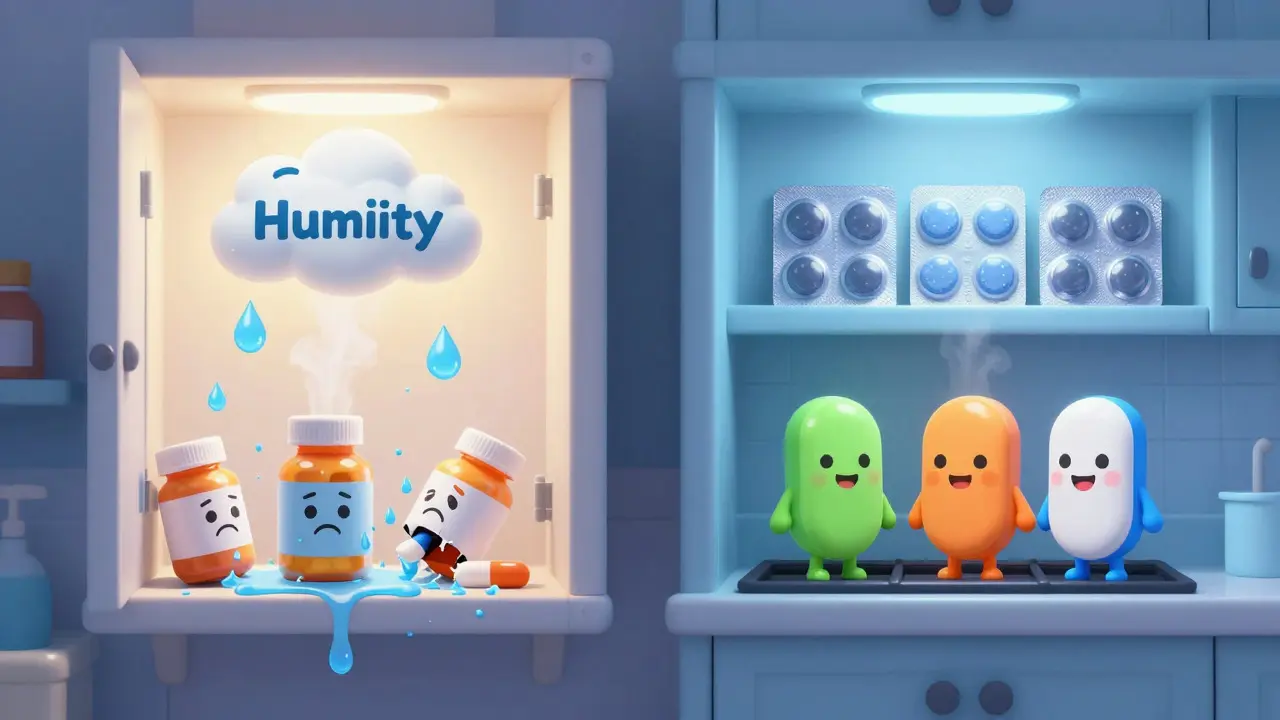
If you want to extend the life of your medications, location is everything. Most people store meds in the bathroom medicine cabinet. This is arguably the worst place in your house. Bathrooms are hot and humid. Every time you shower, steam rises and settles into your cabinets. Moisture is the enemy of most solid oral dosage forms. It causes tablets to crumble, capsules to soften, and chemicals to break down faster than intended.
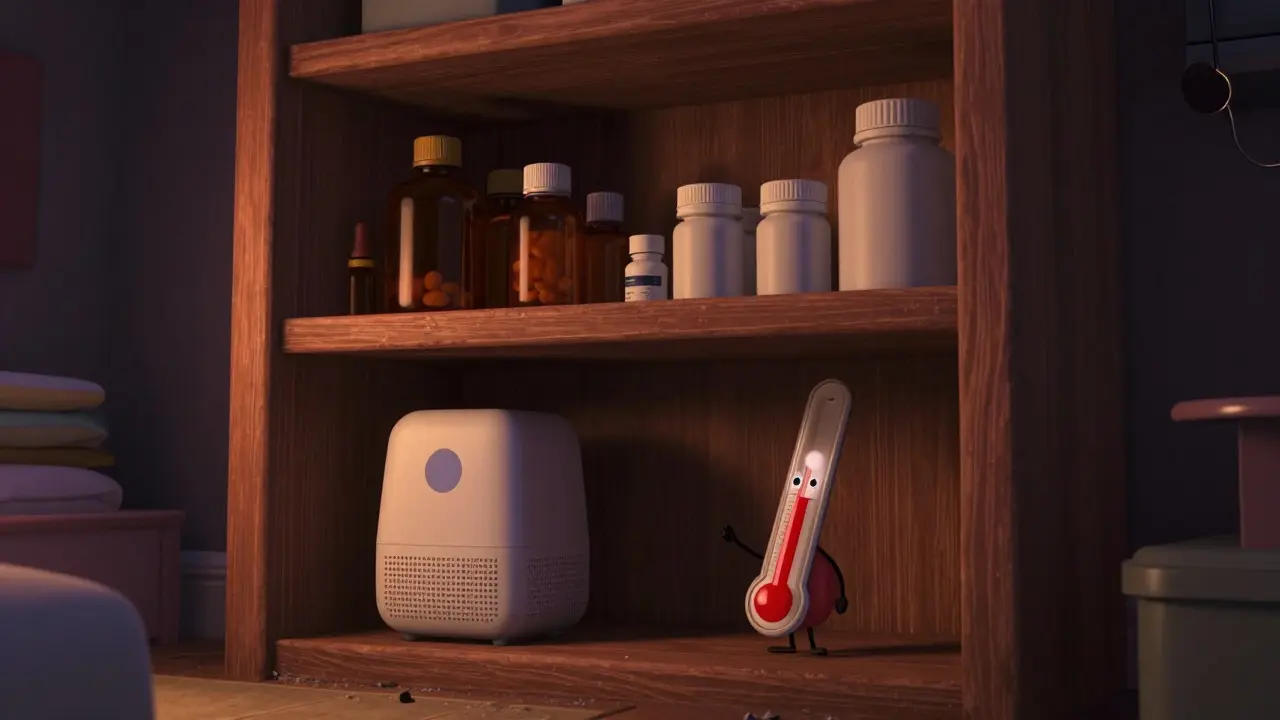
To properly store medications, look for a cool, dry, and dark place. A bedroom closet or a kitchen cupboard away from the stove and sink is ideal. The general rule for most solid oral medications is to keep them at room temperature, specifically between 20°C and 25°C (68°F to 77°F), with relative humidity kept below 60%. If your home gets very hot in the summer, consider using a dehumidifier in the storage area or keeping sensitive meds in an air-conditioned room.
Light is another major factor. Ultraviolet light can degrade certain compounds, turning them less effective or altering their chemical structure. This is why some medications come in amber bottles or opaque packaging. Keep your meds in their original containers whenever possible. These containers are designed to block light and protect against moisture. Transferring pills to weekly pill organizers is convenient, but it exposes them to air and light, potentially shortening their lifespan significantly.
Which Medications Can Last Longer?
Not all drugs age gracefully. The potential for shelf-life extension depends heavily on the formulation. Solid oral dosage forms, such as tablets and capsules, are generally the most stable. The SLEP data showed that drugs like naloxone, halothane, and fentanyl demonstrated 100% stability for 4-5 years post-expiration across all tested lots. Similarly, many common over-the-counter pain relievers and antihistamines tend to hold up well if stored correctly.
| Medication Type | Storage Condition | Stability Risk | Extension Potential |
|---|---|---|---|
| Solid Tablets/Capsules | Cool, Dry, Dark | Low | High (Years beyond date) |
| Liquid Suspensions | Room Temp or Fridge | Medium-High | Low (Follow label strictly) |
| Insulin/Biologics | Refrigerated (2-8°C) | Very High | None (Strict expiry) |
| Nitroglycerin | Original Glass Bottle | High | Low (Short shelf life) |
| Tetracycline Antibiotics | Dry Environment | High (Toxicity risk) | None (Discard if expired) |
Liquid formulations, on the other hand, are much trickier. Once you open a bottle of liquid antibiotic or cough syrup, the clock starts ticking faster due to exposure to bacteria and air. Reconstituted products-powders you mix with water-are particularly unstable. Dr. Lee Cantrell from the University of California, San Francisco, notes that while many solid forms maintain stability, liquid formulations and reconstituted products can degrade into potentially toxic compounds. A prime example is tetracycline. Old studies suggested that expired tetracycline could break down into substances that damage the kidneys. While modern manufacturing has reduced this risk, it remains a cautionary tale: never use expired antibiotics, especially older ones.
Temperature Control: The Silent Degradator
Heat accelerates chemical reactions. If you leave your car parked in the sun during July 2026, the interior temperature can easily exceed 50°C (122°F). Leaving medication in a hot car can ruin it in hours. Conversely, freezing can damage emulsions and suspensions, causing them to separate permanently. Refrigerated medications, such as certain vaccines or eye drops, must be kept between 2°C and 8°C (36°F to 46°F). Even brief excursions outside this range can cause irreversible degradation.
For most household meds, "room temperature" does not mean the top of the fridge or the back of a freezer. It means a consistent, moderate environment. If you live in a region with extreme heat or cold, consider investing in a small, dedicated medical refrigerator for biologics or insulin. For standard pills, simply avoiding places with temperature swings-like near windows, stoves, or heating vents-is crucial. Consistency is key. Frequent temperature changes cause condensation inside bottles, introducing moisture that promotes mold growth and chemical breakdown.
Signs Your Medication Has Gone Bad
Before relying on an expired drug, inspect it closely. Visual and olfactory cues can tell you if a medication has degraded. Look for changes in color, texture, or smell. Tablets that have become soft, crumbly, or discolored should be discarded. Capsules that stick together or feel damp are likely compromised. Liquid medications that have changed color, developed cloudiness, or contain visible particles are no longer safe to use.
If a medication smells different than when you first opened it-particularly if it has a sour, rancid, or unusually strong odor-it is best to throw it away. Some drugs, like nitroglycerin, lose potency so quickly that manufacturers recommend replacing them every three to six months, regardless of the printed expiration date. Always check the package insert for specific storage instructions and signs of degradation.
Safe Disposal of Expired Drugs
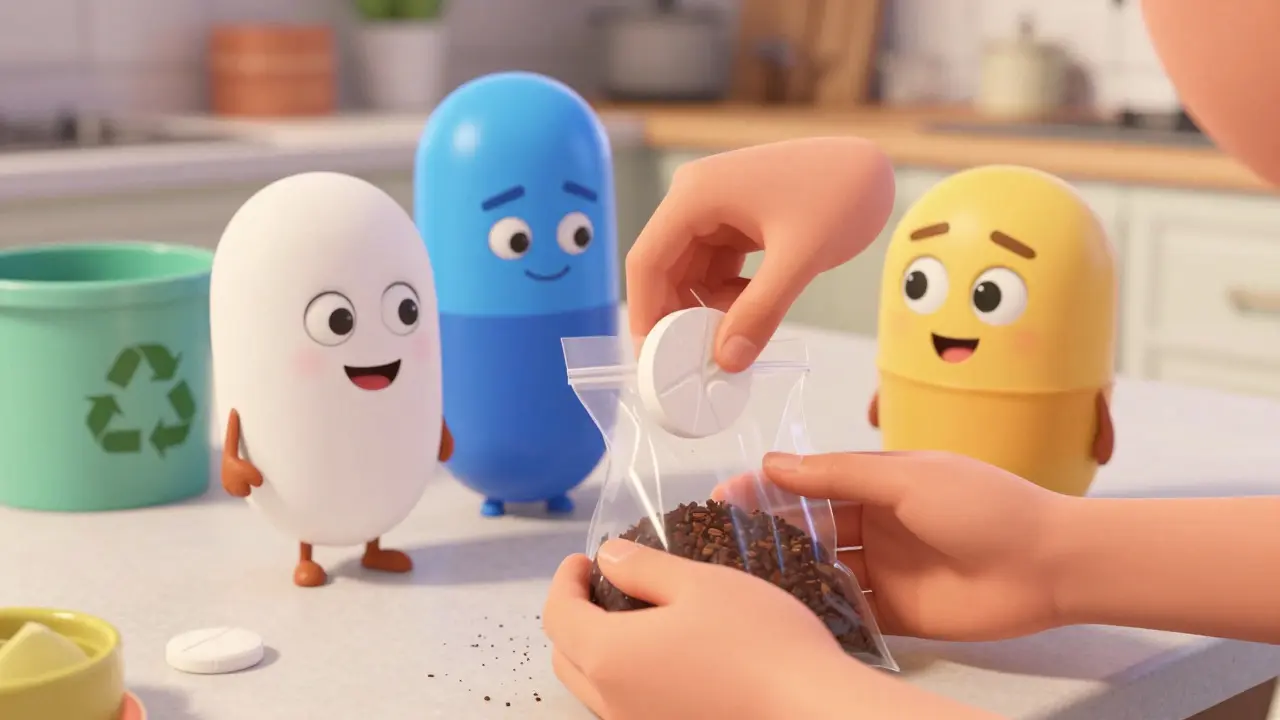
When you decide to toss out old medications, do not just flush them down the toilet unless the label explicitly says to do so. Flushing can contaminate water supplies. Instead, look for local drug take-back programs. Many pharmacies and police stations host collection bins for safe disposal. If no take-back option is available, mix the pills with an unappealing substance like used coffee grounds or cat litter, place the mixture in a sealed container, and throw it in the trash. This prevents accidental ingestion by children or pets.
Removing personal information from prescription labels before disposal is also a good practice to protect your privacy. By disposing of expired drugs responsibly, you reduce environmental impact and prevent accidental overdoses.
Can I take expired medication in an emergency?
In a true emergency where no alternative exists, taking a slightly expired solid oral medication (like ibuprofen or acetaminophen) that has been stored properly is generally considered low risk. However, for life-saving drugs like epinephrine auto-injectors, nitroglycerin, or insulin, expired versions may not work effectively. Always seek professional medical help immediately if possible. The FDA’s Shelf-Life Extension Program shows many drugs remain potent for years, but this is based on rigorous testing, not home storage.
Why shouldn't I store meds in the bathroom?
Bathrooms are typically the hottest and most humid rooms in a house. Steam from showers introduces moisture into medicine cabinets, which can cause tablets to crumble and chemicals to degrade faster. Heat and humidity accelerate the breakdown of active ingredients. A cool, dry closet or drawer in a bedroom is a much safer storage location.
Does refrigerating all my pills help them last longer?
No. Unless the label specifically says "refrigerate," most pills do not need cold storage. In fact, refrigerators can be too humid, leading to condensation inside pill bottles when they are taken out. This moisture can ruin the medication. Only store meds in the fridge if the manufacturer instructs you to do so, such as with certain eye drops, insulin, or liquid suspensions.
What is the Shelf-Life Extension Program (SLEP)?
SLEP is a joint program between the FDA and the U.S. Department of Defense started in 1986. It tests drugs held in strategic national stockpiles to see if they remain stable and effective beyond their printed expiration dates. The program found that 88% of tested drugs remained viable for years past their expiry, saving billions in replacement costs. However, these drugs are stored in highly controlled environments, unlike typical home settings.
Are expired antibiotics dangerous?
Expired antibiotics may lose potency, leading to ineffective treatment and potential antibiotic resistance. More concerningly, some older antibiotics like tetracycline can degrade into toxic compounds that harm the kidneys. While modern manufacturing has improved stability, it is safest to discard all expired antibiotics rather than risk toxicity or treatment failure.