
When you hear about semaglutide, you’re probably hearing about the drug that’s changing how people lose weight. It’s not magic. It’s not a miracle. But it’s one of the most effective weight loss medications ever studied - and it comes in two branded forms: Ozempic and Wegovy. Both contain the same active ingredient, but they’re used for different reasons, and that difference matters a lot.
Same Drug, Different Doses, Different Purposes
Ozempic and Wegovy are both injectable versions of semaglutide. The chemical is identical. What changes is the dose and what the FDA says it’s for.Ozempic was approved in 2017 for type 2 diabetes. It’s given in doses up to 1.0 mg or 2.0 mg once a week. Its main job is to lower blood sugar by helping the pancreas release more insulin when needed and slowing down how fast food leaves the stomach. Many people on Ozempic lose weight as a side effect - sometimes 10% or more of their body weight.
Wegovy was approved in 2021 specifically for weight loss. It’s the same molecule, but at a higher dose: 2.4 mg once a week. That’s the maximum dose studied for obesity. In the STEP 1 clinical trial, people using Wegovy lost an average of 14.9% of their body weight over 68 weeks. That’s not a small number. For someone who weighs 250 pounds, that’s nearly 37 pounds gone. Compare that to placebo users, who lost just 2.4% - about 6 pounds.
So if you’re diabetic and need help with blood sugar, Ozempic makes sense. If you have obesity and want to lose weight, Wegovy is the version designed for that. But here’s the catch: doctors often prescribe Ozempic off-label for weight loss because Wegovy is hard to get. That’s not illegal, but it’s not always covered by insurance.
How It Actually Works in Your Body
Semaglutide doesn’t burn fat. It doesn’t block calories. It works on your brain.It mimics a natural hormone called GLP-1, which your gut releases after eating. That hormone tells your brain, “You’re full.” In people with obesity, this signal is often weak. Semaglutide turns it up to 11.
It hits receptors in the hypothalamus - the part of your brain that controls hunger. It activates neurons that say “stop eating” and quiets down the ones screaming “eat more.” You don’t feel deprived. You just don’t crave food the same way. People on semaglutide often say things like, “I used to think about food all the time. Now, it just doesn’t matter.”
It also slows down digestion. Food stays in your stomach longer. That means blood sugar rises more slowly after meals. It reduces the spike-and-crash cycle that leads to cravings. And it lowers glucagon - a hormone that tells your liver to release stored sugar. Less glucagon means less fat storage.
There’s even evidence it helps your body burn more calories by encouraging “browning” of fat tissue. White fat stores energy. Brown fat burns it. Semaglutide nudges white fat cells to behave more like brown ones. That’s not a huge effect, but every bit helps.
Real Results: What Numbers Don’t Tell You
The clinical trial numbers are impressive. 14.9% weight loss. 79% of people lost at least 10% of their body weight. But real life is messier.One woman in Birmingham, 47, started Wegovy after gaining 50 pounds during menopause. She lost 42 pounds in 10 months. She says the hunger vanished. She stopped snacking. She didn’t feel like she was dieting. Then her insurance stopped covering it. She switched to a cheaper generic version of liraglutide - and gained back 20 pounds in six months.
That’s not unusual. Studies show that when people stop semaglutide, they regain about two-thirds of the weight they lost within a year. The drug doesn’t cure obesity. It manages it. Like blood pressure medication. Like insulin. You don’t stop taking it because you feel better. You keep taking it because your body still needs it.
And that’s why doctors say it’s not a quick fix. It’s a long-term tool. The STEP 4 trial proved it: people who kept taking semaglutide maintained their weight loss. Those who switched to placebo gained back nearly 7% of their body weight in just 48 weeks.

The Side Effects Nobody Talks About
The biggest problem with semaglutide isn’t cost. It’s nausea.In the STEP trials, 77% of people had nausea. 64% had diarrhea. 56% threw up. That’s not a few people. That’s most of them. Most get better after a few weeks as their body adjusts. But some don’t. Some have to stop.
One Reddit user wrote: “I got to 1.7mg and couldn’t take it anymore. I was vomiting three times a day. I lost weight, but I felt like I was dying.”
The dose starts low - 0.25 mg once a week - and goes up slowly over 16 to 20 weeks. That’s not a suggestion. It’s a requirement. Jumping to the full dose too fast almost guarantees nausea. Most people who quit early did so because they skipped the ramp-up.
Other risks include gallbladder problems, pancreatitis (rare), and a theoretical risk of thyroid tumors - seen in rats, not humans. It’s banned for people with a personal or family history of medullary thyroid cancer or MEN2 syndrome. If you’ve had any kind of thyroid cancer, don’t take it.
Wegovy vs. Ozempic: Which One Should You Use?
If you have type 2 diabetes and obesity, Ozempic is a smart choice. It helps both conditions. Insurance usually covers it for diabetes.If you have obesity (BMI ≥30) or overweight with a weight-related condition (like high blood pressure or sleep apnea) and no diabetes, Wegovy is the approved option. But it’s expensive - around $1,350 a month in the U.S. without insurance.
Many people on Ozempic for diabetes end up losing more weight than those on older weight loss drugs like phentermine or liraglutide. Liraglutide (Saxenda) requires daily injections and only leads to about 8% weight loss on average. Semaglutide? 15%.
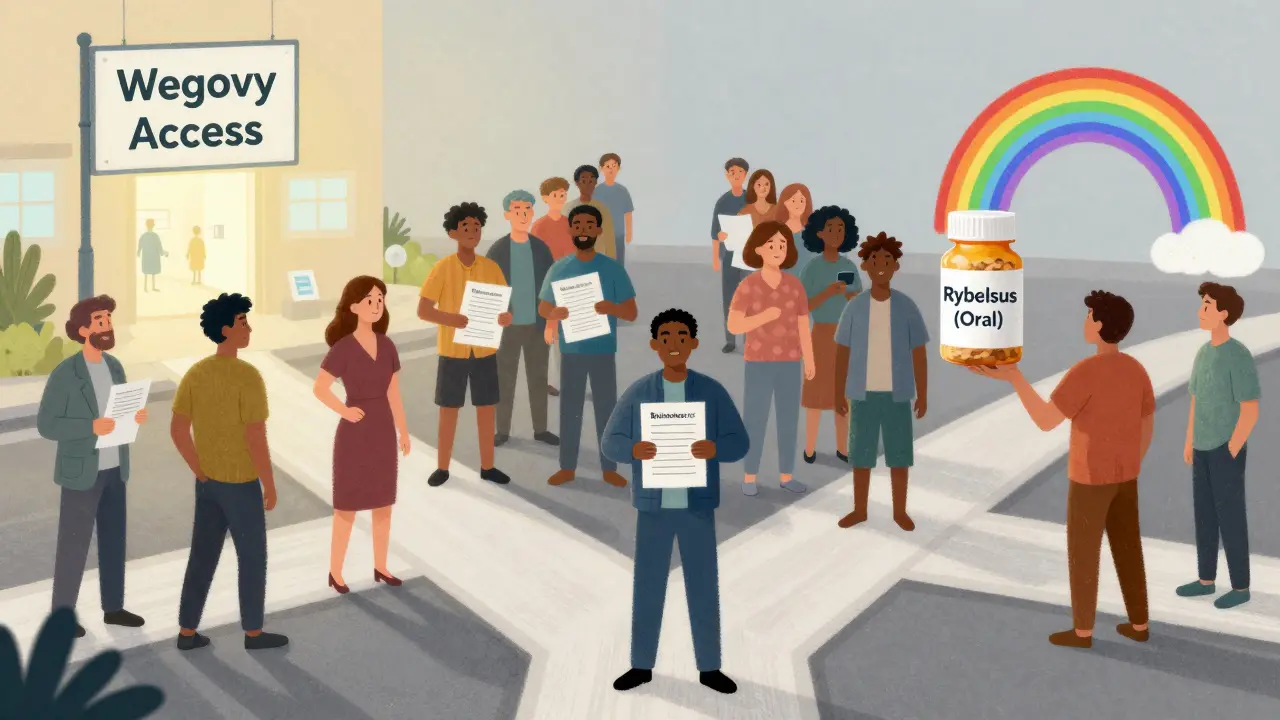
But here’s the reality: if Wegovy is unavailable due to shortages - which it often is - and your insurance won’t cover Ozempic for weight loss, you’re stuck. Supply issues affected 78% of U.S. providers in 2023. Some people wait months for a prescription.
Cost, Access, and the Big Question: Who Gets to Use It?
This isn’t just a medical issue. It’s a fairness issue.Wegovy generated over $5 billion in sales in 2023. But most people who need it can’t get it. Insurance companies often deny coverage unless you’ve tried other weight loss methods first - even though those methods rarely work long-term. Medicaid doesn’t cover it in most states. Medicare only covers it if you have diabetes.
Novo Nordisk has a patient assistance program for uninsured Americans. But in the UK, where I live, NHS coverage is extremely limited. Only a small number of people get it through specialist obesity clinics. The rest pay out of pocket - if they can afford it.
Dr. Robert Kushner put it bluntly: “We have a drug that works better than any before it. But only the wealthy can access it. That’s not medicine. That’s a luxury.”
What Comes Next?
The next wave of drugs is already here. Tirzepatide (Zepbound) is a dual GLP-1 and GIP agonist. In trials, it led to 20.9% weight loss - even better than semaglutide. Oral semaglutide (Rybelsus) is approved for diabetes, but trials for weight loss are underway. If an oral version works, it could change everything.But the biggest hurdle isn’t science. It’s sustainability. If millions of people need semaglutide for life, the cost to the healthcare system could hit 1-2% of total U.S. spending by 2030. That’s billions. And no country is ready for that.
Meanwhile, people are still losing weight. Still feeling better. Still having more energy. Still fitting into clothes they thought they’d never wear again.
Semaglutide isn’t perfect. But for the first time in decades, we have a tool that actually helps people with obesity lose weight - and keep it off - without surgery. That’s huge.
Just don’t think of it as a cure. Think of it as a lifeline. And like any lifeline, it only works if you keep holding on.
How to Start - If You Can
If you’re considering semaglutide:- See a doctor who specializes in obesity medicine - not just your GP.
- Ask about your BMI and weight-related conditions. Wegovy requires a BMI of 30 or higher, or 27+ with a comorbidity.
- Check your insurance coverage. Many require prior authorization or proof of failed diet attempts.
- Be prepared for side effects. Start low. Go slow.
- Combine it with lifestyle changes. The trials included weekly counseling on diet and exercise. That’s not optional.
- Plan for the long term. If you stop, expect to regain weight.
Is Ozempic the same as Wegovy for weight loss?
Ozempic and Wegovy contain the same active ingredient - semaglutide - but they’re approved for different uses. Ozempic is for type 2 diabetes at doses up to 2.0 mg. Wegovy is for weight loss at the higher dose of 2.4 mg. While Ozempic often leads to weight loss as a side effect, Wegovy is specifically studied and approved for that purpose. Many people use Ozempic off-label for weight loss because Wegovy is hard to get, but insurance may not cover it unless you have diabetes.
How much weight can you lose with semaglutide?
In clinical trials, people using Wegovy (2.4 mg weekly) lost an average of 14.9% of their body weight over 68 weeks. About 79% lost at least 10% of their weight, and nearly half lost over 20%. Results vary based on dose, adherence, diet, and activity level. Weight loss typically peaks around 68 weeks. Most of the loss happens in the first 44 weeks.
Why do people gain weight back after stopping semaglutide?
Semaglutide doesn’t change your metabolism permanently. It suppresses appetite and slows digestion while you’re taking it. Once you stop, your body returns to its previous state. Studies show people regain about two-thirds of lost weight within a year of stopping. That’s why experts recommend continuing the medication long-term for weight maintenance - similar to how you’d keep taking blood pressure meds. Stopping isn’t failure. It’s biology.
Are the side effects of semaglutide dangerous?
The most common side effects are nausea, vomiting, diarrhea, and constipation - and they’re usually mild to moderate, improving over time. Severe side effects are rare but include pancreatitis, gallbladder disease, and kidney issues. There’s a theoretical risk of thyroid tumors based on animal studies, so it’s not used in people with a personal or family history of medullary thyroid cancer or MEN2 syndrome. Always talk to your doctor about your full medical history before starting.
Can I take semaglutide if I don’t have diabetes?
Yes. Wegovy is specifically approved for adults with obesity (BMI ≥30) or overweight (BMI ≥27) with at least one weight-related condition like high blood pressure, high cholesterol, or sleep apnea - even if they don’t have diabetes. In fact, most participants in the STEP 1 trial didn’t have diabetes, and they still lost significant weight. Ozempic can also be used off-label for weight loss in non-diabetic people, but insurance coverage is less likely.
How long does it take to see results with semaglutide?
Most people start noticing reduced hunger and slight weight loss within the first 4 to 8 weeks. Significant weight loss - 5% or more of body weight - usually happens by week 12 to 16. Maximum weight loss occurs around 68 weeks (about 16 months). The dose is increased slowly over 16 to 20 weeks to reduce side effects, so patience is key.
Is semaglutide covered by insurance?
Coverage varies widely. In the U.S., Medicare and most private insurers cover Wegovy only if you have obesity and meet specific criteria - often requiring prior authorization and proof of failed diet attempts. Many insurers won’t cover it if you don’t have diabetes. In the UK, NHS coverage is extremely limited and usually only available through specialist obesity clinics. Novo Nordisk offers patient assistance programs in the U.S., but options are scarce elsewhere. Always check with your provider and pharmacy.