
For many people with asthma, a simple headache pill can turn into a medical emergency. If you have ever taken an over-the-counter painkiller and felt your chest tighten or your breathing slow down, you might not just be having a bad reaction to the drug-you could have a specific condition known as NSAID-Exacerbated Respiratory Disease, commonly referred to as NERD or Aspirin-Exacerbated Respiratory Disease (AERD).
This isn't a rare allergy in the traditional sense. It is a distinct inflammatory disorder that affects roughly 7% of all adults with asthma. The scary part? Most patients don't know they have it until they accidentally take a medication containing Nonsteroidal Anti-Inflammatory Drugs, or NSAIDs. By the time they connect the dots, they may have already ended up in the emergency room. Understanding what triggers this reaction, how to spot the warning signs, and which medications are actually safe is critical for keeping your lungs healthy.
The Hidden Mechanism Behind the Reaction
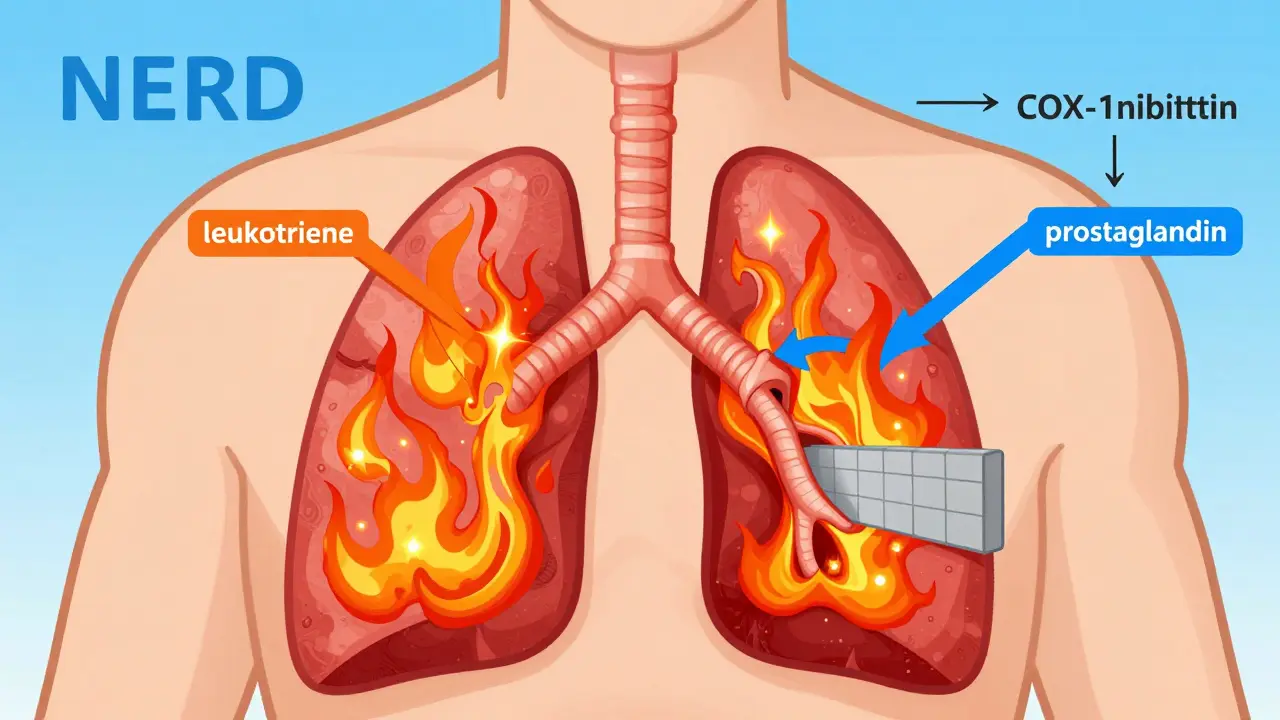
To understand why NSAIDs hurt some asthmatics but not others, we need to look at what happens inside your body on a chemical level. When you take common drugs like ibuprofen or aspirin, they work by blocking an enzyme called Cyclooxygenase-1, often abbreviated as COX-1. In most people, this blockage reduces inflammation and pain without major side effects.
However, in people with NERD, blocking COX-1 disrupts a delicate balance. Normally, your body converts arachidonic acid into prostaglandins, which help keep airways open. When NSAIDs stop this process, the body shunts that arachidonic acid down a different path-the 5-lipoxygenase pathway. This results in a massive surge of pro-inflammatory compounds called Cysteinyl Leukotrienes, or CysLTs.
Think of leukotrienes as the fire alarm for your airways. They cause the muscles around your bronchial tubes to squeeze tight (bronchospasm) and increase mucus production. For someone with normal lungs, this spike is manageable. For someone with asthma, especially if they also have nasal polyps, it can trigger a severe asthma attack within 30 minutes to 3 hours of taking the pill. This is why the reaction feels so sudden and intense-it’s a biochemical cascade gone wrong.
Who Is at Risk? Identifying the Profile
You might wonder if you fit the profile for NERD. While anyone with asthma can potentially develop sensitivity, research points to specific risk factors that make you more vulnerable. If you recognize several of these traits in yourself, you should proceed with extreme caution regarding painkillers.
- Nasal Polyps: This is the biggest red flag. Approximately 40% to 50% of people who have chronic rhinosinusitis with nasal polyps also have NERD. If you have those fleshy growths in your nose, your risk is significantly higher than the general asthma population.
- Age and Gender: NERD rarely shows up in children. The average age of diagnosis is between 30 and 40 years old. Additionally, women are affected much more frequently than men, with studies showing about 70% of NERD patients are female.
- Severity of Asthma: People with severe or poorly controlled asthma are at higher risk. If you find yourself needing rescue inhalers frequently or have had previous hospitalizations for asthma, your susceptibility increases.
- Family History: Having close relatives with asthma, allergic rhinitis, or known drug sensitivities can play a role in your genetic predisposition.
It is also worth noting that upper airway symptoms often precede lower airway issues. Many patients report dealing with constant nasal congestion and loss of smell for years before their asthma becomes noticeably worse after taking NSAIDs.
Symptoms to Watch For After Taking Medication
If you suspect you have NSAID sensitivity, knowing exactly what to watch for is vital. The reaction doesn't usually happen instantly upon swallowing; there is typically a window of 30 minutes to 3 hours where symptoms escalate.
The first sign is often in the nose. You might experience sudden, severe nasal congestion, profuse runny nose (rhinorrhea), and sneezing. This can feel like an allergic reaction to pollen or dust, but the timing relative to medication intake is the key clue. As the reaction progresses, it moves to the lungs. You will likely feel chest tightness, wheezing, and shortness of breath. In severe cases, this can lead to a life-threatening bronchospasm that requires immediate emergency care.
A crucial point to remember: if you react to aspirin, you will likely react to all non-selective NSAIDs. This includes ibuprofen, naproxen, diclofenac, and mefenamic acid. Conversely, if you tolerate one NSAID well, you are generally safe with others in that class, though cross-reactivity is high enough that doctors usually advise avoiding them all if you have a known history.
Safe Alternatives for Pain and Fever
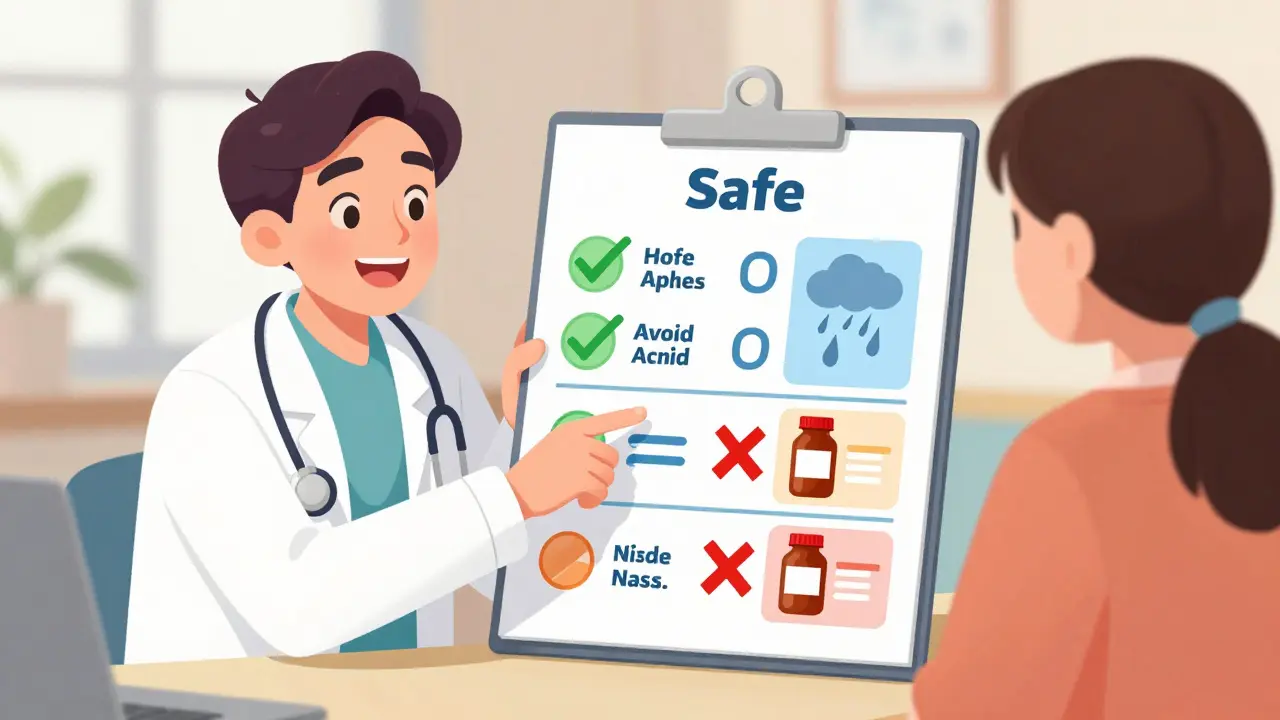
Avoiding NSAIDs doesn't mean you have to live in pain. There are effective alternatives that do not trigger the COX-1 blockade responsible for NERD reactions. However, you must be precise about dosages and types.
| Medication Type | Examples | Safety Status for NERD | Notes |
|---|---|---|---|
| Acetaminophen (Paracetamol) | Tylenol, Panadol | Generally Safe | Most patients tolerate doses up to 1000mg. About 5-10% may react to higher doses (>1000mg). Start low. |
| COX-2 Selective Inhibitors | Celecoxib (Celebrex) | Safe | These drugs target only COX-2, leaving COX-1 alone. They do not trigger the leukotriene surge. Requires prescription. |
| Traditional NSAIDs | Ibuprofen, Aspirin, Naproxen | Avoid | High risk of triggering severe respiratory reactions. Do not use unless desensitized under medical supervision. |
| Opioids | Codeine, Tramadol | Variable | Not anti-inflammatories. Use with caution due to other side effects; consult doctor. |
Acetaminophen is the go-to recommendation for mild pain. However, because a small percentage of NERD patients can still react to high doses of acetaminophen, it is wise to start with a low dose (500mg) and monitor your breathing for an hour. If you need stronger anti-inflammatory action, ask your doctor about celecoxib. It bypasses the problematic enzyme entirely and has been shown in clinical studies to be safe for most NERD patients.
Hidden Sources of NSAIDs
One of the biggest challenges for patients is that NSAIDs hide in plain sight. You wouldn't expect a cold remedy or a sleep aid to contain a powerful anti-inflammatory, but many do. Always read the "Active Ingredients" label carefully.
Common products that may contain hidden NSAIDs include:
- Cold and Flu Combos: Many multi-symptom remedies contain ibuprofen or aspirin alongside decongestants.
- Menstrual Pain Relief: Products specifically marketed for period cramps often rely on high-dose NSAIDs.
- Muscle Rubs and Gels: Topical treatments like Voltaren (diclofenac gel) can sometimes trigger systemic reactions in highly sensitive individuals, though the risk is lower than oral ingestion.
- Low-Dose Aspirin: Some patients take 75mg aspirin daily for heart health. Even this tiny amount can trigger a reaction in NERD patients. Never assume "low dose" means "safe."
If you are unsure whether a medication contains an NSAID, call your pharmacist. They can check the ingredient list against your specific sensitivities. Keeping a written list of your triggers in your wallet or phone can save valuable time in an emergency.
Treatment Options: Desensitization and Beyond
Living with NERD requires more than just avoidance; it involves active management of the underlying inflammation. For many patients, standard asthma inhalers aren't enough to control the severity of symptoms caused by the leukotriene surge.
Leukotriene Receptor Antagonists: Drugs like montelukast (Singulair) block the action of leukotrienes. Since NERD is driven by an excess of these chemicals, adding a leukotriene modifier to your treatment plan can significantly improve both asthma control and nasal symptoms.
Aspirin Desensitization: This sounds counterintuitive, but it is a proven therapy for select patients. Performed in a specialized hospital setting, doctors gradually introduce tiny, increasing amounts of aspirin over several days. This process "resets" your immune response, allowing you to tolerate regular doses of aspirin. Studies show that long-term aspirin desensitization can reduce the size of nasal polyps and improve overall lung function. It is not a cure, but it can be a game-changer for quality of life. Note that you must continue taking aspirin daily to maintain the desensitized state; stopping even for a few days can reverse the effect.
Biological Therapies: Newer injectable medications targeting specific inflammatory pathways (such as anti-IgE or anti-IL-4/13 antibodies) are showing promise for severe NERD cases. These treatments address the root cause of the inflammation rather than just managing symptoms.
Creating Your Personal Action Plan
Knowledge is your best defense. Start by discussing your history with your GP or pulmonologist. If you have never been formally diagnosed with NERD but suspect you have it, ask about an aspirin challenge test. This diagnostic procedure, done under strict medical supervision, confirms the diagnosis definitively.
Once diagnosed, update your medical alert bracelet or card. Emergency responders need to know immediately to avoid giving you epinephrine or steroids alone-they need to treat the bronchospasm aggressively. Finally, educate your family and close friends. Let them know which pills to keep away from you. A well-informed support system ensures that when pain strikes, you get relief without risking your breath.
Can I take Tylenol if I have NSAID sensitivity?
Yes, most patients with NSAID sensitivity can safely take acetaminophen (Tylenol/Paracetamol). However, it is recommended to start with a low dose (500mg) to ensure you do not react, as approximately 5-10% of NERD patients may experience symptoms at higher doses (above 1000mg).
How quickly do symptoms appear after taking an NSAID?
Symptoms typically begin within 30 minutes to 3 hours after ingestion. Early signs often include nasal congestion and runny nose, followed by chest tightness, wheezing, and shortness of breath. If you experience these symptoms after taking a new medication, seek medical attention immediately.
Is Celebrex safe for people with asthma and nasal polyps?
Yes, celecoxib is a COX-2 selective inhibitor, meaning it does not block the COX-1 enzyme that triggers the reaction in NERD patients. Clinical studies have shown it to be a safe alternative for pain relief in most individuals with aspirin-exacerbated respiratory disease.
What is aspirin desensitization therapy?
Aspirin desensitization is a medical procedure performed in a hospital where a patient is given gradually increasing doses of aspirin over several days. This process helps the body tolerate the drug, reducing nasal polyp burden and improving asthma control. Patients must continue daily aspirin maintenance to keep the benefits.
Do topical NSAIDs like gels trigger reactions?
While the risk is lower than with oral medications, topical NSAIDs (like diclofenac gel) can still be absorbed into the bloodstream and trigger reactions in highly sensitive individuals. It is best to avoid them or use them only under the guidance of your specialist.