Have you ever noticed your urine looks like soapy suds? Or maybe you’ve woken up with puffy eyes that feel like they belong to someone else? These aren’t just random quirks of daily life. They could be signs of nephrotic syndrome, a serious kidney condition where the filters in your kidneys get damaged. When this happens, vital proteins leak out of your blood and into your urine. This isn't a single disease but a cluster of symptoms signaling that something is wrong with how your kidneys filter waste.
If you or a loved one has been diagnosed with this, it can feel overwhelming. The swelling, the fatigue, and the confusing medical terms can make you feel lost. But understanding what is happening inside your body is the first step toward managing it effectively. In this guide, we will break down exactly what nephrotic syndrome is, why it causes such dramatic swelling, and what modern treatments are available to help you regain control.
What Exactly Is Nephrotic Syndrome?
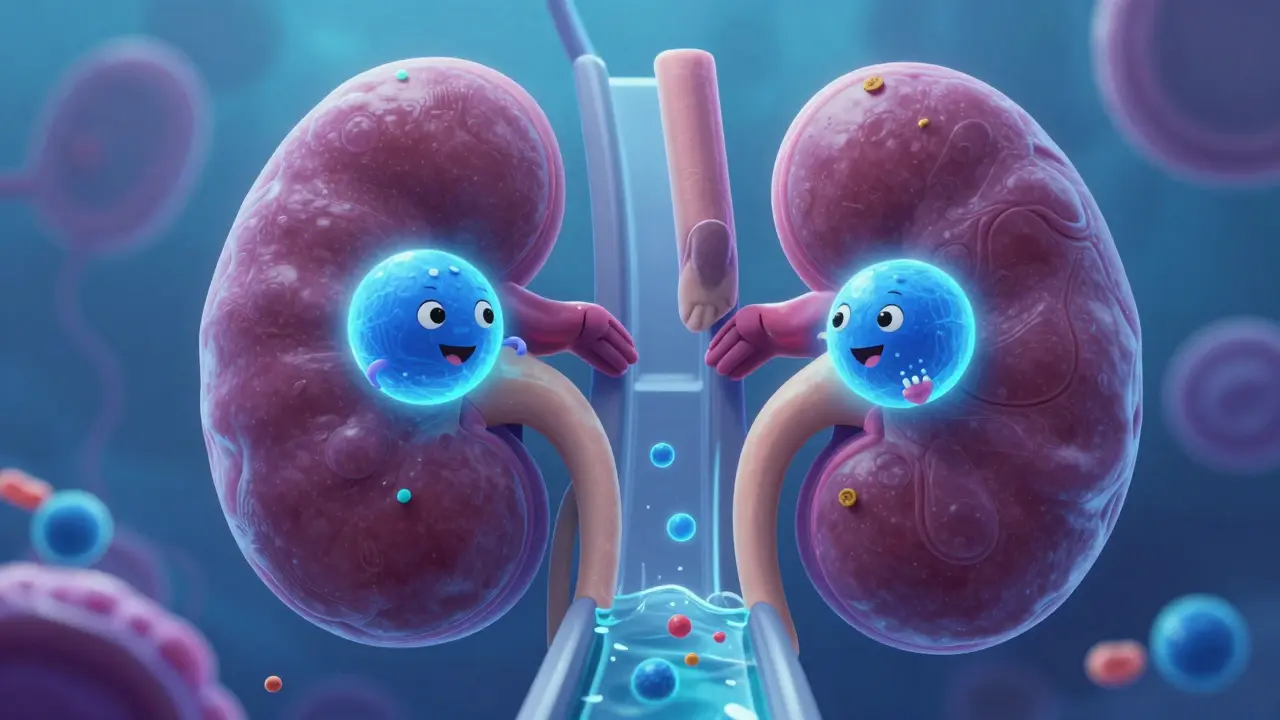
To understand nephrotic syndrome, you need to know how your kidneys work. Think of your kidneys as high-tech coffee filters. They clean your blood by removing waste while keeping essential nutrients, like proteins, inside your bloodstream. Specifically, tiny structures called podocytes act as the final barrier. They have foot-like projections that interlock to prevent large molecules from slipping through.
In nephrotic syndrome, these podocytes get damaged. The barriers become porous. As a result, massive amounts of protein-specifically albumin-escape into your urine. Doctors define this condition by four key markers:
- Heavy Proteinuria: Losing more than 3.5 grams of protein in your urine every day (in adults).
- Hypoalbuminemia: Low levels of albumin in your blood (usually below 3.0 g/dL).
- Edema: Significant swelling, often starting around the eyes and feet.
- Hyperlipidemia: High cholesterol and fat levels in the blood.
This combination creates a domino effect. Because albumin helps keep fluid in your blood vessels, losing it means fluid leaks into your tissues. That’s why you swell. Meanwhile, your liver tries to compensate for the low protein by making more lipids, which raises your cholesterol. It’s a complex cycle, but recognizing these signs early can save your kidney function.
Why Do You Swell? The Link Between Protein Loss and Edema
You might wonder why losing protein makes you puff up. It comes down to physics. Albumin acts like a sponge in your blood vessels, holding water inside them. When your kidneys leak albumin, that "sponge" disappears. Without enough albumin to hold fluid in the veins, water seeps out into the surrounding tissues.
This swelling, known as edema, usually starts subtly. You might notice your rings feel tight or your shoes pinch. In children, it often shows up as puffy eyelids in the morning. If left unchecked, the fluid can accumulate in your abdomen (ascites) or lungs (pleural effusion), making breathing difficult. For many patients, this visible swelling is the most distressing symptom, impacting their quality of life significantly.
It’s also important to distinguish this from other types of kidney issues. Unlike nephritic syndrome, which involves inflammation, bleeding in the urine, and high blood pressure, nephrotic syndrome is primarily about protein loss. While both affect the kidneys, the symptoms and treatments differ vastly. Knowing the difference helps you ask the right questions during your doctor’s visit.
Who Gets Nephrotic Syndrome? Causes and Risk Factors
Nephrotic syndrome doesn’t pick victims randomly. It affects different age groups in distinct ways. In children, particularly those between ages 1 and 6, the most common cause is minimal change disease. Despite the name, it’s serious, accounting for about 80-90% of childhood cases. Interestingly, under a microscope, the kidney tissue looks normal, hence "minimal change," but the function is severely impaired.
For adults, the landscape changes. Focal segmental glomerulosclerosis (FSGS) becomes a leading cause, affecting about 40% of adult cases. Other major culprits include membranous nephropathy and diabetic nephropathy. Diabetes is a huge risk factor, responsible for 20-30% of cases in Western countries. If you have long-standing diabetes, your kidneys are under constant stress from high blood sugar, damaging those delicate filtering units over time.
Secondary causes also play a role. Conditions like lupus, hepatitis B or C, and even certain medications (like NSAIDs taken chronically) can trigger nephrotic syndrome. In rare cases, genetic mutations, such as those causing congenital nephrotic syndrome of the Finnish type, present in infancy. Identifying the root cause is crucial because treating the underlying condition-like controlling blood sugar in diabetes-can sometimes reverse the damage.

Diagnosing the Condition: Tests and Biopsies
If your doctor suspects nephrotic syndrome, they won’t guess. They will order specific tests to confirm the diagnosis. The gold standard is a 24-hour urine collection. You’ll collect all your urine for a full day to measure exactly how much protein you’re losing. A level above 3.5 grams per day confirms heavy proteinuria.
Blood tests follow closely behind. They check your serum albumin levels and lipid profile. Low albumin and high cholesterol support the diagnosis. However, knowing *why* it’s happening requires looking deeper. That’s where a kidney biopsy comes in.
A biopsy involves taking a tiny sample of kidney tissue using a needle guided by ultrasound. It sounds scary, but it’s routine. This test allows pathologists to see the exact type of damage. Is it minimal change disease? FSGS? Membranous nephropathy? Each type responds differently to treatment. For example, steroids work wonders for minimal change disease but might not touch FSGS. Getting the right diagnosis prevents wasted time on ineffective therapies.
| Cause | Typical Age Group | Key Characteristics | Response to Steroids |
|---|---|---|---|
| Minimal Change Disease | Children (1-6 years) | Sudden onset, severe edema | Excellent (80-90%) |
| FSGS | Adults & Older Children | Progressive, often resistant | Poor to Moderate |
| Membranous Nephropathy | Adults (Middle-aged) | Slow progression, auto-immune link | Variable |
| Diabetic Nephropathy | Adults with Diabetes | Long-term damage, hypertension | No (Manage diabetes instead) |
Treatment Options: From Steroids to New Therapies
Treating nephrotic syndrome isn’t one-size-fits-all. It depends entirely on the underlying cause. For most children with minimal change disease, corticosteroids like prednisone are the first line of defense. About 80-90% of kids respond well, going into remission within weeks. Remission means the protein stops leaking, and the swelling goes down.
However, steroids come with side effects. Increased appetite, weight gain, mood swings, and facial rounding (moon face) are common. Parents often find these harder to manage than the illness itself. In adults, steroid response is lower, and relapses are more frequent. When steroids fail or cause too many issues, doctors turn to second-line immunosuppressants like tacrolimus or cyclophosphamide.
Recent advances offer hope. Drugs like rituximab target specific immune cells, reducing the need for long-term steroids. Newer agents, such as sparsentan, block multiple pathways that contribute to kidney damage, showing promise in clinical trials. Additionally, ACE inhibitors or ARBs are almost always prescribed. These blood pressure meds do double duty: they lower blood pressure and reduce protein leakage by easing strain on the kidneys.

Lifestyle Changes: Diet and Daily Management
Medication alone isn’t enough. What you eat plays a massive role in managing symptoms. The biggest dietary change? Cutting salt. Sodium holds water in your body. If you’re already retaining fluid due to low albumin, adding salt is like pouring gasoline on a fire. Aim for less than 2,000 mg of sodium per day. Avoid processed foods, canned soups, and salty snacks.
Protein intake is another tricky area. Old advice suggested eating tons of protein to replace what was lost. We now know this can actually harm your kidneys further by making them work harder. Stick to moderate protein intake-about 0.8 to 1.0 grams per kilogram of body weight. Focus on high-quality sources like fish, chicken, and eggs.
Fluid restriction may also be necessary if swelling is severe. Your doctor will tell you how much water you should drink each day. Don’t guess. Too little can dehydrate you; too much worsens edema. Monitoring your weight daily is a simple but powerful tool. A sudden jump of 2-3 pounds in a day usually means fluid retention, not fat gain. Report this to your care team immediately.
Living With Nephrotic Syndrome: Long-Term Outlook
Living with nephrotic syndrome requires patience. Relapses are common, especially in children. A simple cold or flu can trigger a flare-up. That’s why staying up-to-date on vaccinations is critical, though you must avoid live vaccines while on high-dose steroids. Work closely with your nephrologist to create a relapse plan. Know when to call the doctor and when to adjust meds at home.
The long-term prognosis varies. Children with minimal change disease often grow up with healthy kidneys, despite occasional relapses. Adults with FSGS or diabetic nephropathy face a tougher road. Persistent proteinuria increases the risk of progressing to end-stage kidney disease. However, aggressive management of blood pressure, cholesterol, and protein leakage can slow or stop this progression. Many people live full, active lives for decades after diagnosis.
Remember, you are not alone. Support groups and patient communities provide invaluable advice and emotional support. Share your experiences, learn from others, and stay informed. Knowledge is your best weapon against this condition.
Is nephrotic syndrome curable?
For many people, especially children with minimal change disease, nephrotic syndrome is highly treatable and often goes into long-term remission. While some forms may recur, they can be managed effectively. In adults, depending on the cause (like FSGS or diabetes), it may be chronic but controllable with medication and lifestyle changes. Complete cure depends on the underlying pathology.
What causes foamy urine?
Foamy urine is caused by high levels of protein in the urine, a condition called proteinuria. Normally, urine flows smoothly. When excess protein is present, it changes the surface tension, creating bubbles that look like soap suds. If you notice persistent foamy urine, consult a doctor for a simple urine test.
Can diet reverse nephrotic syndrome?
Diet cannot cure nephrotic syndrome on its own, but it is essential for managing symptoms. Reducing salt intake helps decrease swelling (edema). Maintaining moderate protein levels prevents further kidney strain. However, medication is almost always required to address the underlying immune or structural kidney damage.
How does nephrotic syndrome differ from nephritis?
Nephrotic syndrome is characterized by heavy protein loss, low blood albumin, and severe swelling. Nephritis (or nephritic syndrome) involves inflammation, blood in the urine (hematuria), high blood pressure, and reduced kidney filtration. While both affect the kidneys, their symptoms and treatments are distinct.
Are there natural remedies for edema in nephrotic syndrome?
There are no proven natural cures for the edema caused by nephrotic syndrome. Diuretics (water pills) prescribed by doctors are the standard treatment to remove excess fluid. Natural approaches like limiting salt and elevating legs can help mildly, but they cannot replace medical therapy for significant fluid retention.