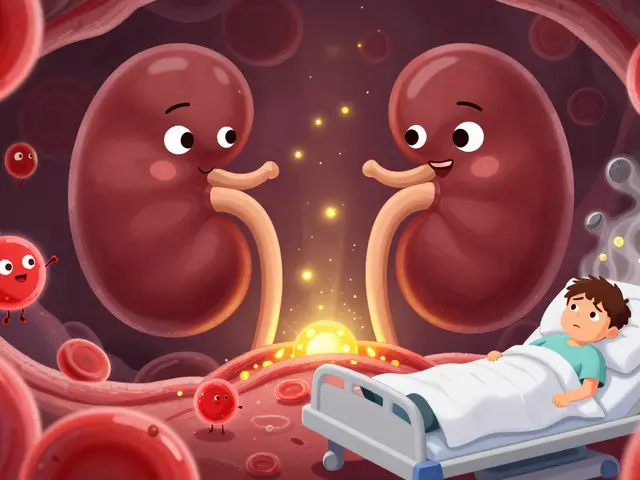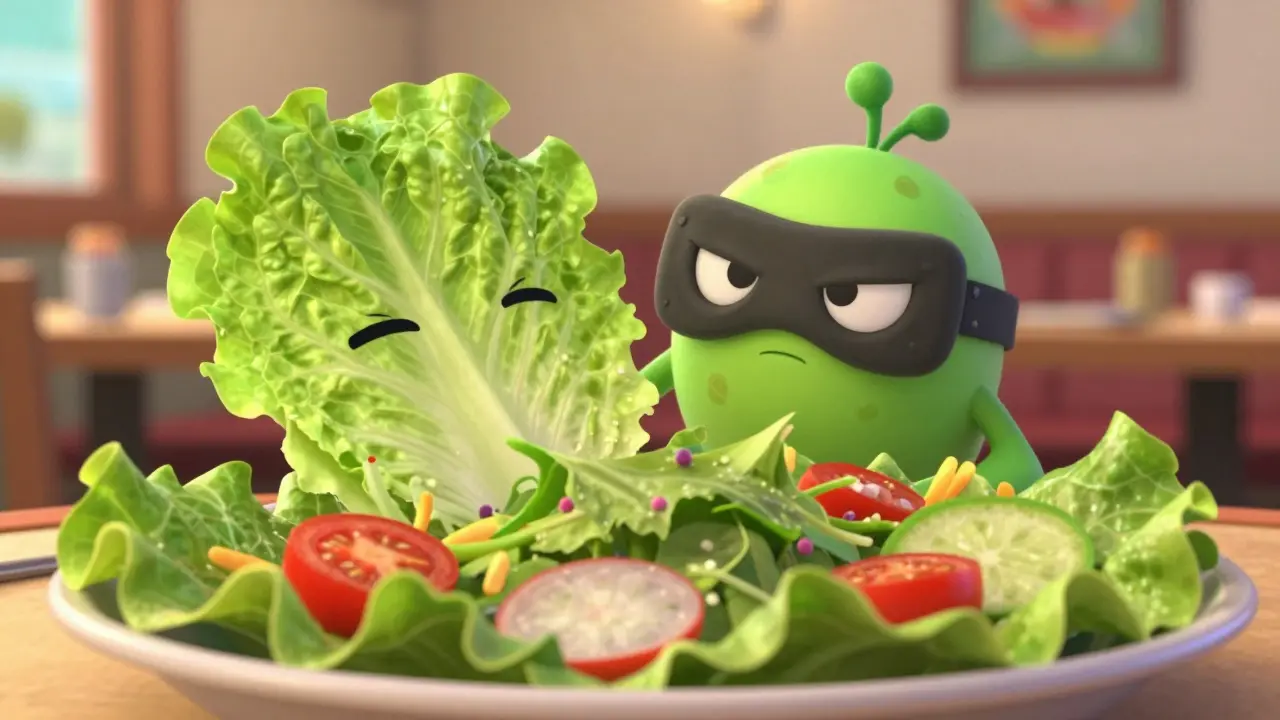
Imagine biting into a fresh salad at a restaurant you love, only to find out weeks later that it was the source of a liver infection. It sounds like a scene from a movie, but for Hepatitis A, a highly contagious virus causing acute liver inflammation, this is exactly how outbreaks often start.
You might think modern sanitation has eliminated these risks, but the truth is more complicated. The Hepatitis A virus (HAV) remains stable in the environment and resistant to multiple inactivation methods, meaning it can survive on surfaces and in food long after an infected person has left the building. In fact, according to the World Health Organization (WHO), hepatitis A affects approximately 1.4 million people worldwide annually. While routine childhood vaccination has reduced cases in places like the US since 1996, foodborne outbreaks still account for up to 25% of cases during large incidents.
If you work in food service, or if you’ve recently eaten at a place where an outbreak occurred, knowing how this virus spreads-and what steps you can take immediately after exposure-is critical. This guide breaks down the mechanics of foodborne transmission and explains your options for post-exposure prophylaxis (PEP), so you aren’t caught off guard.
How Hepatitis A Hides in Plain Sight
To understand why Hepatitis A is such a stubborn problem in restaurants and kitchens, we have to look at its biology. First identified in 1973 by Feinstone and colleagues using immune electron microscopy, HAV is a non-enveloped RNA virus belonging to the Picornaviridae family. Unlike many other viruses, it doesn’t have a fragile outer lipid envelope that soap easily destroys. Instead, it has a tough protein coat that allows it to withstand heat, gamma irradiation, and common chemical germicides.
This resilience is dangerous because it means standard cleaning isn't always enough. Research shows the virus can survive at room temperature for up to 30 days on stainless steel surfaces-think cutting boards or prep tables. It can remain infectious in dried form for up to 4 weeks and persist in frozen foods for years. If you freeze contaminated berries or shrimp, the virus doesn’t die; it just waits.
The real danger lies in the "fecal-oral route." An infected person sheds the virus in their stool. If they don’t wash their hands properly after using the bathroom, those viral particles transfer to their hands. From there, they touch food. Studies quantifying viral transfer mechanisms demonstrate that nearly 10% of infectious virus transfers from contaminated fingerpads to clean lettuce during casual contact-just 0.2 kg/cm² pressure for 10 seconds. That’s barely a touch.
Here’s the kicker: the infectious dose is incredibly low. As few as 10-100 viral particles can cause an infection. You don’t need a lot of contamination; you just need a little bit of the wrong thing.
The Silent Spreaders: Why Food Handlers Are Key
The most significant vector for Hepatitis A in developed countries is the infected food handler. But here’s the tricky part: symptoms don’t appear immediately. The incubation period ranges from 15 to 50 days, averaging 28 days. During this time, the person feels fine.
Worse yet, infected individuals become contagious 1-2 weeks *before* any symptoms show up. They are shedding the virus while preparing breakfast sandwiches, tossing salads, or handling sushi, completely unaware they are sick. They remain infectious until one week after jaundice (yellowing of the skin or eyes) appears. This creates a massive window for asymptomatic transmission.
A 2025 systematic review in *Frontiers in Public Health* highlighted that a single infected food handler can transmit the virus to dozens or even hundreds of individuals. Dr. Jane Smith, Director of the Center for Acute Disease Epidemiology at Iowa Health & Human Services, notes that the combination of asymptomatic cases (estimated at 30-50% of infections) and delayed symptom recognition creates "perfect conditions for silent transmission that often isn't detected until 2-3 weeks after initial contamination."
This is why relying on workers to call in when they feel sick is flawed strategy. By the time they feel bad, they may have already infected half the staff and dozens of customers.
High-Risk Foods: Where the Virus Thrives
Not all foods carry the same risk. Because HAV survives well in cool, moist environments and resists mild cooking temperatures, certain foods are frequent culprits in outbreaks:
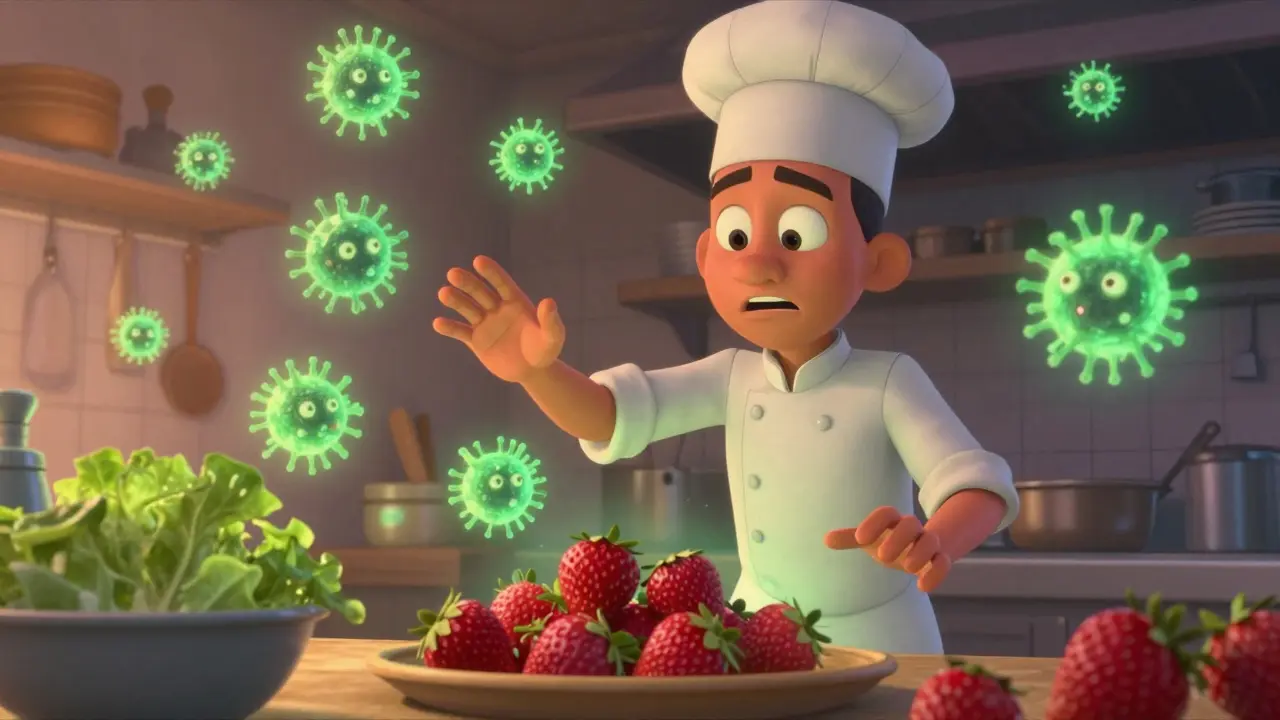
- Raw Produce: Lettuce, strawberries, and raspberries are common sources. These are often washed with untreated water or handled extensively by hand without adequate sanitization.
- Shellfish: Clams, oysters, and mussels filter feed, concentrating pathogens from the water. The Penn State Extension identifies shellfish as a particular concern, noting that 92% of shellfish-related outbreaks originate from harvesting in waters with fecal coliform counts exceeding the FDA's safety threshold of 14 MPN/100mL.
- Ready-to-Eat Foods: Sandwiches, deli meats, and pre-cut fruits are risky because they undergo no final cooking step to kill the virus. Remember, HAV survives at 60°C (140°F) for 60 minutes. Complete inactivation requires heating to 85°C (185°F) for at least 1 minute. Most ready-to-eat foods never reach these temperatures.
If you’re eating raw or lightly cooked items prepared by someone who might be infected, you’re in the highest risk category.
Post-Exposure Prophylaxis (PEP): Your Safety Net
Let’s say you suspect you were exposed-maybe you ate at a restaurant linked to an outbreak, or you had close contact with someone diagnosed with Hepatitis A. What do you do? You act fast. Post-exposure prophylaxis (PEP) is a medical intervention designed to prevent the disease from taking hold, but timing is everything.
The CDC explicitly states that PEP must be administered within **14 days** of exposure to be effective. After two weeks, the window closes, and the vaccine or immunoglobulin won’t stop the infection if it has already started.
You have two primary options for PEP, depending on your age and health history:
- Hepatitis A Vaccine: For healthy persons aged 1 to 40 years, a single dose of the hepatitis A vaccine is recommended. It provides longer-term protection, lasting a minimum of 25 years. It’s also cheaper, costing approximately $50-$75 per dose (2023 pricing).
- Immune Globulin (IG): For infants under 1 year, adults over 40, immunocompromised individuals, or those with chronic liver disease, IG is preferred. It provides immediate, short-term immunity (2-5 months) but costs significantly more ($150-$300 per dose). It contains antibodies that fight the virus right away.
It’s important to note that PEP does not eliminate transmission risk immediately. Even if you get the shot, you could still shed the virus for a short period. Therefore, recipients must maintain strict hand hygiene and avoid bare-hand contact with ready-to-eat foods for 6 weeks post-exposure to prevent secondary transmission to others.

Prevention Beyond the Shot: Practical Steps
Vaccination is powerful, but it’s not a magic bullet if basic hygiene fails. The WHO identifies three foundational prevention pillars: safe drinking water, proper sewage disposal, and consistent handwashing. In a kitchen setting, handwashing is your first line of defense.
The CDC emphasizes that thorough handwashing with soap and water for at least 20 seconds reduces transmission risk by 70% compared to water-only washing. Alcohol-based sanitizers? They’re less effective against non-enveloped viruses like HAV if hands are visibly dirty. Soap physically lifts the virus off the skin; alcohol alone may not penetrate the protein coat effectively in all scenarios.
Despite this, implementation gaps are huge. Washington State’s Department of Health reports that 78% of food establishments fail to implement proper bare-hand contact prevention. Only 42% use tongs or gloves for ready-to-eat food handling as required. Employee awareness is equally low: surveys show only 35% of food workers can correctly identify hepatitis A symptoms.
If you manage a food business, consider these actionable steps:
- Mandate Vaccination: As of January 2024, 14 US states require hepatitis A vaccination for food handlers. California’s 2022 mandate prevented an estimated 120 infections and saved $1.2 million in outbreak response costs. Encourage your staff to get vaccinated, even if it’s not legally required in your area.
- Train on Handwashing: Hands-on demonstration improves protocol adherence by 65% compared to verbal instruction alone. Don’t just tell them to wash; show them how.
- Enforce Work Restrictions: Infected food handlers cannot return to work until 7 days after jaundice onset or two weeks after symptom onset, whichever comes first. This isn’t optional-it’s public safety.
The Economic Reality of Outbreaks
Why should you care about prevention beyond health? The economics are staggering. A 2025 study documented that outbreak investigation costs average $100,000 to $500,000 per incident. This includes testing, trace-back investigations, lost productivity, and reputational damage. Compare that to the cost of a vaccine ($50-$75) or even IG ($150-$300). Dr. Michael Chen, lead author of the 2025 Frontiers review, projects potential healthcare savings of $3.20 for every $1 invested in prevention based on 2022 outbreak cost analyses.
For employers, offering vaccination programs isn’t just altruistic; it’s financially smart. Early data shows that $50 completion bonuses increase staff vaccination rates by 38 percentage points. With high staff turnover (average 150% annually in quick-service restaurants), protecting your workforce protects your bottom line.
How long does the Hepatitis A virus survive on surfaces?
The Hepatitis A virus is remarkably resilient. It can survive at room temperature for up to 30 days on stainless steel surfaces, remain infectious in dried form for up to 4 weeks, and persist in frozen foods for years. This durability makes environmental decontamination challenging and highlights the importance of rigorous cleaning protocols.
What is the difference between the Hepatitis A vaccine and Immune Globulin (IG)?
The Hepatitis A vaccine stimulates your body to produce its own antibodies, providing long-term protection (minimum 25 years) and is recommended for healthy individuals aged 1-40. Immune Globulin (IG) provides immediate, passive immunity by introducing pre-made antibodies, lasting 2-5 months. IG is preferred for infants under 1, adults over 40, and immunocompromised individuals due to faster action.
When is the best time to seek Post-Exposure Prophylaxis (PEP)?
PEP must be administered within 14 days of exposure to be effective. After two weeks, the window closes, and neither the vaccine nor IG will prevent the infection if it has already begun. If you suspect exposure, contact a healthcare provider immediately.
Can I get Hepatitis A from cooked food?
Properly cooked food is generally safe. The virus is completely inactivated at 85°C (185°F) for 1 minute. However, it can survive at 60°C (140°F) for 60 minutes. Risks arise when food is undercooked or handled with contaminated hands after cooking. Ready-to-eat foods like salads and deli meats pose higher risks because they skip the high-heat cooking step.
How soon after exposure do symptoms appear?
The incubation period for Hepatitis A ranges from 15 to 50 days, with an average of 28 days. Crucially, individuals are contagious 1-2 weeks before symptoms appear, making early detection difficult. Symptoms include fatigue, nausea, abdominal pain, and jaundice.