
LDL Cholesterol Reduction Calculator
Cholesterol Reduction Calculator
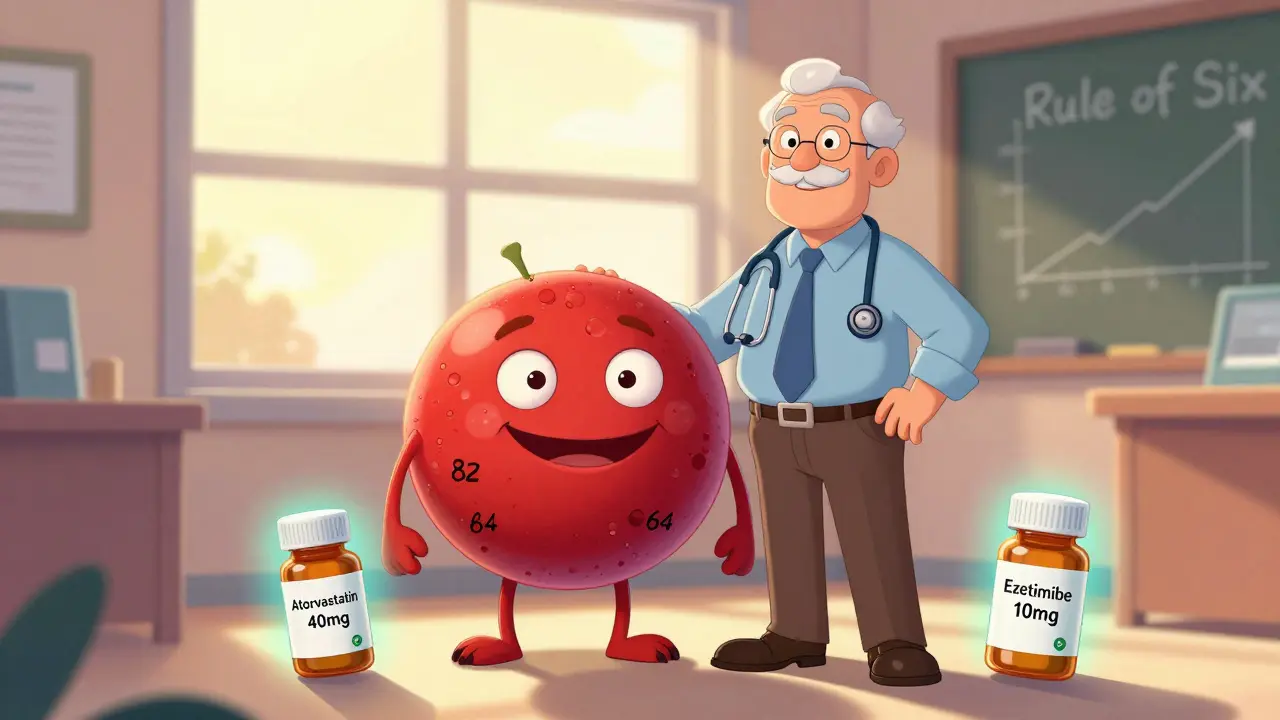
The Rule of Six: Doubling statin dose only gives about 6% additional LDL reduction. Higher doses don't provide proportional benefits but increase side effects.
Statin Monotherapy
Combination Therapy
Your Results
Statin Only
Combination Therapy
Why This Matters: Combining a moderate statin with ezetimibe gives 23.7 mg/dL more LDL reduction than doubling the statin dose (per 2025 meta-analysis), with 28% higher chance of hitting target LDL levels. Patients often report better tolerance with combination therapy.
This calculator uses data from IMPROVE-IT and CLEAR Harmony trials to estimate LDL reduction based on current medical evidence. Results are illustrative and should not replace professional medical advice.
Ask your doctor about combination therapy if you experience side effects from high-dose statins or haven't reached your LDL goal with statin monotherapy.
Most people on statins are told to take the highest dose possible to crush their LDL cholesterol. But what if that’s not the best way? What if doubling your statin dose barely moves the needle-and makes you feel worse? That’s the reality for millions. A growing number of doctors are switching to a smarter strategy: combination cholesterol therapy with reduced statin doses. It’s not new. But it’s finally getting the attention it deserves.
Why Higher Statin Doses Don’t Work Like You Think
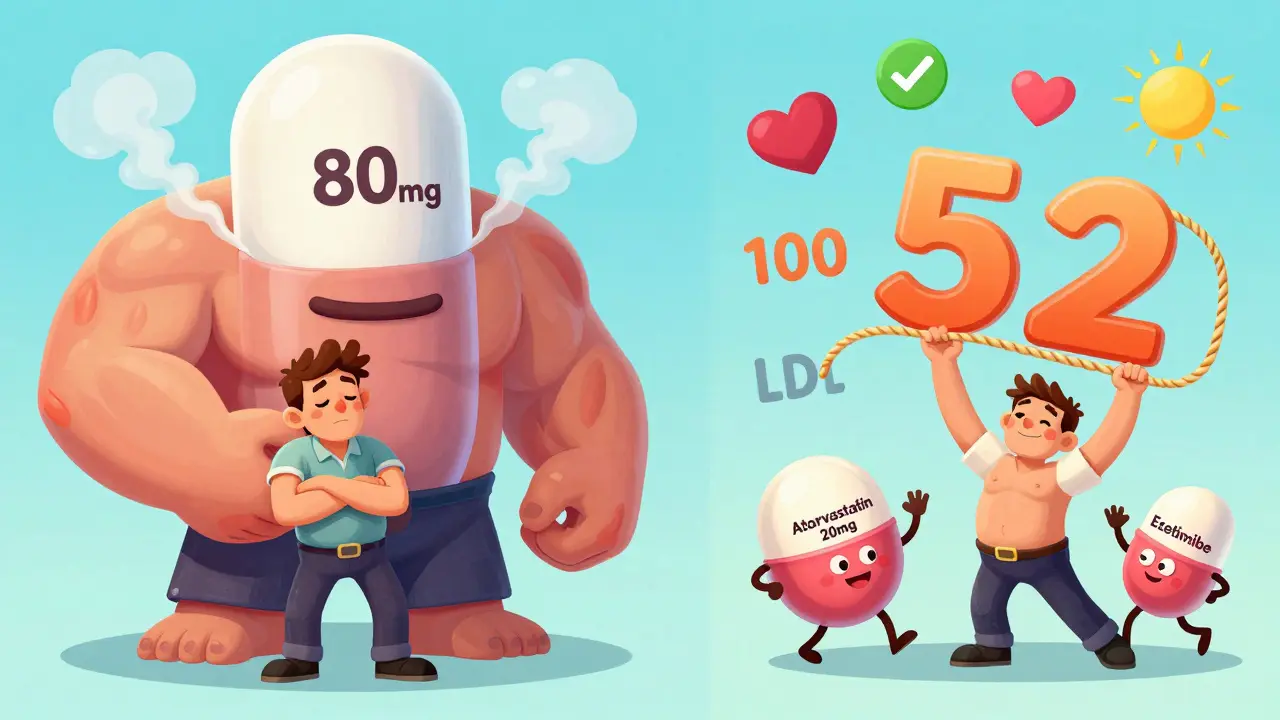
You’d assume that if 20 mg of atorvastatin lowers LDL by 39%, then 40 mg should drop it by 78%. But that’s not how it works. Every time you double the statin dose, you only get about 6% more LDL reduction. This is called the “rule of six.” A 2023 analysis in the Journal of the American College of Cardiology confirmed it: going from 10 mg to 20 mg of atorvastatin bumps LDL reduction from 39% to 45%. That’s it. The curve flattens fast.High-dose statins like 80 mg of atorvastatin or 40 mg of rosuvastatin might sound powerful, but they come with a cost. Around 10-15% of people on high doses report muscle pain, fatigue, or weakness. For many, those symptoms are enough to quit. One study found half of patients stop statins within a year-not because their cholesterol is high, but because they feel bad.
The Real Power of Combining Drugs
Here’s where things change. Instead of pushing statins harder, add a second drug that works differently. Ezetimibe is the most common. It blocks cholesterol absorption in the gut. Alone, it lowers LDL by about 18-20%. But when you pair it with a moderate statin-say, 20 mg of atorvastatin or 10 mg of rosuvastatin-the effect isn’t just added. It’s multiplied.Think of it this way: if a statin cuts your LDL by 40%, that leaves 60% still in your blood. Ezetimibe then knocks down 20% of what’s left. That’s 40% + (20% of 60%) = 52% total reduction. That’s better than high-dose statin monotherapy, which maxes out around 50%. And it’s done with less muscle pain.
A 2025 meta-analysis of nearly 19,000 patients showed that adding ezetimibe to a statin lowered LDL by 23.7 mg/dL more than doubling the statin dose. Patients on the combo were 28% more likely to hit their LDL target. And here’s the kicker: they didn’t feel worse. In fact, many felt better.
Who Benefits Most?
This isn’t for everyone. But for certain groups, it’s game-changing.- People with statin intolerance: About 7-29% of statin users can’t tolerate high doses. For them, moderate statin + ezetimibe is often the only way to get LDL under control without quitting meds.
- Very high-risk patients: Those who’ve had a heart attack, stroke, or have diabetes plus other risk factors need LDL under 55 mg/dL. High-dose statins alone rarely get them there. Combo therapy does.
- Familial hypercholesterolemia: Genetic high cholesterol doesn’t respond well to statins alone. Early combo therapy is standard in Europe and becoming common in the U.S.
Take a 68-year-old man in Cleveland who had a heart attack. He was on 80 mg of atorvastatin but his LDL stayed at 82 mg/dL. He had muscle pain and couldn’t tolerate higher doses. His doctor switched him to 40 mg of atorvastatin plus 10 mg of ezetimibe. His LDL dropped to 64 mg/dL-and the muscle pain vanished. He’s been on it for two years now.
What About Newer Drugs Like Bempedoic Acid and PCSK9 Inhibitors?
Ezetimibe isn’t the only option. Bempedoic acid works in the liver, not the gut. It lowers LDL by about 18% and causes fewer muscle side effects than statins. A 2019 trial called CLEAR Harmony showed that moderate statin + bempedoic acid achieved the same LDL reduction as high-dose statin alone-but with 25% fewer muscle-related problems. It’s a solid alternative for statin-intolerant patients.PCSK9 inhibitors (alirocumab, evolocumab) are injectables that slash LDL by 50-60%. But they’re expensive. Still, when used with a high-intensity statin, they can drop LDL by 80% or more. That’s powerful for people who’ve had multiple heart events or have very high genetic risk. The problem? Cost and access. Insurance often blocks them unless you’ve tried everything else.
There’s also a triple combo: high-dose statin + ezetimibe + PCSK9 inhibitor. It can drop LDL by 84%. But this is reserved for the most extreme cases-like someone with recurrent heart attacks despite maxed-out therapy.
Why Isn’t This the First Choice Everywhere?
The science is clear. The guidelines are catching up. But practice lags behind.Most primary care doctors still start with the highest statin dose they think a patient can handle. Why? Because that’s what they were taught. Guidelines from 2013 didn’t strongly endorse early combo therapy. Even today, European and U.S. guidelines still frame it as a backup plan-something to try after high-dose statins fail. But new evidence says: don’t wait.
A 2024 European Heart Journal study found that patients on statin + ezetimibe hit their LDL target 4.2 months faster than those on high-dose statins alone. That’s four months of lower heart attack risk. And yet, only 25% of eligible patients get this combo early, according to a 2023 JAMA Internal Medicine study.
Insurance is another hurdle. Ezetimibe is cheap-generic, under $10 a month. But PCSK9 inhibitors can cost over $14,000 a year. Even with coupons, prior authorizations delay treatment by one to two weeks. Many patients give up before they even start.
The Bottom Line: Less Statin, More Results
The old model-go high, go hard-is outdated. Statins are powerful, but their dose-response curve is flat. Side effects climb faster than benefits. Combination therapy flips the script: use less statin, add a second drug, get better results, and feel better doing it.For very high-risk patients, starting with a moderate statin plus ezetimibe isn’t just reasonable-it’s smarter. It’s faster. It’s safer. And it’s backed by solid data from IMPROVE-IT, CLEAR Harmony, and dozens of other trials.
If you’re on a high-dose statin and still not at your LDL goal, or if you’ve stopped statins because of side effects, ask your doctor about combination therapy. You might be surprised how much better you feel-and how much lower your cholesterol can go.
What’s Next?
The European Society of Cardiology is expected to update its guidelines in 2025, and leaked drafts suggest they’ll recommend moderate statin + ezetimibe as first-line for very high-risk patients. The American College of Cardiology already updated its 2023 expert pathway to say the same. The shift is real.And the numbers show it. In 2024, 78% of lipid specialists said they now start with combination therapy for high-risk patients-not escalate statin doses. That’s a massive change in just five years.
Lowering cholesterol doesn’t have to mean pushing your body to its limit. Sometimes, the best way forward is to take a step back-and add another tool.
Is combination therapy safer than high-dose statins?
Yes, for many people. High-dose statins cause muscle-related side effects in 10-15% of users, leading to up to 50% discontinuation rates within a year. Combining a moderate statin with ezetimibe or bempedoic acid achieves similar or better LDL reduction with 25-50% fewer side effects. Studies show better adherence and fewer doctor visits for muscle complaints.
Does adding ezetimibe really make a difference?
Absolutely. Ezetimibe alone lowers LDL by 18-20%. But when paired with a statin, it works on a different pathway, so the effects multiply. A moderate statin (30-49% reduction) plus ezetimibe (20% reduction of remaining cholesterol) equals 50-55% total reduction-better than high-dose statin monotherapy. The IMPROVE-IT trial proved this combo reduces heart attacks and strokes over time.
Can I just take ezetimibe without a statin?
It’s possible, but not ideal for most high-risk patients. Ezetimibe alone lowers LDL by about 18-20%, which isn’t enough for someone with heart disease or familial hypercholesterolemia. Statins are more potent and proven to reduce cardiovascular events. Ezetimibe is best used as a partner to a moderate statin, not a replacement.
How long does it take to see results with combination therapy?
You’ll see LDL changes in 4-6 weeks. Most patients reach their target within 8-12 weeks. In contrast, high-dose statin monotherapy often takes longer to hit targets-and many patients never get there due to side effects. A 2024 study showed combo therapy hit targets 4.2 months faster than high-dose statins alone.
Is combination therapy covered by insurance?
Ezetimibe is usually covered-it’s generic and cheap. Bempedoic acid is often covered for statin-intolerant patients, but prior authorization is common. PCSK9 inhibitors are harder to get; most insurers require you to try and fail on statins and ezetimibe first. Costs vary, but the long-term savings from preventing heart attacks often outweigh the drug cost.
Will I need blood tests more often with combination therapy?
No. You’ll still get your LDL checked every 6-12 weeks after starting, then every 6-12 months if stable. The same monitoring applies whether you’re on one drug or two. Your doctor will also check liver enzymes and creatine kinase (CK) if you report muscle pain, but rates of abnormal results are similar to statin monotherapy.


One comment
So let me get this straight-we’ve been force-feeding people 80mg statins like they’re protein powder, and the only thing we’re crushing is their quality of life? 🤦♂️
Turns out, the body ain’t a car engine where more fuel = more power. Sometimes you just need a better transmission.
Adding ezetimibe is like upgrading from a 1998 Camry to a hybrid Prius-same destination, way less gas, no back pain.
The clinical evidence supporting combination therapy is both robust and underutilized. The IMPROVE-IT trial, CLEAR Harmony, and subsequent meta-analyses consistently demonstrate improved lipid targets with reduced adverse event profiles. Primary care providers must be educated on guideline-aligned approaches to optimize long-term cardiovascular outcomes.
Wow. So the medical establishment finally caught up to the fact that doubling a dose doesn’t double the effect? Took ‘em long enough.
Meanwhile, I’ve been telling my doctor since 2018 that I couldn’t lift my arms after 40mg of rosuvastatin. He just shrugged and said, ‘Try harder.’
Turns out, the problem wasn’t me. It was the algorithm.
USA still thinkin’ ‘more pills = better’ like it’s a buffet? 😂
Here in Nigeria, we know: if your body screamin’ ‘NO!’ and your doctor still pushin’ 80mg, he ain’t healin’-he’s profitin’!
Ezetimibe? Cheap. Safe. Works. Why you payin’ for pain? 🇳🇬💊
Stop the statin cult. Start the smart combo. 🙏
I’ve been on a moderate statin + ezetimibe for 18 months. My LDL dropped from 148 to 62. I can now walk up stairs without feeling like I ran a marathon.
My doctor said, ‘We’ll try this if you’re still having issues.’ I said, ‘I’ve been having issues since day one.’
Don’t wait until you’re miserable to ask for a better plan. You deserve to feel good while you’re getting healthy.
Ezetimibe + moderate statin = better than high-dose statin. Done.
It is imperative that clinicians transition from a dose-escalation paradigm to a multi-modal therapeutic strategy in the management of hyperlipidemia, particularly among high-risk cohorts. The data supporting combination therapy are unequivocal, and adherence outcomes are demonstrably superior. Institutional protocols must be revised accordingly to reflect current evidence-based standards.
My grandma’s on this combo. She’s 74, plays pickleball twice a week, and her LDL is 58. She says, ‘I used to feel like a zombie. Now I feel like I can actually live.’
Also, she paid $3 for the whole month’s supply. I’m telling my doc tomorrow.
Wait… so this whole time, Big Pharma didn’t want us to know you can get the same results with cheaper drugs? 😏
Let me guess-ezetimibe doesn’t have a fancy ad campaign with a guy kayaking while smiling. It’s just… a pill.
And now they’re gonna push PCSK9 inhibitors like they’re magic wands because they make $14,000 off each one.
They don’t want you to feel better cheap. They want you to feel better expensive.
Wake up, people. This isn’t medicine. It’s a business model.
I was skeptical. I thought, ‘This is just another ‘natural remedy’ disguised as science.’
But then I watched my brother go from 120mg statin + constant muscle cramps to 20mg statin + ezetimibe… and suddenly he was lifting weights again. He cried.
Not because he was happy-he was angry. Angry that no one told him this was an option for years.
So if you’re on a high-dose statin and you’re tired, sore, or just… done… don’t suffer in silence.
Ask for the combo. Ask for the data. Ask for your life back.
You’re not broken. The protocol is.