
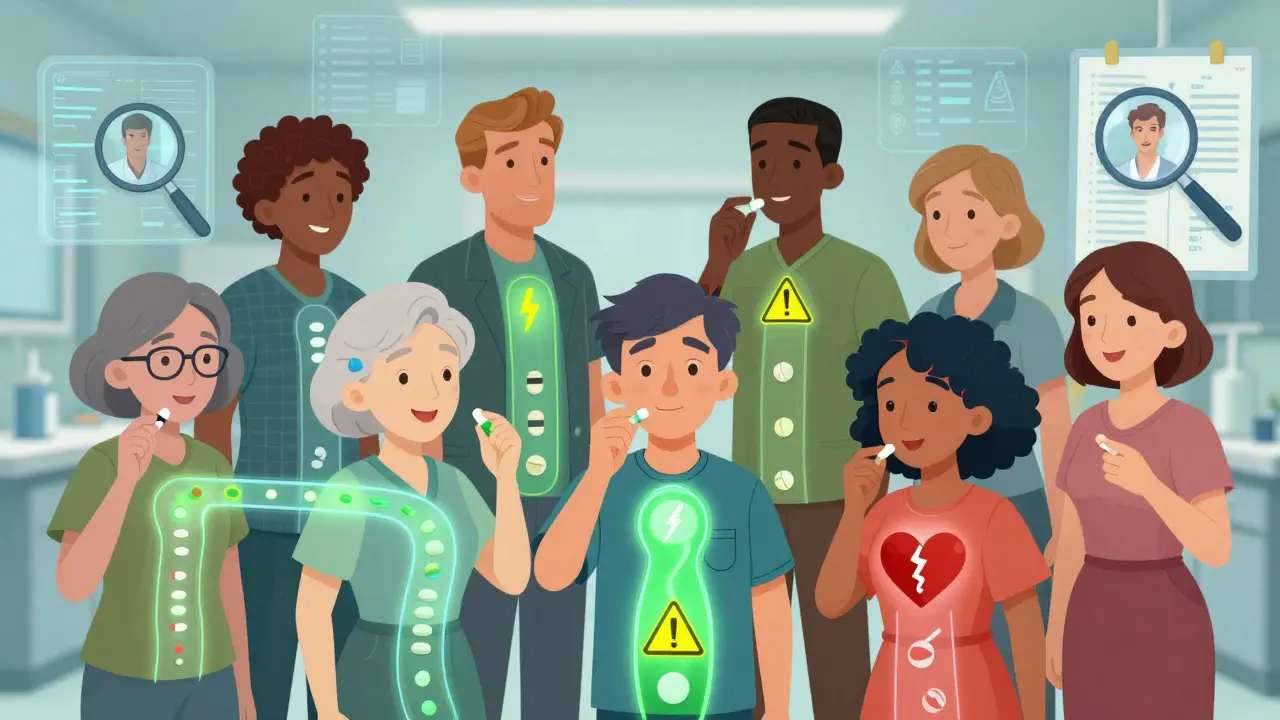
Every time someone takes a pill, there’s a balance being struck-between what the drug can do for them and what it might do to them. This isn’t guesswork. It’s science. And that science is called medication safety.
Why Medication Safety Isn’t Just About Avoiding Mistakes
Most people think medication safety means nurses double-checking labels or pharmacists catching wrong doses. That’s part of it. But the real foundation is deeper. It’s about knowing, with real data, whether a drug is truly safe for millions of people-not just the few thousand who took it in a clinical trial. Clinical trials are tightly controlled. Participants are carefully selected. They’re monitored closely. But real life? People take multiple drugs at once. They forget doses. They have other health problems. They buy over-the-counter meds that interact with their prescriptions. That’s where clinical trial data falls short. Take the case of thalidomide in the 1960s. It was approved for morning sickness. Within years, over 10,000 babies were born with severe limb defects. The problem? The trials didn’t include pregnant women. No one knew it crossed the placenta. That tragedy changed everything. It forced regulators and scientists to build systems that look beyond the lab and into the real world.The Gap Between Trials and Reality
A typical Phase III drug trial includes between 1,500 and 5,000 people over 6 to 24 months. That’s enough to catch common side effects-like nausea or dizziness. But what about rare ones? Like a 1 in 10,000 chance of liver failure? Or a 1 in 50,000 risk of a dangerous heart rhythm? Those events won’t show up in trials. They’re too rare. That’s why, after a drug hits the market, we need something bigger. Enter pharmacoepidemiology-the science of studying how drugs affect large populations over time. This field uses massive databases: Medicare records covering 57 million people, the FDA’s Sentinel Initiative tracking 190 million, and systems like Kaiser Permanente’s with 12.5 million members. Researchers don’t just look at who took a drug. They track who ended up in the hospital, who had a stroke, who died. Then they compare those outcomes to people who didn’t take the drug. It’s messy. People aren’t randomized. They choose their own meds. They have different diets, incomes, lifestyles. That’s why researchers use advanced stats-propensity score matching, self-controlled case series-to try and balance out those differences. Good studies can achieve 85-95% balance in patient characteristics. But even then, some bias stays. That’s why we need multiple methods.Randomized Trials vs. Real-World Data: What Works When
Randomized controlled trials (RCTs) are still the gold standard for proving a drug works. They’re the reason most new drugs get approved. But they’re expensive-up to $26 million per trial-and too small to catch rare harms. Observational studies? They’re cheaper-$150,000 to $500,000-and can study hundreds of thousands of people. They’re the backbone of post-market safety monitoring. In fact, 78% of FDA safety alerts between 2015 and 2022 came from observational data. But here’s the catch: 22% of the associations found in observational studies were later disproven by RCTs. That doesn’t mean observational studies are wrong. It means they find signals, not certainties. A spike in heart attacks after a new diabetes drug? That’s a signal. It doesn’t prove the drug caused it. But it’s enough to trigger a deeper investigation. That’s why the best safety science uses both. RCTs answer: Does this drug work? Observational studies answer: Who gets hurt by it-and when?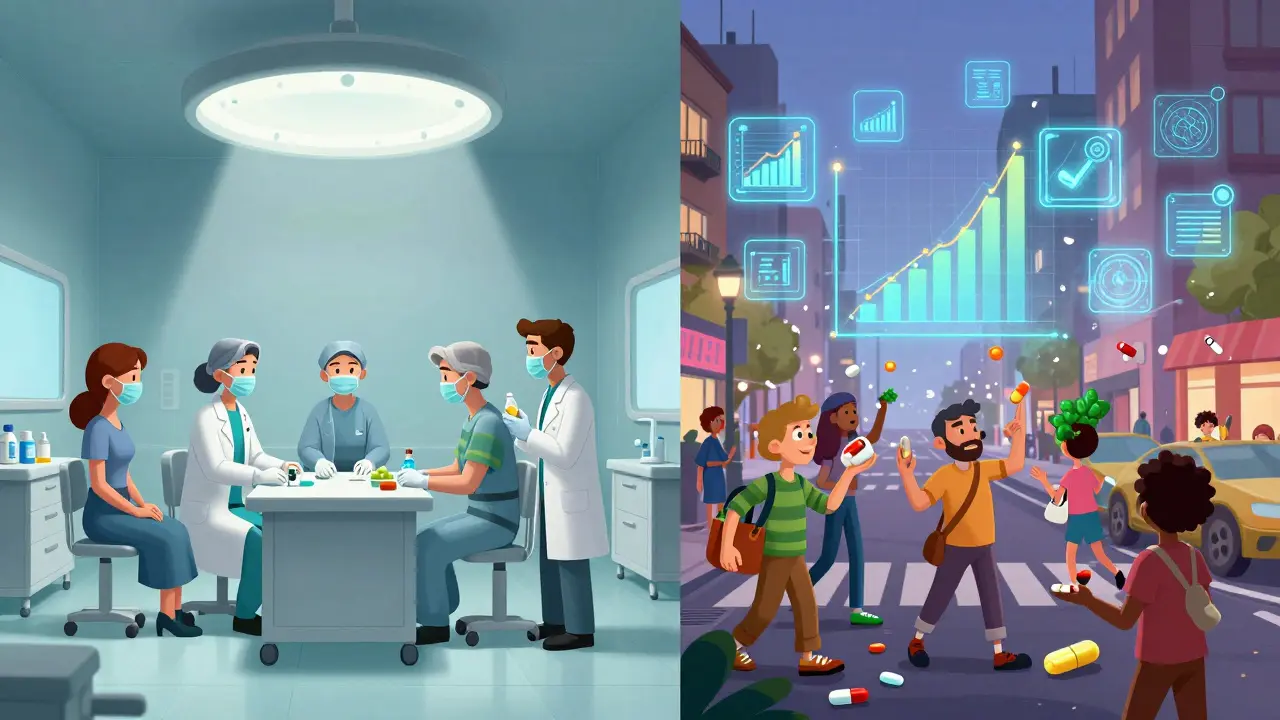
Where the System Still Fails
Even with all this data, things slip through. One big problem? Alert fatigue. In hospitals, computer systems pop up warnings every time a doctor prescribes a drug that might interact with another. But too many of these alerts are low-risk or irrelevant. A 2022 study found prescribers override 89% of drug interaction alerts-especially for common meds like antibiotics or blood pressure pills. Why? Because they’re tired of being interrupted. Nurses report near-miss errors weekly because of fragmented electronic health records. One nurse might see a patient’s blood pressure meds. Another doesn’t know they’re also taking a herbal supplement that raises the risk of bleeding. Communication breaks down. Systems don’t talk to each other. And then there’s the issue of who’s left out. Older adults, people with multiple chronic conditions, pregnant women, and those in low-income communities are often underrepresented in both trials and databases. Yet they’re the ones most likely to be on five or more medications daily. By 2030, 35% of adults over 65 will be doing exactly that. We’re not ready.What’s Working-Real Examples
It’s not all broken. There are wins. At Kaiser Permanente Washington, they redesigned how they treat alcohol withdrawal. Instead of giving high-dose benzodiazepines to everyone, they started using a fixed-dose phenobarbital protocol. The result? Severe withdrawal events dropped from 15.3% to 8.9% across 12 hospitals. That’s a 42% reduction. No new drug. Just better use of an old one, guided by data. In Iran, a 2023 study of 500 nurses found that medication safety competence explained 61% of safe care practices. Training nurses to understand drug interactions, dosing, and monitoring didn’t just reduce errors-it improved overall patient outcomes. And now, AI is stepping in. The AHRQ’s 2024 update highlighted early AI tools that predict which patients are most likely to have an adverse drug event. In pilot programs, these tools cut high-alert medication errors by 22-35%. That’s not science fiction. It’s happening now.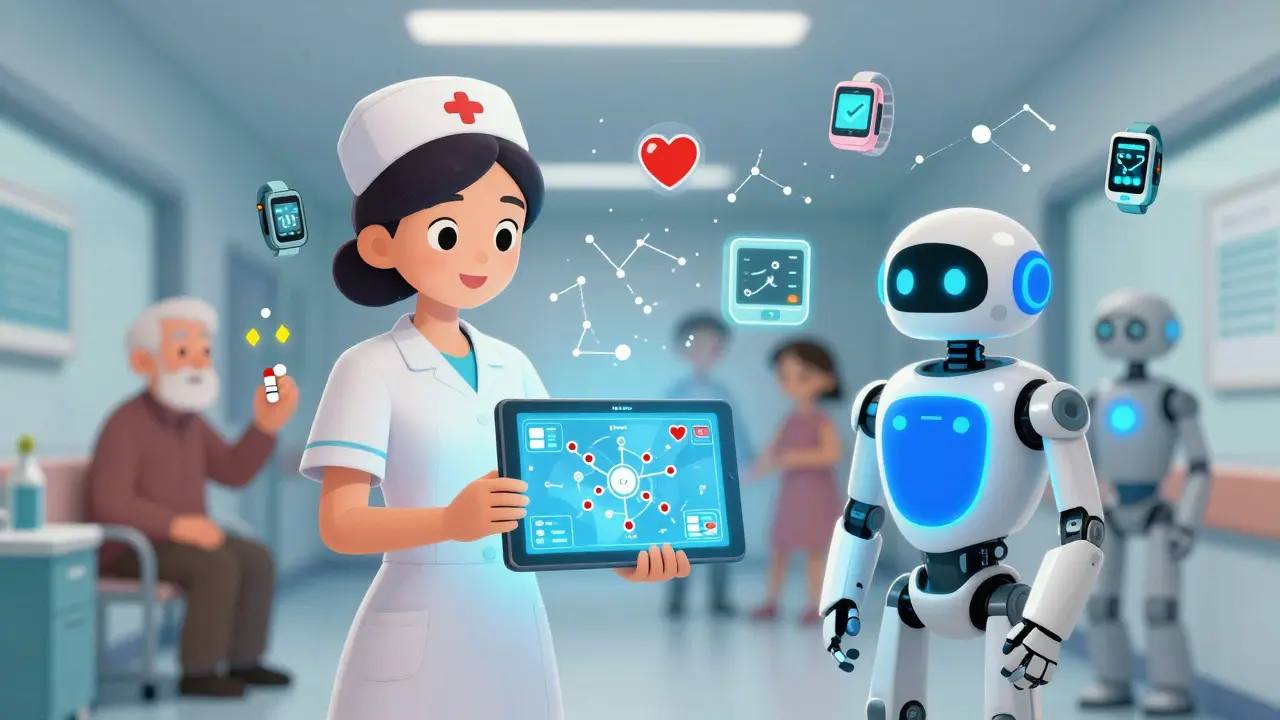
What You Need to Know If You’re Taking Medications
You don’t need to be a researcher to protect yourself. Here’s what matters:- Keep a list of every medication you take-prescription, OTC, vitamins, herbs. Bring it to every appointment.
- Ask: “What’s this for? What are the real risks? What happens if I miss a dose?”
- Don’t ignore side effects. If you feel different after starting a new drug, tell your doctor. Don’t wait.
- Use one pharmacy if you can. They’ll flag interactions across all your meds.
- Ask if there’s a simpler, safer alternative. Sometimes the cheapest drug isn’t the safest.
The Future Is Here
The global pharmacovigilance market is expected to grow from $5.2 billion in 2023 to $11.7 billion by 2028. Why? Because regulators are demanding it. The FDA now requires post-market safety studies for 37% of new drugs. The European Medicines Agency requires a risk plan for every new medicine. Soon, wearables will feed real-time data into safety systems-heart rate, sleep patterns, activity levels. That could catch drug-induced arrhythmias before they become emergencies. But the biggest shift? We’re moving from reacting to harm-to preventing it. That means using data not just to find problems after they happen, but to predict who’s at risk before they even take the pill. It’s not perfect. But it’s getting better. And the science behind it? It’s the reason millions of people can take their meds every day without ending up in the hospital.What’s the difference between a clinical trial and real-world evidence?
Clinical trials test drugs in small, controlled groups under ideal conditions. Real-world evidence looks at how drugs perform in everyday life-with millions of people, different health conditions, and real behaviors like skipping doses or mixing medications. Trials tell us if a drug works. Real-world data tells us who gets hurt and why.
Are all drug side effects caught before a drug is approved?
No. Most side effects that affect fewer than 1 in 1,000 people won’t show up in trials because the groups are too small. That’s why post-market monitoring is essential. Some serious risks, like liver damage or dangerous heart rhythms, are only discovered after thousands or millions of people start using the drug.
Why do doctors sometimes ignore drug interaction alerts?
Too many alerts. Many are low-risk or irrelevant, like warnings for common combinations that have been safely used for decades. When every click brings a pop-up, doctors start ignoring them-even the important ones. This is called alert fatigue. It’s a major safety problem in hospitals.
Can I trust that my medication is safe if it’s on the market?
Yes-but with awareness. All approved drugs have passed strict safety reviews. But safety isn’t a one-time check. It’s an ongoing process. If you notice new symptoms after starting a drug, report them. Talk to your pharmacist. Your feedback helps improve safety for everyone.
How does age affect medication safety?
As people age, their bodies process drugs differently. Kidneys and liver slow down. They’re more likely to take five or more medications daily. That increases the risk of harmful interactions. Older adults make up 15% of Medicare beneficiaries who suffer adverse drug events each year. That’s why dosing adjustments and regular reviews are critical.



One comment
So basically we're trusting computers and spreadsheets to not kill us with pills? Cool cool. I took some random supplement last week and my left toe turned purple. No big deal. Probably just the universe telling me to stop listening to scientists who think they're gods with lab coats.
This is such an important topic-and I think we need to be really thoughtful about how we interpret real-world data. I mean, yes, RCTs have limitations, but observational studies? They’re incredibly powerful when done right-and they’ve saved so many lives by catching rare adverse events. I just wish more people understood that correlation isn’t causation, but signals? Those matter. A lot.
Let me be unequivocal: the pharmaceutical-industrial complex has weaponized pharmacovigilance as a performative façade to mask systemic malfeasance. The FDA’s Sentinel Initiative? A corporate Trojan horse. Real-world evidence is manipulated by data scientists who’ve never met a patient. They don’t care about the grandmother in rural Appalachia taking five antihypertensives with turmeric and ashwagandha-they care about quarterly earnings. This isn’t science. It’s algorithmic colonialism.
ok so i read this whole thing and like… why are we even here? like i just take my meds and hope for the best. also why do people spell ‘phenobarbital’ so wrong? its phenobarbital not phenobabbital or whatever. i mean come on.
While the article presents a compelling overview of pharmacovigilance methodologies, it omits critical discussion regarding the epistemological hierarchy of evidence. The assertion that observational studies serve as a ‘backbone’ for post-market surveillance presupposes methodological equivalence between randomized control trials and non-randomized designs-a premise that remains contentious within the biostatistical community. The 22% false-positive rate cited is not merely a statistical artifact; it reflects a fundamental ontological divergence in causal inference frameworks.
I appreciate how this breaks down something so complex without oversimplifying. It’s scary to think how many people are on five or more meds and don’t even know what they’re for. I had a friend who was on a new antidepressant and just assumed the brain fog was ‘normal’-took her six months to realize it was the drug. She almost quit her job. We need more of these conversations-not just from doctors, but from all of us.
Okay but… have you ever tried to get a pharmacist to explain your meds without them talking to you like you’re a 5-year-old? I mean, I get it, they’re busy-but why does it feel like they think we’re too dumb to understand the word ‘metabolized’? I printed out my whole med list, wrote down every question, and still got ‘just take it as directed.’ Ugh. We’re people, not data points.
Alert fatigue is REAL. I’m a nurse. I get 40 pop-ups a shift. Half of them are for drugs that have been co-prescribed since the 80s. I once got an alert saying ‘this patient is taking aspirin and ibuprofen together’-like… duh. They’re both in my cart. I’ve given this combo to 200 patients. I didn’t even click ‘acknowledge’-I just closed it. And now I’m terrified I missed something important. This system is broken. And nobody’s fixing it because nobody wants to admit they built a house of cards.
Love how this article doesn’t just throw tech at the problem. The phenobarbital switch in Washington? That’s the kind of low-tech, high-impact change we need more of. Sometimes the answer isn’t AI or new drugs-it’s just using what we already have, smarter. Also, props to Iran for showing that training nurses isn’t just nice-it’s life-saving. We need more of that everywhere.
One thing this doesn’t address enough: the emotional labor of being a patient in this system. You’re not just managing side effects-you’re managing fear, guilt, shame, and the quiet terror of being a statistic. The data is vital, yes-but behind every adverse event is someone who cried in a pharmacy parking lot because they didn’t know if the pill was killing them. We need systems that see people, not just patterns.
THIS. This is why I fight for patient advocacy. Real-world data isn’t just numbers-it’s my mom’s liver failing after a new cholesterol drug. It’s my neighbor’s stroke after a ‘safe’ combo. We can’t wait for perfect trials. We need better post-market systems NOW. And yes, AI can help-but only if we design it with patients, not just profit margins. Let’s stop talking and start doing.
Mark my words: the integration of wearables into pharmacovigilance is a prelude to state-mandated biometric surveillance under the guise of ‘public health.’ The FDA’s push for real-time heart rhythm monitoring? It’s not about safety-it’s about control. Who owns this data? Who profits? Why are we not asking who designed these algorithms? The same corporations that profit from the drugs are now collecting your pulse. This is not progress. This is the final stage of medical totalitarianism.