
Why Night Shifts Break Your Sleep - and How Medications Can Help (or Hurt)
Working nights isn’t just inconvenient. It rewires your body. Your brain expects to sleep at night and be awake during the day. When you flip that schedule, your internal clock gets confused. This isn’t just feeling tired - it’s a real medical condition called Shift Work Disorder. The American Academy of Sleep Medicine recognized it in 2014, and today, about 10 million Americans working nights struggle with it. If you’re one of them, you’ve probably thought about taking something to help you sleep during the day or stay awake at night. But here’s the hard truth: medications can help - but they’re not a fix. And if used wrong, they can make things worse.
The Two Types of Medications Night Shift Workers Use
There are two sides to this coin. One kind helps you sleep when you need to. The other helps you stay awake when you have to work. Both have risks. And both need precise timing.
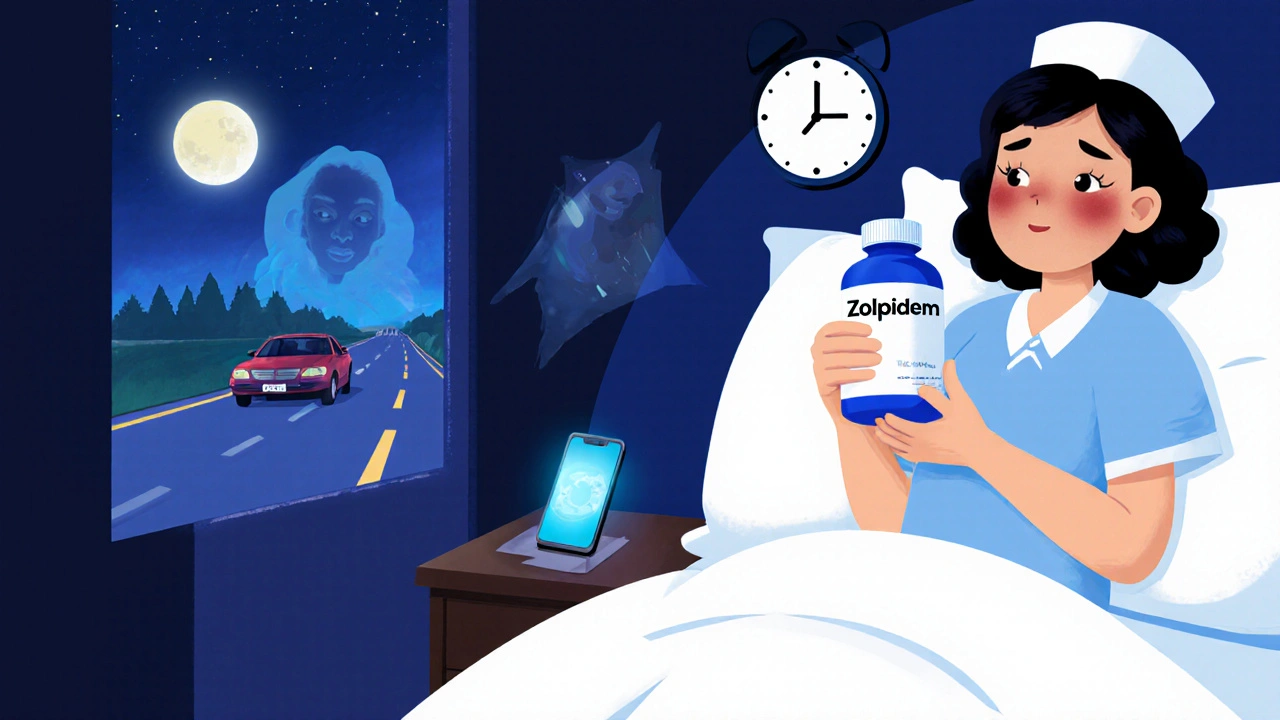
For sleep, doctors sometimes prescribe eszopiclone (Lunesta), zolpidem (Ambien), or zaleplon (Sonata). These are powerful. They work fast. But the FDA says you must plan for 7 to 8 hours of uninterrupted sleep after taking them. If you wake up too early - say, because your kid needs you or your alarm goes off - you could be groggy, confused, or even sleepwalk. There are real reports of people driving, eating, or even leaving their homes while asleep after taking these drugs. One nurse in a 2022 FDA report drove 15 miles in her sleep after taking zolpidem. She didn’t remember a thing.
For staying awake, the most common prescription is modafinil (Provigil) or its longer-acting version, armodafinil (Nuvigil). These aren’t stimulants like caffeine or amphetamines. They don’t make you jittery. Instead, they target brain chemicals linked to alertness. Studies show modafinil improves reaction time by 34% during night shifts compared to a placebo. That’s huge if you’re operating machinery, driving, or monitoring patients. But here’s the catch: it doesn’t make you as sharp as you’d be during the day. And after 3-4 weeks of daily use, many people notice it stops working as well.
What About Melatonin? It’s Not What You Think
Melatonin is everywhere - drugstores, Amazon, gas stations. It’s sold as a natural sleep aid. And yes, it can help night shift workers. But not the way most people assume.
Studies show melatonin works best when taken 3-4 hours before you want to sleep. So if you’re finishing a night shift at 7 a.m. and want to sleep until 3 p.m., you should take it around 3 a.m. That’s counterintuitive. Most people take it right before bed. That won’t help reset your clock. Doses matter too. 0.5 mg to 5 mg is the range. Higher isn’t better. And while melatonin is safer than prescription pills, it doesn’t make you more alert during your shift. It just helps you fall asleep. The American Academy of Sleep Medicine says it’s useful for sleep timing, but don’t expect it to replace a good night’s rest.

The Hidden Dangers: Dependency, Residual Drowsiness, and Crashes
Let’s talk about what no one tells you until it’s too late.
Prescription sleep meds like benzodiazepines and zolpidem can lead to dependence. UCLA Health says 25-30% of people who use them daily for 4-6 weeks start needing them to fall asleep at all. That’s not sleep - that’s addiction. And if you take them for more than a few weeks, they stop working as well. Your body adapts. You need more. You feel worse without them.
Then there’s residual drowsiness. A 2023 American Medical Association survey found 32% of night shift healthcare workers still felt groggy during their next shift. That’s not just annoying - it’s dangerous. If you’re driving home after your shift, you’re at risk. The National Highway Traffic Safety Administration found people who took prescription sleep meds were 4.5 times more likely to crash within 2 hours of taking them. The risk lingers for up to 8 hours.
And don’t mix them with alcohol. The FDA’s boxed warning says this can cause serious injury or death. Yet, a 2023 National Health Interview Survey found 15% of night shift workers still combine sleep meds with alcohol. That’s not a habit. That’s a gamble.
What the Experts Really Say - And What You Should Do Instead
Dr. Charles Czeisler from Harvard puts it bluntly: “Pharmacological interventions alone cannot overcome the fundamental biology of circadian misalignment.” That means pills can’t fix your body clock. They can only mask the symptoms.
So what should you do?
- Use light strategically. Wear blue-light-blocking glasses on your way home from work. Get bright light exposure during your shift. This helps your brain understand it’s nighttime.
- Protect your sleep time. Tell your family, neighbors, and roommates you’re sleeping. Use blackout curtains. White noise machines. Put your phone on Do Not Disturb.
- Stick to a schedule. Even on your days off, try to sleep and wake around the same time. Jumping between schedules makes your body more confused.
- Try non-drug tools. Many hospitals now give out light therapy lamps. Some employers offer sleep hygiene coaching. Ask your HR department if they have a fatigue management program.
Medications should be a last resort - not a first response. And if you do use them, do it with eyes wide open.
How to Use Sleep and Wake Medications Safely
If you’re prescribed something, here’s how to use it without putting yourself or others at risk.
- Timing is everything. Take wake-promoting meds like modafinil one hour before your shift starts. Take sleep meds 3-4 hours before you plan to sleep - not right before bed.
- Never skip the Medication Guide. The FDA now requires every prescription sleep med to come with a guide. Read it every time. It’s updated regularly.
- Plan for full sleep. If you take Lunesta or Ambien, block out 7-8 hours. No exceptions. No alarms. No kids. No calls.
- Talk to your doctor about your schedule. Tell them you work nights. Many doctors don’t ask. But your work hours change how your body processes drugs.
- Don’t use them long-term. Most doctors won’t prescribe sleep meds for more than 3-4 weeks. That’s by design. They’re meant to be a bridge, not a permanent solution.
And if you’re a nurse, firefighter, truck driver, or anyone in a safety-critical job - talk to your supervisor. Many workplaces now have fatigue risk management programs. You’re not weak for asking for help. You’re protecting lives - including your own.
What’s Next? Personalized Sleep Medicine Is Coming
Science is moving fast. Dr. Phyllis Zee at Northwestern University predicts that within five years, genetic testing will tell doctors exactly when to give you melatonin or modafinil based on your unique body clock. That’s not sci-fi. It’s already being tested in clinical trials.
Until then, the best strategy is simple: treat your sleep like your job. Schedule it. Protect it. Respect it. Medications can help you get through the night. But they can’t replace good habits. And no pill can fix a broken rhythm - only time, light, and consistency can.
Can I take melatonin every night for my night shift?
Yes, melatonin is generally safe for daily use at low doses (0.5-3 mg), especially if taken 3-4 hours before your daytime sleep. But it’s not a magic fix. It helps signal sleep time to your brain but doesn’t improve sleep quality or alertness during your shift. Long-term use is okay for most people, but if you’re still struggling to sleep after 2 weeks, talk to your doctor about other options.
Is modafinil addictive?
Modafinil has a low risk of addiction compared to stimulants like Adderall or caffeine. It doesn’t cause euphoria or cravings. But it can become less effective over time, leading people to increase their dose. That’s not addiction - it’s tolerance. Still, using it daily for more than a few months isn’t recommended. The goal is to use it temporarily while adjusting your sleep schedule, not as a permanent crutch.
Why do I still feel tired even after taking sleeping pills?
Prescription sleep meds help you fall asleep faster, but they don’t improve sleep quality. Many night shift workers get 7 hours of sleep but still wake up feeling unrested because their sleep is fragmented or shallow. Your body is fighting its natural rhythm. Pills can’t fix that. Light exposure, quiet sleep environments, and consistent timing do. If you’re still tired after taking pills, it’s not the medication - it’s the schedule.
Can I drive home after taking a sleep medication?
No. Not if you’ve taken zolpidem, eszopiclone, or similar drugs. Even if you feel fine, your reaction time, coordination, and judgment can be impaired for up to 8 hours. The FDA warns that these drugs can cause complex sleep behaviors - including sleep-driving. If you must drive, wait until you’ve had a full 7-8 hours of sleep and feel completely alert. If you’re unsure, don’t drive. Take a taxi, use a rideshare, or ask a coworker to help.
Are over-the-counter sleep aids safe for night shift workers?
Most OTC sleep aids contain antihistamines like diphenhydramine (Benadryl) or doxylamine (Unisom). These cause drowsiness, but they also cause next-day grogginess, dry mouth, and confusion - especially in older adults. A 2023 FDA study found 18% of users still felt drowsy the next day. They’re not designed for long-term use and don’t help reset your circadian rhythm. Use them only for occasional help, not as a nightly solution.
What should I do if I think I’m dependent on sleep meds?
If you can’t sleep without your medication, or if you’re taking more than prescribed, talk to your doctor. Don’t stop suddenly - that can cause rebound insomnia or anxiety. A gradual taper, combined with behavioral changes like sleep scheduling and light therapy, is the safest way out. Many hospitals have sleep clinics that specialize in shift work disorders. Ask your employer if they offer access.



One comment
Bro. I took Ambien after my 3am shift and woke up in the garage eating cold pizza in my PJs. No memory. Just a half-eaten slice and a cat staring at me like I'm the villain in a Netflix doc. That's not sleep. That's a horror movie. And now I'm on melatonin. And I still feel like a zombie. 😵💫
You people are so naive. Medications? Please. The real issue is that society refuses to acknowledge that humans are diurnal animals. We are not nocturnal machines. The fact that you think a pill can override 2 million years of evolution is not just ignorant-it's dangerous. And don't get me started on melatonin being sold next to energy drinks like it's candy! The FDA should ban this entire industry.
I work night shift in a call center in Mumbai. Took modafinil for 2 weeks. Felt like a robot. Then my hands started shaking. Stopped. Now I just drink cold brew + 20 min nap before shift. Works better than pills. Also, blue light glasses? Game changer. My eyes stopped burning. Try it.
I'm a nurse who's been on nights for 12 years. I used to rely on Ambien like it was oxygen. Then I had a near-miss with a patient because I was too groggy to read the monitor. That scared me. I switched to light therapy + strict sleep schedule. No meds for 3 years now. I sleep deeper. I'm sharper. My kid actually remembers my face. 🌞🌙 It's not easy. But it's worth it. You're not weak for wanting to sleep-you're brave for trying to fix it the right way.
This article is a joke. The government and Big Pharma are pushing these drugs because they profit from dependency. They don't care if you sleepwalk into traffic. They care about quarterly earnings. And now they're selling 'sleep hygiene coaching' like it's a luxury spa package. Wake up. The system is rigged. Your body isn't broken. The schedule is. And no pill will fix a society that treats human biology as an inconvenience.
The circadian rhythm is not a suggestion. It is a law written in the DNA of every living organism. To defy it with pharmacological bandaids is not wisdom-it is arrogance. I have observed in my clinical practice that those who rely on modafinil eventually develop a psychological dependence on the illusion of control. The body does not lie. It whispers. And if ignored, it screams. One must align with nature, not battle it with chemistry.
I knew it. This is all part of the New World Order. They want us on modafinil so we’re too distracted to notice the microchips in our smart fridges. Melatonin? That’s just the gateway drug. Next thing you know, they’ll be forcing us to wear ‘circadian alignment’ wristbands that sync with the CIA’s satellite network. 🕵️♀️👁️🗨️ I’ve been using blackout curtains since 2018. I’m the only one who knows the truth. You’re welcome.
You all are so dramatic. I take zolpidem every night, drive home, work my shift, and still have energy to play Call of Duty. If you can’t handle it, maybe you shouldn’t be working nights. This isn’t daycare. It’s a job. Stop whining and take the pill. And if you crash? That’s your problem, not mine.
Light. Schedule. Silence. That’s it. No pills needed. I started using a sunrise alarm, blocked all noise with foam plugs, and told my family I’m a temple during sleep hours. I sleep 7 hours. I’m alert. I’m alive. It’s not magic. It’s discipline. You don’t need a PhD to fix your rhythm. You just need to care enough to try.
Modafinil is the new Adderall for adults who think they’re too cool for caffeine. Let’s be real-70% of night shift workers on it are just trying to outwork their burnout. It doesn’t make you smarter. It just makes you feel like you’re not dying. And yeah, tolerance builds. But nobody wants to hear that. They want a quick fix. So they pop it. And then they wonder why they’re crying in the break room at 4am.
The real tragedy isn’t the pills. It’s that we’ve normalized this. We accept that humans must live out of sync with the sun. We call it ‘progress.’ It’s not progress. It’s decay. And now we medicate the symptoms instead of ending the system that created them. We’ve turned biology into a commodity. And we’re all just consumers in the machine.
I used to think meds were the answer. Then I met a guy who worked nights for 20 years without a single pill. He said, 'I don't fight my body. I listen to it.' He takes a 20-minute nap after his shift, eats dinner at 6am, sleeps at 7am, and wakes at 3pm. No alarms. Just rhythm. He's 68 and still drives his truck. I tried it. Took me 3 weeks. But now I don't need anything. Just patience. And maybe a good pair of blackout curtains.
You are not alone. I was a trucker. Took Ambien. Nearly crashed. Then I found a sleep coach through my union. We fixed my schedule. No pills. Just light, timing, and boundaries. I sleep like a baby now. You can too. Start small. One change. One day. You got this.