

Staring at a pharmacy bill that feels impossible to pay is one of the most stressful moments in healthcare. You have the prescription, you have the diagnosis, but you don’t have the funds. For millions of Americans, this isn't just about skipping a generic vitamin; it's about missing doses of life-saving treatments because insurance deductibles are too high or coverage simply doesn't exist. This is where Patient Advocacy Foundations like the Patient Advocate Foundation (PAF) step in. These organizations act as critical safety nets, offering direct financial grants to bridge the gap between your income and the cost of care.
Navigating these resources can feel overwhelming. There are pharmaceutical programs, state aids, and nonprofit foundations all vying for your attention. Understanding how to use patient advocacy foundations effectively requires knowing exactly which fund fits your situation, what documents to gather before you start, and when to apply to beat the rush. Let’s break down how to secure these grants so you can focus on getting better instead of worrying about the bill.
Understanding Patient Advocacy Foundations vs. Pharmaceutical Programs
Before filling out any forms, it helps to know who you are dealing with. Many people confuse Patient Assistance Programs (PAPs) run by drug manufacturers with nonprofit foundations like PAF. They serve different purposes.
Pharmaceutical PAPs are usually sponsored by the company that makes the drug. They typically provide free medication to uninsured patients for that specific product. If you need three different drugs from three different companies, you might need to join three separate programs. It’s fragmented and time-consuming.
In contrast, The Patient Advocate Foundation (PAF) operates differently. Established in 1996, PAF aggregates donor funds to help patients regardless of which manufacturer makes their medicine. Their model addresses two distinct groups:
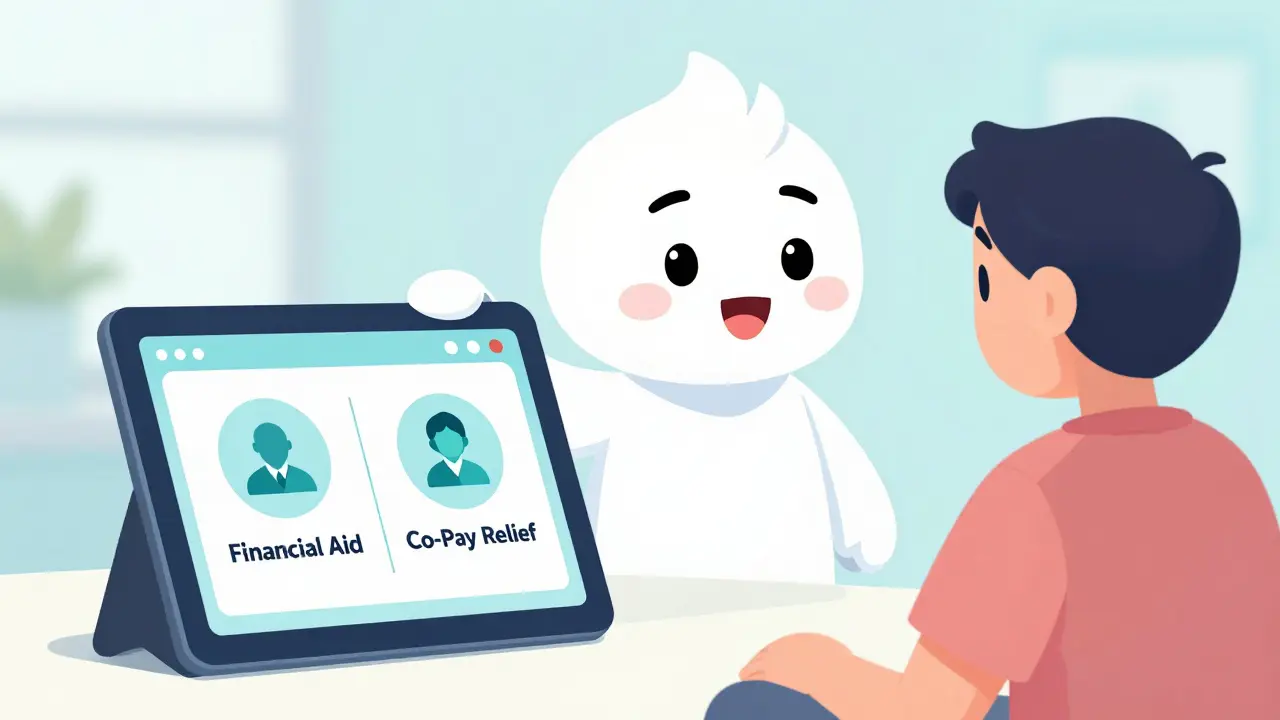
- Financial Aid Funds: Small grants for patients meeting specific medical and financial criteria. These often cover non-medication costs or broader treatment expenses.
- Co-Pay Relief Program: Specifically designed for insured patients who are struggling with high out-of-pocket costs due to high-deductible plans or formulary restrictions.
The key takeaway? If you have insurance but can’t afford your co-pays, look at Co-Pay Relief. If you are uninsured or underinsured and need help with general treatment costs, look at Financial Aid Funds. Knowing this distinction saves you hours of reading terms and conditions that don’t apply to you.
Eligibility Requirements: Do You Qualify?
Not everyone qualifies for every fund. PAF has strict guidelines to ensure funds go to those in immediate need. Here is the baseline eligibility for most of their Financial Aid Funds:
- Diagnosis: You must have a confirmed diagnosis of a serious health condition.
- Treatment Status: You must be in active treatment, starting treatment within the next 60 days, or have finished treatment within the last 6 months.
- Residency: You must be a U.S. citizen or permanent resident receiving treatment in the United States or a U.S. territory.
- Income: Specific funds have income guidelines. For example, the Sepsis/ARDS/TSS fund requires proof that you meet certain income thresholds.
For the Co-Pay Relief Program, the rules shift slightly. You must have commercial insurance coverage for the medication you need help with. This program is not for the uninsured; it is for the "underinsured"-people whose insurance exists but leaves them paying hundreds or thousands of dollars out of pocket.
If you are unsure if you qualify, check the specific fund page on the PAF website. Each condition-specific fund (like Thyroid Eye Disease or Sepsis) may have unique requirements, such as needing an application submitted within six months of diagnosis.
Gathering Your Documents Before You Apply
The biggest mistake applicants make is starting the online form without their paperwork ready. The process pauses while you hunt for files, and remember: these funds operate on a first-come, first-served basis. Speed matters.
Have the following documents scanned and saved to your computer before you begin:
- Proof of Diagnosis: A letter from your physician confirming your diagnosis and current treatment plan.
- Financial Proof: Recent tax returns, pay stubs, or bank statements to verify income and residency.
- Insurance Details: If applying for Co-Pay Relief, have your insurance card and recent Explanation of Benefits (EOB) showing the co-pay amounts.
- Provider Forms: Most applications require a section filled out by your healthcare provider. Call their office early and ask them to prepare the necessary forms. Don’t wait until the night before you submit.
Having these ready allows you to complete the application in one sitting, reducing errors and speeding up processing time.
Step-by-Step Application Process
Once your documents are gathered, follow these steps to apply through the Patient Advocate Foundation:
1. Identify the Right Fund
Visit patientadvocate.org. Navigate to the "Financial Aid" section. Look for a fund that matches your specific condition. If there isn’t a condition-specific fund, look for general hardship funds. Note the phone numbers provided for each fund; having a direct line helps if you get stuck.
2. Create an Account or Start Online
You can apply online or by phone. The online portal is generally faster. Enter your personal information accurately. Double-check your address and contact details, as grant checks or communications will be sent there.
3. Submit Medical and Financial Evidence
Upload the documents you prepared earlier. Ensure the images are clear and legible. Blurry scans lead to delays or rejections.
4. Provider Verification
Send the provider portion of the application to your doctor’s office. Follow up with them to ensure they fax or upload it promptly. Some offices have dedicated staff for this; others do not. Be polite but persistent.
5. Review and Submit
Review your application for completeness. Once submitted, you will receive a confirmation. Keep a record of your submission date and reference number.
Timing Is Everything: The First-Come, First-Served Reality
Here is the hard truth about nonprofit grants: money runs out. PAF explicitly states that funds are distributed on a first-come, first-served basis until depleted. When a fund is "fully allocated," they stop accepting new applications.
This creates a strategic window for applicants. Many condition-specific funds reopen on the first business day of the following month after being replenished. If you miss the cutoff one month, mark your calendar for the 1st of the next month. Being among the first to apply when funds reset significantly increases your chances of approval.
If you apply and find the fund is closed, do not give up. Ask the case manager if you can be placed on a waiting list or notified when funds reopen. Persistence pays off in this system.

Comparison: PAF vs. Other Assistance Options
| Feature | Patient Advocate Foundation (PAF) | Pharmaceutical PAPs | State Medicaid Programs |
|---|---|---|---|
| Target Audience | Uninsured, underinsured, and insured patients with high out-of-pocket costs | Primarily uninsured patients for specific brand-name drugs | Low-income residents meeting strict state criteria |
| Funding Source | Donor-funded nonprofits and partnerships | Drug manufacturers | Government taxes and federal matching funds |
| Coverage Scope | Broad: Can cover multiple meds, co-pays, and non-medical costs | Narrow: Only covers the sponsor’s specific medication | Comprehensive: Covers wide range of services if eligible |
| Availability | First-come, first-served; funds deplete monthly | Generally stable as long as drug is marketed | Continuous, but application process is lengthy |
| Best For | Patients needing flexible help with various costs or co-pays | Patients on a single expensive brand-name drug without insurance | Long-term, low-income patients needing comprehensive care |
Pro Tips for Maximizing Your Chances
Applying for grants is competitive. Here are some insider tips to improve your success rate:
- Apply Early in the Month: As mentioned, many funds reset on the first business day. Apply immediately.
- Use Case Management Services: PAF offers case management to help navigate insurance complexities. Even if you don’t get a grant, their advice on understanding your insurance coverage can save you money elsewhere.
- Combine Resources: You can often apply for both a pharmaceutical PAP and a PAF grant. For example, use a PAP to get the drug itself, and use PAF Co-Pay Relief to handle the insurance co-pay if applicable.
- Keep Communication Open: If your financial situation changes, update the foundation. Transparency builds trust and keeps your file active.
What Happens After Approval?
If approved, the payout method depends on the fund. For some caregiver support funds, the check is mailed directly to the caregiver. For other medical expense funds, it may go to the patient or the provider. Check the specific terms of the fund you applied to. The money is intended to reduce your financial burden, so use it strictly for the approved medical expenses. Misuse can disqualify you from future assistance.
Remember, these grants are part of a larger ecosystem. While they provide crucial relief, they are not a substitute for comprehensive health insurance. Continue to explore options like marketplace plans during open enrollment or special enrollment periods triggered by life events.
Is the Patient Advocate Foundation (PAF) available outside the United States?
No. PAF services are strictly limited to U.S. citizens and permanent residents who are receiving treatment within the United States or its territories. If you live in the UK or other countries, you will need to look for local charitable organizations or government-supported health schemes.
Can I apply for PAF grants if I have Medicare?
Yes. Having Medicare does not automatically disqualify you. In fact, many Medicare beneficiaries face significant out-of-pocket costs, especially with Part D prescription coverage gaps. PAF’s Co-Pay Relief Program specifically assists insured patients, including those with Medicare, who struggle with high deductibles or co-insurance.
How long does it take to get a decision on my application?
Processing times vary based on the volume of applications and the completeness of your documentation. Typically, once all required documents (including provider forms) are received, decisions can take several weeks. Applying early in the month and ensuring all documents are clear can speed up this process.
What happens if the fund is fully allocated when I apply?
If a fund is fully allocated, PAF cannot process new applications until funds are replenished. Many funds reopen on the first business day of the following month. You should monitor the PAF website or contact their support line to know exactly when the next cycle begins. Do not assume your pending application will be held; you may need to reapply.
Do I need to repay the grant?
No. Grants provided by PAF and similar patient advocacy foundations are gifts, not loans. You do not need to repay the money. However, you must use the funds for the intended medical expenses as outlined in the grant agreement.
Can I apply for multiple funds at once?
Generally, yes, provided you meet the eligibility criteria for each. For instance, you might qualify for a condition-specific fund and a general hardship fund. However, review the terms of each fund carefully, as some may exclude patients who are receiving assistance from other sources for the same expense.



One comment
Oh my goodness, reading this really brought tears to my eyes because it is so incredibly true!
We are living through such a difficult time for so many families who just want to get better but are held back by these impossible bills.
I truly believe that kindness and community support can make all the difference in someone's darkest hour.
Please remember that you are never alone in this struggle!
There is always hope on the horizon if we keep pushing forward together!
Haha, look at us begging for handouts again :P
Maybe if people stopped buying imported junk and stuck to domestic products we wouldn't have such a messed up economy.
But sure, let's blame the pharma companies instead of looking in the mirror.
Typical whining from the left :D
oh wow another article telling us what we already know basically
i mean duh you need docs to get money lol
but like seriously why do they make it so hard?
its total bs that we have to jump through hoops
just give the damn meds already
This is exactly why the system is broken.
You think writing a blog post fixes anything?
Nope.
Just more noise.
It is indeed a challenging situation for many individuals navigating the complex landscape of healthcare financing in the United States today.
The Patient Advocate Foundation plays a crucial role in providing necessary support to those who might otherwise fall through the cracks of the insurance system.
I would strongly encourage anyone facing such difficulties to reach out and utilize these resources effectively.
Remember that preparation is key to success in these applications.
Stay strong and keep fighting for your health :)
i think its nice they help
but yeah its crazy we need this
hope everyone gets what they need
Listen up because I am only going to say this once.
If you are struggling you need to act now.
Do not wait until it is too late.
Gather your documents immediately.
Your health is worth fighting for so stop making excuses and get it done.
I actually used PAF last year and it was a lifesaver.
The process was tedious but worth it.
Make sure you call your doctor early.
They often forget about these forms.
Good luck to everyone applying!
Oh please, as if anyone here actually reads the terms and conditions :P
You all just click submit and hope for the best.
It is quite amusing really.
Most of you lack the intellectual capacity to navigate even basic paperwork.
But by all means, keep dreaming of free money :)
System is rigged.
Nothing changes.
Same old story.
I am so sorry you are dealing with this stress.
It sounds absolutely terrible.
I can imagine how draining it must be.
Please take care of yourself during this time.
You deserve so much better than this system.
yeah i know all this
not helpful
just waste of time
What a fascinating tapestry of bureaucratic hurdles we weave here.
It reminds me of the ancient labyrinths where heroes sought treasures.
Except our treasure is just staying alive.
How poetic yet tragic.
We dance around the red tape hoping for a moment of grace.
Perhaps there is beauty in our persistence.
Or maybe just exhaustion.
Either way we keep moving forward.